Whether a Bloodhound Can Trail From a Car Window
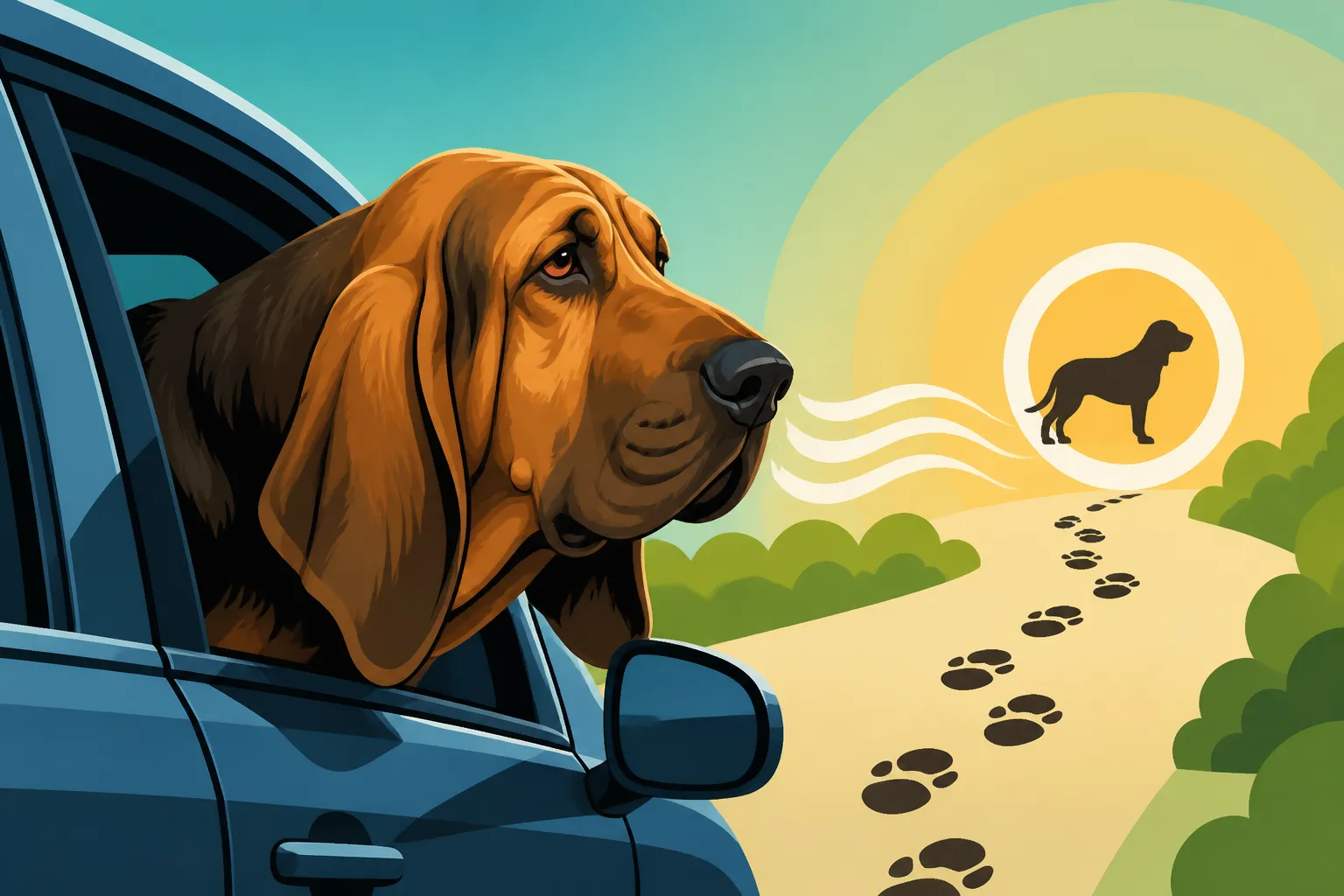
Many Bloodhound owners, fascinated by their dog's incredible nose, might wonder if their furry detective could simply stick its head out a car window and "track" a scent. It's an understandable thought, given their legendary abilities, but the reality of how a Bloodhound works a trail is far more complex and grounded. This guide will clarify why trailing from a moving vehicle isn't effective or safe, and what truly makes these magnificent scent hounds so exceptional.
The Complex Reality of Bloodhound Scenting: Why the Car Window Doesn't Work
It's easy to look at a Bloodhound, with its glorious, floppy ears and heavily wrinkled face, and imagine it effortlessly sifting through the air from a car window, locking onto a distant scent. After all, their noses are legendary, capable of How Many Times Better a Bloodhound Smells Than a Person. However, the art and science of Bloodhound trailing is far more intricate than simply sniffing the breeze. A car window, far from being an advantage, creates a chaotic environment that actively hinders a Bloodhound's natural and highly specialized trailing method.
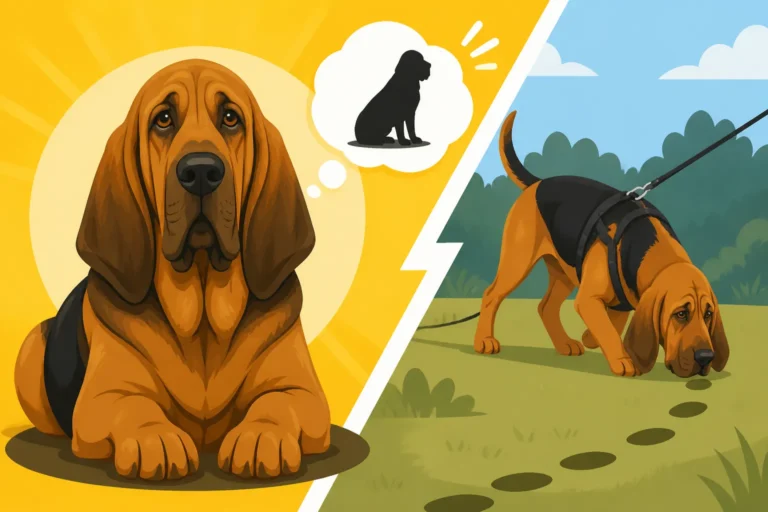
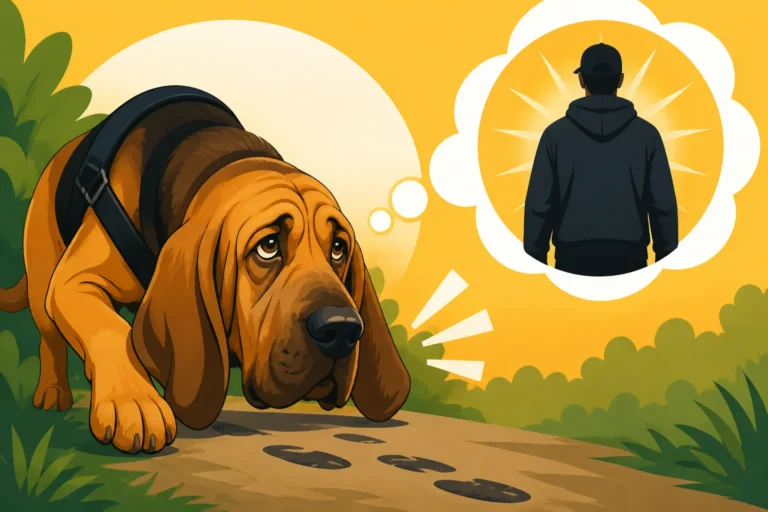
A Bloodhound primarily follows what we call a "ground scent." This isn't just a general odor; it's a specific, microscopic trail left behind by a person in the form of skin rafts, sweat particles, and disturbed vegetation. These particles fall to the ground and create a "scent cone" that a Bloodhound methodically works through. When a dog is hanging out of a moving car window, several factors conspire against this precise process. Firstly, the speed of the vehicle creates extreme wind turbulence. This rush of air doesn't just pass over the dog; it scatters, lifts, and distorts any ground scent, making it impossible for the dog to discern the delicate nuances of a trail. Imagine trying to read fine print while standing in a wind tunnel – it's an analogous challenge for their nose.
Secondly, a Bloodhound's physical adaptations, which are so crucial for its trailing prowess, are rendered ineffective in this scenario. Their long, pendulous ears are specifically designed to sweep ground scent toward their nose, trapping it and funneling it for analysis. Their loose skin and dewlaps also help to collect and hold scent particles. Why a Bloodhound's Ears Sweep Scent Toward Its Nose This entire system is built for working low to the ground, moving slowly and deliberately over a specific path. From a car window, these features are simply flapping in the wind, unable to perform their intended function of scent concentration. The dog's nose is designed to process information from a relatively stable, localized scent picture, not a constantly shifting and fragmented one experienced at speed. It's truly a testament to What a Bloodhound Is Actually Smelling on a Trail that they can do what they do, but it requires specific conditions.
Essential Conditions for Effective Bloodhound Trailing
For a Bloodhound to perform its incredible work, a very specific set of conditions and protocols must be in place. It’s a far cry from a casual car ride. The effectiveness of a Bloodhound's nose hinges on focus, control, and a systematic approach to working a trail, none of which are compatible with "trailing from a car window."
First and foremost, a Bloodhound needs to be on the ground, literally with its nose inches from the surface. This allows it to differentiate the specific "skin rafts" and odor molecules of the subject from general environmental smells. The dog's concentration is paramount. Any distractions, loud noises, or sudden movements can pull their focus from the incredibly demanding task of deciphering a complex scent signature. In a car, they are bombarded with sights, sounds, and an overwhelming, rapidly changing air current that offers no stable scent picture. This makes it impossible for them to apply their finely tuned abilities.
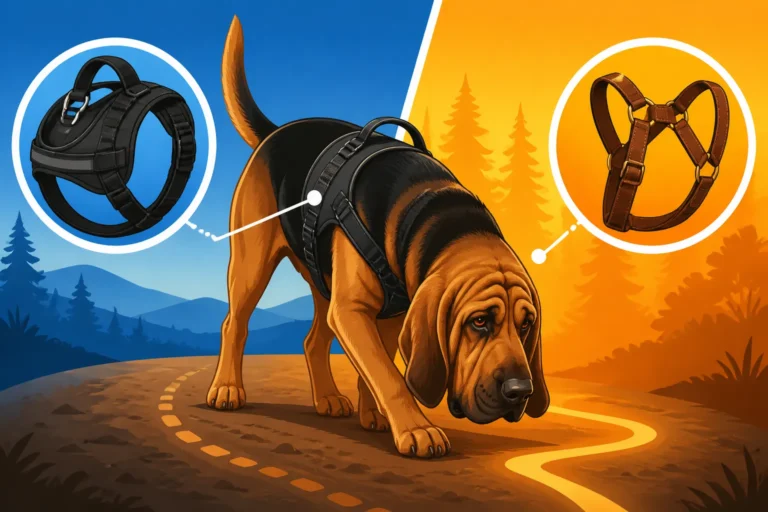
The handler's role is also absolutely critical. A Bloodhound doesn't just "follow a smell" blindly; they work in partnership with their handler. The handler is responsible for providing the initial scent article, reading the dog's subtle cues, maintaining tension on the Which Harness a Bloodhound Trails In and Why a Bloodhound Works on a Long Line, Not a Collar, and guiding the dog through challenging terrain or intersections. This active collaboration is impossible when the dog is passively observing from a moving vehicle. The handler can't respond to the dog's indications, can't provide encouragement, and can't make critical decisions about where to go next when the dog signals a turn or a loss of scent. Think about it: if your Bloodhound indicates What a Bloodhound Does When It Loses the Trail from a car window, what do you do? You can't just stop the car and have them backtrack effectively.
Furthermore, the environment itself plays a huge role in scent preservation and how a Bloodhound can work. Scent adheres differently to various surfaces. For example, Whether Asphalt Holds Scent for a Bloodhound differently than grass, and rain can affect a trail, though often not destroy it. These are factors a Bloodhound processes when moving deliberately on foot. A moving car effectively sanitizes the environment from the dog's perspective, blowing away the very clues it needs. To genuinely follow a trail, the dog needs to physically interact with the ground, moving at its own pace to sift through the scent molecules.
Here's a quick comparison of what makes effective scent work possible versus the limitations of car-window sniffing:
| Feature | Effective Ground Trailing | Car Window Sniffing |
|---|---|---|
| Scent Source | Ground-borne skin rafts, disturbed vegetation | Air current from various sources, highly dispersed |
| Movement | Slow, deliberate, methodical | Rapid, passive vehicle movement |
| Airflow | Stable, allows scent cone analysis | Turbulent, chaotic, distorts scent |
| Handler Role | Active partnership, communication, guidance | Passive observation, no active engagement with scent |
| Physical Adaptations | Utilizes ears and loose skin to gather scent on ground | Features become hindrances in turbulent air |
| Focus | Intense concentration on specific trail | Distracted by speed, sights, sounds outside vehicle |
| Safety | Controlled environment, dog on leash/long line | High risk of injury, collision, falling from vehicle |
| Purpose | Professional search, specific training, problem-solving | Casual observation, provides limited sensory input |
The Practicalities and Perils of Car Window Scenting
Beyond the ineffectiveness, there are significant practical and safety concerns that make attempting to trail from a car window a genuinely bad idea for any Bloodhound owner. We want our hounds to be safe and healthy, and this particular fantasy just doesn't align with responsible pet ownership or proper training.
Firstly, and most critically, there's the immediate physical danger to your dog. A Bloodhound, while typically calm and steady, can still be startled or excited. Imagine your big, powerful hound, head out the window, suddenly lunging or attempting to jump out if it catches a particularly compelling whiff, or if another vehicle passes too closely. The risk of falling, being struck by debris, or suffering severe injury from a sudden stop or swerve is incredibly high. Even with a harness, a dog hanging out a window is in a precarious position. The primary goal in any scent work is the safety of both the dog and the handler, and this method utterly fails on that front. Securing your Bloodhound properly in the vehicle is paramount, whether with a crash-tested harness or a secure crate. Whether a Bloodhound Should Ride Loose in a Car is an important consideration.
Secondly, it's inefficient and ultimately fruitless for actual trailing purposes. While your Bloodhound might be enjoying the rush of air and the cacophony of smells, they aren't working in the sense of following a specific, coherent human trail. They're getting a broad spectrum of environmental odors, but without the ability to put nose to ground, backtrack, re-establish a lost scent, or indicate a specific find, it's just a joyride for their nose. It doesn't build their trailing skills or contribute to any meaningful search effort. A true trailing dog needs to be able to follow a How Old a Trail a Bloodhound Can Follow, and that involves methodical, ground-based work.
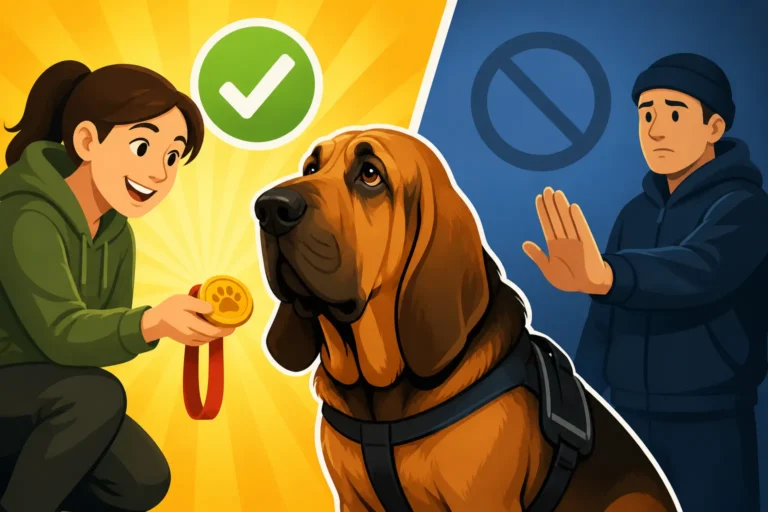
For those interested in channeling their Bloodhound's natural abilities, there are far safer and more effective ways to engage their incredible nose. Investing in quality equipment like a proper trailing harness and a long line from retailers like Amazon is a great start. Then, seeking out local mantrailing or scent work classes will provide a structured and safe environment for your Bloodhound to learn. Even general obedience and clear communication are crucial; resources like BAXTER & Bella offer excellent foundational training that will make any specialized work, including trailing, much more manageable and rewarding. A well-trained Bloodhound is a joy, and knowing how to communicate with them can even affect Whether a Bloodhound Can Be Called Off a Scent when they are on a trail.
In summary, while the image of a Bloodhound tracking from a car window might seem appealing, it's a romanticized notion that doesn't align with the realities of their work or basic safety. To truly tap into the extraordinary capabilities of your Bloodhound's nose, you need to commit to ground-based, controlled, and well-trained scent work. It's a journey that's immensely rewarding for both you and your dog, leading to a deeper understanding of their incredible talents.
The Foundations of Real Bloodhound Trailing
If you're truly interested in harnessing your Bloodhound's extraordinary olfactory abilities, the path doesn't involve car windows, but rather dedicated training on the ground. Real Bloodhound trailing is a methodical, skilled discipline that requires patience, consistency, and an understanding of how these dogs process scent. It's a far more fulfilling and safer pursuit than any car-window fantasy.
The journey begins with foundational work, often in puppyhood. Early socialization and basic obedience are crucial, building a strong bond and communication channel between you and your Bloodhound. While resources like BAXTER & Bella offer excellent programs for general puppy training and positive reinforcement, specialized scent work builds on these basics. It's about teaching your dog to focus its incredible nose on a specific human odor and follow it, despite myriad environmental distractions. This means starting with very short, simple trails in controlled environments, using a highly motivating reward at the end. The First Year With a Bloodhound That Already Wants to Trail is a period of immense learning and growth, where the groundwork for their future career is laid.
The training progresses by gradually increasing the difficulty of the trails – making them longer, older, more complex, and introducing them to various terrains and conditions. Handlers learn to "read" their dog, understanding the subtle changes in body language that indicate they're on scent, losing it, or have found their target. This close communication is only possible when you are physically working alongside your dog, typically with a long line attached to a specialized tracking harness. The dog needs the freedom to explore the scent cone while the handler maintains control and support. Why Recall Fails on a Bloodhound Outdoors is a critical piece of information for Bloodhound owners; their nose will always outvote a casual call, making proper trailing equipment and technique essential for safety.
Ultimately, successful trailing involves developing a partnership built on trust and understanding. It's about recognizing that your Bloodhound is a sentient being with a profound and ancient instinct, not a machine to be pointed in a direction. They thrive on the work, the challenge, and the reward of finding their quarry. This kind of work is not only safe and productive but also incredibly enriching for the Bloodhound, providing immense mental and physical stimulation that satisfies their deepest drives. It’s truly remarkable to watch them work, confirming A Bloodhound's Nose Outvotes Its Handler in the most beautiful way possible.
Disclaimer
This article is for general informational purposes only and does not constitute professional advice. Laws, prices and regulations vary by location and change over time. Consult a qualified professional for guidance on your specific situation.