Whether a Bloodhound Would Guard the House
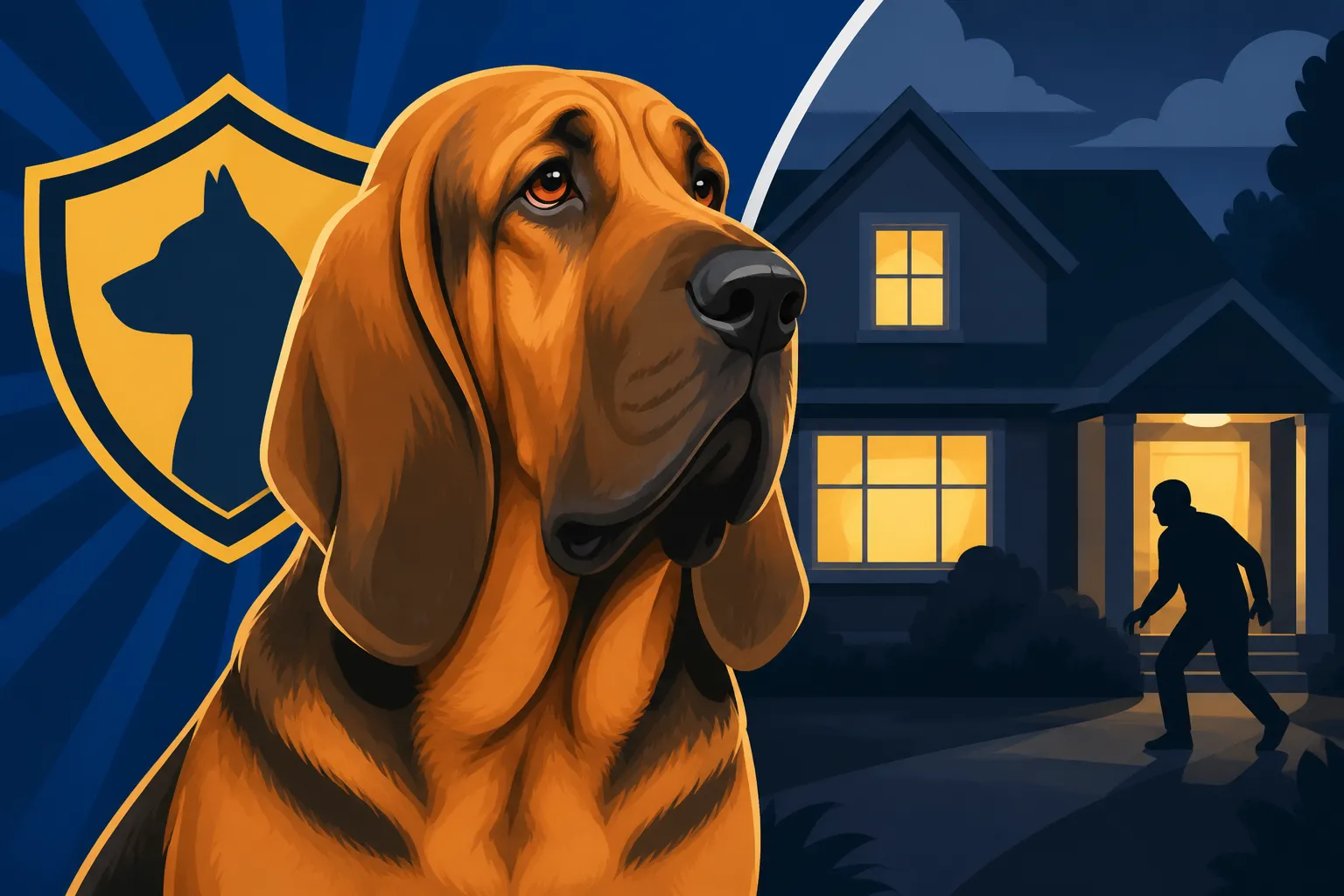
One common misconception about Bloodhounds is that their impressive size, deep bay, and somewhat imposing appearance make them excellent guard dogs. Many prospective owners, especially those new to the breed, often wonder if their Bloodhound will naturally protect their home and family. The truth, however, is far more nuanced, and often, what people expect from a traditional guard dog is entirely at odds with the Bloodhound's inherent nature. This guide will explore the unique temperament of Bloodhounds and clarify what you can realistically expect regarding their protective instincts, helping you understand why these gentle giants are better suited for other roles.
Understanding the Bloodhound Temperament
When we talk about a Bloodhound's temperament, we're really diving into centuries of selective breeding that shaped them for one purpose: tracking. Every aspect of their personality and instincts is geared towards that incredible nose, and that means their focus is rarely, if ever, on territorial defense. They are, by their very design, lovers, not fighters.
The Scent-Driven World of a Bloodhound
Imagine living in a world where every single whiff tells a story, where the air hums with information that humans can't even begin to process. That's a Bloodhound's reality. Their entire being is oriented around scent. When a new person approaches your home, a typical guard dog might assess them visually, listen for suspicious sounds, and react defensively. A Bloodhound, on the other hand, is likely processing their unique scent signature, thinking about where they've been, what they've eaten, and if there's any interesting trail to follow. Their brain is simply wired differently, prioritizing olfactory data over perceived threats. This intense focus on scent means they often don't register an "intruder" in the same way another breed might. Their primary drive isn't to protect territory, but to explore and understand the world through their nose. This singular drive is precisely Why a Bloodhound's Nose Outvotes Its Handler in almost every situation.
Friendly by Nature: A Breed Trait
Bloodhounds are known universally for their remarkably friendly and amiable disposition. They are often described as "gentle giants" for a very good reason. This isn't just a pleasant anecdote; it's a fundamental characteristic of the breed, carefully cultivated over generations. They tend to view everyone, human or animal, as a potential friend or a source of interesting smells. Walk into a room with a Bloodhound, and instead of a suspicious stare or a defensive posture, you're far more likely to be met with a wagging tail, a wet nose, and an eager lean, even if they've never met you before. This inherent good nature makes them wonderful family companions, but it's completely counterproductive to the role of a guard dog. A true guard dog needs a degree of aloofness, suspicion, and a willingness to stand its ground against strangers. A Bloodhound generally possesses none of these traits.
Lack of Natural Suspicion
One of the defining characteristics of a guard dog is a natural wariness of strangers and an instinct to protect its territory or its pack. Bloodhounds, bless their hearts, just don't typically have this. Their default setting is curiosity and friendliness, not suspicion. If a stranger enters your property, a Bloodhound is more likely to greet them like a long-lost friend, perhaps even leading them on a tour of the garden, rather than challenging their presence. They lack the intrinsic territorial aggression or protective drive that breeds like German Shepherds or Rottweilers possess. This isn't a flaw in their character; it's simply how they are wired. Expecting a Bloodhound to be suspicious of an unfamiliar person is like expecting a fish to climb a tree—it goes against their very nature. They are truly Whether the Bloodhound Is Actually Gentle to almost everyone.
The "Guard Dog" Misconception
It's easy to look at a large, deep-chested dog with a booming voice and assume it will be a deterrent. However, for Bloodhounds, appearances can be incredibly deceptive when it comes to their protective capabilities.
Physical Presence vs. Protective Instinct
There's no denying that a full-grown Bloodhound, with their substantial What a Bloodhound Weighs and How Tall It Stands, loose skin, and serious expression, has an imposing physical presence. They are big dogs, and their sheer size alone can sometimes make people pause. This can appear to be a form of guarding, simply because their appearance might make an opportunistic intruder think twice. However, this is a far cry from actual protective instinct. A Bloodhound might look formidable, but inside, they are typically softies. Their size might deter some, but it doesn't mean they'll actively defend. It's more akin to a large, friendly bouncer who accidentally looks menacing but really just wants to give you a hug. Their intimidating appearance is purely coincidental to any protective drive.
The Gentle Giant Stereotype
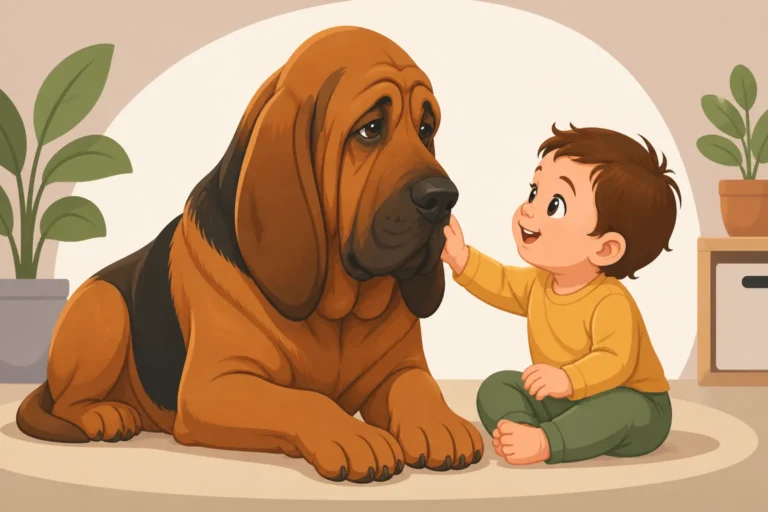
The "gentle giant" isn't just a cute nickname for the Bloodhound; it's a profound truth about their personality. They are incredibly tolerant, patient, and good-natured, especially with children and other animals. This makes them fantastic family pets, fitting perfectly into The Household a Bloodhound Was Built For where companionship is prioritized. However, these very traits make them unsuitable for guard duty. A guard dog needs to be able to make quick, decisive decisions about who is a threat and act accordingly. A gentle giant's instinct, on the other hand, is to de-escalate, to befriend, and to explore. They are simply too sweet, too good-natured, to effectively deter or confront an intruder. Their instinct is not to guard, but to love, and that doesn't usually come with teeth bared.
Barking vs. Warning
Bloodhounds are definitely not quiet dogs. They have a distinctive, resonant bay that can carry for long distances. When they hear something new, see a squirrel, or simply feel like expressing themselves, they will often let out a deep, soulful bay. This might lead some owners to think, "Aha! They're warning me!" And in a very rudimentary sense, they are alerting you to something. But there's a crucial difference between an alert bark (or bay, in this case) and a warning bark from a true guard dog. A guard dog's warning is usually accompanied by a body posture, an intense gaze, and an air of readiness to defend. A Bloodhound's bay, while loud, is often more of an expression of excitement, curiosity, or even boredom, rather than a genuine threat assessment. Why a Bloodhound Bays is typically rooted in their hound heritage and communication, not in an active desire to guard property. It's an announcement, not a challenge.
What a Bloodhound Will Actually Do
So, if they're not traditional guard dogs, what can you expect from a Bloodhound when it comes to home security? They certainly aren't useless, but their contributions will look very different from what you might envision.
The Alarm System: Baying at Novelty
Your Bloodhound will serve as an alarm system, just perhaps not in the way you'd expect. Their large, sensitive ears and keen nose mean they are highly aware of their surroundings. Any unusual sound—a car pulling up, a delivery person walking to the door, a squirrel trying to raid the bird feeder, or even just a distant siren—is likely to elicit a characteristic deep bay. How Loud a Bloodhound's Bay Is can be quite impressive, and it's certainly attention-grabbing. This baying will undoubtedly alert you to something happening outside, which is a valuable service. However, they're not necessarily discriminating. They'll bay at the mail carrier with the same enthusiasm they might bay at an actual intruder. The key takeaway is that they'll let you know someone or something is there, but they won't necessarily differentiate between a welcome guest and an unwanted one, and they certainly won't take action beyond vocalizing. It's an early warning system, not a defensive line.
Greeting Strangers with Enthusiasm
If an unfamiliar person manages to get past your Bloodhound's initial baying alert and actually enters your home or yard, you can expect one thing: an incredibly enthusiastic greeting. Forget growling or standing between you and the stranger. Your Bloodhound is far more likely to wag its tail, lean into their legs, and possibly even try to solicit pets. For a Bloodhound, a new person often means new smells to investigate and a potential new friend. They might even assume the stranger is there to play! This is a stark contrast to a dog bred for protection, which would likely maintain a defensive posture. How a Bloodhound Greets a Stranger at the Door is almost always with unbridled joy, which, while endearing, doesn't translate to security. They are big, loving goofballs who don't have a suspicious bone in their body towards new people.
Accidental Intimidation Through Size
While a Bloodhound doesn't possess inherent guarding instincts, their sheer size and distinctive appearance can unintentionally provide some deterrent value. A large, lumbering dog with a deep bay can look formidable, even if their intentions are nothing but friendly. An opportunist might see a dog of their stature and assume it's protective, deciding it's not worth the risk. This isn't active guarding, but rather passive deterrence based on appearance alone. It's important to understand this distinction. They aren't trying to intimidate; they just are big. Think of it like a very friendly but large bouncer at a club who looks tough but just wants to hand out lollipops. The intimidation is a side effect of their impressive physique, not a result of their temperament.
Training and Socialization's Role
While you can't train a Bloodhound to be a true guard dog if they lack the natural instincts, proper training and socialization are still incredibly important for managing their behavior and ensuring they are well-adjusted members of your family.
Early Exposure and Positive Associations
From a young age, it's crucial to expose your Bloodhound puppy to a wide variety of people, sounds, and environments. This isn't about training them to guard; it's about building their confidence and reinforcing their naturally friendly disposition. Positive experiences with different people—delivery drivers, visitors, children, and even strangers encountered on walks—will help solidify their trust and ease. A well-socialized Bloodhound is a calm, confident, and friendly dog, less likely to be fearful or anxious, which can sometimes manifest as unwarranted shyness or reactive barking in other breeds. For training, programs like BAXTER & Bella can be incredibly helpful in guiding new puppy owners through crucial socialization periods, ensuring a well-adjusted adult. These programs emphasize positive reinforcement and early exposure, which is exactly what a Bloodhound needs to thrive.
Managing Enthusiasm, Not Suppressing Instinct
Since a Bloodhound's default mode is enthusiastic greeting, training should focus on managing that enthusiasm rather than trying to suppress their friendly nature. Teaching commands like "sit" or "stay" when guests arrive can help prevent them from knocking over visitors in their excitement. Working on polite leash manners is also essential, as a pulling Bloodhound following a scent trail can be incredibly strong. What a Bloodhound Will Work For often revolves around treats and praise, so positive reinforcement is key. The goal isn't to make them suspicious or aggressive, but to teach them polite ways to interact with the world and harness their intelligence. You want a well-mannered greeter, not a guard. Trying to force a Bloodhound into a guarding role would be unfair to their nature and likely ineffective.
Understanding Their Motivation
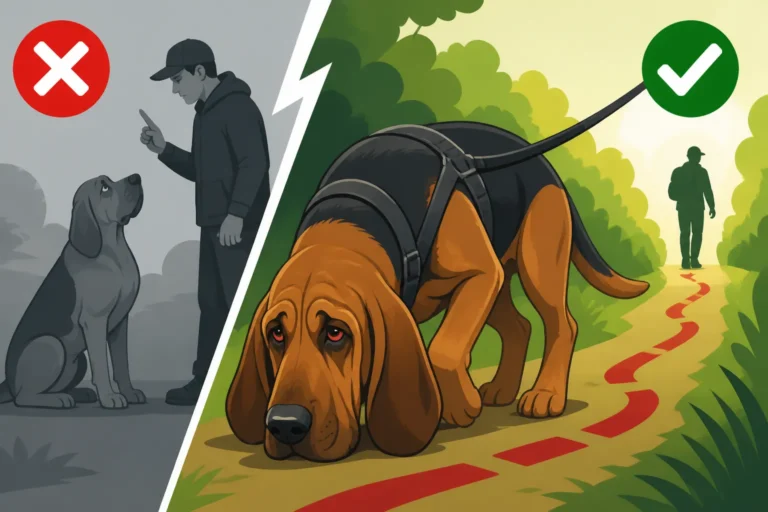
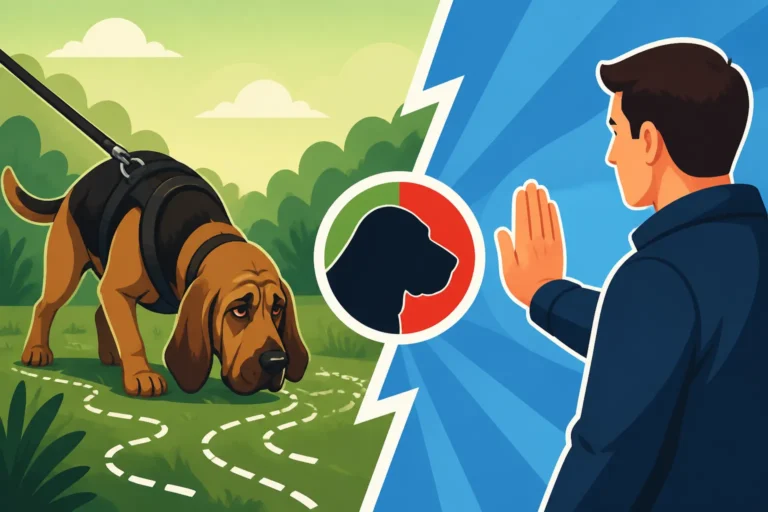
Understanding a Bloodhound's primary motivation—scent work—is paramount when it comes to any training, including how they interact with their environment and strangers. Their world is dictated by their nose. If they hear or smell something new, their first impulse is to investigate via scent, not to defend. This means that while they might bay at a perceived threat, their follow-through will be to attempt to get closer to the source of the scent, often with a wagging tail. This is why Why Off Leash Is Not a Goal With a Bloodhound is so important; once on a scent, they are off in their own world. If you want a dog to deter or engage an intruder, a Bloodhound's instincts are fundamentally misaligned with that task. They are motivated by the chase of a scent, not the defense of property.
Living with a Bloodhound: Security Considerations
Recognizing that your Bloodhound isn't a guard dog means you need to adjust your expectations and approach home security from a different angle. They still have roles to play, but not the traditional ones.
The Real Value of Their Scenting Ability
While a Bloodhound won't guard your house, their unparalleled scenting ability makes them invaluable in other security-related contexts. Should a person go missing—a child, an elderly relative, or even an escaped pet—a trained Bloodhound can be a lifesaver. Their ability to follow a cold trail, often days old, is legendary and unmatched by almost any other breed. This is where their true "protective" value lies: in finding the lost, not in confronting the unwanted. Owners who embrace Mantrailing Is the Answer to a Bloodhound, Not Obedience will find immense satisfaction in nurturing this natural talent, and for families with wander-prone members, this can be the most comforting "security" feature imaginable.
Supplementing Your Home Security
Since your Bloodhound won't be your first line of defense, it's essential to implement other robust home security measures. This means sturdy locks, alarm systems, and potentially motion-activated lights or cameras. Think of your Bloodhound as a wonderful companion and an excellent early alert system due to their baying, but not as an active deterrent or protector. They'll tell you something is happening, but then it's up to you or your technological security to handle it. You might want to invest in a durable crate or secure indoor space where your Bloodhound can relax when strangers are present, especially if they are overly enthusiastic greeters. Finding heavy-duty crates or gate systems, sometimes available on Amazon, can be a practical way to manage their excitement while keeping everyone safe.
Managing the Doorway Dynamic
The doorway is often where the "guard dog" question becomes most apparent. When someone knocks or rings the bell, a Bloodhound will likely bay excitedly and rush to the door. This is where proper training is crucial, not to make them guard, but to make them polite. Teach them to sit and wait patiently a few feet back from the door when it opens. This prevents them from overwhelming guests or making an escape. If you have A Bloodhound in a House With Small Children, teaching them this doorway etiquette is even more important for safety. They are large and can accidentally knock over a small child or a guest in their exuberance. The goal is a controlled, friendly greeting, not a challenge. It's about manners, not malice.
| Guard Dog Trait | Bloodhound Trait | Implication for Home Security |
|---|---|---|
| Natural Suspicion of Strangers | Inherent Friendliness and Curiosity | Will greet intruders with enthusiasm, not aggression. |
| Territorial Aggression | Minimal Territorial Drive | Unlikely to actively defend property from perceived threats. |
| Defensive Stance and Body Language | Wagging Tail, Seeking Affection | May accidentally intimidate with size, but not intent. |
| Direct Confrontation | Follows Scent, Avoids Confrontation | More interested in investigating new smells than engaging a threat. |
| Instinctive Protection of Family | Affectionate Companion | Protects by alerting (baying), but not through physical defense. |
| Trains for Protection Work | Excels in Scent Work/Mantrailing | Can be trained for detection, not for personal or property defense. |
In conclusion, while the Bloodhound is a magnificent, loyal, and incredibly loving companion, they are not, by nature or breeding, guard dogs. Their unique temperament, driven by an unparalleled sense of smell and an overwhelmingly friendly disposition, makes them ill-suited for the role of protecting property or actively deterring intruders. Embrace them for their incredible noses, their gentle hearts, and their unwavering companionship, and make sure your home security is handled by more conventional means.
Disclaimer
This article is for general informational purposes only and does not constitute professional advice. Laws, prices and regulations vary by location and change over time. Consult a qualified professional for guidance on your specific situation.