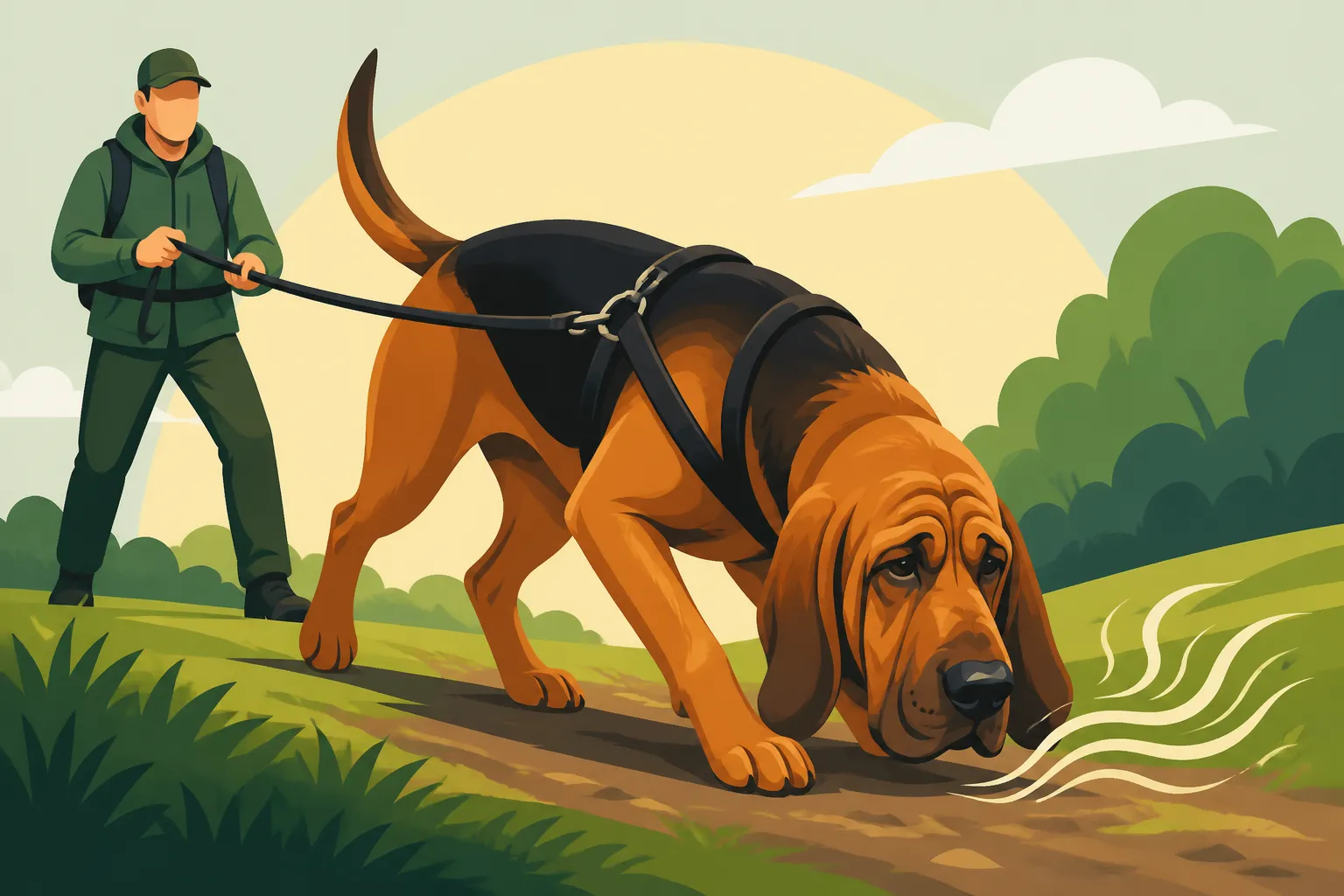
Walking a Bloodhound That Has Found a Scent
There are few things as humbling, and sometimes frustrating, as trying to walk a Bloodhound who has just picked up a scent. One moment, they’re ambling along, a big, lovable goofball, and the next, their head drops, their tail stiffens, and you're suddenly being towed by a freight train with a singular mission. If you've ever felt like your arm was about to be pulled out of its socket, or wondered why your perfectly trained "heel" command suddenly became utterly meaningless, you're not alone. This guide is here to help you understand why your Bloodhound behaves this way and, more importantly, how you can manage these scent-driven walks for both your sanity and their fulfillment.
Understanding the Bloodhound's Olfactory World
To truly understand why walking a Bloodhound can feel like wrestling a determined scent-seeking missile, you first need to wrap your head around just how profoundly different their world is from ours. For them, scent isn't just an added layer of information; it is their primary reality. It's like living in a silent movie versus a full-sensory IMAX experience – they're operating on an entirely different plane.
The Unparalleled Power of Their Nose
Let's talk numbers for a moment, because they really do tell a story. While humans have a respectable 5 or 6 million scent receptors, your Bloodhound boasts an astonishing 300 million. Think about that for a second. It's not just "better," it's a completely different magnitude of sensory input. They're not just smelling the pizza; they're smelling the individual pepperoni, the yeast in the crust, the specific brand of mozzarella, and the faintest whiff of the delivery driver’s laundry detergent from three hours ago.
This isn't an exaggeration; it's how their brain is designed to process the world. Every single molecule floating in the air or lying on the ground tells them a story, a complex tapestry of information that we can barely fathom. When they drop their nose to the ground, they're plugging into a data stream so rich and detailed that it's akin to us trying to ignore a blaring fire alarm in a quiet room. It's simply not possible for them to tune it out once their incredible olfactory system has engaged.
Scent as Their Primary Motivator
For a Bloodhound, scent isn't a hobby or a pastime; it's an intrinsic, primal drive. It’s what they were bred for, refined over centuries to be the absolute masters of trailing. When they lock onto a scent, it’s not an act of defiance or stubbornness; it's their entire being focused on fulfilling their genetic destiny. Imagine asking a fish not to swim, or a bird not to fly – that’s essentially what we’re asking a Bloodhound to do when we expect them to ignore a compelling trail.
This deep-seated motivation means that when a scent hits them, it literally overrides almost every other external stimulus, including your voice, your tugs on the leash, or even the promise of a favorite toy. Their concentration becomes laser-focused, their tunnel vision absolute. It's a testament to their dedication to the task at hand, even if that task is just following the ghost of a squirrel from yesterday. Understanding this fundamental aspect of their being is the first step toward managing their walks with empathy and effectiveness.
How Scent Travels and Lies on the Ground
Scent isn't just a static thing waiting to be sniffed; it's dynamic, shaped by the environment, and always telling a story to a Bloodhound. Imagine particles of scent as tiny, invisible breadcrumbs. When a person or animal moves, they shed these cells constantly, leaving a distinct "scent cone" behind them. This isn't just skin cells; it's bacteria, hormones, oils, and other microscopic elements that create a unique individual signature.
The way this scent lies on the ground, or lingers in the air, depends heavily on factors like temperature, humidity, and, crucially, wind. A gentle breeze can carry scent particles, creating a wider, more diffuse trail, while still air might allow scent to pool more intensely in certain areas. Different surfaces absorb and retain scent differently too; a grassy verge might hold it longer than hot asphalt. Your Bloodhound is an expert at reading these environmental nuances, detecting minute changes in concentration to determine direction, age, and even emotional state of the scent layer. They know instinctively how to process these subtle variations, moving their heads from side to side to triangulate the source, even when we see nothing but an empty sidewalk. This is why a simple "walk" for us is a complex, intricate puzzle for them. They're constantly trying to put the pieces together. In fact, many people wonder Whether Wind Moves the Scent a Bloodhound Follows, and the answer is absolutely – wind is a major factor in how a Bloodhound works a trail, constantly shifting the scent picture.
The Challenges of a Scent-Driven Walk
Let's be real: walking a Bloodhound can feel less like a leisurely stroll and more like an unexpected workout, particularly when their nose latches onto something irresistible. It's a unique challenge that Bloodhound owners understand deep in their bones, a challenge that can sometimes leave you feeling exasperated, bewildered, and wondering if your dog secretly just enjoys watching you flail.
The Sudden Shift: From Ambling to Obsessed
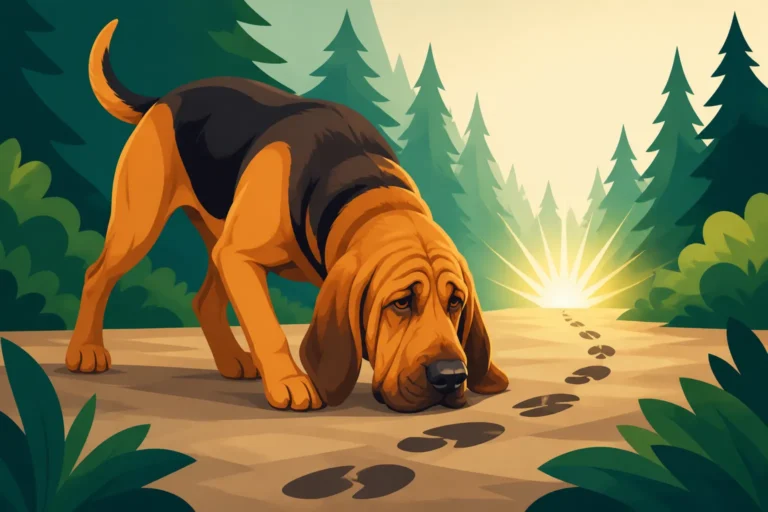
One moment, your Bloodhound is a picture of serene, droopy-eared contentment, sniffing a patch of grass with casual interest. The next, a switch flips. It’s almost instantaneous. Their entire posture changes: head drops to the ground, those long ears become scent-sweepers, tail goes up, perhaps wagging with a focused intensity, and their stride lengthens and strengthens. That gentle, lumbering gait vanishes, replaced by a powerful, unwavering pull.
This sudden transformation can be jarring. You go from having a pleasant companion at your side to being an anchor to a determined tracking machine. They might ignore their surroundings, other dogs, people, and even direct commands because their world has narrowed to that singular, compelling scent. This isn’t a choice they’re making to be difficult; it’s an involuntary, instinctual response to a smell that their brain has flagged as profoundly important. It's their natural programming kicking in, overriding everything else.
The Futility of Traditional Obedience Cues
How many times have you cheerfully called "heel!" or firmly commanded "leave it!" only to be met with the deafening silence of a Bloodhound utterly consumed by a scent trail? It’s a common, incredibly frustrating experience. We're taught that obedience is about control and communication, but with a Bloodhound on a hot trail, it often feels like you're speaking a completely different language.
This isn't because your Bloodhound is unintelligent or poorly trained. Quite the opposite: they are incredibly intelligent, but their intelligence is deeply specialized for scent work. When their nose is engaged, the part of their brain that processes external commands seems to temporarily switch off. The reward of following that trail far outweighs any treat or praise you could offer in that moment. It's a physiological and psychological reality of the breed. It truly highlights Why a Bloodhound Ignores a Cue It Knows – it's not disrespect, it's an inherent drive that is almost impossible to override in the moment. Trying to force them off a trail can lead to frustration for both of you, potentially damaging your bond and making future walks even harder.
Physical Demands on the Handler
Let’s be honest, Bloodhounds are big, powerful dogs. An adult male can easily weigh over a hundred pounds, and even a smaller female has surprising strength and momentum when their nose is down and their mind is set. When they suddenly lunge onto a scent, the physical impact on you can be significant. It's not uncommon for handlers to experience sore shoulders, strained wrists, or even lose their balance and take an unplanned trip if they’re not prepared.
Managing a pulling Bloodhound requires more than just physical strength; it demands constant vigilance and quick reflexes. You have to anticipate their movements, be ready to brace yourself, and maintain a firm but flexible grip on the leash. This can be exhausting, especially on a long walk or in areas with varied and enticing smells. It quickly teaches you the importance of good core strength and how much your dog truly enjoys a good ol' tug of war with you at the end of the leash.
Essential Equipment for Scent Work Walks
When you're walking a Bloodhound, especially one prone to deep-diving into scent trails, your equipment isn't just about fashion; it's about safety, control, and making the experience enjoyable for both of you. The right gear can make all the difference between a pleasant outing and a struggle that leaves you both frazzled.
Harnesses Designed for Control and Comfort
First things first: ditch the neck collar for anything more than casual, controlled bathroom breaks. A Bloodhound, with its deep chest and strong neck, can exert an incredible amount of force on a collar, potentially causing damage to their trachea or spine, especially if they're prone to pulling. Beyond that, a flat collar offers very little control when your dog is determined to follow a trail.
Instead, invest in a well-fitting harness. There are several types that work wonders for Bloodhounds. A front-clip harness, where the leash attaches at the dog's chest, is a game-changer. When your Bloodhound pulls, the leash redirects them gently to the side, discouraging the forward momentum without causing pain. Look for brands that offer good padding and adjustability around the chest and shoulders to prevent chafing, which can be an issue with their loose skin. Alternatively, a Y-front harness with a back clip can distribute pressure evenly across the chest and shoulders, allowing for comfort while still offering a secure connection for a long line. When shopping, I always recommend checking out the wide variety available on Amazon, as you can often find reviews specific to large, deep-chested breeds. This type of harness is often the preferred choice for Which Harness a Bloodhound Trails In during actual scent work, precisely because it allows for full range of motion while maintaining security.
The Importance of a Long Line (and How to Use It)
For a Bloodhound, true "off-leash" freedom in an unfenced area is almost always a pipe dream. Their nose will lead them far beyond your sight and voice. This is where a long line becomes an indispensable piece of equipment. It gives your Bloodhound the freedom to explore scents at a distance, to truly engage their nose without being constantly interrupted, while still keeping them safely tethered to you.
Long lines typically range from 15 to 50 feet, or even longer. For general scent-exploring walks, a 20-30 foot line is a good starting point. You want one made of a durable, easy-to-grip material that won't tangle easily. Biothane lines are fantastic as they are waterproof, easy to clean, and don't absorb odors or get heavy when wet. The key to using a long line safely is to always maintain a grip on it, never wrapping it around your hand or wrist, as a sudden lunge could cause injury. Let the line extend and retract as your dog explores, but be ready to step on it or gather it in quickly if they head towards danger. It’s about giving them choice within boundaries. You might be surprised at How Long a Line a Bloodhound Handler Buys for serious trailing – sometimes 100 feet or more!
High-Value Rewards that Cut Through Scent
When your Bloodhound is deep in a scent trance, a dry piece of kibble isn't going to cut it. You need something truly irresistible, a reward so high-value that it can momentarily compete with the intoxicating allure of a fresh trail. Think of it as sensory warfare, and you need the big guns.
This means soft, smelly, meaty treats that can be eaten quickly. Cooked chicken, cheese, hot dogs, or specially formulated high-value training treats are excellent choices. The smellier, the better! You might even keep a squeeze tube of liver paste or peanut butter for those emergency "look at me!" moments. The idea is to create a positive association with disengaging from the scent (even for a split second) and focusing on you. Practicing in low-distraction environments first, with these amazing treats, will build that association. Once they understand that looking at you sometimes leads to deliciousness, you have a better chance of breaking through their scent-induced tunnel vision when it matters most. Remember, consistency with these rewards is crucial; every time they choose you over a distracting smell, even briefly, it's a win that deserves top-tier reinforcement.
Strategies for Managing a Trailing Bloodhound
Okay, so we know why they do it and what gear helps. Now, let’s talk about how to actually manage those moments when your Bloodhound’s nose takes over. It’s less about stopping them entirely and more about channeling that incredible drive into something productive and safe.
Proactive Management: Choosing the Right Environment
The first, and often easiest, strategy is to set yourself and your Bloodhound up for success by choosing your walking environments wisely. You wouldn't take a toddler to a porcelain shop and expect them not to touch anything, would you? The same logic applies to a Bloodhound and a scent-rich environment.
If your goal is a relaxed, leash-mannered walk where your Bloodhound isn't constantly pulling, then seek out areas with fewer overwhelming scents. Think paved paths, quiet industrial parks (when not in operation), or even large, open sports fields where ground-level scents might be less concentrated. Conversely, if you want to indulge their nose – and you absolutely should! – then head to a nature trail, a local park with plenty of bushes, or even a designated dog park (though be mindful of other dogs if your Bloodhound gets too focused). Knowing your objective for the walk helps you choose the right battlefield, so to speak. If you’re trying to practice loose-leash walking, don’t take them to the deer trail behind your house. Save that for their dedicated "work" time.
Working With Their Nose, Not Against It
This is perhaps the most crucial mindset shift for any Bloodhound owner. Instead of viewing their scent-following as a problem to be solved, embrace it as their greatest gift and primary joy. Your Bloodhound isn't ignoring you to be difficult; they're doing what they were born to do. Why not lean into that?
Consider formal scent work or mantrailing. This is where your Bloodhound truly thrives, where their instincts are celebrated and guided. Enrolling in a local class or joining a scent work club can provide a structured outlet for their incredible abilities. It gives them a "job," and a tired Bloodhound, both mentally and physically, is a happy and well-behaved Bloodhound. When you engage in this activity, you’re not just walking; you’re partnering in an ancient hunt. It strengthens your bond and fulfills their deep-seated need to track. It's often said that Mantrailing Is the Answer to a Bloodhound, Not Obedience, and there's a lot of truth to that. It provides a purpose that traditional obedience alone cannot.
The "Catch and Release" Method
Even with the best planning, your Bloodhound will inevitably pick up an unexpected scent during a casual walk. This is where the "catch and release" method can be incredibly useful. Instead of getting into a tug-of-war, which you'll likely lose, try to briefly interrupt their focus, reward, and then allow them to go back to the scent if it's safe to do so.
When your Bloodhound locks onto a scent and starts pulling, gently apply pressure to the leash, but instead of fighting them, try to get their attention with your high-value treat. Say their name once, clearly. The moment they even glance in your direction, mark it with a "yes!" or a clicker, and offer the treat right by your leg. Don't make them come to you; meet them where they are. After they've taken the treat, immediately release the pressure and say, "Okay, go find!" or a similar release cue, allowing them to return to the scent. The goal here is not to pull them off the scent permanently, but to teach them that momentarily checking in with you is incredibly rewarding. Over time, they learn that a brief check-in doesn't mean the fun stops; it might even make the fun better because they get a tasty snack! This technique helps them build a habit of briefly disengaging and re-engaging, giving you tiny windows of control within their scent-driven world.
Training and Behavior Modifications
While a Bloodhound's nose is king, it doesn't mean you're entirely powerless. There are specific training approaches that, while perhaps not completely "fixing" the scent-driven pull, can significantly improve your ability to communicate with and manage your Bloodhound during those moments of intense focus.
Conditioning a "Check-in" Cue
One of the most valuable things you can teach a Bloodhound is a reliable "check-in" cue – a signal that tells them, "Hey, just look at me for a second." This isn't a recall, but a momentary break in their concentration, a chance for you to reconnect. Start this training in a completely distraction-free environment, like your living room. Hold a high-value treat near your face, say your Bloodhound's name, and the instant they make eye contact, say "Yes!" and give them the treat. Repeat this many, many times.
Slowly, introduce mild distractions. Practice in your backyard, then a quiet park. The key is to be extremely consistent and to always reward lavishly for even a split-second of eye contact. You're building a strong positive association with looking at you, even when their nose is on overload. This check-in cue becomes your lifeline when they're starting to get too engrossed in a scent, giving you a chance to gather your thoughts, assess the environment, or simply remind them that you're part of their world too. Resources like BAXTER & Bella offer excellent online courses that break down this kind of foundational training into easy-to-follow steps, perfect for the dedicated Bloodhound owner.
Emergency Stop and Recall (When to Expect Failure)
Let's be brutally honest here: teaching a Bloodhound a truly reliable recall or emergency stop when they are deeply immersed in a scent trail is one of the most challenging feats in dog training. Many experienced Bloodhound owners will tell you it's simply not a realistic expectation in high-distraction environments. While you absolutely should work on these cues in low-distraction settings, managing your expectations for outdoor, scent-rich situations is vital for your sanity and your dog's safety.
Why does Recall Fails on a Bloodhound Outdoors? Because the primal drive to follow a scent is often stronger than any learned command, no matter how well-reinforced. Their brain literally tunes out your voice. An "emergency stop" might work in a specific training scenario, but when that deer trail crosses a busy road, your Bloodhound’s nose will likely be prioritizing the deer over your desperate pleas. This isn't to say don't train it, but rather, understand its limitations. For true safety in unfenced, outdoor areas, a long line (as discussed earlier) is your most reliable "recall" device. It provides physical control when verbal commands inevitably fail in the face of an irresistible scent.
Introducing Formal Scent Work
Instead of fighting their natural instincts, embrace them! Formal scent work, such as mantrailing, tracking, or even competitive nose work, is not just a training method; it's a way of life for many Bloodhound owners. It allows your dog to use their extraordinary nose for its intended purpose, providing immense mental stimulation and physical exercise.
Enrolling in classes or working with a professional trainer who specializes in scent work can unlock a whole new world for you and your Bloodhound. You'll learn how to lay trails, how to read your dog’s subtle body language, and how to become an effective handler who supports their dog's natural talent. This type of activity provides an unparalleled outlet for their energy and intelligence, making them more content and often calmer in other aspects of their life. Think of it: a Bloodhound who gets to "hunt" regularly is far less likely to be bored and destructive at home. It’s also incredibly rewarding for you to watch your dog do what they do best. If you have a Bloodhound puppy, getting them started early on their natural abilities can be incredibly beneficial. There are many great resources for Starting a Bloodhound Puppy on a Trail that can guide you through the initial steps.
Safety and Practical Considerations
A Bloodhound on a scent trail is a powerful force of nature. While it's beautiful to witness their dedication, it also comes with significant safety responsibilities for you as their handler. Their singular focus means they can become oblivious to their surroundings, and it's your job to be their eyes and ears.
Road Safety and Environmental Awareness
Imagine your Bloodhound has just picked up the most tantalizing scent ever – perhaps a rabbit from yesterday morning, or the lingering odor of a child's dropped lollipop. Their head is down, nose glued to the ground, and they're pulling with all their might. Now imagine that irresistible trail leads directly across a busy street, or into a patch of broken glass, or towards an aggressive dog that you hadn't even noticed. This is the reality of walking a Bloodhound.
Their profound tunnel vision means they are often unaware of immediate dangers. You must be hyper-vigilant. This means constantly scanning your environment, not just your dog. Look for traffic, potential hazards, other animals, and unexpected obstacles. Your leash and harness are not just training tools; they are your primary safety devices. Be prepared to brace, redirect, or even physically stop your dog from entering a dangerous situation. Sometimes, this means being the "bad guy" and pulling them off a scent, even if it's frustrating for them, because their safety is paramount.
Respecting Public Spaces and Other People
While your Bloodhound is on a mission, the rest of the world isn't always prepared for a large, determined hound dragging its owner along. A focused Bloodhound, even a friendly one, can accidentally knock over a small child, tangle leashes with another dog, or simply alarm someone who isn't familiar with their intense working style.
It's crucial to maintain control, especially in crowded areas or when passing other people and pets. If your Bloodhound is prone to strong pulling, consider walking them during off-peak hours or in less populated areas. Teach them a "move over" or "let's go" cue that, with consistent reinforcement, can help them briefly disengage and move past an obstacle or person politely. Always be ready to apologize and explain, "He's working his nose!" when encountering surprised passersby. Their public perception matters, and responsible handling goes a long way.
Dealing with Inclement Weather and Trail Conditions
Weather and terrain play a huge role in both scent preservation and the practicalities of a Bloodhound walk. Rain, for example, can wash away some scent particles but can also enhance others by making them more volatile. On the flip side, a hot, dry day can cause scents to dissipate quickly. It’s a common question, Whether Rain Destroys a Bloodhound's Trail, and the answer is complex, but it certainly changes how they work. Similarly, Whether Heat Shortens What a Bloodhound Can Do is a definite yes; intense heat can make scent work exhausting and dangerous for your dog.
Beyond the scent itself, consider your Bloodhound's physical comfort and safety. Their long ears can drag through mud, snow, or puddles, becoming wet and prone to infection. Their loose skin can collect burrs, thorns, or debris. In icy conditions, their pads can suffer. Always dress appropriately for the weather yourself, and consider protective gear for your dog if needed, such as a snood to keep ears clean and dry, or paw balm for rough terrain. After any "working" walk, especially in varied conditions, a thorough check of their ears, folds, and paws is essential to prevent irritation or infection.
The Joy of Letting a Bloodhound "Work"
While the challenges of walking a Bloodhound on a scent trail are real and often comical (at least in retrospect!), there's an undeniable, profound joy in watching these dogs do what they were born to do. It's a privilege to witness their pure, unadulterated passion.
Recognizing Their Natural Bliss
There's a specific look a Bloodhound gets when they're truly "on" a scent – a deep concentration in their eyes, a focused determination in their posture, and often, an almost ethereal calm despite the intense physical activity. You'll see their tail go up, not in a frantic wag, but a steady, purposeful flag. Their nose will be vacuum-sealed to the ground, hoovering up every particle of information.
This isn't just sniffing; it's a profound engagement with their world. It’s where they feel most alive, most fulfilled. For them, it’s not work; it’s an all-consuming puzzle, a grand adventure unfolding beneath their nose. As their handler, you become a silent observer, a supportive partner in their quest. Witnessing this pure, unadulterated bliss is one of the greatest rewards of owning a Bloodhound. It reinforces why we put up with the drool, the ear cleaning, and the occasional shoulder ache – because in these moments, they are truly magnificent.
Strengthening Your Bond Through Shared Scent Adventures
Engaging in scent work with your Bloodhound isn't just about training or exercise; it's a powerful way to deepen your bond. When you participate in mantrailing or tracking, you're not just a leash holder; you become an integral part of their team. You learn to read their subtle signals – the slight shift of their head, the momentary pause, the change in tail carriage – understanding what the scent is telling them.
This shared activity creates a unique language between you. You become their guide, their safety net, and their biggest cheerleader. They learn to trust your judgment on when it's safe to pursue and when they need to check in. This partnership, built on trust and shared purpose, is far stronger than any bond forged through simple obedience commands alone. You’re not just an owner; you’re a fellow explorer in the intricate world of scent.
The Mental and Physical Benefits
Beyond the emotional connection, letting your Bloodhound engage in regular, focused scent work offers immense practical benefits for their overall well-being. A Bloodhound’s mind is incredibly active, and if it's not given appropriate outlets, it can lead to boredom, frustration, and destructive behaviors around the house. Their short attention span for traditional obedience contrasts sharply with their almost limitless focus on scent.
Regular scent walks or training sessions provide unparalleled mental stimulation. Deciphering a complex scent trail is like solving a puzzle, and it’s far more tiring for them than a simple jog. This mental fatigue, combined with the physical exertion of moving over varied terrain, results in a dog who is far more relaxed and content at home. You'll likely see a decrease in unwanted behaviors like excessive baying, chewing, or restlessness. A Bloodhound whose nose is regularly put to good use is a happier, healthier, and much more manageable companion. It truly highlights the concept that a tired dog is a good dog, and for a Bloodhound, "tired" often means mentally stimulated through scent.
| Aspect | Casual Walk (Human-Led) | Scent Walk (Bloodhound-Led) |
|---|---|---|
| Primary Goal | Exercise, potty break, loose-leash practice | Mental stimulation, fulfilling instinct, tracking a scent |
| Handler Mindset | Guiding, directing, expecting attention | Observing, supporting, reading dog's cues |
| Bloodhound Mindset | Can be distracted, might pull, occasionally checks in | Intense focus, nose-down, tunnel vision, deep engagement |
| Recommended Equipment | Front-clip harness, 6-foot leash, high-value treats | Y-front or padded harness, 20-50ft long line, super high-value treats, scent article (if formal) |
| Environment | Sidewalks, quiet paths, open fields | Nature trails, parks, wooded areas, varied terrain |
| Communication | Verbal cues, leash pressure | Reading body language, subtle leash guidance, occasional check-ins |
| Safety Emphasis | Preventing pulling, basic manners | Environmental awareness, preventing accidental injury or escape |
Disclaimer
This article is for general informational purposes only and does not constitute professional advice. Laws, prices and regulations vary by location and change over time. Consult a qualified professional for guidance on your specific situation.