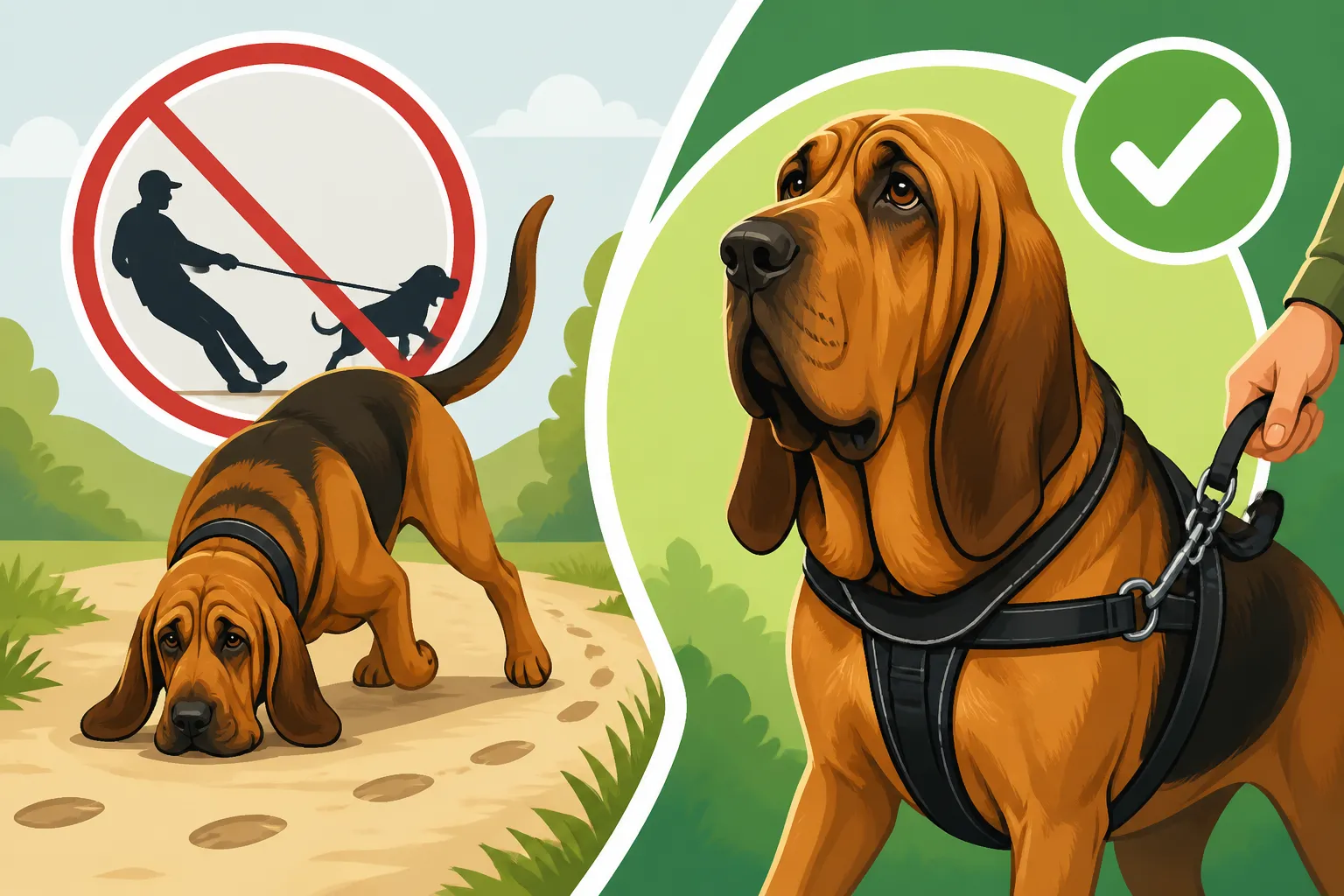
Why Off Leash Is Not a Goal With a Bloodhound
We all see those idyllic images: a dog frolicking through a field, ears flying, coming back to its owner with a joyful wag the moment it's called. As Bloodhound owners, or aspiring ones, we often dream of that same freedom for our beloved, wrinkly companions. But the truth is, for a Bloodhound, off-leash is rarely a safe or realistic goal, and understanding why is the first step toward a fulfilling life together. This guide will delve deep into the unique characteristics that make true off-leash reliability a pipe dream for most Bloodhounds, and what truly enriching alternatives exist.
The Bloodhound's Nose Reigns Supreme and Autonomous
Let's be honest, you chose a Bloodhound, in part, because of that magnificent nose. It's legendary, almost mythical, for a reason. What many don't fully grasp, however, is the sheer power and autonomy that nose possesses. It's not just a tool; it's practically a separate entity driving your dog's world. To ask a Bloodhound to ignore a compelling scent is akin to asking a human to ignore their own name being shouted in a crowded room – only ten thousand times more intense and biologically ingrained.
The Irresistible Call of Scent
Imagine walking into a bakery, the aroma of fresh bread, sweet pastries, and brewing coffee hitting you all at once. Now, multiply that sensory experience by what feels like a million. That's a tiny fraction of what your Bloodhound experiences every single second it's outdoors. Every blade of grass, every gust of wind, every pebble on the ground tells a story, a complex tapestry of scents that are utterly captivating. When a Bloodhound drops its nose to the ground, it's not just sniffing; it's reading a novel, deeply engrossed in a thrilling narrative that no human voice, no matter how beloved, can possibly compete with.
This isn't stubbornness; it's pure, unadulterated instinct. Their brains are wired to process scent information above all else, to follow a trail until its conclusion. It's their purpose, their art, their very existence. Once that nose is down and locked onto something interesting – be it the faint residue of a rabbit that passed by an hour ago, or the lingering scent of a stranger's forgotten glove – the world outside that scent stream fades to insignificance. The joy they derive from solving that olfactory puzzle is so profound that very little can pull them away from it.
A Different Kind of Intelligence
We often evaluate canine intelligence by their ability to obey commands quickly or perform complex tricks. A Bloodhound’s intelligence, however, operates on a completely different plane. Their genius lies in their unparalleled olfactory capabilities and their single-minded determination. While a Border Collie might excel at herding sheep on command, a Bloodhound's brilliance shines when it's meticulously untangling a cold trail across varied terrain.
This means their "listening" is contextual. They are incredibly smart problem-solvers when it comes to scent, but that doesn't always translate into conventional obedience in distracting environments. They understand your cues, they absolutely do, especially in a calm, low-distraction setting. But out in the big, wide, smelly world, their primary directive from deep within their DNA takes over. Their brain simply processes "scent first, human second" when a trail is active.
It can be incredibly frustrating for owners who've had other breeds that were easily recall-trained. You might think, "He knows 'come'! He does it perfectly in the house!" And you'd be right. But the house doesn't smell like a thousand distinct stories layered on top of each other, each one begging to be investigated. Outdoors, your voice becomes background noise to the symphony of scent, and their focus becomes an impenetrable tunnel vision.
Beyond Human Perception
We, as humans, cannot truly comprehend the depth and richness of a Bloodhound's scent world. We might smell a flower, but they smell the individual pollen grains, the insect that landed on it, the last person who walked past it, and the subtle changes in its chemical composition as it ages. It's a level of detail that would overwhelm us, but for them, it's their native language. To truly appreciate your Bloodhound, you have to accept that they perceive the world through a lens we can't replicate.
Their long, pendulous ears, often referred to as "hear-flaps," actually serve a crucial purpose in this olfactory dominance. They sweep scent molecules from the ground up towards the nose, enhancing their ability to pick up and concentrate a trail. This physical adaptation further illustrates how thoroughly their entire being is designed for scent work. When you see their ears swinging as they follow a trail, you're witnessing a biological marvel in action, one that makes it almost impossible for them to ignore their calling.
Understanding this profound difference in perception is key to letting go of the off-leash dream. It's not about your Bloodhound disrespecting you; it's about their physiological and instinctual imperatives being overwhelmingly powerful. For them, ignoring a scent is like us trying to ignore a loud fire alarm – it's just not how they're built.
Why Traditional Recall Fails a Bloodhound
The concept of a perfect recall is the holy grail for many dog owners, promising freedom and safety. For a Bloodhound, however, this promise often turns into a dangerous illusion. Their inherent nature and the sheer power of their nose make traditional recall training, especially in an uncontrolled environment, an exercise in futility and risk.
The Sensory Overload of the World
Think about the busiest, most chaotic environment you can imagine – a bustling city street, a crowded festival, a loud concert. For a Bloodhound, every patch of woods, every park, every open field is a sensory explosion, primarily of scent. They are bombarded with information, far beyond what our meager human noses could ever detect. The scent of a deer that passed hours ago, a squirrel that buried a nut last week, the residue of countless human footsteps – it's all there, a rich, complex mosaic waiting to be deciphered.
In this state of sensory overload, your voice, no matter how loud or enticing, becomes just another sound in the cacophony. It's like trying to get your attention by whispering across a football stadium during a touchdown. Their auditory processing is simply overshadowed by their olfactory drive. Why Recall Fails on a Bloodhound Outdoors isn't a training flaw; it's a fundamental biological reality. Their focus is completely externalized and directed downward, making it incredibly challenging to re-engage their attention once they've locked onto a scent.
This isn't to say a Bloodhound can't learn to respond to its name or basic cues. In a quiet backyard with no distractions, they often do beautifully. But step outside that controlled environment, and their world transforms into an irresistible buffet of scent. Expecting them to ignore that for a "come" command is asking them to betray their very nature, a nature that has been honed over centuries for one singular purpose.
Prioritizing the Trail Over You
Many dogs are motivated by their owners – by praise, treats, toys, or simply the desire to please. Bloodhounds also value their human companions deeply, but when a trail is present, their priority shifts dramatically. The chase, the puzzle, the inherent reward of following a scent becomes the paramount motivator. No treat, no matter how high-value, no toy, no matter how squeaky, can consistently compete with the primal satisfaction of a fresh, intriguing scent trail.
Imagine you're solving a complex Sudoku puzzle, completely absorbed. Someone calls your name; you might register it, but your brain is still primarily focused on the numbers. Now, imagine that Sudoku puzzle is a matter of life or death, and you have an instinctual, genetic imperative to solve it. That's closer to what your Bloodhound feels when their nose is on a trail. Their drive to follow is not a choice; it's an imperative.
This means that even if you've practiced recall religiously and your Bloodhound has shown progress, that progress is often conditional on the absence of a truly compelling scent. The moment they hit a trail that sparks their deep-seated instinct, you become secondary. It's not personal, it's physiological. They aren't being disobedient; they are being a Bloodhound.
The Bloodhound's Definition of "Emergency"
For us, an emergency might be our dog running towards a busy road, or disappearing over the horizon. Our recall command is an urgent plea for their safety. For a Bloodhound on a scent, not following that scent is the emergency. Their entire being is screaming "FOLLOW! FIND!" and anything that interrupts that mission is an obstacle, not a lifeline.
They literally do not process the same "danger" signals we do when they are trailing. Their focus is so intense and narrow that peripheral vision and auditory cues about threats like cars or other animals might simply not register until it's too late. How Far a Loose Bloodhound Will Travel can be astounding; they can cover miles in a surprisingly short amount of time, utterly oblivious to their surroundings, driven solely by the scent.
This profound difference in what constitutes an "emergency" for your Bloodhound highlights why off-leash experiences are fundamentally risky. You might perceive an open field as safe, but for them, it's a highway of scents, each one a potential path to somewhere far away and potentially dangerous. Without a physical tether, you simply don't have enough influence to override their innate drive when it truly matters.
The Dangers of Off-Leash Freedom
While the idea of a dog running free is romanticized, for a Bloodhound, it carries very real and often severe consequences. The very traits that make them incredible scent hounds are precisely what make off-leash freedom a perilous choice. It's not about being a killjoy; it's about protecting these dogs from their own instincts.
Traffic and Unseen Hazards
One of the most immediate and terrifying dangers of an off-leash Bloodhound is traffic. A Bloodhound with its nose to the ground is effectively blind and deaf to its surroundings. They do not look up to check for cars, they do not hear approaching vehicles over the whisper of scent, and they will absolutely follow a trail across a busy street without a second thought. Their focus is so singular that common sense and self-preservation instincts we attribute to other dogs simply don't apply when they're "on the job."
Beyond cars, there are countless other hazards lurking just out of sight. Untreated lawns sprayed with pesticides, discarded food that could be toxic, sharp objects, aggressive dogs, or even unexpected wildlife like coyotes. A Bloodhound's broad head and low-slung body make them exceptionally vulnerable to these ground-level dangers as they meticulously work a trail. The dream of a Bloodhound bounding joyfully through nature quickly becomes a nightmare when they disappear around a bend, hurtling toward an unseen danger, completely unresponsive to your frantic calls.
This isn't fear-mongering; it's a stark reality many Bloodhound owners have faced. The heartbreak of a lost or injured dog because of a momentary lapse in judgment regarding off-leash privileges is a heavy burden. It’s a gamble that, for a Bloodhound, has extremely poor odds due to their genetic programming.
Getting Truly Lost
A Bloodhound's incredible scenting ability can be a double-edged sword. While it makes them phenomenal trackers, it also means they can follow a compelling trail for miles, completely disoriented from their starting point. They might successfully track a deer through dense woods, across a stream, and over several ridges, only to "finish" their trail and realize they have no idea where home is. What a Bloodhound Does When It Loses the Trail is often just to wander, nose still seeking, further away from familiar territory.
Unlike some breeds who might eventually circle back or use their sight to navigate home, a Bloodhound's primary navigational tool is scent. If the home scent isn't strong, or if they've crossed water which can break a scent trail, they can quickly become irrevocably lost. The desperation of owners searching for a lost Bloodhound is palpable, knowing that their dog is simply following its nose into uncharted territory, unable to find its way back even if it wanted to.
This is where microchips and visible ID tags are absolutely critical, but even those are reactive measures. The best proactive measure is preventing them from getting lost in the first place. You might think "just a quick run in the park," but that one irresistible rabbit trail could lead them miles away before you even realize they're truly gone.
Legal and Community Implications
Beyond the immediate dangers to your Bloodhound, allowing them off-leash can lead to significant legal and community problems. Many areas have strict leash laws, and a large, uncontained Bloodhound, even one that is incredibly gentle, can be intimidating to others. Imagine a stranger encountering a 100-plus pound dog with a loud bay barreling towards them, even if it's just trying to sniff their shoes.
If your off-leash Bloodhound causes an accident, even indirectly (e.g., a driver swerving to avoid them), you could face severe legal repercussions, including fines, liability for damages, and even potential legal action. If your dog, driven by scent, damages property or harasses livestock, the consequences can be even more dire. Even if your Bloodhound is the sweetest dog on earth, its size and imposing appearance can cause fear, and fear can lead to complaints or worse.
Respecting leash laws isn't just about avoiding trouble; it's about being a responsible pet owner and a good neighbor. It protects your Bloodhound, other people, and your community. For these reasons, and the safety of all involved, off-leash access for Bloodhounds is almost universally discouraged in public spaces.
Realistic Alternatives to Off-Leash
Giving up the off-leash dream doesn't mean giving up on giving your Bloodhound a fulfilling life. In fact, by understanding their true nature, you can provide activities that are far more enriching and safe than unsupervised free-roaming. The key is to channel their natural instincts rather than fighting against them.
The Joy of the Long Line
If you want to give your Bloodhound the sensation of freedom and the ability to explore scents at their leisure, a long line is your absolute best friend. Forget the retractable leashes – those are prone to breaking, can cause rope burns, and offer little true control. We're talking about a proper 20, 30, or even 50-foot long line, typically made of durable nylon or biothane. Brands like Amazon offer a wide variety of lengths and materials for long lines, making it easy to find one that suits your needs.
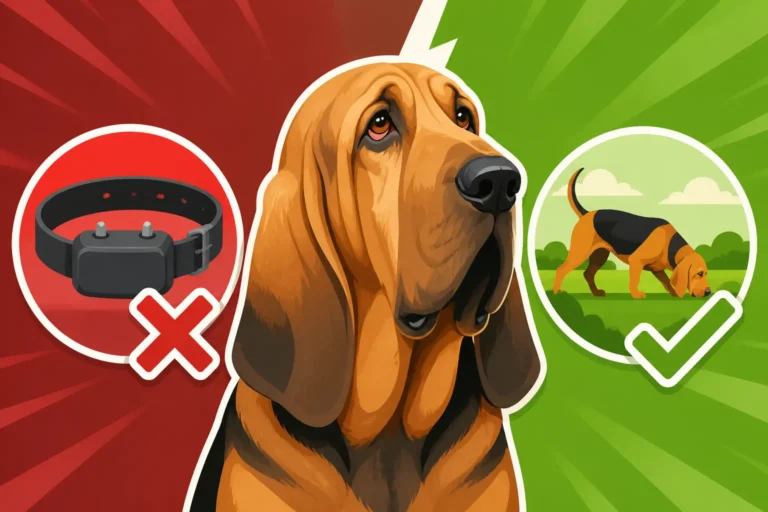
A long line allows your Bloodhound to roam, sniff, and follow a trail within a safe, controlled distance. You maintain contact, you can guide them away from hazards, and you can gently interrupt their focus when needed. It simulates off-leash freedom without the inherent risks. You can allow them to explore a vast field, track a fascinating scent line along a hiking trail, or just enjoy a more expansive sniffing experience in a park, all while knowing you have the ability to intervene if necessary.
Training with a long line is crucial. You'll want to practice holding the line, letting it drag, and reeling it in smoothly. It teaches your Bloodhound to "check in" with you even when at a distance, and it provides a safe way to practice a recall command with a safety net. The best part? Your Bloodhound will be exhausted and satisfied after a good long-line session, having engaged their most powerful sense to its fullest.
Securely Fenced Areas
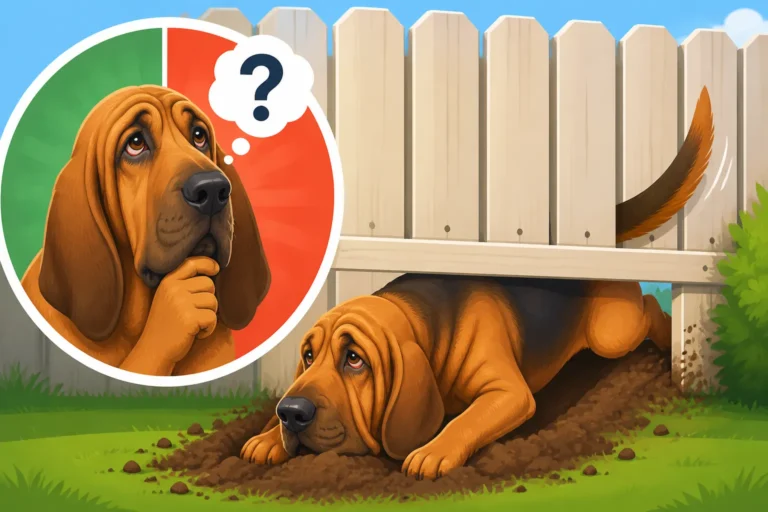
While a public off-leash park is generally not suitable for a Bloodhound, a securely fenced private property or a specially designed, very secure private dog park can offer a safe space for them to stretch their legs. The emphasis here is on "securely." Bloodhounds are surprisingly agile and can be master escape artists when their nose tells them there's something fascinating just beyond the fence. What Fencing Actually Holds a Bloodhound needs to be substantial – usually a minimum of six feet, and ideally with some measure to prevent digging underneath.
Even in a fenced yard, vigilance is key. Never leave a Bloodhound unsupervised for long periods, as boredom combined with an intriguing scent from outside the fence can motivate them to find a weakness. Regularly inspect your fencing for any weak spots, loose boards, or areas where they might be trying to dig. A sturdy, escape-proof fence gives them room to run, play, and engage in some self-directed sniffing within a contained environment, providing a much-needed outlet for their energy without the anxiety of them disappearing.
Specialized Scent Work
This is where your Bloodhound truly shines and where you can build an incredible bond rooted in their natural abilities. Instead of trying to suppress their nose, embrace it! Mantrailing, scent detection, and tracking are natural fits for Bloodhounds and offer unparalleled mental and physical stimulation. Mantrailing Is the Answer to a Bloodhound, Not Obedience because it allows them to fulfill their deepest genetic programming.
You can start simple: hide treats around the house or yard and encourage them to find them. As they progress, you can enroll in classes or join local groups that teach proper mantrailing or scent work techniques. This involves teaching your dog to follow a specific human scent trail, often using a "scent article" from the person they are looking for. It's a structured, safe, and incredibly rewarding activity that taps directly into their genius. Organizations like BAXTER & Bella offer online resources that can help new owners understand how to begin engaging their dogs in mentally stimulating activities, though specialized scent work often benefits from in-person instruction.
Engaging your Bloodhound in scent work gives them a "job," which is deeply satisfying for them. It tires them out mentally far more effectively than a simple walk and reinforces your bond as you work together as a team. It's also a fantastic way to meet other like-minded owners who appreciate the unique gifts of their scent hounds.
Training Strategies for a Leash-Reliant Life
Since off-leash freedom isn't the goal, our training strategies for Bloodhounds shift focus dramatically. Instead of striving for perfect recall in the wilderness, we aim for impeccable leash manners, strong engagement in distracting environments, and a deep understanding of their unique learning style. It's about working with their nature, not against it.
Building a Strong Foundation on Leash
The leash is your Bloodhound's lifeline and your primary tool for safety and communication. Therefore, investing heavily in leash training from puppyhood is paramount. This isn't just about preventing pulling; it's about fostering a consistent, comfortable connection between you and your dog. Start with loose-leash walking in low-distraction environments, rewarding every moment your Bloodhound walks politely by your side.
Use positive reinforcement heavily. When your Bloodhound chooses to look at you, even for a split second, reward them generously. Practice sudden changes of direction, encouraging them to stay attentive. Teach them a "watch me" cue that gets their eyes on you even amidst tempting smells. This early foundation builds the habit of checking in with you, even when their nose is busy. It's about making you more interesting than the ground, at least occasionally.
Don't be afraid to use different types of leashes and harnesses to find what works best. A well-fitting front-clip harness can greatly reduce pulling, making walks more enjoyable for both of you. A standard flat collar with an ID tag is a must, but a harness provides better control for a dog as powerful and driven as a Bloodhound. Focus on making the leash a positive experience, not a constant struggle.
Engagement and Reward Systems
Bloodhounds are highly motivated by scent, food, and often, praise from their beloved people. When training, leverage these motivators. Keep your training sessions short, frequent, and fun. Long, repetitive drills will bore a Bloodhound and make them "tune out." They prefer novel problems to solve, especially if scent is involved.
Use high-value treats that are irresistible – cooked chicken, cheese, hot dogs – something they rarely get. Vary your rewards. Sometimes it's a treat, sometimes it's a quick game with a favorite toy, sometimes it's just enthusiastic praise. The goal is to keep them guessing and keep you interesting. Consider incorporating scent games into your training, even if it's just dropping a few treats in the grass for them to find as a reward for a good "sit."
Engagement is also about you. Be animated, use an encouraging tone, and make yourself exciting. If you're dull, the ground will always win. Practice calling their name in exciting ways, rewarding them generously when they look at you. The more you can capture and hold their attention in varying environments, the stronger your connection will be, even if it doesn't translate into perfect recall off-leash.
Understanding the Bloodhound's Learning Style
Bloodhounds are not traditionally "biddable" in the same way a retriever might be. They are independent thinkers, problem-solvers, and they have an innate drive that supersedes many learned behaviors in certain contexts. This doesn't mean they're untrainable; it just means you need a different approach. Patience is your greatest virtue when training a Bloodhound.
They often need a moment to process a command before responding. Don't expect instant reactions. Give them a few seconds. They're not being stubborn; they're analyzing, sometimes debating internally. Repetition is less effective than consistency and making the "right" choice inherently rewarding. Why a Bloodhound Ignores a Cue It Knows isn't necessarily defiance, but a prioritization of internal drives.
Think of training as a partnership where you guide their immense talents rather than trying to stifle them. Embrace their sniffing. Incorporate it into your walks by giving them "sniff breaks" where you stop and let them thoroughly investigate a particularly interesting spot. Recognize that their deep dives into scent are a form of mental enrichment. This acceptance and understanding will foster a much stronger bond than constant frustration.
Equipment Essentials for Bloodhound Safety
Living a safe and happy life with a Bloodhound, especially when off-leash is not an option, requires the right gear. These tools aren't just for control; they're for safety, communication, and peace of mind. Investing in high-quality, reliable equipment is non-negotiable for any Bloodhound owner.
Harnesses, Collars, and Leashes
For a Bloodhound, a sturdy, well-fitting harness is often a better choice than a collar for walks, especially for powerful pullers. A front-clip harness, which redirects pulling power to the side, can be incredibly effective in managing their strength without putting pressure on their delicate trachea. Look for harnesses with multiple points of adjustment to ensure a snug, escape-proof fit, as Bloodhounds can be surprisingly adept at backing out of ill-fitting gear.
A flat collar, however, is still essential. It should always be worn with identification tags that include your phone number. This is your Bloodhound's primary form of identification if they ever do get loose. Make sure the collar is snug enough that it can't slip over their head easily, but loose enough for comfort. For training, some owners may also use head halters for added control, but these require careful introduction and proper fit.
When it comes to leashes, forget the flimsy ones. You need a strong, durable leash, at least six feet long, with a reliable clasp. Biothane leashes are excellent as they are waterproof, easy to clean, and offer a good grip. As discussed, long lines (20-50 feet) are also invaluable for providing a sense of freedom in controlled environments. Always carry two leashes on walks – one for standard control and a backup in case of emergency or for tandem walking in highly stimulating areas. Which Harness a Bloodhound Trails In is also a specific type of padded harness designed for comfort during long scenting sessions.
Here's a quick comparison of popular leash/collar types:
| Equipment Type | Pros | Cons | Best Use Cases |
|---|---|---|---|
| Flat Collar | Good for ID tags; basic control | Can cause tracheal pressure if dog pulls; easy to slip out of | Everyday ID; low-distraction walking |
| Front-Clip Harness | Reduces pulling; comfortable; good control | Can tangle legs if not fitted well; not for ID tags primarily | Walking, training, strong pullers |
| Back-Clip Harness | Comfortable; good for dogs not prone to pulling | Can encourage pulling; less control over head | Casual walks for non-pullers; car restraint |
| Head Halter | Excellent control over head; prevents pulling | Requires careful introduction; some dogs dislike it | Strong pullers; dogs needing head direction |
| Standard 6ft Leash | Versatile; good balance of control and freedom | Can be limiting for extensive sniffing | Daily walks; basic obedience training |
| Long Line (20-50ft) | Allows "off-leash" experience in control; safe exploration | Can tangle easily; requires careful handling; not for crowded areas | Parks, large fields, scent work |
GPS Tracking Devices
Given a Bloodhound's propensity to follow its nose far and wide, a GPS tracking device can be a literal lifesaver. These devices attach to your dog's collar and allow you to track their location in real-time via a smartphone app. While they shouldn't replace vigilant leash use, they offer an invaluable layer of security, especially if your Bloodhound were to slip its leash or dig out of a yard.
There are many reputable brands on the market offering features like geofencing (alerts when your dog leaves a set area), activity monitoring, and long battery life. While they do involve an initial cost and often a monthly subscription fee, the peace of mind they offer is immeasurable. Consider it an investment in your Bloodhound's safety. Whether a tracking collar is a smart consideration, particularly for those who live in areas with large properties or where the risk of escape is higher.
No technology is foolproof, but a GPS tracker significantly increases your chances of a swift reunion if the unthinkable happens. It’s particularly useful for those moments when a gate is accidentally left open or a squirrel proves too tempting in the backyard.
Preparing for the Unexpected
Even with the best equipment and training, accidents can happen. Being prepared for the unexpected is part of responsible Bloodhound ownership. This means having an emergency plan in place. Know the location of your nearest 24-hour veterinary emergency clinic. Keep their number, along with your regular vet's number, readily accessible.
Consider a pet first-aid kit, and familiarize yourself with basic canine first aid. Having a recent, clear photo of your Bloodhound is crucial for lost pet posters. Some owners even carry a small, loud whistle to try and gain their Bloodhound's attention in an emergency, though its effectiveness against a strong scent drive is limited. Having treats, their favorite toys, and even a "stinky" article of your clothing handy can be useful tools for coaxing a lost Bloodhound back.
Lastly, make sure friends, family, and dog walkers understand the critical importance of keeping your Bloodhound leashed and secure at all times. Educate them on the unique drive of the breed and the dangers of allowing them off-leash. Prevention is always the best approach, but preparation is key for those rare, terrifying moments when things go awry.
Embracing the Bloodhound's Unique Nature
Coming to terms with the reality that your Bloodhound probably won't be an off-leash companion can be a shift in perspective. But once you embrace their unique nature, a world of rich, fulfilling experiences opens up that truly celebrates what makes them special. It's about redefining what "freedom" means for this magnificent breed.
Redefining "Freedom"
For many dogs, freedom means running wild and playing fetch in an open field. For a Bloodhound, true freedom is the freedom to sniff. It's the ability to immerse themselves completely in the olfactory world, to follow a faint wisp of scent across a landscape, to piece together the stories written on the wind and ground. When their nose is engaged, and their brain is working to solve a scent puzzle, that is when a Bloodhound is most content, most stimulated, and most "free."
This freedom can be achieved safely with a long line in an appropriate area, or within the structured context of scent work. It means letting them lead the way on a sniffari walk, allowing them to dictate the pace and direction as they unravel the mysteries beneath their feet. It might not look like the typical dog park romp, but for your Bloodhound, it is infinitely more satisfying.
By shifting our definition of freedom from "off-leash running" to "unrestricted sniffing and trailing," we align our expectations with their genetic imperatives. This understanding not only makes for a happier Bloodhound but also a more harmonious relationship for the owner, reducing frustration and fostering a deeper appreciation for their incredible abilities.
The Bond Forged on a Line
Many assume that a dog constantly on a leash cannot form as strong a bond with its owner. For Bloodhounds, the opposite is often true. The leash, or long line, becomes an extension of your connection, a shared adventure. When you're working a long line, you are constantly communicating, guiding, and supporting your Bloodhound as they explore. You're a team, navigating the scent world together.
Think of it as a partnership. Your Bloodhound is the expert tracker, and you are their trusted guide, ensuring their safety and providing opportunities for them to use their talents. This collaborative experience builds immense trust and strengthens your bond in a way that independent off-leash running cannot. You become the source of their opportunities, the one who facilitates their greatest joy.
Moreover, managing a powerful Bloodhound on a leash requires consistent interaction, positive reinforcement, and a deep understanding of their body language. This constant engagement means you are always "in tune" with your dog, anticipating their moves and celebrating their discoveries. This active partnership fosters a unique and powerful connection that few other breeds experience in the same way.
Finding Fulfillment in Their Work
Bloodhounds were bred for work, for trailing, for solving complex scent problems. While not every Bloodhound owner will pursue competitive mantrailing or search and rescue, finding ways to engage their natural drive provides immense fulfillment for the dog. A bored Bloodhound is a destructive Bloodhound, or an anxious one, or one that constantly baying out of frustration.
Whether it's daily "sniffari" walks where they dictate the pace and thoroughly investigate every lamppost, or structured backyard scent games, or formal scent work classes, giving your Bloodhound a "job" for their nose is crucial. It taps into their primal satisfaction and channels their energy productively. When they are mentally stimulated by scent, they are often calmer and more content at home.
Remember, a tired Bloodhound isn't just physically tired; it's mentally satisfied from a good brain workout. Embrace the wonder of their nose, provide outlets for its incredible power, and you will unlock a level of canine companionship that is truly special and unique to the magnificent Bloodhound.
Common Misconceptions and Frustrations
Bloodhound ownership comes with its own set of unique challenges and deeply ingrained frustrations, often stemming from misunderstandings about the breed's fundamental nature. It's important to address these head-on, validating the owner's experience while gently correcting common misperceptions.
"They're just stubborn"
This is perhaps the most common complaint leveled against Bloodhounds, often uttered in exasperation after a dog has dragged its owner halfway down the street to investigate a particularly enticing scent. But to call a Bloodhound "stubborn" is to fundamentally misunderstand their purpose and drive. They aren't defying you out of malice or spite; they are simply operating on a different set of priorities. Whether a Bloodhound Is Stubborn or Just Busy is a crucial distinction.
When a Bloodhound locks onto a scent, their brain is in a state of intense focus. Their internal drive to follow that trail is incredibly powerful, overshadowing almost all other stimuli. What looks like stubbornness to us is, for them, an unshakeable commitment to their genetic calling. Their refusal to "come" or "leave it" when on a hot trail isn't a sign of disrespect; it's a demonstration of their profound dedication to scent.
Instead of fighting this "stubbornness," we need to learn to manage it. This means using appropriate equipment, practicing engagement in lower distraction environments, and ultimately, accepting that their nose will, at times, win. By reframing it as immense focus and drive rather than stubbornness, we can approach training and daily life with more patience and empathy.
"But my last dog was off-leash!"
This is a sentiment often heard from experienced dog owners who are new to Bloodhounds. They've successfully trained retrievers, collies, or even terriers to be reliable off-leash, and they naturally assume a Bloodhound will be no different. This leads to immense frustration when their new Bloodhound consistently fails to meet these expectations.
The truth is, a Bloodhound is not "just another dog" when it comes to off-leash reliability. Their scent drive is so overwhelmingly powerful and all-consuming that it fundamentally alters their ability to respond to commands in distracting environments. It's not about your skill as a trainer; it's about the breed's inherent genetic makeup. You're comparing apples and oranges, or rather, a highly biddable herding dog to a single-minded scent hound.
It's okay to mourn the loss of the off-leash dream you might have had, especially if you're used to it. But it's crucial to acknowledge that this breed operates on a different rulebook. Embracing this difference, rather than trying to force a Bloodhound into a mold they weren't designed for, will lead to a much happier experience for both you and your dog. Focus on their strengths and redefine your goals based on who they truly are.
The Baying That Means Business
Bloodhounds are known for their distinctive bay – a deep, resonant, mournful sound that can carry for miles. While charming in theory, it can quickly become a source of frustration for owners and neighbors alike, especially if the dog bays constantly. The Baying a Bloodhound Cannot Be Trained Out Of is something every potential owner needs to understand.
Bloodhounds bay for a variety of reasons: to alert, to express excitement, to call out to other dogs, and most notably, when they are on a trail. When they're focused on a scent, that bay can be an intense, sustained vocalization that signals their commitment to the hunt. It's a natural, instinctual part of their work.
Trying to "train out" the bay completely is futile and goes against their nature. Instead, focus on understanding why your Bloodhound is baying. Are they bored and under-stimulated? Are they picking up a scent they desperately want to follow? Are they anxious or lonely? Addressing the root cause can help manage excessive baying. Provide plenty of mental and physical exercise, particularly scent work, and ensure they feel secure. While you can teach a "quiet" cue, especially in the house, expecting them to be silent when their nose is fully engaged outdoors is often an unrealistic expectation. Accepting their vocalizations as part of their unique charm (within reason) is part of loving a Bloodhound.
Disclaimer
This article is for general informational purposes only and does not constitute professional advice. Laws, prices and regulations vary by location and change over time. Consult a qualified professional for guidance on your specific situation.