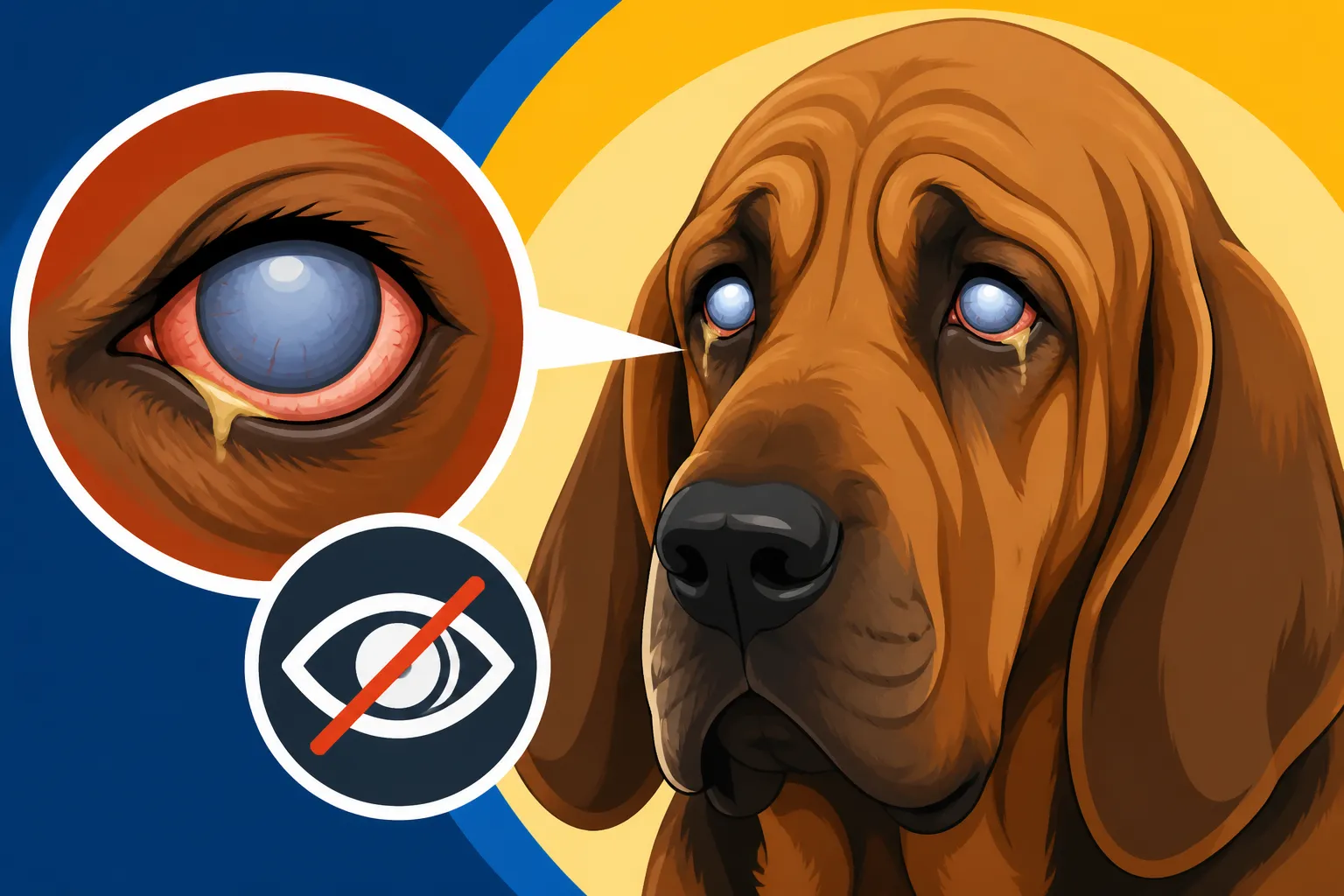
Whether a Bloodhound Goes Blind From Untreated Dry Eye
It's incredibly frightening to think about your beloved Bloodhound experiencing pain, much less losing their precious sight. Dry eye, medically known as Keratoconjunctivitis Sicca (KCS), is a chronic and often misunderstood condition that can cause significant discomfort and, if left unchecked, can indeed lead to permanent blindness. This guide is here to walk you through what dry eye means for your Bloodhound, the severe risks of not treating it, and most importantly, how we can work to protect their vision.
Understanding Canine Dry Eye in Bloodhounds Keratoconjunctivitis Sicca – KCS
When you look into your Bloodhound's soulful eyes, you see intelligence and affection, but also, for many, the distinct characteristics of their breed. What you might not immediately realize is that those very features, combined with genetic predispositions, can make them particularly susceptible to certain health issues, including dry eye. It's not just a minor irritation; it's a serious condition that deserves our full attention.
What Exactly is Dry Eye?
Imagine your own eyes feeling gritty, burning, and constantly irritated. That's a glimpse into what a dog with dry eye might experience every single day. The surface of a healthy eye relies on a complex tear film, essentially a natural lubrication system, to stay moist, clean, and protected. This tear film isn't just water; it's actually made up of three crucial layers: an oily outer layer that prevents evaporation, a watery middle (aqueous) layer that provides moisture and nutrients, and an inner mucous layer that helps the tears stick to the eye's surface.
When we talk about Keratoconjunctivitis Sicca, or KCS, we're primarily referring to a deficiency in that crucial aqueous layer. For most Bloodhounds, and dogs in general, this isn't simply a case of "not enough tears" but rather a failure of the lacrimal glands (the main tear-producing glands) to produce the watery component adequately. This often stems from an immune-mediated process where the dog's own immune system mistakenly attacks and damages these glands. Other, less common causes can include certain medications, nerve damage, or even a congenital inability to produce tears from birth. When this watery layer is compromised, the eye is left vulnerable, exposed, and prone to severe damage.
Why Bloodhounds Are Particularly Prone to Dry Eye
Bloodhounds, like many purebred dogs, carry genetic predispositions to certain conditions, and immune-mediated diseases are unfortunately on that list. This makes them statistically more likely to develop KCS due to their own immune system attacking their tear glands. It's a cruel irony that a condition directly impacting their vision is more prevalent in a breed known for its incredible sensory abilities.
Beyond the internal immune factors, a Bloodhound's distinctive facial structure can also play a role in exacerbating dry eye symptoms, even if not directly causing the KCS itself. Their characteristic loose, drooping eyelids, a condition often referred to as :What Ectropion Looks Like on a Bloodhound:, can mean that their eyes are more exposed to the elements. This increased exposure can lead to faster evaporation of whatever precious tears they do produce, further contributing to dryness and irritation. While ectropion isn't the root cause of KCS, it certainly doesn't help an already struggling tear film. Understanding these breed-specific factors is critical, and it’s why a Bloodhound owner should always be vigilant about their dog's eye health, much like being aware of :The Four Eye Problems a Bloodhound Is Born Toward: that the breed commonly faces.
The Progression of Untreated Dry Eye and the Risk of Blindness
It's easy to dismiss a bit of redness or discharge from your dog's eyes as a passing irritation, perhaps from dust or allergies. But with a Bloodhound, especially given their predisposition, it's a mistake we simply can't afford to make. Untreated dry eye is not just uncomfortable; it's a relentless assault on the eye, and the consequences escalate dramatically over time, ultimately risking their ability to see the world around them.
Early Signs and Initial Damage
In the beginning, dry eye can be subtle. You might notice your Bloodhound blinking more, or squinting slightly, especially in bright light. There might be some general redness in the whites of their eyes and around the conjunctiva. This early discomfort is caused by the constant friction between the eyelids and the dry surface of the eyeball, which lacks the smooth gliding provided by a healthy tear film.
One of the most characteristic early signs, however, is the eye discharge. Unlike the clear, watery discharge you might see with mild irritation, KCS often produces a thick, stringy, yellowish or greenish mucous. This isn't just unsightly; it's a direct result of the eye trying to compensate for the lack of aqueous tears by overproducing the mucous layer. This thick discharge not only builds up and obstructs vision but also creates a perfect breeding ground for bacteria, leading to frequent secondary infections. The absence of proper tear flushing means that debris, allergens, and bacteria are no longer being washed away, further compounding the irritation and inflammation. This is why paying close attention to :Signs a Bloodhound Has Dry Eye: is so vital. If you're seeing this kind of discharge, coupled with other symptoms, it's a clear signal to get to the vet promptly. Without intervention, this constant irritation begins to damage the delicate corneal surface, setting the stage for more serious problems down the line.
Advanced Stages and Vision Loss
As KCS progresses without proper treatment, the initial irritation and discomfort give way to profound and often irreversible damage to the cornea – the transparent outer layer of the eye through which light must pass. The chronic inflammation and lack of lubrication cause the cornea to undergo several changes, each one further compromising vision.
First, you'll start to see a condition called melanosis, where black or brown pigment spreads across the cornea. This pigmentation is the eye's attempt to protect itself from chronic irritation, but it's a self-defeating mechanism, as it literally blocks light from entering the eye. Simultaneously, the eye will try to heal itself by growing blood vessels across the corneal surface (vascularization), which again, impairs transparency. The cornea will also thicken and develop scar tissue, creating a cloudy, opaque appearance instead of the clear window it's supposed to be. All these changes work together to diminish vision, making the world a blurry, darker place for your Bloodhound.
The most acute danger, however, comes from corneal ulcers. The dry, damaged surface is incredibly susceptible to even minor trauma or bacterial infection, leading to open sores on the cornea. These ulcers are excruciatingly painful and can quickly deepen, potentially perforating the eyeball. A perforated ulcer is an emergency that can lead to severe internal eye infections, complete loss of the eye, and indeed, permanent blindness. It's a stark reality: untreated dry eye is not just a nuisance; it is a direct and undeniable pathway to permanent vision loss in Bloodhounds. The cumulative effect of pigmentation, scarring, and ulceration means that light simply cannot reach the retina, leaving your dog blind.
Treatment and Management: Protecting Your Bloodhound's Sight
The good news, thankfully, is that dry eye in Bloodhounds is a treatable condition. While it often requires lifelong management, with consistent care and the right approach, we can prevent the devastating progression to blindness and significantly improve your Bloodhound's comfort and quality of life. The key is early diagnosis and unwavering commitment to the prescribed regimen.
Medical Management of KCS
The cornerstone of treating dry eye in Bloodhounds involves medications that directly address the underlying cause: the compromised tear production. The most effective treatments are topical tear stimulants, primarily cyclosporine (often known by brand names like Optimmune or Restasis) or tacrolimus. These medications aren't just artificial tears; they work by suppressing the immune response that is attacking the tear glands, thereby stimulating the glands to produce more of their natural, healthy tears. It's a slow process, often taking weeks to see significant improvement, but the results can be remarkable, halting the progression of the disease and sometimes even reversing some of the corneal damage. The commitment to these medications is indeed lifelong, as :Whether a Bloodhound With Dry Eye Needs Drops for Life: explains, because stopping them will almost certainly lead to a relapse.
In addition to tear stimulants, your veterinarian may prescribe artificial tears and lubricating ointments. These are crucial for providing immediate relief and additional moisture, especially during the initial treatment phase or on days when your Bloodhound's eyes seem particularly dry. Anti-inflammatory drops, such as those containing corticosteroids, might also be used cautiously and for short periods to reduce severe inflammation, though they are usually not a long-term solution, especially if an ulcer is present. Regular check-ups with your vet or a veterinary ophthalmologist are non-negotiable to monitor progress, adjust dosages, and catch any secondary issues early. It’s also important to be realistic about the financial commitment to these long-term medications, as :What a Bloodhound's Dry Eye Medication Costs Monthly: can add up over the years. This is where a robust pet insurance plan, like those offered by Healthy Paws, can be incredibly helpful in offsetting the ongoing costs of chronic conditions.
Surgical Options and Supportive Care
While medical management is usually the first and most effective line of defense, there are surgical considerations for severe cases of KCS that don't respond adequately to medication. One such option is parotid duct transposition. This is a complex surgical procedure where a salivary gland duct from the mouth is redirected to the eye, essentially replacing the deficient tear production with saliva. While it sounds like a miracle cure, it's typically reserved as a last resort due to potential complications, such as mineral deposits forming on the cornea from the saliva, or the eye becoming too wet, leading to skin irritation around the eyelids. It's a significant undertaking and one that a veterinary ophthalmologist would only recommend after all other avenues have been exhausted.
Beyond specific medical and surgical interventions, daily supportive care at home is absolutely vital for managing KCS and preventing complications. This includes meticulous daily eye cleaning to remove any accumulated discharge, which as we discussed, can become a breeding ground for bacteria. Your vet can show you the best techniques for :Daily Eye Care for a Bloodhound: using gentle, veterinary-approved solutions. This also helps reduce irritation and keeps the eyes as comfortable as possible. Ensuring your Bloodhound's eyes are always clean is a fundamental part of preventing secondary infections that could exacerbate damage.
Consider this table for a quick overview of symptoms and treatment focus:
| Symptom Severity | Common Signs | Primary Treatment Goals | Expected Outcome (with treatment) | Risk of Blindness (with treatment) |
|---|---|---|---|---|
| Mild KCS | Redness, occasional squinting, clear/mild discharge | Stimulate tear production, reduce inflammation, lubricate | Improved comfort, stabilized tear film | Low |
| Moderate KCS | Persistent redness, thick mucous discharge, pain, early corneal changes (dullness, some pigment) | Aggressive tear stimulation, anti-inflammatories, antibiotics for infection, frequent lubrication | Significant improvement, halt progression, some reversal of changes | Moderate, if inconsistent treatment |
| Severe KCS | Extreme pain, heavy discharge, extensive corneal pigmentation & scarring, ulcers | Intensive medical therapy, potential surgery (parotid duct transposition), aggressive infection control | Preservation of remaining vision, improved comfort, prevention of further damage | High, if inadequate treatment |
Ultimately, managing dry eye in your Bloodhound requires patience, consistency, and a strong partnership with your veterinary team. But with diligence, you can ensure your beloved companion continues to see the world clearly and enjoy a comfortable, happy life.
Disclaimer
The information provided in this article is for general informational purposes only and is not intended as a substitute for professional veterinary advice, diagnosis, or treatment. Always seek the advice of your veterinarian or other qualified animal health provider with any questions you may have regarding a medical condition or the health and welfare of your Bloodhound.