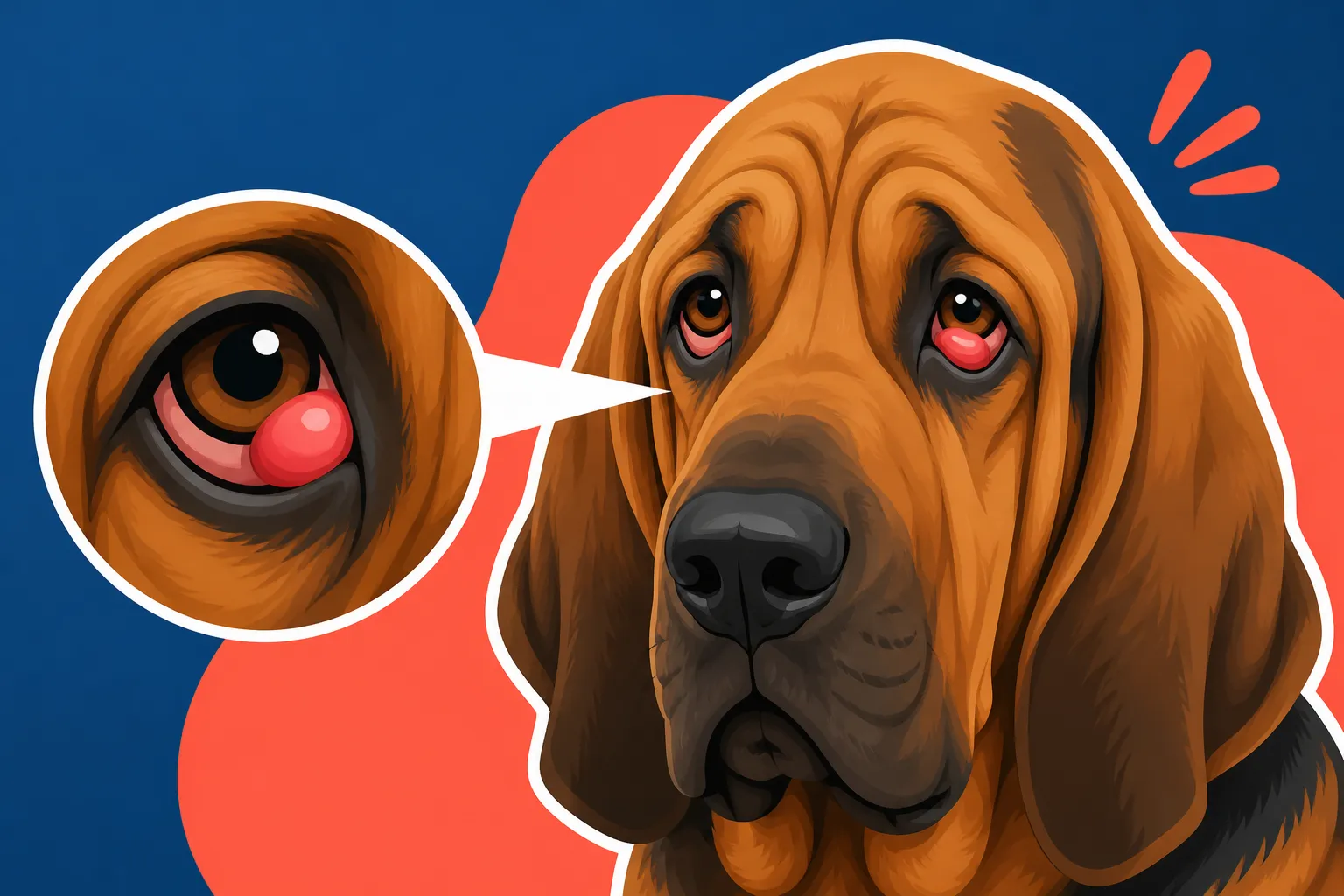
Cherry Eye in a Bloodhound
Few things are as startling to a Bloodhound owner as looking at your beloved companion and seeing a bright red, fleshy mass suddenly protruding from the corner of their eye. It’s an alarming sight that often sends a wave of panic, imagining the worst for your gentle giant. This guide is here to walk you through exactly what "cherry eye" is, why it's so common in Bloodhounds, and most importantly, how to tackle it head-on with confidence and care.
Understanding Cherry Eye in Bloodhounds: What It Is and Why It Happens
Cherry eye, medically known as a prolapse of the nictitating membrane gland, is one of those conditions that can sneak up on you and leave you wondering what in the world just happened to your Bloodhound’s eye. It looks dramatic, but understanding the underlying anatomy and predisposition can help demystify it.
The Anatomy of a Bloodhound's Third Eyelid
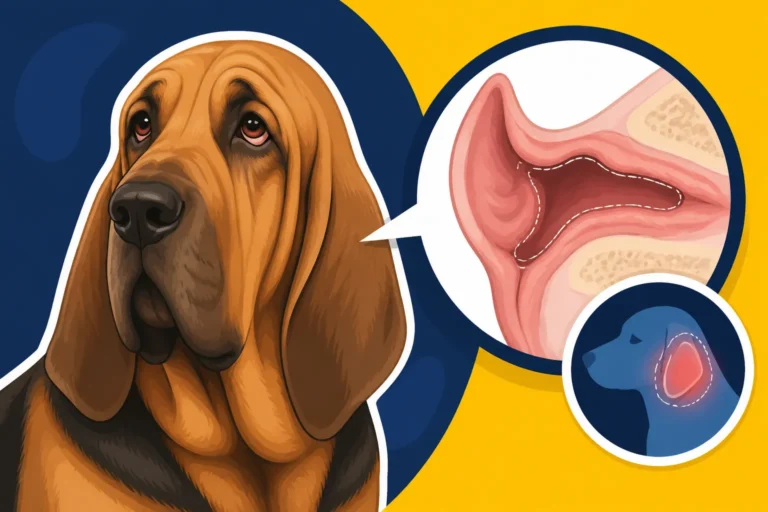
Every dog, including our floppy-eared Bloodhounds, possesses a "third eyelid," also called the nictitating membrane. This isn't just a random flap of tissue; it's a vital, T-shaped structure located in the inner corner of their eye, closest to their nose. Its primary role is multifaceted: it sweeps across the eye, acting like a windshield wiper to clear away debris, and crucially, it houses a gland responsible for producing a significant portion—about 30-50%—of the eye's tear film. These tears are absolutely essential for lubricating the eye, flushing out irritants, and maintaining overall ocular health.
When everything is working as it should, this third eyelid and its precious tear gland remain tucked neatly out of sight. You might catch a glimpse of it if your Bloodhound is particularly tired, drowsy, or under the effects of anesthesia, as it momentarily sweeps across the cornea. However, it should never be a prominent feature of their awake, alert eye. The gland within this membrane is delicate, and its proper function is critical to preventing conditions like Dry Eye in a Bloodhound, which can be incredibly uncomfortable and damaging if left untreated.
Why Bloodhounds Are Predisposed to Cherry Eye
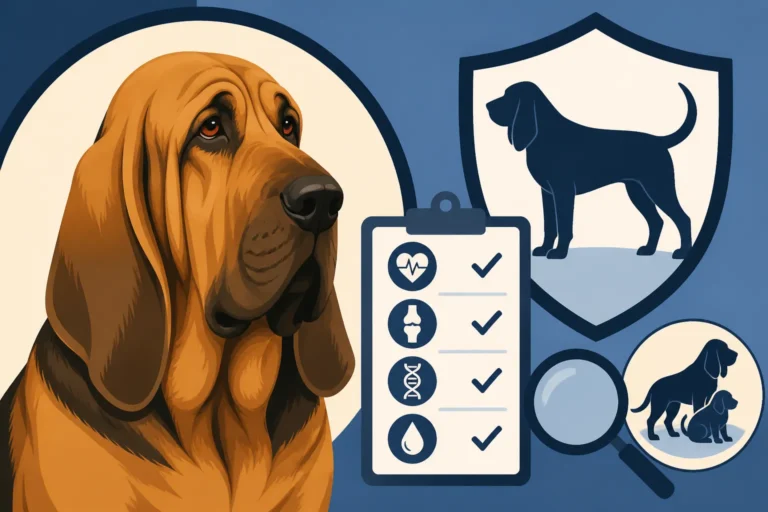
So, why do Bloodhounds, specifically, seem to draw the short straw when it comes to cherry eye? It largely comes down to genetics and the unique conformation of their eyes. Certain breeds, and Bloodhounds are definitely on that list, have a genetic predisposition to weaker connective tissue that is supposed to anchor the gland of the third eyelid in its correct position. Think of it like a tiny, vital organ held in place by microscopic ligaments and fascia – if those "guy wires" are loose or brittle, the gland can pop out.
When this connective tissue fails, the gland detaches from its normal anchorage points behind the lower eyelid and "prolapses," or pops out. It then becomes visible as that distinctive red mass. It's not an infection, per se, though it can certainly become irritated and inflamed once exposed. Instead, it's a structural defect, an unfortunate inherited trait that means the gland just isn't held as securely as it should be. It can occur in one eye or both, and while it often manifests in younger Bloodhounds (typically before they are two years old), it can technically happen at any age. The sudden appearance can be startling, but rest assured, it’s a relatively common issue for these wonderful hounds.
Differentiating Cherry Eye from Other Eye Issues
Given that Bloodhounds are prone to a few different eye issues, it’s understandable to feel overwhelmed and confused when something looks "off." The good news is that cherry eye usually presents in a very distinct way, making it somewhat easier to differentiate from other common conditions. Unlike general conjunctivitis, which is an inflammation of the pink tissues around the eye, cherry eye involves the actual prolapse of the gland itself. With conjunctivitis, you'll see redness, perhaps some discharge, and irritation, but not that tell-tale fleshy mass.
Similarly, eye tumors, while a concern for any breed, tend to grow slowly over time and will have a different appearance and texture than the smooth, round "cherry." Another common Bloodhound eye issue is What Ectropion Looks Like on a Bloodhound, where the lower eyelid droops outward, exposing the conjunctiva. This might make the eye look red and watery, but again, there’s no prolapsed gland. Then there’s What Entropion Does to a Bloodhound's Eye, where the eyelid rolls inward, causing eyelashes to rub against the cornea, leading to irritation and pain. While these conditions can all make your Bloodhound uncomfortable and require veterinary attention, cherry eye typically stands out due as a specific, often sudden, red protrusion. If you're unsure, always err on the side of caution and consult your vet.
Spotting the Signs: How to Identify Cherry Eye in Your Bloodhound
Identifying cherry eye is often straightforward because its appearance is so characteristic. However, knowing what to look for beyond just the "cherry" can help you catch it early and understand the urgency of the situation.
The Classic Red Mass
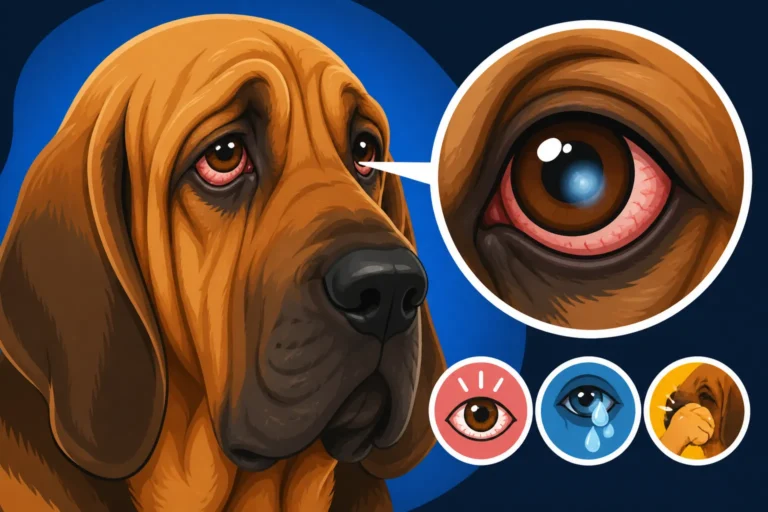
The most unmistakable sign of cherry eye is the presence of a small, round, fleshy, reddish mass in the inner corner of your Bloodhound's eye. It genuinely looks like a miniature cherry or a small, pink bubble that has popped out from beneath the third eyelid. This is the gland itself, now exposed to the air and often irritated. Sometimes, it might appear intermittently, receding back into place only to pop out again, especially if your Bloodhound rubs their eye or gets excited.
Initially, the mass might be light pink, but with continued exposure to air and irritation from your Bloodhound pawing at it, it will typically become redder and more swollen. It's important to remember that even if it's small or only appears occasionally, it still indicates a prolapsed gland that needs attention. Don't assume it will just go away on its own, because unfortunately, it rarely does for good.
Accompanying Symptoms and Changes
While the red mass is the primary indicator, a Bloodhound with cherry eye will often display other symptoms that signal their discomfort. You might notice them pawing at their face more frequently, rubbing the affected eye against furniture or the ground, or even squinting. This is a clear indication that the exposed gland is causing irritation, which is completely understandable! The delicate tissues aren't meant to be exposed to the elements.
You might also observe an increase in tearing or a mucous-like discharge from the eye. This is partly due to irritation and partly because the exposed gland isn't functioning optimally, leading to an imbalance in tear production and drainage. The conjunctiva (the pink tissue lining the eyelids) surrounding the prolapsed gland will also likely appear red and inflamed. In severe cases, or if the gland remains prolapsed for a long time, its function can be compromised, potentially leading to chronic dry eye. Monitoring these accompanying symptoms is crucial for understanding the severity of the situation and relaying accurate information to your veterinarian.
When to Seek Veterinary Attention
When you notice a cherry eye, it's not something to put off. While not an immediate, life-or-death emergency like bloat (How Fast Bloat Kills a Bloodhound), it is definitely an urgent matter that requires prompt veterinary attention. The longer the gland remains prolapsed and exposed, the more inflamed and potentially damaged it becomes. Prolonged exposure can lead to swelling, making it harder to reposition, and increasing the risk of the gland drying out and losing its vital tear-producing function.
Damage to this gland can lead to keratoconjunctivitis sicca (KCS), or "dry eye," a chronic and often debilitating condition that requires lifelong medication. Therefore, as soon as you spot that characteristic red mass, make an appointment with your veterinarian. They will confirm the diagnosis, assess the severity, and discuss the best course of action. Early intervention is key to preserving the health and function of the gland and ensuring your Bloodhound remains comfortable.
Treatment Options for Cherry Eye: From Medical Management to Surgery
Once cherry eye is diagnosed, your vet will discuss the best treatment approach. While initial medical management might be attempted, surgical correction is almost always the most effective and long-term solution for Bloodhounds.
Initial Medical Approaches: Managing Inflammation
In some very mild or recent cases of cherry eye, your veterinarian might suggest an initial course of medical management. This typically involves using topical anti-inflammatory eye drops or ointments, sometimes combined with antibiotics if a secondary bacterial infection has developed due to irritation and exposure. The goal of these medications is to reduce the swelling and inflammation of the prolapsed gland, which can sometimes make it easier for the gland to slip back into place on its own, or to be manually repositioned by the vet.
Manual repositioning, where the vet gently attempts to massage the gland back into its rightful spot, can be tried. However, for most Bloodhounds, especially those with a strong genetic predisposition and weak connective tissue, medical management and manual repositioning are usually only temporary fixes. The underlying structural weakness remains, meaning the gland is highly likely to prolapse again. It’s important not to try and force the gland back yourself, as you could cause further damage. Think of these medical approaches as a way to "calm things down" before addressing the root of the problem, which is almost always surgical.
Surgical Correction: The Gold Standard
For most Bloodhounds experiencing cherry eye, surgical correction is considered the gold standard treatment. The main goal of surgery is not to remove the gland—that would be a critical mistake often leading to severe dry eye—but rather to reposition it back into its normal anatomical location and secure it there. The most common and successful surgical technique is known as the "pocket technique" or "Morgan Pocket Technique." In this procedure, the veterinarian creates a small pocket in the conjunctiva (the pink tissue) behind the third eyelid, tucks the prolapsed gland into this newly formed pocket, and then sutures the tissue closed over it. This essentially creates a new anchor for the gland, preventing it from prolapsing again.
Another technique is the conjunctival flap technique, which also involves securing the gland. These procedures require general anesthesia, as the eye is a very delicate structure, and the dog must remain completely still. It’s crucial that the surgery is performed by an experienced veterinarian, or ideally, a veterinary ophthalmologist, to maximize the chances of success and minimize complications. For example, some owners ask Whether a Bloodhound's Cherry Eye Should Be Tucked or Removed, and the answer is almost always to tuck it to preserve the gland. Understanding the intricacies of these procedures can alleviate some of the natural anxiety you might feel about your Bloodhound going under the knife.
Post-Operative Care and Potential Complications
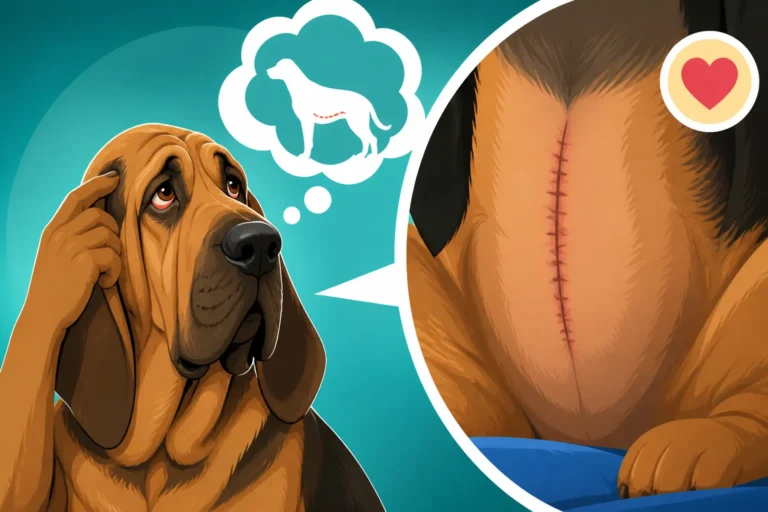
Just like any surgery, proper post-operative care is absolutely vital for a successful recovery from cherry eye correction. Your Bloodhound will likely need to wear an Elizabethan collar (E-collar or "cone of shame") for a couple of weeks to prevent them from rubbing or scratching at the surgical site, which could reopen sutures or introduce infection. You'll also be sent home with a regimen of medications, which usually include oral pain relief, antibiotics, and anti-inflammatory eye drops or ointments. Administering these as prescribed, even if your Bloodhound seems uncomfortable with eye drops, is crucial.
Activity restriction will also be important; no roughhousing or strenuous exercise during the initial healing period. While the surgery has a high success rate, potential complications can include the gland prolapsing again (recurrence), which might necessitate a second surgery. Another serious concern is the development of KCS or dry eye if the gland was already significantly damaged or if there was an unforeseen complication affecting tear production. This is why preserving the gland is so important during surgery. If you notice any signs of recurrence, excessive redness, discharge, or any of the Signs a Bloodhound Has Dry Eye, contact your vet immediately.
The Long-Term Outlook: Living with a Bloodhound Prone to Cherry Eye
Having a Bloodhound who has experienced cherry eye means a commitment to ongoing vigilance and understanding that their eyes might need a little extra TLC throughout their lives. But with proper care, they can live a full and comfortable life.
Preventing Recurrence and Managing Other Eye Concerns
While surgical correction significantly reduces the chance of recurrence, it's not a 100% guarantee. For Bloodhounds, due to their breed-specific predispositions, it's wise to remain vigilant. Regularly examine your Bloodhound's eyes as part of your Daily Eye Care for a Bloodhound routine. Look for any redness, swelling, or changes in discharge. Catching any potential issues early can make a big difference. If your Bloodhound had cherry eye in one eye, there's a higher chance they might develop it in the other eye at some point, so keep an equally close watch on the "good" eye.
Beyond cherry eye, Bloodhounds are prone to other eye issues like ectropion and entropion, which their characteristic loose skin can exacerbate. Maintaining good general eye hygiene, gently wiping away any dust or debris, and ensuring their long ears don't drag through irritants can help support overall eye health. While you can't prevent every genetic predisposition, proactive monitoring and a clean environment contribute significantly to their well-being.
Financial Considerations and Pet Insurance
Let's be realistic: surgical intervention for cherry eye, especially with a specialist, is not inexpensive. The cost can vary widely depending on your location, the specific veterinary clinic, and whether an ophthalmologist is involved. You might be looking at anywhere from several hundred to a couple of thousand dollars per eye. This is why many Bloodhound owners find that A Bloodhound's Money Is Spent in the Operating Room for a variety of health issues. It's not just the surgery itself; there's the pre-anesthetic bloodwork, the anesthesia, post-operative medications, and follow-up visits. If you're wondering What a Bloodhound's Cherry Eye Repair Is Separate from other potential eye surgeries, it is generally treated as its own specific procedure.
This is where pet insurance can be a literal lifesaver for Bloodhound owners. Companies like Healthy Paws offer comprehensive plans that can cover accidents, illnesses, and even hereditary conditions like cherry eye, provided the policy is in place before the condition is diagnosed. While no pet insurance will cover a pre-existing condition, if you enroll your Bloodhound puppy early with Healthy Paws, for example, they could potentially cover a large percentage of those unexpected surgical costs down the line. It's definitely worth looking into to mitigate the financial stress of these common breed-specific health challenges. Remember to check if Whether a Bloodhound's Eyelid Surgery Needs a Specialist is a factor for your plan.
Ongoing Vigilance and Routine Eye Care
Even after successful surgery, ongoing vigilance remains a critical part of caring for a Bloodhound. Those beautiful, soulful eyes require continuous attention. This means regular at-home checks, paying close attention to any changes in redness, discharge, or how your Bloodhound is behaving (e.g., rubbing their eyes). Routine veterinary check-ups are also crucial, as your vet can spot subtle signs you might miss, and ensure overall eye health is maintained.
Think of it as part of their unique charm and responsibility. Their long, drooping eyelids and characteristic loose skin, while integral to their scenting ability, also make them a bit more susceptible to various eye irritations. Being proactive about their eye health, recognizing symptoms promptly, and maintaining a strong relationship with your veterinarian will ensure your Bloodhound enjoys clear, comfortable vision for years to come.
Common Eye Conditions in Bloodhounds: A Quick Comparison
To help you quickly differentiate between some of the more common eye conditions a Bloodhound might face, here's a brief comparison of their key signs. Remember, this table is for informational purposes only, and any eye issue warrants a trip to your vet.
| Condition | Primary Visual Sign | Accompanying Symptoms | Urgency Level |
|---|---|---|---|
| Cherry Eye | Red, fleshy, round mass in inner eye corner | Pawing at eye, increased tearing, redness | Urgent |
| Ectropion | Lower eyelid visibly sags or rolls outward | Exposed pink conjunctiva, dryness, irritation | Moderate |
| Entropion | Eyelid rolls inward, lashes rub on cornea | Squinting, excessive tearing, eye pain, discharge | Urgent |
| Conjunctivitis | General redness and inflammation of eye lining | Discharge (clear, yellow, green), irritation | Moderate |
| Dry Eye (KCS) | Thick, sticky discharge; dull, red eyes | Chronic irritation, cloudiness, frequent blinking | Urgent/Chronic |
Disclaimer
The information provided in this article is for general informational purposes only and is not intended as a substitute for professional veterinary advice, diagnosis, or treatment. Always seek the advice of your veterinarian or other qualified animal health provider with any questions you may have regarding a medical condition or the health and welfare of your Bloodhound. Never disregard professional veterinary advice or delay in seeking it because of something you have read in this article.