Whether a Bloodhound Suits a Hot Climate
A Bloodhound can live in a hot climate, but heat changes the daily routine: midday walks become risky, damp skin folds need attention, and even a short car stop can turn dangerous. This guide explains how to judge whether your home and schedule are a good fit, how to exercise and cool a Bloodhound safely, and which signs mean it is time to get veterinary help.
Can a Bloodhound Handle a Hot Climate
Heat tolerance depends on more than the thermometer
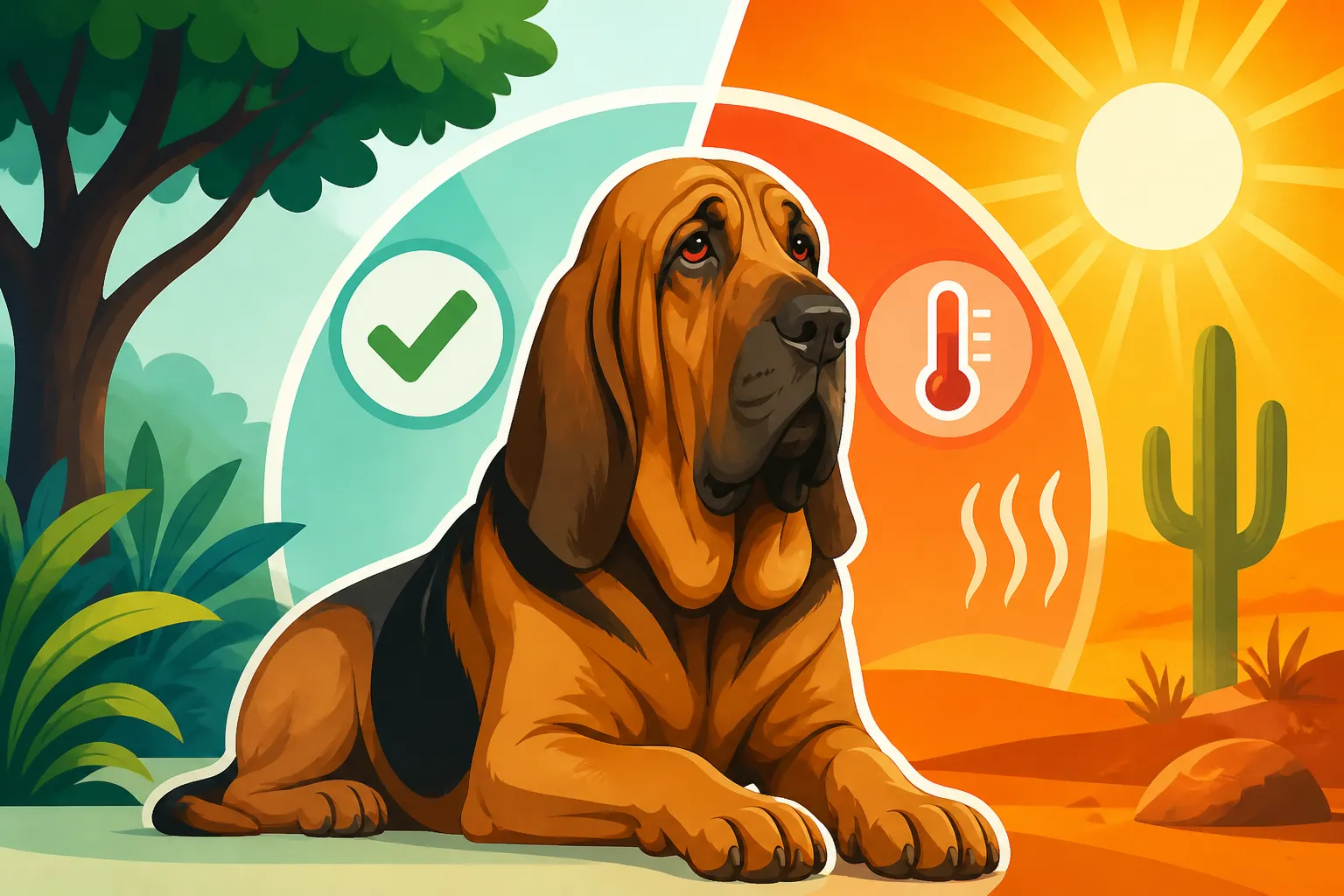
Bloodhounds are not a breed that should be treated as automatically unable to live somewhere warm. Many can enjoy life in a hot region when they have reliable shade, indoor cooling, fresh water, and an owner willing to change the schedule. But a dog’s comfort depends on more than the number on the weather app. Humidity, direct sun, air movement, activity level, coat, age, health, and acclimation all matter.
Dogs cool themselves mainly by panting. In humid weather, panting is less effective because moisture evaporates more slowly from the respiratory tract. That means a warm, muggy evening can be more challenging than a hotter but dry morning. A Bloodhound that seems comfortable standing in the shade may still overheat quickly if it starts pulling hard on a scent trail.
Bloodhounds are large, substantial dogs, and their enthusiasm can outlast their body’s ability to shed heat. Their loose skin and long ears are distinctive breed features, but they do not function as built-in cooling systems. Heat tolerance varies from dog to dog, so watch the individual rather than relying on a breed-wide rule. For a closer look at how temperature can affect activity, see Whether Heat Shortens What a Bloodhound Can Do.
The home setup matters as much as the climate
A hot-climate home needs a genuinely cool place where the dog can rest. That might mean a climate-controlled room, not just a shaded porch or a garage that gets stuffy by afternoon. Shade can move as the sun shifts, and outdoor shelters can trap heat if they lack good airflow. If your Bloodhound spends time outside, check the actual conditions in its resting area at different times of day.
Fresh water should be easy to reach indoors and outdoors, with bowls placed where they are unlikely to be tipped over. A cooling mat may give a dog another comfortable resting spot, but it should be treated as an optional aid rather than a replacement for a cool room. If you are comparing cooling mats, fans, or other basic supplies, Chewy can be one place to browse product types; choose items based on your dog’s comfort and follow the manufacturer’s instructions.
Think about the whole household routine, too. Can the dog stay inside while you are away during the hottest part of the day? Is there a reliable way to keep the home cool if the weather turns unexpectedly? A Bloodhound that has access to a cool, quiet room is in a very different position from one left in a sunny yard with a water bowl.
Exercise and Outdoor Time in Hot Weather
Move walks to cooler parts of the day
In a hot climate, the familiar morning walk may need to happen earlier, before the ground and air heat up. A second outing can often wait until after sunset, but check the temperature of the pavement and the surrounding air rather than assuming that dark means cool. Asphalt, concrete, and sand can hold heat well into the evening.
Shorten outings when conditions are warm, humid, or sunny, and let your dog set a comfortable pace. A Bloodhound may pull toward an interesting smell even when it is already hot, so do not mistake determination for comfort. If your dog is panting heavily, slowing down, seeking shade, or seeming less responsive, end the walk and get it somewhere cool. The practical question is not only how much exercise the breed needs, but how to provide it safely in your particular weather. How Much Walking a Bloodhound Needs Daily offers related guidance on building an appropriate routine.
Hot weather also changes what counts as a good outing. A shaded, quiet sniff around a cool lawn may be a better choice than a long, exposed route. For trail work or scent games, keep sessions brief, plan access to water and shade, and stop before your dog looks exhausted. Heat can reduce a Bloodhound’s working capacity, even when it is eager to continue.
Protect paws and avoid hot-car risks
Paw pads can burn on hot surfaces, and dogs may not show discomfort immediately. Choose grass or shaded paths where possible, and avoid making your dog walk across sun-baked pavement to reach a park or trail. Boots can help in some situations, but they are not a reason to stay out longer; they may also feel unfamiliar or uncomfortable, so introduce them gradually and check for rubbing. See Whether a Bloodhound Needs Boots for Rough Ground for more on when protective footwear may be useful.
Never leave a Bloodhound alone in a parked car, even if the windows are cracked or you expect to be away briefly. A car can heat up rapidly, and open windows do not make it a safe waiting place. If your dog must travel, use air conditioning, plan stops where it can come with you or stay safely at home, and never rely on a quick errand being quick. More detail is available in Whether a Bloodhound Should Ride With the Window Down.
| Situation | Safer approach | What to avoid |
|---|---|---|
| Daily walk | Go during the coolest part of the day and keep the route flexible | Long walks in direct sun or over hot pavement |
| Scent activity | Use short sessions with shade and rest breaks | Letting the dog work until it is visibly exhausted |
| Outdoor rest | Provide reliable shade, airflow, and water, with indoor access | Assuming a porch, kennel, or garage stays cool |
| Car travel | Use air conditioning and take the dog out with you when practical | Leaving the dog alone in a parked vehicle |
| Cooling supplies | Use a mat or fan as an extra comfort option | Treating a product as a substitute for supervision or a cool room |
Skin, Ears, and Everyday Summer Care
Check folds and ears after warm, damp days
Heat and humidity can make it harder to keep a Bloodhound’s skin comfortable. Moisture, sweat-like skin secretions, drool, dirt, and trapped debris can collect around folds, especially after exercise or a wet outing. Gently inspect areas such as the neck and lip folds, and dry them carefully if they are damp. The goal is clean, dry skin—not vigorous scrubbing or frequent use of harsh products.
Look for new redness, tenderness, a sour or unusually strong odor, discharge, or persistent scratching. These signs can indicate irritation or infection and deserve veterinary advice, especially if they continue or worsen. Avoid applying powders, medicated washes, or human skin products unless your veterinarian recommends them. Summer can make fold care more important, but the right routine depends on your dog’s skin and medical history. For more, read Whether a Bloodhound's Folds Get Worse in Summer.
Long ears can also become damp after swimming, bathing, or playing in wet grass. Check them after those activities and dry only the parts you can safely reach; do not push cotton swabs down the ear canal. A red, painful, smelly ear or repeated head shaking calls for a veterinary check rather than repeated home cleaning. The anatomy that makes airflow less straightforward is discussed in Whether a Bloodhound's Ear Leather Blocks Airflow.
Build a routine your dog will tolerate
A reliable warm-weather routine does not need to be elaborate. After an outing, offer water, let your dog rest in a cool place, and check paws, folds, and ears if the walk involved wet grass, mud, or swimming. Keep a towel near the door so you can dry damp areas without turning cleanup into a wrestling match. If your Bloodhound resists handling, practice brief, calm checks at cooler times and reward cooperation.
For a long-haired or heavily coated dog, shaving is not a safe default cooling strategy, and a Bloodhound’s short coat does not eliminate heat risk. Regular brushing can remove loose hair and debris, while clean, dry skin helps you notice changes sooner. If you are considering a cooling vest, mat, or portable fan, check fit and comfort and watch your dog while it uses the item. Chewy may help you compare available product categories, but no accessory can make strenuous activity in dangerous heat safe.
Recognizing Heat Stress and Making the Decision
Know when to stop and cool down
Heavy, persistent panting is a warning to stop activity, especially if it is accompanied by thick or excessive drool, weakness, stumbling, vomiting, unusual restlessness, or a change in responsiveness. A dog with heat illness may seem confused or suddenly reluctant to move. Do not wait for a dramatic collapse before taking the situation seriously.
Move the dog to a cooler place, stop exercise, and contact a veterinarian promptly if you suspect heat illness. Follow the clinic’s instructions while arranging care. Do not force water into a dog that is struggling, and do not delay veterinary help to see whether the dog improves on its own. Heat illness can become an emergency quickly, and a dog that appears to recover may still need professional assessment.
It helps to know the route to your regular veterinary clinic and an emergency hospital before you need one. During a heat wave, keep outings close to home, carry water, and have a plan for getting indoors quickly. In an unfamiliar place, identify shaded areas and a cool indoor option before starting a long walk.
Decide whether your lifestyle can meet the dog’s needs
A hot climate does not automatically rule out a Bloodhound, but it does require realistic planning. The fit is better if you have a cool indoor space, can schedule exercise outside the hottest hours, and are willing to shorten or skip outdoor activities when conditions are poor. It is harder if the dog would spend long stretches outdoors, ride frequently in a vehicle without dependable cooling, or be expected to exercise in heat because your schedule leaves no alternative.
Consider your dog’s age and health as well as the climate. Puppies, older dogs, overweight dogs, and dogs with medical conditions may need extra caution and individualized advice. Ask your veterinarian how to adjust activity for your dog, particularly before starting trail work or a new exercise routine in warm weather.
The best test is an ordinary summer day, not an ideal morning. Can your Bloodhound stay comfortable when the afternoon is humid, the pavement is hot, and your usual walking time no longer works? If you can adapt the schedule and prioritize indoor cooling, a Bloodhound may fit your home. If you cannot reliably protect the dog from prolonged heat exposure, it is worth reconsidering before bringing one home.
Disclaimer
This article is for general informational purposes only and does not constitute professional advice. Laws, prices and regulations vary by location and change over time. Consult a qualified professional for guidance on your specific situation.