The Hour of Night a Bloodhound’s Bloat Usually Starts
One of the most terrifying emergencies a Bloodhound owner can face is bloat, or Gastric Dilatation-Volvulus (GDV). This condition can strike without much warning, turning a peaceful evening into a frantic rush to the emergency vet, often in the dead of night. This comprehensive guide will explore the common patterns of when bloat tends to occur in Bloodhounds, helping you understand the risk factors and prepare for what can be a life-saving response.
Understanding Bloat in Bloodhounds: A Primer
For Bloodhound owners, the word "bloat" carries a chilling weight. It’s not just an upset stomach; it's a rapidly progressing, life-threatening condition that demands immediate veterinary intervention. Understanding what it is and why Bloodhounds are particularly susceptible is the first step in being prepared.
The Silent Threat: What is Gastric Dilatation-Volvulus (GDV)?
Gastric Dilatation-Volvulus, or GDV, is a veterinary emergency where a dog's stomach fills with gas, food, or fluid (dilatation) and then twists upon itself (volvulus). When this twisting happens, both the entrance and exit of the stomach are sealed off, trapping everything inside. The gas continues to build, putting immense pressure on internal organs, restricting blood flow, and eventually leading to shock and organ damage. The worst part? It progresses incredibly fast. What might seem like mild discomfort can turn into a critical situation in a matter of minutes or a few short hours. This isn't something that will "just get better" on its own; without immediate surgical correction, it's almost always fatal.
The pain is excruciating, and the dog's condition deteriorates rapidly. The stomach can press on large blood vessels, impeding blood flow back to the heart, leading to a dangerous drop in blood pressure. Toxins build up as tissues begin to die, and the dog can go into shock. This isn't just a physical twist; it's a systemic crisis that affects the entire body.
Why the Bloodhound Anatomy Poses a Unique Risk
Bloodhounds, like many other large, deep-chested breeds, are unfortunately at a significantly higher risk for bloat compared to their smaller counterparts. Their distinctive chest conformation, which gives them that majestic, powerful appearance, is also their Achilles' heel when it comes to GDV. The deep and narrow chest cavity provides ample space for the stomach to distend and twist freely.
Think of it like this: in a shallow-chested dog, the stomach is more constrained, making a full rotation less likely. But in a Bloodhound, that stomach has room to swing and flip. This anatomical predisposition isn't something you can change, which is why prevention and early detection are so crucial for our hounds. It’s a sad reality that the very build we admire in our Bloodhounds also puts them in harm's way. This inherent risk is precisely why every Bloodhound owner needs to be hyper-aware of bloat symptoms and its typical timing. You can learn more about this specific risk in Why a Deep Narrow Chest Puts a Bloodhound at Risk.
The Witching Hours: When Bloat Strikes Most Often
When you’re a Bloodhound owner, understanding when bloat is most likely to occur is almost as important as knowing what it looks like. It’s a common misconception that bloat happens right after eating; while that can be a trigger, the actual onset of severe symptoms often has a specific, frustratingly inconvenient timing.
The Peak Times for Emergency Bloat Cases
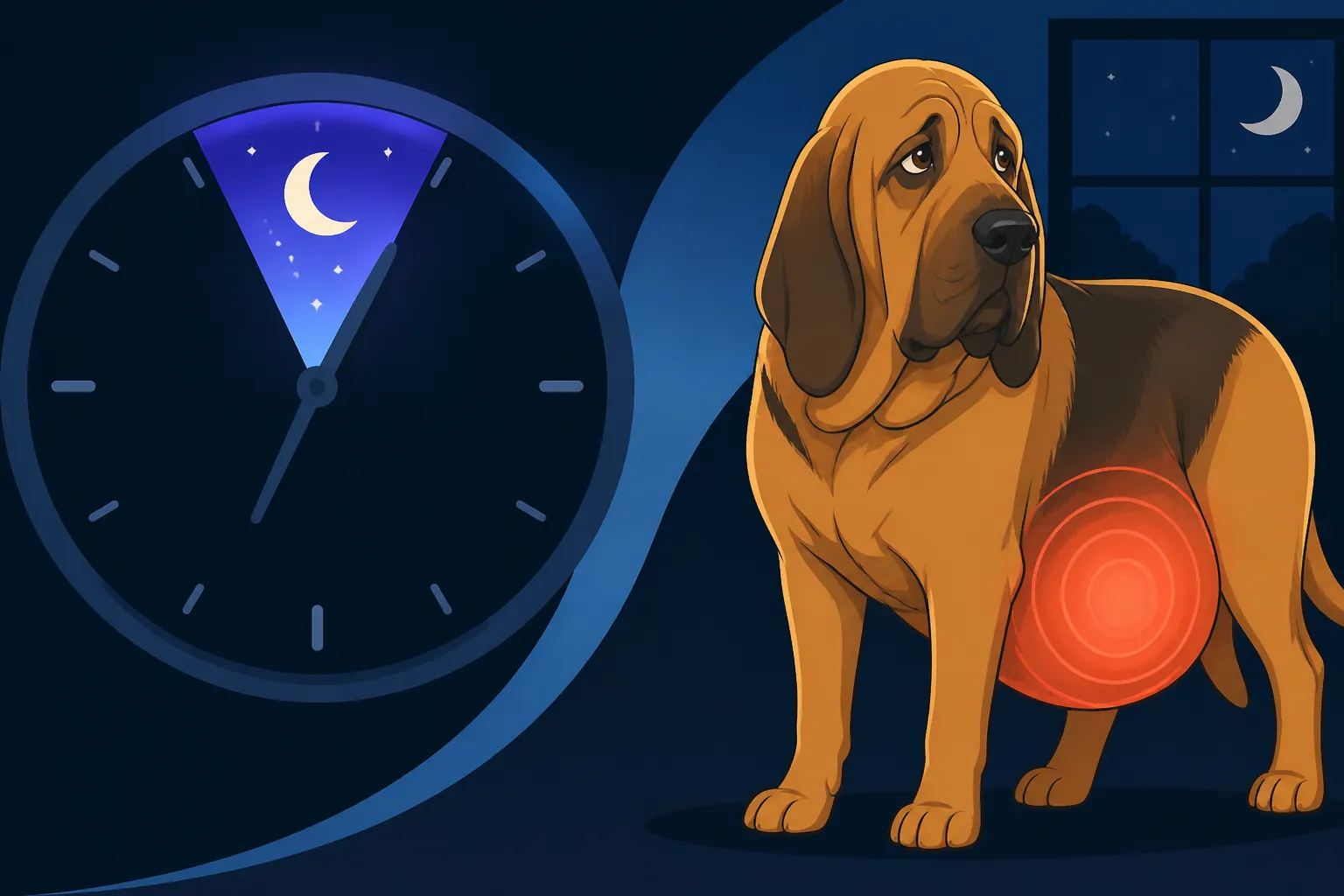
Veterinarians and Bloodhound owners alike will tell you that bloat has a nasty habit of showing up at the absolute worst times: late at night or in the very early morning hours. This often means between 10 PM and 6 AM, when most people are winding down for the night or are deep in sleep. It's during these quiet, dark hours that your Bloodhound might start showing the subtle, then increasingly alarming, signs of bloat.
Why this particular timeframe? It's not entirely clear, but several factors likely contribute. For one, activity levels might have just dropped after an evening walk or playtime, and dogs have often recently consumed their evening meal. Owners are less vigilant, engrossed in TV, or already asleep, making early detection a challenge. Furthermore, during these hours, veterinary clinics are often closed, forcing owners to rely on more expensive and potentially further-away emergency veterinary hospitals. The added stress of navigating a dark, unfamiliar facility with a critically ill dog only compounds the terror of the situation. It’s a cruel twist of fate that this emergency often coincides with the lowest availability of immediate, primary veterinary care.
Activity Levels and Meal Timing: A Dangerous Combination
Many Bloat cases are linked to feeding habits, particularly the timing of meals relative to activity. A common scenario for a Bloodhound is consuming a large meal, then having their activity drastically change – either becoming very active or becoming very sedentary – shortly before or after eating. Eating too quickly, especially large volumes of food, can introduce excess air into the stomach, setting the stage for dilatation. Then, if the dog then runs around, rolls, or even drinks a large amount of water, it can sometimes trigger the stomach to twist.
Conversely, a large meal followed by a long period of inactivity, particularly during sleep, can also be problematic. The stomach can distend with gas without the dog showing obvious distress until it's more advanced. The risk isn't just immediately after eating; it can be several hours later. For many Bloodhounds, their largest meal of the day might be dinner, and if they then settle in for a long evening and overnight sleep, the conditions could be ripe for bloat to begin as their digestive system works through that meal. This is why many experienced owners emphasize splitting meals and monitoring activity. Consider that Whether a Bloodhound Bloats More After Six could be a factor.
The Impact of Sleep Cycles on Bloat Detection
One of the most insidious aspects of nighttime bloat is the human factor: our sleep cycles. When bloat begins in the dead of night, you, as the owner, are likely asleep. This means early, subtle signs of distress – restlessness, mild pacing, or discomfort – can easily be missed. Your Bloodhound might be trying to tell you something is wrong, but you’re simply not awake to notice.
By the time you wake up in the morning, or perhaps are disturbed by more pronounced symptoms like severe retching or a distended abdomen, the bloat might have progressed significantly, reducing the precious window of time for intervention. This delay in detection can be critical, as every minute counts in a GDV emergency. It’s a race against time, and being asleep puts you at a severe disadvantage. This is why some owners even go as far as setting alarms to check on their high-risk Bloodhounds after a meal, especially if they are particularly prone to anxiety or rapid eating. The concept of Whether a Bloodhound Can Bloat Overnight is a frightening reality for many.
Recognizing the Early Warning Signs When Time is Critical
Knowing when bloat often strikes is crucial, but it's equally, if not more, vital to know what to look for, especially during those potentially dangerous nighttime hours. Bloat can be tricky because the initial signs can be subtle and easily mistaken for minor stomach upset.
Subtle Indicators You Might Miss in the Dark
The earliest signs of bloat in your Bloodhound might not scream "emergency." They can be quiet, almost imperceptible if you're not actively looking for them. In the dark, or when you're groggy from sleep, these subtle cues are even harder to catch. Look for restlessness; your Bloodhound might shift positions frequently, unable to get comfortable. They might pace around, seemingly agitated, or repeatedly try to lay down and then immediately stand up again.
One of the most classic, yet often overlooked, early signs is unproductive retching or gagging. Your Bloodhound will look like they are trying to vomit, often with visible abdominal contractions, but nothing, or very little, comes up. This is a critical red flag, indicating that something is blocking the normal passage of contents from the stomach. It's not just a passing upset stomach if they can't actually throw anything up. Any unusual panting or excessive drooling when they are typically calm could also be a warning sign. These seemingly minor behaviors can escalate quickly, so don't dismiss them. For a more detailed look at the symptoms, refer to Signs a Bloodhound Is Bloating and Why a Bloating Bloodhound Retches Without Producing.
The "Prayer Position" and Abdominal Changes
As bloat progresses, the signs become more unmistakable, and often more alarming. One very telling posture that many dogs with bloat adopt is often called the "prayer position" – their front legs are stretched out on the floor with their head down, while their hind end remains standing or slightly elevated. It looks like they are bowing. They do this instinctively to try and relieve the intense abdominal pressure and pain.
Alongside this posture, you'll start to notice changes in their abdomen. It might appear visibly distended, tight, and hard to the touch, especially on the left side of their body just behind the rib cage. It will feel like a tightly stretched drum. Gently pressing on their belly might elicit a painful reaction or even a "thunk" sound if it's filled with gas. Don't wait for this stage! If you notice any of these more advanced signs, your Bloodhound is likely in a critical state and needs immediate veterinary attention. Every minute counts. Learn more about these physical signs in The Prayer Position a Bloating Bloodhound Takes and How a Bloodhound's Abdomen Looks When It Bloats.
What to Do in the Middle of the Night
This is the most crucial part: if you suspect bloat, you must act immediately. Do not hesitate. Do not wait to see if it gets better. Do not try home remedies. Bloat is an emergency that requires professional veterinary intervention. Your first step should be to call your nearest emergency veterinary clinic while you are getting your Bloodhound into the car. Don't just show up; call ahead so they can prepare their surgical team for your arrival. This saves critical minutes once you get there.
Gather your dog's leash, harness, and perhaps a blanket. Be prepared for your dog to be in severe pain, possibly restless or even collapsing. Handle them gently but efficiently. On the drive, focus on getting there safely and quickly. Do not stop for anything. You have a very limited window – sometimes as little as The Half Hour a Bloating Bloodhound Has – before the condition becomes irreversible. Knowing What to Do on the Drive With a Bloating Bloodhound can make all the difference. Stay calm, speak to your Bloodhound reassuringly, and get to the vet. This is a situation where seconds truly matter, and your quick action is your Bloodhound's best chance.
Proactive Measures to Mitigate Nighttime Bloat Risk
While the thought of bloat is terrifying, there are proactive steps you can take as a Bloodhound owner to significantly reduce the risk and be better prepared if it does strike. Prevention and preparedness are your best allies in safeguarding your beloved hound.
Feeding Strategies to Reduce Risk
Managing your Bloodhound's feeding habits is one of the most effective ways to lower bloat risk. Instead of one large meal per day, break their daily food allowance into two or three smaller meals. This reduces the amount of food and gas in the stomach at any one time, making distention and twisting less likely. Feeding smaller, more frequent meals can also help manage digestion throughout the day. For instance, brands like Chewy offer a variety of slow-feeder bowls that can make a huge difference, forcing your Bloodhound to eat more slowly and ingest less air with their food. These bowls have various ridges and obstacles that make gulping down food nearly impossible.
Additionally, it's crucial to avoid strenuous exercise or high-energy play for at least an hour before and two hours after meals. Let their food digest in peace. A quiet period before and after eating is vital. Ensure they have access to fresh water, but discourage them from gulping down huge amounts immediately after eating. Small sips are fine, but a massive drink can also fill the stomach too quickly. These simple adjustments to their meal routine can have a profound impact on their safety. More on this can be found in How Many Meals a Day a Bloodhound Should Eat and Whether a Bloodhound's Gastropexied Bloodhound Still Needs Split Meals.
Considering a Preventive Gastropexy
For Bloodhounds, given their inherent risk, a preventive gastropexy is often recommended and is considered the gold standard for reducing the risk of fatal bloat. A gastropexy is a surgical procedure where the stomach is permanently attached to the abdominal wall. This attachment prevents the stomach from twisting (volvulus), even if it still dilates with gas. While it doesn't prevent the dilatation (gas accumulation), it eliminates the deadly volvulus aspect, which is what causes the most immediate threat to life.
Many owners opt to have this procedure done when their Bloodhound is spayed or neutered, as it requires only one anesthetic event and can be performed laparoscopically, which is less invasive. While it's an upfront cost, many consider it a worthwhile investment in their Bloodhound's long-term health and your peace of mind. It’s a proactive step that can genuinely save your dog's life and spare you the horror of a middle-of-the-night emergency dash. Discussing this option with your veterinarian is highly recommended for all Bloodhound owners. The decision to pursue this surgery is a significant one, and more details can be found in What a Preventive Gastropexy Does for a Bloodhound and The Gastropexy Decision Every Bloodhound Owner Faces.
Emergency Preparedness and Vet Relationships
Beyond prevention, being prepared for an emergency is paramount. First and foremost, know the location and phone number of the nearest 24-hour emergency veterinary clinic. Don't wait until you're in a panic to look it up. Have it saved in your phone and perhaps even posted prominently in your home. It's also a good idea to discuss your Bloodhound's bloat risk with your regular veterinarian and ensure they are familiar with their history and any concerns you might have.
Financially, bloat surgery can be very expensive, especially if it happens after hours and requires extensive hospitalization. Having an emergency fund specifically for your pet is wise. Alternatively, consider pet insurance. Providers like Healthy Paws offer coverage that can significantly alleviate the financial burden of unexpected emergencies like bloat. Review their policies carefully to understand deductibles, reimbursement rates, and any waiting periods for specific conditions. Being financially prepared means you can make decisions based on what's best for your Bloodhound, not on your wallet, during a stressful time.
| Symptom Category | Early Signs (Act Fast!) | Advanced Signs (Urgent Emergency!) |
|---|---|---|
| Behavioral | Restlessness, pacing, inability to get comfortable, whining. | Collapse, weakness, excessive drooling, labored breathing, visible pain. |
| Vocalization | Mild panting, low whimpers, unusual quietness/lethargy. | Loud groaning, constant unproductive retching/gagging. |
| Physical | Repeated unproductive attempts to vomit, slight abdominal discomfort. | Swollen, hard, or taut abdomen; "prayer position" (front down, rear up); pale gums. |
| Action | Call emergency vet immediately, head to clinic. | Immediate emergency veterinary care is critical. |
Disclaimer
This article is for general informational purposes only and does not constitute professional advice. Laws, prices and regulations vary by location and change over time. Consult a qualified professional for guidance on your specific situation.