How the Bloodhound Reached England
The historical journey of the Chien de Saint Hubert from the Ardennes region to England explains the Bloodhound origin.
Is this the right one for you?
Origins and temperament, size and coat, what living with one is actually like, and how it compares to the breeds people weigh against it.

The historical journey of the Chien de Saint Hubert from the Ardennes region to England explains the Bloodhound origin.

Monks at the Abbey of Saint Hubert bred these hounds from the seventh to ninth centuries to track deer and wild boar.

Monk breeding practices in European monasteries shaped ancestral hounds, laying the genetic foundation for the modern Bloodhound breed.

Saint Hubert was a seventh-century nobleman, bishop, and hunter whose legendary forest vision established him as the patron saint of hunters.

The ancestral home of the Bloodhound lies at the historic abbey of Saint Hubert, where monks bred tracking dogs.

Police departments still utilize Bloodhounds for specialized tracking, leveraging their unique scenting abilities and established legal standing.
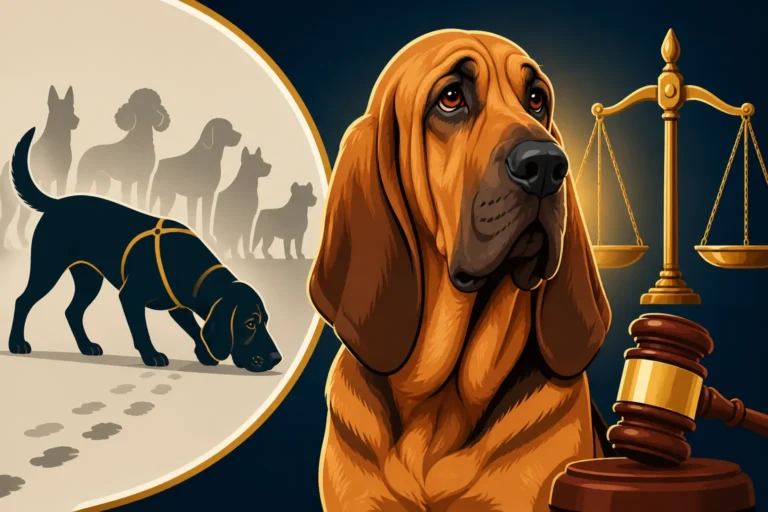
Bloodhound scenting ability and unique legal standing explained through an analysis of olfactory receptors and tracking anatomy.

Bloodhound trail evidence requires corroborating facts because a scent alone cannot legally secure a criminal conviction.

Bloodhound scent evidence holds unique legal standing and historical precedent, influencing criminal trial juries across various jurisdictions.

Bloodhound scent trailing history and precise legal requirements reveal how courts first accepted canine evidence for justice.