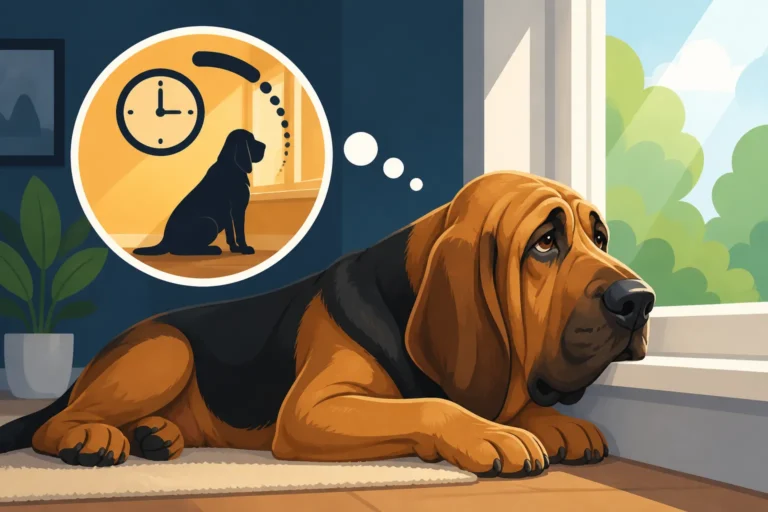
What a Bloodhound Does With an Empty Afternoon
It's a common misconception that Bloodhounds are lazy, sleepy dogs who spend their days draped over a couch, occasionally stirring for a meal. The truth is, a Bloodhound with an "empty afternoon" is rarely truly empty. Their incredible nose and inherent drive mean that even when they appear to be doing nothing, their minds are often working overtime, processing a world of scent. But what happens when that drive isn't channeled, or when they're truly left with nothing to do? This guide delves into the various ways a Bloodhound fills its unscheduled hours, from industrious self-employment to outright mischief, and how you, as their dedicated human, can ensure those afternoons are enriching and calm.
The Instinctual Drive: A Nose Never Truly Off Duty
For a Bloodhound, downtime isn't necessarily quiet time for their most powerful organ – their nose. It's almost as if their olfactory system has its own internal clock, constantly scanning, analyzing, and categorizing the myriad scents around them. An empty afternoon for a Bloodhound is, more often than not, an unsolicited shift for their highly specialized scent detection unit.
The Silent Hunt for Scent
Imagine your Bloodhound sprawled out, seemingly napping, but every twitch of its incredibly long ears or slight shift of its head is a subtle indication of its true occupation. Even indoors, the air is thick with stories waiting to be read by their nose. They might be tracking the microscopic dust motes that settled after you baked cookies yesterday, following the trajectory of a fly that buzzed through the room, or discerning the faint chemical residue from your latest cleaning spree. This isn't just casual sniffing; it's a deep, immersive experience. They're constructing a narrative in their mind, piecing together information about who has been where, what they touched, and what they left behind.
Outdoors, this "silent hunt" becomes even more pronounced. The garden might seem dormant to us, but to a Bloodhound, it's a bustling metropolis of smells. They'll meticulously investigate where a neighborhood cat strolled hours ago, pinpoint the exact spot a squirrel buried a nut, or even follow the ghost of a rabbit's trail from dawn. This innate behavior is why they are often referred to as "noses with a dog attached." They don't switch off their primary sense; they simply redirect it to whatever is available. Understanding What a Bloodhound Is Actually Smelling on a Trail helps you appreciate the complexity of this internal world.
This constant sensory input can be both a blessing and a curse. While it keeps them mentally stimulated, it also means their minds are always "on," making true, deep relaxation a skill they sometimes need to learn. Their focus can be so intense that they can literally tune out the world around them, lost in a fragrant tapestry only they can perceive.
Patrols and Perimeter Checks
Beyond the microscopic world of scent, a Bloodhound's empty afternoon often includes a more overt form of self-assigned duty: patrolling their territory. This isn't about aggression, but about information gathering and maintaining a mental map of their domain. They'll systematically inspect every corner of the yard, walk the entire fence line, and pause at gates or access points. Each sniff is a data point: has anything changed? Has a new animal come into their space? Is there a weak spot in the fence?
This behavior is reminiscent of their ancestral role, where understanding the boundaries and inhabitants of a given area was crucial. They're not bored; they're simply performing their natural function as a highly attentive, information-gathering animal. For an owner, observing these patrols can be fascinating, as you witness their focused dedication. They might linger for minutes at a single spot, deeply inhaling, processing, and then moving on, their long ears sweeping the ground, guiding scent molecules towards their powerful nostrils.
Indoors, this translates to thorough checks of each room. They might go from window to window, catching outside scents, then move to a heating vent, analyzing the circulating air. It’s their version of reading the daily newspaper, except their paper is made of molecules, and it updates constantly. This diligent observation and information processing are critical to their well-being; denying them this opportunity can lead to frustration.
Self-Entertained Scent Games
When an actual "task" isn't present, a Bloodhound's ingenious mind might invent its own scent games. This self-entertainment is a testament to their intelligence and profound need for mental stimulation. For instance, they might meticulously root through a pile of freshly laundered clothes, not just for warmth, but to pick out and analyze the individual scents of each family member. It's a game of "find the human," played entirely on their own terms.
They might also engage in a deep, focused exploration of a new object brought into the house – a grocery bag, a new rug, or even a friend's forgotten jacket. They'll spend a significant amount of time breaking down its composite smells, trying to understand its origin and purpose. This isn't just curiosity; it's an intellectual exercise for them. They're categorizing, filing, and learning. You might find them meticulously nosing an empty food bowl, convinced there's still a phantom crumb to be discovered, or systematically investigating every crevice of their bedding for a lost toy.
Sometimes, they'll pick up an old, forgotten toy and carry it around, shaking it, not necessarily to play, but perhaps to release its stored scent and analyze it anew. These self-directed activities, while sometimes leading to a messy house (especially with the laundry basket!), are crucial for their mental health. They are, in essence, practicing their craft, keeping their incredible olfactory skills sharp even when there's no official "trail" to follow.
When Boredom Strikes: Destructive Outlets and Anxious Behaviors
While a Bloodhound's nose is almost always "on," there's a distinct difference between self-directed scent work and true, unfulfilled boredom. When a Bloodhound's mental and physical needs aren't met over time, or if they lack appropriate outlets for their intelligence and drive, that empty afternoon can quickly turn into a problematic one. They don't sit around feeling sorry for themselves; they find ways, often inconvenient ones, to self-soothe or seek stimulation.
Chewing and Destruction
One of the most common signs of an under-stimulated Bloodhound is destructive chewing. They aren't doing it out of spite or naughtiness, but out of a profound need to engage their mouths and minds. Their jaws are powerful, designed for holding and carrying, and their curiosity extends to the texture and taste of everything around them. A plush couch cushion, a wooden chair leg, your favorite pair of shoes, or even a doorframe can become the target of an unmanaged afternoon.
This isn't always just about chewing; it can involve disemboweling soft toys, ripping apart bedding, or systematically shredding paper. For a Bloodhound, the act of tearing and destroying provides sensory input, mental engagement (how does this come apart?), and a release of pent-up energy. It’s a very satisfying activity for them. Younger Bloodhounds, in particular, are prone to this as they explore their world and test boundaries with their mouths. If you've ever wondered Whether a Bloodhound Chews Furniture When Bored, the answer is a resounding yes, and often with impressive efficiency.
The key to preventing this is not punishment, but redirection and preemptive management. Providing appropriate chew toys that are durable and engaging, rotating them to maintain novelty, and ensuring sufficient mental exercise are far more effective than trying to stop the behavior once it starts. A bored Bloodhound will always find something to do, and if you haven't given them good options, they'll choose their own.
Baying and Vocalization
Bloodhounds are renowned for their distinctive, mournful bay, and an empty afternoon is often when this particular vocalization comes to the forefront. If your Bloodhound is feeling lonely, anxious, or profoundly bored, they will use their voice to express it. This isn't a sharp, alarm bark like some breeds; it's a deep, resonating sound that carries far and can be quite persistent. Neighbors often hear it long before you realize your dog is baying up a storm.
This baying can be triggered by a lack of companionship, insufficient mental stimulation, or simply the presence of intriguing outdoor scents they cannot access. For them, it’s a form of communication – a plea for interaction, a declaration of boredom, or an expression of frustration. They might bay at the mail carrier, a passing squirrel, or simply at the general emptiness of the house. Understanding Why a Bloodhound Bays is crucial for addressing the root cause, rather than just trying to silence the symptom.
It's important to differentiate between occasional baying, which is part of the breed, and excessive, prolonged vocalization. The latter often points to an underlying issue of unmet needs. Ignoring it can lead to further anxiety and more intense baying, potentially causing issues with close neighbors. Creating a stimulating environment and ensuring their needs are met before you leave them alone can significantly reduce this behavior.
Restlessness and Pacing
While some Bloodhounds might resort to destruction or vocalization, others manifest their boredom or anxiety through restlessness and pacing. Instead of settling down for a nap, they'll wander from room to room, sighing dramatically, nudging you with their massive heads, or staring intently at you as if willing you to entertain them. This isn't about needing a physical run; it's a profound mental agitation. Their busy minds are churning, but without a task, they simply can't find peace.
This behavior can also escalate to shadow chasing, obsessively licking paws, or repetitive movements. It’s a clear signal that their internal world is in turmoil from lack of appropriate engagement. You might notice them unable to settle in one spot for long, moving from the couch to the dog bed, then to the cool tile floor, only to get up again a few minutes later. This constant low-level agitation can be draining for both the dog and the owner.
A Bloodhound that consistently follows its owner room to room when left to its own devices might be exhibiting early signs of separation distress or simply an intense need for companionship and direction. They are, after all, pack animals and derive comfort from presence and purpose. Providing mental puzzles or dedicated cuddle time before leaving can help soothe these tendencies, reminding them they are not truly alone and will be engaged again soon.
Productive "Empty Afternoons": Management and Enrichment
The good news is that "empty afternoons" don't have to be a recipe for disaster. With thoughtful planning and the right approach, you can transform these periods into genuinely enriching and satisfying experiences for your Bloodhound. The key is to acknowledge their incredible drive and provide appropriate, safe outlets for it.
Scent Work and Puzzle Toys
The single best way to manage a Bloodhound's empty afternoon is to lean into their greatest strength: their nose. Structured scent work, even if it's self-directed by the dog, is incredibly powerful. Puzzle toys are invaluable tools here. Look for toys that require them to think, manipulate, and sniff to get a reward. Fill them with their regular kibble or a special treat, and watch them engage their brains. Brands available on Amazon offer a wide variety of durable, engaging options, from treat-dispensing balls to multi-layered puzzles.
Snuffle mats are another fantastic option. These fabric mats with many folds and pockets encourage natural foraging behavior. Sprinkle kibble or small treats deep within the fabric, and your Bloodhound will happily spend a significant portion of their afternoon snuffling, sniffing, and discovering. This activity is calming, mentally tiring, and deeply satisfying for them. It’s also incredibly safe, as it keeps them focused on a productive, solitary task.
Beyond commercial products, you can create your own scent games. Hide treats around the house while your Bloodhound watches (or is crated), then release them to "find" them. Start easy and gradually increase the difficulty. You can use old towels rolled up with treats inside, or even cardboard boxes. These activities truly tire a Bloodhound's brain in a way that physical exercise alone cannot. For more on this, consider Whether Nose Work Tires a Bloodhound More Than Walking. It really does.
Supervised Outdoor Exploration
A common mistake is to assume a fenced yard is enough to keep a Bloodhound entertained. While a yard offers space, if it's not managed, it can lead to boredom, digging, excessive baying, or even escape attempts. However, supervised outdoor exploration can be wonderfully enriching. This means you are out there with them, not necessarily actively playing, but present and observing.
Allowing them a period of "free sniffing" in a secure, fenced area is invaluable. Let them methodically check every bush, every patch of grass, and every fence post without interruption or demands. This fulfills their patrolling instinct and allows them to soak in the ambient scents. You might sit on a bench and read while they work, occasionally offering a gentle word of encouragement. This supervised time prevents them from becoming destructive or getting into trouble, as you can redirect them if they start digging or fixating on something inappropriate.
It's critical that any outdoor time is in a truly secure environment. A Bloodhound's nose will drive them to explore, and they are surprisingly adept at testing fences, finding weak spots, and even scaling impressive heights if a scent is compelling enough. Understanding What Fencing Actually Holds a Bloodhound is key to ensuring their safety and your peace of mind during these explorations.
Training Sessions and Mental Games
An "empty afternoon" doesn't mean a complete absence of interaction. Short, focused training sessions can provide immense mental stimulation and strengthen your bond. Even 10-15 minutes of working on basic obedience cues like "sit," "stay," "down," or "come" in a quiet environment can be surprisingly tiring for a Bloodhound. They might take a moment to process the request – not because they're stubborn, but because they're deeply considering the task – but their engagement is clear.
Learning new tricks or engaging in structured mental games, like "find the hidden toy" or "which hand has the treat," can also fill an afternoon productively. These activities build their confidence and give them a sense of purpose. Think about introducing novel objects for them to investigate or creating a small obstacle course in your living room for them to navigate by scent and command.
Programs like BAXTER & Bella provide excellent online resources and structured learning activities that can guide you through fun and engaging training sessions, even for a few minutes a day. This ongoing mental challenge keeps their minds sharp and prevents boredom from setting in. Remember, for a Bloodhound, learning is often about curiosity and investigation, not just rote repetition. It shows you how intelligent they really are and How Long a Bloodhound Takes to Learn Something New isn't always about speed, but depth of understanding.
The Importance of a Routine for Bloodhounds
For a breed so driven by instinct and sensory input, a predictable routine might seem counterintuitive, but it's actually one of the most powerful tools you have to ensure your Bloodhound's "empty afternoons" are peaceful and productive rather than destructive or anxious.
Predictable Engagement Prevents Problems
Bloodhounds thrive on knowing what to expect. A consistent daily schedule that incorporates their needs for mental stimulation, physical activity, and rest helps them regulate their behavior and emotional state. When they know that their dedicated scent work time, their walk, or their interactive play session will happen at a certain point in the day, they are much better equipped to relax and settle during the periods in between.
Imagine the difference: a Bloodhound who has no idea when their next engagement will be is likely to be constantly "on," searching for something to do, leading to restlessness or mischief. In contrast, a Bloodhound who knows that "after lunch is puzzle toy time" or "when you get home, we do yard sniffs" can conserve energy and genuinely rest, knowing their needs will be met. This predictability reduces anxiety and the likelihood of them inventing their own, often less-than-desirable, entertainment options. This is why How Long a Bloodhound Copes Alone often depends heavily on the routine established.
A good routine provides a framework around their boundless energy and powerful nose. It allows them to understand the rhythm of their day and adjust their activity levels accordingly. This doesn't mean every minute has to be scheduled, but having anchors for their key activities is incredibly beneficial.
Balancing Activity with Rest
While we've emphasized the importance of mental and physical engagement, it's equally important to teach a Bloodhound the art of resting. An afternoon doesn't always need to be filled with high-intensity scent work or vigorous exercise. They also need to learn to calmly chew on an appropriate bone or simply settle down for a quiet nap. This balance is crucial for a well-adjusted Bloodhound.
After a stimulating morning walk or a puzzle toy session, an afternoon of quiet relaxation is perfectly healthy. Provide a comfortable bed, a safe chew item, or even just a window where they can observe the world passively. The goal isn't to constantly entertain them, but to provide sufficient outlets for their drive so that they are able to relax when there isn't a specific task. For example, Whether Twenty Minutes of Scent Work Settles a Bloodhound can be a resounding yes, precisely because it engages them so deeply that they are ready for a break afterward.
Over-scheduling or constantly stimulating a Bloodhound can be just as detrimental as under-stimulating them. They need periods of calm to process information, digest their experiences, and simply be a dog. A balanced approach ensures that when they have an "empty afternoon," they choose to fill it with peaceful relaxation rather than frantic activity or destructive behaviors.
| Afternoon Activity | Bloodhound Motivation | Owner Solution / Enrichment |
|---|---|---|
| Silent Scent Exploration | Innate drive to process olfactory information | Allow supervised "free sniff" time, varied environments. |
| Perimeter Patrols | Territorial information gathering | Secure fencing, presence during yard time. |
| Invented Scent Games | Mental stimulation, curiosity, problem-solving | Puzzle toys, snuffle mats, hide-and-seek with treats. |
| Destructive Chewing | Unmet mental/physical needs, boredom, anxiety | Durable chew toys (e.g., Kong), rotation of toys, ample exercise. |
| Excessive Baying | Loneliness, anxiety, frustration, attention-seeking | Consistent routine, mental engagement, companionship. |
| Restlessness/Pacing | Mental agitation, lack of purpose | Short training sessions, interactive games, comfortable rest spots. |
| Following Owner Room to Room | Seeking companionship, direction, or stimulation | Include in activities, specific "place" training, scheduled interaction. |
Disclaimer
This article is for general informational purposes only and does not constitute professional advice. Laws, prices and regulations vary by location and change over time. Consult a qualified professional for guidance on your specific situation.