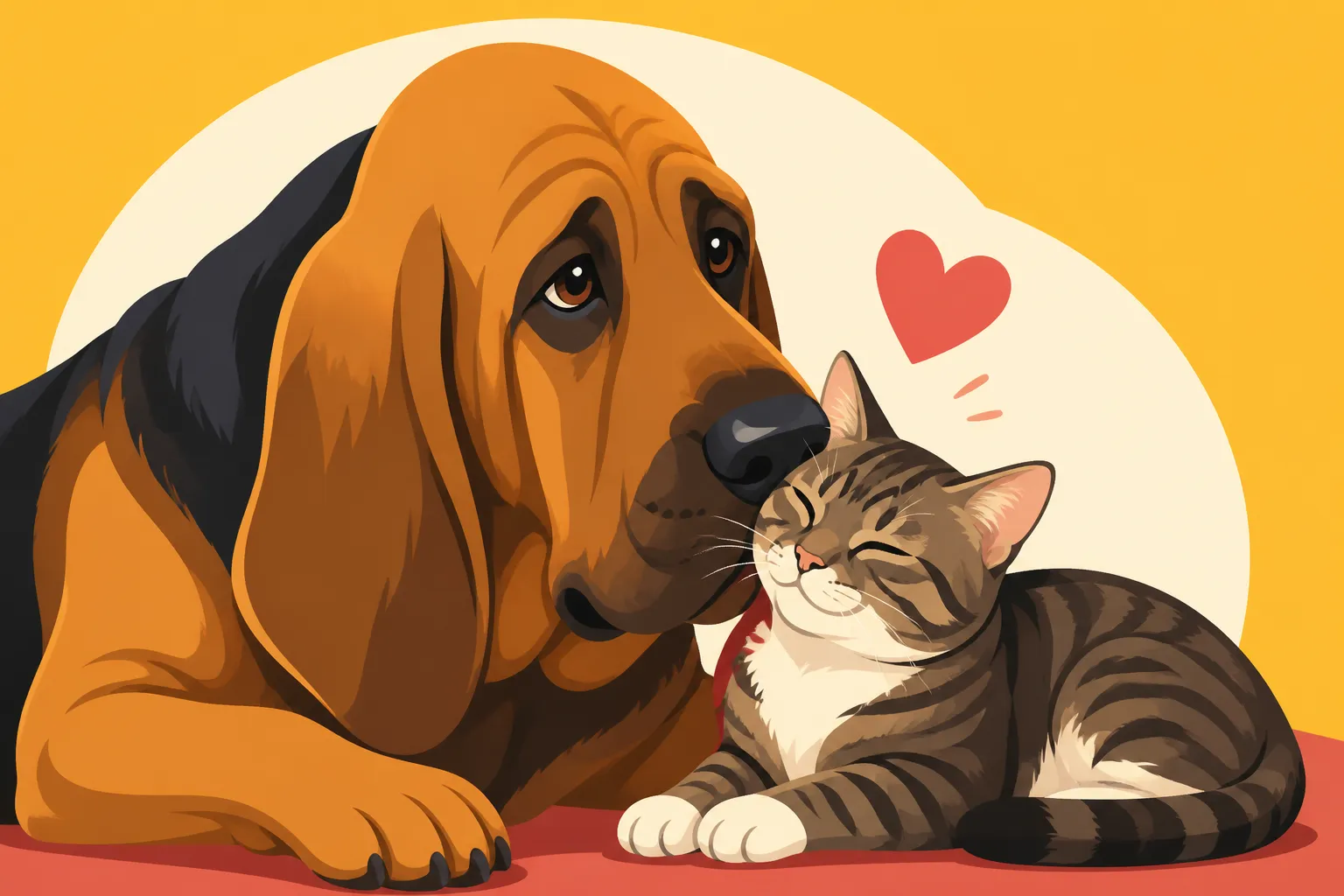
How a Bloodhound Treats a Cat
Bringing a new cat into a home with an existing Bloodhound, or vice-versa, can feel like navigating a minefield of potential conflicts and anxieties. Many dog owners worry about their large, scent-driven hound's reaction to a small, fast-moving feline, fearing a chase impulse that could put the cat in danger. This guide aims to offer realistic, empathetic advice on understanding and managing the dynamic between a Bloodhound and a cat, helping you foster a safe and respectful multi-species household.
Understanding the Bloodhound's Innate Drive
Bloodhounds are magnificent creatures, renowned for their incredible noses and gentle demeanor with people. However, living with one means understanding the deep-seated instincts that govern their world, particularly when it comes to smaller, faster-moving animals like cats. It’s not about malice; it's about millions of years of selective breeding for a specific purpose.
The Scent-Driven World of a Bloodhound
Imagine living in a world where every single whiff of air tells a story, a tapestry of information richer and more compelling than anything you see or hear. That's a Bloodhound's reality. Their entire being is geared towards following a trail, interpreting the faintest of odors, and pursuing that scent to its source. This intense focus, while incredible for tracking, means that a scampering cat can easily trigger that fundamental chase instinct. It's not necessarily about wanting to harm the cat, but the act of chasing is immensely rewarding for them. They are hardwired to pursue, and a cat darting across a room can be an irresistible, albeit unintended, "trail" that demands to be followed. This drive can sometimes override even the most solid obedience training, which is why Why Off Leash Is Not a Goal With a Bloodhound is such a critical concept for owners.
Their massive ears aren't just for looking regal; they actively sweep scent towards their nose, enhancing their ability to detect and follow. This unique adaptation means they are constantly processing olfactory information, and a cat's individual scent signature is a very real, tangible thing in their world. When a cat moves, it displaces air, spreading its scent, which to a Bloodhound, is like an arrow pointing to a fascinating, mobile target. Understanding that their nose often outvotes their handler is key to successful management.
Prey Drive vs. Pack Mentality
It's easy to conflate a Bloodhound's chase instinct with aggression or a desire to harm, but often, it's a display of their ingrained prey drive. This isn't the same as true predatory aggression where the intent is to kill for food. For many Bloodhounds, the chase itself is the reward, and once they catch up, they might not know what to do next, or they might try to "play" in a way that is far too rough for a cat. They might bowl the cat over, mouth it, or simply corner it, causing immense stress and potential injury to the feline. This distinction is important because it guides our training and management strategies.
Bloodhounds, like many hounds, also have a strong pack mentality. This can sometimes work in your favor, as a carefully introduced cat can, over time, become part of their perceived "pack." However, this requires careful supervision and a very structured introduction process. They aren't naturally inclined to see a cat as a member of their species, but rather as another creature in their environment. Their initial reaction will depend heavily on their individual temperament, early socialization, and your management. Remember that while they are generally friendly, their sheer size and enthusiasm can be overwhelming for a small cat, regardless of their intentions.
The Bloodhound's Gentle Nature
It’s true, Bloodhounds are often described as gentle giants, and it’s a well-earned reputation when it comes to people. They are typically patient, affectionate, and remarkably tolerant, even with children. This gentle nature is a huge asset when introducing them to other household pets, including cats. They rarely exhibit aggression towards humans and are more likely to lean on you for comfort than snap in frustration.
However, this gentleness with people doesn't automatically extend to small, furry creatures that dart and weave. A Bloodhound's physical presence, coupled with their powerful build, means that even an accidental bump or an overzealous sniff can be traumatizing or even injurious to a cat. Their thick skin and bone structure make them resilient, but a cat is far more delicate. So, while their heart might be in the right place, their instincts and physical capabilities mean that caution and careful management are absolutely paramount. It's not about doubting their good intentions, but acknowledging the physical disparity and the strength of their drives.
Introducing a Bloodhound to a Cat: The Slow and Steady Approach
Successfully integrating a Bloodhound and a cat into the same home is less about luck and more about a meticulously planned, patient, and consistent introduction process. Rushing things is the surest way to create a stressful, potentially dangerous, and ultimately failed dynamic.
Puppyhood vs. Adult Introductions
The ideal scenario for a harmonious Bloodhound-cat relationship begins when your Bloodhound is a puppy. A young puppy, especially one under 16 weeks, is much more impressionable and open to accepting a cat as a permanent fixture in their world. During this critical socialization window, they can learn that cats are not prey, but rather part of the family. Puppy classes, like those offered by BAXTER & Bella, can be helpful for general socialization, though specific cat introductions need careful handling at home. When introducing a puppy to a cat, the cat should always have an escape route and safe, elevated perches. The puppy needs to be taught impulse control and gentle interactions from day one. You'll want to reward calm behavior around the cat, even if it's just a glance followed by disinterest.
Introducing an adult Bloodhound to a cat, especially one with an unknown history around felines, presents a greater challenge. Adult dogs' ingrained behaviors are harder to modify, and their prey drive might be more fully developed. This doesn't mean it's impossible, but it demands even more vigilance, management, and a slower, more controlled approach. You might need to consider The Age a Bloodhound Is Considered Senior if dealing with an older dog, as their energy levels and reaction times might be different. In either case, never force interactions, and always prioritize the safety and comfort of both animals.
Controlled Encounters and Safe Spaces
The cornerstone of any successful introduction is control and ensuring both animals have readily available safe spaces. Before any direct contact, begin with scent swapping. Exchange blankets, toys, or even rub a cloth on each animal and then let the other sniff it. This allows them to get used to each other's scent in a non-threatening way. Once they are calm with each other's scent, move to visual introductions through a barrier, like a baby gate or a glass door. Keep initial visual sessions very short and positive, rewarding both animals for calm behavior.
When you do move to direct, supervised interaction, the Bloodhound should always be on a leash, ideally with a harness for better control. A long line can be useful in larger spaces, offering a balance between freedom and control, but remember How Long a Line a Bloodhound Handler Buys depends on the environment. The cat must have multiple escape routes – high shelves, cat trees, or another room they can slip into. Never leave them unsupervised until you are absolutely certain of their compatibility, and even then, long-term supervision is a wise practice. Think of sturdy pet gates available on Amazon as essential tools for creating these controlled environments and physical boundaries.
Desensitization and Positive Reinforcement
The goal is to desensitize your Bloodhound to the presence of the cat and to create positive associations. Every time the cat is in view and your Bloodhound remains calm (no staring, no tense posture, no excessive whining or baying), reward them lavishly with high-value treats or praise. If your Bloodhound shows too much interest or starts to get excited, calmly redirect their attention to you with a "look at me" cue or a simple sit.
Avoid scolding or punishing the Bloodhound for showing interest in the cat, as this can create negative associations or make them act furtively. Instead, aim to interrupt the unwanted behavior and immediately reward the desired calm behavior. Consider clicker training to mark the exact moment of calm. This positive reinforcement process takes time and consistency, often months, not days or weeks. You're essentially retraining an ancient instinct, and that's a marathon, not a sprint. Remember that What a Bloodhound Will Work For often includes food, so use tasty, small treats generously during these sessions.
Managing a Multi-Pet Household with a Bloodhound and Cat
Even after successful introductions, managing a household with both a Bloodhound and a cat requires ongoing vigilance and smart strategies. It's about proactive prevention and establishing clear guidelines for everyone's well-being.
Establishing Boundaries and Rules
Clear boundaries are essential for both the Bloodhound and the cat. The cat needs designated "dog-free" zones where they can truly relax without fear of being investigated, chased, or bothered. This might be a room with a cat door that the dog cannot fit through, or high perches and cat trees that are inaccessible to your large hound. Using baby gates to restrict access to certain rooms can be incredibly effective, especially during times when you can't actively supervise.
For the Bloodhound, the rule is simple: the cat is not a toy, and the cat is not for chasing. This needs to be consistently enforced by all family members. This might mean keeping your Bloodhound on a leash inside the house during initial stages of integration, even if you’re just moving from room to room, until you are confident in their calm responses. Teaching a solid "leave it" or "stay" cue is paramount. For a dog whose nose outvotes its handler, this requires patience and high-value rewards. Mantrailing Is the Answer to a Bloodhound, Not Obedience highlights how Bloodhounds excel in focused work, and you can leverage this drive for controlled interactions.
Separate Feeding and Resting Areas
One of the most common flashpoints in a multi-pet household is food. A Bloodhound, with its powerful nose and hearty appetite, will be intensely interested in a cat's food, and conversely, a cat might be stressed by a large dog sniffing around its bowl. To prevent resource guarding and unnecessary tension, always feed your cat in a location inaccessible to your Bloodhound. This could be on a countertop, inside a cat-only room, or in a high-sided crate with a small entrance.
Similarly, both animals need their own undisturbed resting spots. Cats often prefer elevated, secluded areas where they can observe their surroundings without feeling exposed. For your Bloodhound, a cozy bed or crate in a quiet corner can be their sanctuary. Ensure these spaces are respected by the other pet. A cat might not mind sharing a sunbeam, but if a Bloodhound tries to join it, the cat should have an easy escape route without feeling trapped. This separation minimizes stress and allows both animals to feel secure in their own domain.
Exercise and Mental Stimulation for Your Bloodhound
A bored or under-exercised Bloodhound is a Bloodhound more likely to cause trouble with a cat. Their incredible scenting ability and moderate energy levels mean they need both physical and mental outlets. If they aren't getting enough appropriate stimulation, they might turn their prodigious energy and nose towards "hunting" the cat out of sheer boredom or frustrated drive.
Daily walks are a given, but engaging their brain is just as crucial. Scent work, even simple "find it" games around the house or in the yard, can be incredibly tiring and satisfying for a Bloodhound. Consider puzzle toys, sniff mats (many available on Amazon), or even formal Mantrailing Is the Answer to a Bloodhound, Not Obedience training. A Bloodhound who has spent an hour working its nose on a trail is far less likely to be interested in chasing the cat around the living room. Providing consistent, appropriate outlets for their natural instincts channels their energy positively, fostering a calmer household environment for everyone, including your feline friend. You might also want to consult How Much Exercise a Bloodhound Actually Needs for more insights into meeting their physical demands.
Recognizing Red Flags and When to Seek Help
While many Bloodhound-cat relationships can be managed successfully, it's vital to recognize when the dynamic is unhealthy or dangerous. Ignoring subtle signs of stress or escalating aggression can lead to tragic outcomes.
Signs of Stress or Aggression in Either Pet
Observing the body language of both your Bloodhound and your cat is crucial. For your Bloodhound, red flags include:
- Fixated Staring: Intense, unblinking focus on the cat, often accompanied by a stiff body posture.
- Whining or Excessive Excitement: Not just a happy greeting, but an agitated, relentless focus.
- Growling, Snapping, or Lunging: Clear signs of aggression or an inability to control their impulses.
- Chasing with Intent: Not just a playful romp, but a determined, relentless pursuit.
- Resource Guarding: Protecting food, toys, or even you from the cat.
For your cat, signs of stress or fear include:
- Hiding Constantly: Spending most of their time tucked away, unwilling to come out.
- Hissing, Spitting, Swatting: Clear defensive actions.
- Arched Back, Piloerection (Hair Standing Up): Classic fear or aggression display.
- Avoiding Food or Litter Box: Stress can lead to these essential needs being neglected.
- Changes in Grooming: Over-grooming or under-grooming can be stress indicators.
A single instance of a cat hissing might be a warning, but if these behaviors become chronic, it indicates a deep-seated problem that needs immediate attention. Prolonged stress is detrimental to a cat's health and happiness.
When Training Alone Isn't Enough
Sometimes, despite your best efforts with training, management, and positive reinforcement, the situation simply isn't improving. You might find that your Bloodhound's prey drive is so intense that they cannot control their impulses around the cat, even with a leash and supervision. Or perhaps the cat is so terrified that it cannot relax in its own home. If you've been diligently working on introductions and management for several weeks or months and see no progress, or if the situation is actually deteriorating, it's a clear sign that training alone isn't going to fix it.
It's tempting to think you just need to try harder, but some behavioral patterns are deeply ingrained, especially in a breed like the Bloodhound with its strong instincts. This is not a reflection of your failure as an owner, but rather an acknowledgment of the complexity of animal behavior. Pushing an animal past its comfort zone or biological wiring can lead to dangerous situations for both pets.
Professional Guidance and Intervention
If you're seeing persistent red flags or feel stuck, it's time to call in the professionals. Don't wait until an incident occurs. A certified professional dog trainer, particularly one experienced in multi-pet households and scent hounds, can offer invaluable guidance. They can observe your specific dynamic, identify triggers you might be missing, and develop a tailored plan that is realistic for your household.
In more severe cases, a veterinary behaviorist might be necessary. These are veterinarians with specialized training in animal behavior, who can assess if there are underlying medical conditions contributing to the behavior or if medication might be helpful alongside behavior modification. They can provide a more holistic approach to complex behavioral challenges. They can also offer specific advice on things like Whether a Bloodhound Chases Livestock which is a heightened form of prey drive, helping you understand the severity of your dog's instinct. Investing in professional help early can prevent heartache and ensure the safety and well-being of all your beloved pets.
Living Harmoniously: Long-Term Strategies
Achieving and maintaining peace between your Bloodhound and cat is an ongoing process, requiring consistent effort, adaptation, and an understanding that their relationship will likely evolve over time.
Consistent Management and Supervision
Even after months or years of peaceful coexistence, consistent management and supervision remain vital. This doesn't mean you need to be a hawk 24/7, but it does mean having systems in place and remaining attentive. Always supervise interactions, especially when you can't predict potential stressors, like during playtime or when new visitors arrive. Keep cat-free zones clearly defined and regularly reinforce your Bloodhound's obedience cues, especially "leave it" and "stay," around the cat.
Think of it as maintaining a healthy boundary in any relationship. The initial intense training phases might lessen, but the underlying rules and structure should persist. This might mean having sturdy gates available on Amazon for when you need to quickly separate them, or ensuring the cat always has access to its escape routes. Remember, a moment of distraction from you could lead to a less than ideal interaction for your cat. Consistency is key to building trust between species and preventing old habits from resurfacing.
Enrichment for Both Species
A truly harmonious household prioritizes the well-being and enrichment of both pets individually. Just because your Bloodhound tolerates the cat doesn't mean the cat is thriving if it's constantly on edge. Ensure your cat has plenty of vertical space—cat trees, shelves, window perches—where it can feel safe and observe its surroundings from a secure vantage point. Provide scratching posts, interactive toys, and dedicated playtime with you to meet its feline needs.
For your Bloodhound, continued mental and physical stimulation is crucial. Beyond walks, engaging their magnificent nose with Mantrailing Is the Answer to a Bloodhound, Not Obedience or simpler scent games keeps them fulfilled and less inclined to focus on the cat. Puzzle toys, chew toys, and consistent training sessions can burn mental energy effectively. A content, well-exercised Bloodhound is a calmer housemate. When both animals have their individual needs met, they are less likely to seek out disruptive interactions with each other. This holistic approach contributes to a generally calmer and happier household dynamic. What a Bloodhound Does With an Empty Afternoon can often lead to trouble, so keep them busy!
The Ever-Evolving Relationship
It's important to remember that relationships, even between different species, are dynamic. What works perfectly at one stage might need adjustment later. A Bloodhound puppy might be more tolerant, while an adolescent Bloodhound might test boundaries more. An aging cat might become less tolerant of a rambunctious dog, or an older Bloodhound might develop health issues that make them less patient.
Remain observant, flexible, and ready to adapt your management strategies as both your Bloodhound and your cat age and their individual needs change. Celebrate the small victories, like a cat napping near a Bloodhound (from a safe distance, of course!), or a Bloodhound calmly ignoring a cat walking by. The goal isn't necessarily for them to be best friends, but rather to coexist peacefully, safely, and with minimal stress for both. Your dedication to understanding and managing their unique dynamic is what will ultimately foster a respectful and lasting cohabitation.
| Scenario for Bloodhound-Cat Interactions | Bloodhound Reaction to Watch For | Cat Reaction to Watch For | Management Strategy |
|---|---|---|---|
| First Scent Introduction | Intense sniffing, mild curiosity | Ears forward, cautious sniffing | Scent swap, separate spaces |
| First Visual Introduction (Barrier) | Calm observation, occasional glance | Staring, tail twitching | Short, supervised, positive rewards for calm |
| First Direct Supervised Contact | Leash tension, focused stare, low growl | Hissing, retreating, swiping | Leash on Bloodhound, cat has high escape routes, reward calm |
| Cat Running | Immediate chase, excited baying | Bolting, hiding, fear vocalization | Prevent chasing; strong "leave it" cue, leashed indoors |
| Cat Resting in Open | Calm ignoring, casual observation | Relaxed, grooming, sleeping | Reward Bloodhound for ignoring, maintain cat's safe zones |
| Feeding Time | Intense interest in cat's food | Eating quickly, looking around, refusing food | Separate feeding areas for each pet, inaccessible to the other |
| Play Time | Attempting to engage cat roughly | Hiding, hissing, avoiding eye contact | Play with each pet separately, redirect Bloodhound's energy |
| Ongoing Calm Coexistence | Ignores cat, occasional sniff | Calm around Bloodhound, uses shared spaces safely | Maintain routines, continue mental/physical enrichment |
Disclaimer
This article is for general informational purposes only and does not constitute professional advice. Laws, prices and regulations vary by location and change over time. Consult a qualified professional for guidance on your specific situation.