How Long a Bloodhound Takes to Learn Something New
One of the most common frustrations I hear from new Bloodhound owners is the belief that their dog is stubborn or slow to learn. It's a natural conclusion when your intelligent-looking hound seems to deliberately ignore a simple "sit" cue, especially compared to the lightning-fast responses you might see from other breeds. But the truth is, a Bloodhound isn't stubborn in the way you might think; they simply have a different operating system, one entirely dedicated to scent. This guide will explore exactly how a Bloodhound processes new information, what shapes their learning speed, and how you can tailor your training approach to work with their incredible nose, rather than against it.
The Bloodhound Brain: Not Stubborn, Just Scent-Obsessed
It’s easy to project human ideas of intelligence and obedience onto our dogs, especially when we’re trying to teach them something. With a Bloodhound, however, you quickly learn that their definition of "important" is vastly different from yours. Their brain is a finely tuned machine, optimized over centuries for one single, unparalleled purpose: scent detection. This isn't just a strong sense of smell; it's a profound, all-consuming drive that dictates how they perceive the world and, crucially, how they learn within it.
Why Their Nose Rules Everything
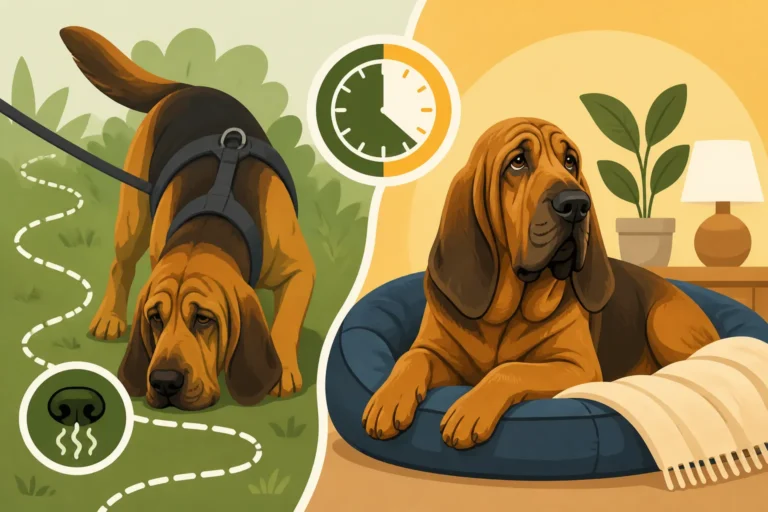
Imagine living in a world where every single piece of information, every story, every emotion, every memory, came to you through your nose. That's a Bloodhound's reality. From the moment they wake up, their highly specialized olfactory system is engaged, decoding the intricate tapestry of smells around them. A single human footprint isn't just a trace on the ground; it's a complex signature of oils, shed skin cells, and microscopic detritus, telling a detailed story of who was there, when, and what they were doing. This profound instinct to follow a trail isn't a choice; it's an imperative. It's the equivalent of a human being unable to ignore a captivating novel or a brilliant piece of art.
When you're trying to teach your Bloodhound to sit in your living room, but they're picking up the faint scent of a squirrel that ran across your lawn hours ago, or the lingering odor of the pizza delivery driver from yesterday, their brain is prioritizing that information. Their internal GPS is locking onto a scent, mapping its trajectory, and preparing to follow. This isn't defiance; it's their biological programming kicking in. It's why trying to pull them away from a compelling scent often feels like trying to stop a freight train – because, to them, that scent is the most important thing in the universe at that moment. Understanding this fundamental aspect of their being is the first step in unlocking their learning potential. For a deeper dive into this, you might find A Bloodhound's Nose Outvotes Its Handler particularly insightful.
Processing Information Through Scent
Because scent is their primary mode of interaction with the world, Bloodhounds often process new information differently from breeds more accustomed to relying on visual cues or verbal commands. Where a Border Collie might instantly grasp a hand signal for "down," a Bloodhound might take a moment longer. This isn't due to a lack of intelligence, but rather a preference for a different input channel. They're constantly cross-referencing sensory data, and if a verbal cue doesn't have an immediate, tangible scent association for them, it might just take a fraction longer to register as the most important signal in their immediate environment.
Think of it like this: if you were trying to learn a new language, and someone kept giving you instructions in a language you only partially understood while a fascinating novel in your native tongue lay open in front of you, which would capture your attention more readily? Your Bloodhound's "native tongue" is scent. When you ask them to "stay," they might be sniffing the air, wondering what that particular word smells like in context, or if there's a more interesting scent nearby that requires their immediate attention. This doesn't mean they can't learn verbal cues or hand signals – they absolutely can! It just means that their primary processor is always running a background check on the scent environment, and sometimes, that background check takes precedence or adds a slight delay to their response. It emphasizes the need for extremely clear, consistent, and highly rewarding communication to cut through the noise of their olfactory world.
Understanding the Bloodhound Learning Curve
The perceived "slowness" in a Bloodhound's learning isn't a deficit in their cognitive abilities; it's a reflection of their deep processing style and their inherent drive. They're not wired for instant gratification or lightning-fast obedience drills in the same way some other breeds might be. Instead, they operate on a more deliberate, methodical tempo, especially when there's an intriguing scent narrative unfolding around them.
The "Delay" in Response Time
Have you ever given your Bloodhound a command, like "come," and watched them just… stand there, maybe with their nose glued to the ground, before slowly, eventually, turning to you? It's a common scenario that leads many owners to believe their dog is simply ignoring them or being stubborn. However, what you're likely witnessing is a Bloodhound in the midst of processing. Their powerful nose is constantly collecting data, interpreting scents, and building a narrative. When you issue a command, their brain isn't immediately clearing the scent-related cache to respond to your voice. Instead, it's often trying to integrate your command into the current scent-scape, or perhaps deciding if your instruction overrides the fascinating information their nose is providing.
This "pause" isn't an act of defiance. It's often a deep thinker at work, prioritizing information. They might be taking a moment to fully register your request, to ensure it's not a trick, or to simply disengage from the compelling olfactory input that was previously dominating their attention. My own Bloodhound, Buster, would often take a solid five to ten seconds to respond to his name when he was really engrossed in a particularly juicy patch of grass. I learned that yelling only made him less likely to respond; waiting patiently, sometimes taking a step closer, and then praising him enthusiastically when he finally did respond, was far more effective. It's a testament to their deliberate nature. If you've ever wondered about this specific behavior, Why a Bloodhound Pauses Before It Obeys offers excellent insights.
Repetition, Consistency, and Novelty
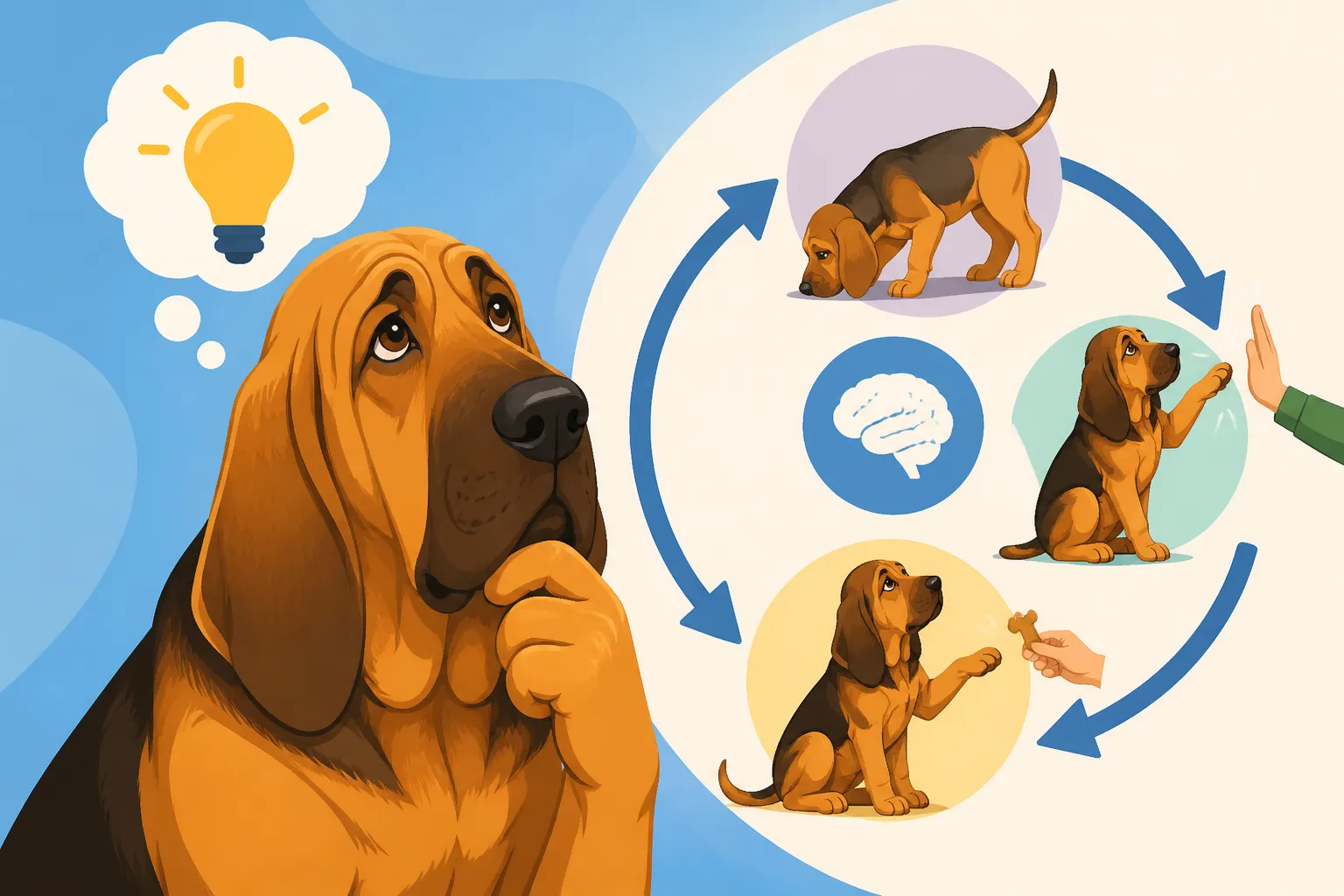
Teaching a Bloodhound requires a unique blend of unwavering consistency and an understanding of their need for novelty. They absolutely thrive on repetition when it comes to understanding what you want, but they can quickly become bored if that repetition is mundane or lacks meaningful reward. You might teach them "sit" fifty times in the kitchen, and they'll get it perfectly. But then you take them outside, where the world is a symphony of smells, and suddenly "sit" is a foreign concept. This isn't regression; it's context. They're intelligent enough to generalize, but only with consistent exposure across varying environments.
The trick is to be relentlessly consistent with your cues and expectations, but to introduce variety in your training sessions. Don't drill the same command in the same spot for twenty minutes. Instead, do a few "sits" in the kitchen, then move to the hallway for a "down," then outside for a "come." Keep it short, fun, and always end on a high note. Think of it like a game of hide-and-seek for their brain. They love to figure things out, but they need that mental stimulation to stay engaged. Without novelty, they might decide that your training session is less interesting than the dust bunnies under the couch.
Strategies for Effective Bloodhound Training
Training a Bloodhound is a journey of understanding and adaptation. You can’t just apply a generic dog training manual and expect miraculous results. Instead, you need to lean into their natural abilities and tailor your methods to suit their unique way of experiencing the world. It’s about being smart, patient, and above all, rewarding.
Harnessing Their Natural Drive (Mantrailing)
This is where the magic truly happens with a Bloodhound. Instead of constantly battling their powerful nose, you should embrace it and channel it into constructive, engaging activities. Mantrailing – the sport of teaching dogs to follow a specific human scent trail – is not just a game; it's a deeply satisfying job for a Bloodhound. This isn't merely about finding a person; it’s about providing mental and physical stimulation that aligns perfectly with their genetic predispositions. When a Bloodhound is working a trail, they are in their element, focused, and utterly content. This type of work engages their brain on a profound level, often making them more receptive and calmer in other areas of their life because their primary drive is being fulfilled.
You can start a Bloodhound puppy on simple scent games very early, laying short, easy trails in your backyard. As they grow, these trails can become longer, older, and more complex. Using a dedicated harness (like one you might find on Amazon for scent work, distinct from their walking harness) signals to them that it's "work time," helping them differentiate between casual strolls and serious trailing. By engaging them in mantrailing, you're not just teaching them a skill; you're speaking their language. It builds their confidence, strengthens your bond, and offers an unparalleled outlet for their energy. For detailed advice on how to get started, Mantrailing Is the Answer to a Bloodhound, Not Obedience is an invaluable resource.
High-Value Rewards are Key
If you want a Bloodhound to learn quickly and reliably, you need to offer something truly irresistible. A simple "good dog" might not cut it when they're wrestling with the urge to follow a tantalizing scent trail. Bloodhounds are often very food motivated, which is a fantastic advantage in training. But not just any food. We're talking about the good stuff – tiny pieces of cooked chicken, cheese, hot dogs, or whatever makes their eyes light up and their tail wag like crazy. Experiment to find what your individual hound considers a five-star treat.
Beyond food, specific toys can also be incredibly motivating. For my Bloodhound, a squeaky toy or a quick tug game was sometimes even better than a treat after a particularly good effort. The key is to keep these high-value rewards exclusively for training, making them extra special. If they get chicken all the time for nothing, it loses its power. When they nail a challenging recall or hold a long "stay" in a distracting environment, break out the top-tier rewards. Make it clear that doing what you ask leads to truly fantastic outcomes. This positive reinforcement system, where great effort is met with great reward, dramatically speeds up their learning and willingness to engage. If you're looking for ideas on what truly motivates these hounds, What a Bloodhound Will Work For delves into their specific motivators.
Short, Engaging Sessions
Bloodhounds, for all their intelligence, are not designed for hour-long, repetitive obedience drills. Their attention spans, especially for tasks that don't directly involve scent, can be surprisingly short. Trying to force them through a long session will only lead to boredom, frustration (for both of you!), and a decreased willingness to participate in future training. Instead, aim for frequent, short, and highly engaging sessions. Five to ten minutes, two to three times a day, is often far more effective than one long session.
During these short bursts, focus on one or two specific cues, keep the energy positive, and mix it up. Use different locations – inside, outside, in the yard, on a walk. End each session on a successful note, even if it means asking for a simple "sit" they know well. This strategy keeps them keen and excited for the next training opportunity. It prevents them from feeling "drilled" and ensures that training remains a positive, enriching experience. Remember, their minds are always working, so mental breaks are important. Training resources like those offered by BAXTER & Bella often emphasize this approach, building enthusiasm rather than reliance on prolonged, tedious drills. When thinking about their attention, consider How Long a Bloodhound's Attention Lasts in a Session to really optimize your approach.
Common Training Hurdles and How to Overcome Them
Bloodhounds present some unique training challenges, primarily due to their unparalleled olfactory prowess and independent nature. Recognizing these hurdles and approaching them with specific, tailored strategies is crucial for a harmonious relationship and successful training.
The Outdoor Recall Challenge
This is perhaps the most famous Bloodhound training challenge, and for good reason. Asking a Bloodhound for a reliable recall outdoors is like asking a gourmet chef to ignore a perfectly seared steak. When unleashed in an open area, surrounded by a dizzying array of scents – the deer that passed an hour ago, the neighbor's cat from yesterday, the fascinating trace of human footsteps – their brain simply cannot prioritize your "come" command. Their primal drive to follow a trail is overwhelmingly powerful. It's not that they don't know what "come" means; it's that the reward of following that invisible scent thread is, to them, far superior to anything you might offer.
For this reason, off-leash freedom in unfenced areas is rarely a realistic or safe goal for most Bloodhounds. This might sound disheartening, but it's a critical safety measure. Instead, embrace the long line. A 30 to 50-foot long line allows them to explore and follow scents safely, giving you control and preventing them from disappearing over the horizon on a hot trail. Practice recall on the long line in increasingly distracting environments, always with those high-value rewards. Gradually, they will learn that returning to you, even when there are enticing scents, leads to wonderful things. But always remember that no recall is 100% foolproof with a Bloodhound when a strong scent is involved. Why Recall Fails on a Bloodhound Outdoors offers a candid look at this specific issue.
Distraction Management
Because their world is so dominated by scent, Bloodhounds can be easily distracted in busy environments. This means that a command they perform perfectly in your quiet living room might completely fall apart at the park or a busy street corner. Building focus and managing distractions is a gradual process that requires patience and careful planning.
Start by practicing commands in low-distraction environments. Once they're consistent there, slowly introduce minor distractions – a toy on the floor, another person walking by in the distance. Gradually increase the level of distraction, always setting your Bloodhound up for success. If they fail, the distraction was too high for that stage of their learning. Go back a step. Use their high-value rewards to mark and reinforce moments of focus. For example, if they glance at a squirrel but then immediately look back at you when you say their name, reward that instant! This teaches them that choosing to focus on you, even amidst distractions, pays off handsomely. Positive reinforcement techniques and tools, often recommended by online dog training platforms, can be invaluable here for structured progression.
Avoiding Harsh Methods
Given their sensitive nature and deep processing style, Bloodhounds respond very poorly to harsh training methods. Yelling, physical corrections, or punitive tools like choke chains and prong collars can quickly shut them down, making them anxious, fearful, or simply more withdrawn and less willing to engage. These methods don't teach a Bloodhound what you want them to do; they only teach them to be afraid or to avoid interaction.
Bloodhounds thrive on positive reinforcement, patience, and clear, calm communication. They need to trust you implicitly, especially when they're working a trail and relying on your guidance. If they associate training with fear or discomfort, they will become less responsive, not more. Instead, focus on building their confidence, rewarding good choices, and gently redirecting unwanted behaviors. If your Bloodhound makes a "mistake," it's usually a communication breakdown on your part or a moment where their nose simply overwhelmed them. Re-evaluate your approach, simplify the task, and try again with more positive encouragement. Remember, a Bloodhound wants to please you, but they are also profoundly driven by their instincts. For a deeper understanding of why specific methods fail, What Harsh Handling Does to a Bloodhound is a must-read.
| Training Method Type | Bloodhound Learning Speed | Effectiveness | Impact on Bond | Notes |
|---|---|---|---|---|
| Positive Reinforcement (Scent Work) | Fast & Enthusiastic | Very High | Strengthens | Leverages natural drive; highly engaging. |
| Positive Reinforcement (Obedience) | Moderate to Deliberate | High (with consistency) | Strengthens | Requires high-value rewards & patience. |
| Aversive/Correction Based | Slow & Unwilling | Low (causes shutdown) | Damages | Creates fear, anxiety, and avoidance. |
| Repetitive Drills (No Novelty) | Slows, leads to boredom | Low | Weakens | Needs variety and engaging rewards to sustain. |
| Distraction-Free Environment | Faster Initial Learning | High | Builds Foundation | Essential for initial understanding before proofing. |
| High-Distraction Environment | Slower, requires proofing | Moderate | Challenges | Requires gradual introduction and strong reinforcement. |
Realistic Expectations for Bloodhound Learning
It's tempting to compare your Bloodhound's learning progress to that of a neighbor's German Shepherd or a friend's Labrador. But this comparison is often unfair and unproductive. Bloodhounds are phenomenal learners, but their intelligence manifests in a very specialized way.
Not a "Quick Study" in Traditional Obedience
If your goal is a dog that learns 20 complex obedience commands in a month and performs them flawlessly on cue in a crowded stadium, a Bloodhound might not be your fastest route. They are absolutely capable of learning traditional obedience cues like "sit," "stay," "down," and "heel," but their learning curve for these tasks is often more extended and deliberate than that of breeds specifically bred for high-speed, general obedience. Their brain is not wired for immediate, unquestioning compliance, especially if there's a more interesting scent to decipher.
This isn't a knock on their intelligence; it's a recognition of its specialization. A Bloodhound is a brilliant problem-solver, but the problems they're designed to solve involve intricate scent puzzles, not competitive obedience routines. They might learn a "sit" in a day, but reliably performing it in a busy park might take months of consistent, patient practice. Their intellect is deep and persistent, but applied differently. So, don't get disheartened if your Bloodhound isn't winning "Fastest Learner" awards. Their value lies in other, far more profound, abilities. Understanding their cognitive strengths can shift your perspective; for more, see Where the Bloodhound Ranks for Obedience Intelligence.
The Lifelong Learner
Despite their deliberate pace in some areas, Bloodhounds are very much lifelong learners, especially when it comes to refining their natural talents. Their ability to track and discriminate scents actually improves with experience and age. An older Bloodhound, with years of trailing under their belt, can often follow older, fainter, and more complex trails than a younger, less experienced one. Their brains are constantly building a library of scent profiles, weather effects on scent, and human behaviors, making them incredibly sophisticated detectives.
This means that while a puppy might learn basic cues, an adult or senior Bloodhound can still be taught new and advanced scent work skills. The joy of learning never leaves them, particularly when it involves their nose. Engaging your Bloodhound in consistent, stimulating scent work throughout their lives keeps their minds sharp, their bodies active, and their spirits high. They may not be the fastest to learn a trick, but when it comes to their life's purpose – the trail – they are perpetually evolving masters of their craft. Even if you only have a pet Bloodhound, you can still enroll them in local nose work or mantrailing classes. Whether a Pet Bloodhound Should Do Scent Work Classes explores the benefits of such activities.
Disclaimer
This article is for general informational purposes only and does not constitute professional advice. Laws, prices and regulations vary by location and change over time. Consult a qualified professional for guidance on your specific situation.