Which Harness a Bloodhound Trails In
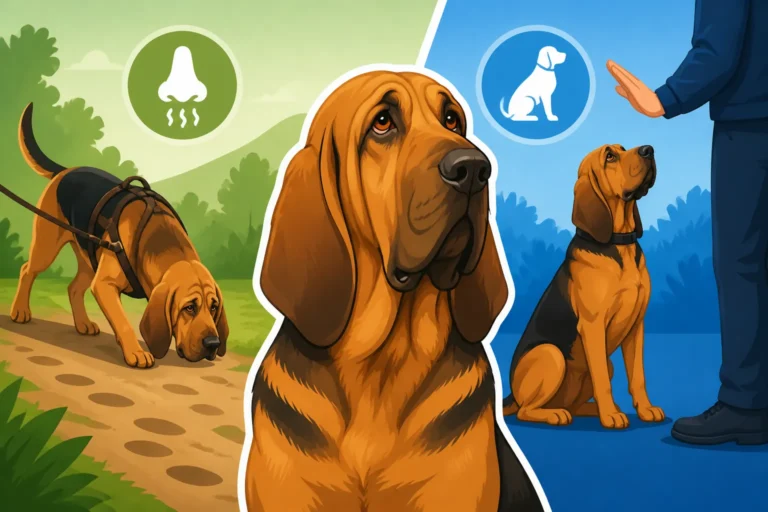
There's nothing quite like watching a Bloodhound follow a scent, nose to the ground, utterly consumed by their mission. It’s a breathtaking display of instinct and focus. However, trying to outfit that powerful, determined dog with the right gear can feel like a puzzle. A flimsy or ill-fitting harness won't just be uncomfortable; it can actively hinder their incredible work and even make them reluctant to engage. This guide will help you understand precisely what kind of harness your Bloodhound needs to perform their best when trailing, ensuring both their comfort and your success.
Why a Standard Walking Harness Isn't Enough for Trailing
Many Bloodhound owners, especially those new to scent work, often wonder if their everyday walking harness will suffice. After all, it gets the job done for walks around the neighborhood, right? The truth is, there's a world of difference between a casual stroll and a full-throttle trailing session for a Bloodhound, and that difference demands specialized equipment.
The Difference Between Walking and Working
A standard walking harness is primarily designed to prevent a dog from pulling excessively, or to give the handler more control during a casual walk. These harnesses typically have a leash attachment point on the back, or sometimes on the front. While they are adequate for a leisurely outing, they aren't built for the sustained, forward-driving pressure a Bloodhound exerts when deeply engaged in scent work. When a Bloodhound commits to a trail, they aren't just walking; they are working. They lean into the harness, pulling with purpose, their entire body channeling energy into following that invisible path.
Imagine trying to run a marathon in a pair of dress shoes. They might be fine for a walk to the corner store, but they'd quickly become painful and inefficient for serious athletic endeavor. Similarly, a walking harness can restrict a Bloodhound's natural movement, particularly around the shoulders. Their powerful shoulders and deep chest need a full range of motion to cover ground efficiently for extended periods. A restrictive harness can cause chafing, impede their gait, and even make breathing harder when they're exerting themselves. How Long a Bloodhound Can Work Before It Tires is a relevant consideration here; gear should support, not hinder, their stamina.
Limiting the Bloodhound's Natural Drive
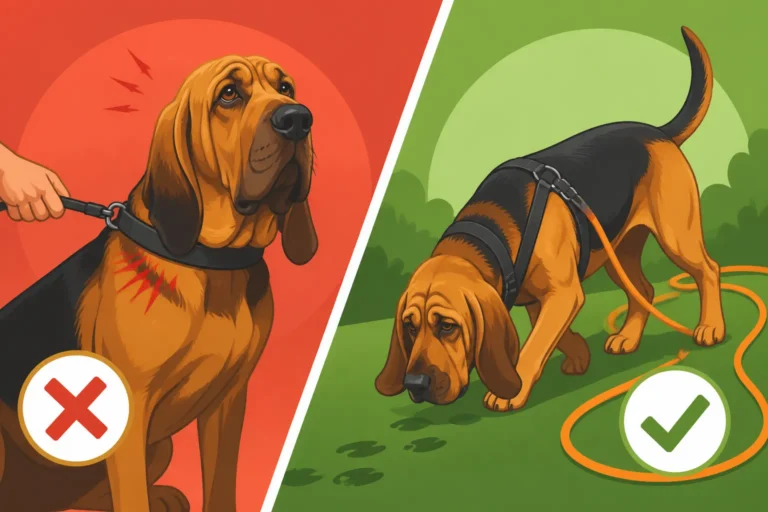
A Bloodhound's nose is their guiding force, their entire world when on a trail. They put their head down and drive forward, pulling steadily against the leash as they parse out microscopic scent particles. A harness that places pressure on their throat or the front of their chest in a constricting way can be incredibly uncomfortable and counterproductive. Instead of focusing on the scent, their attention might be diverted by the constant irritation or even mild pain.
This isn't just about physical comfort; it's about supporting their innate drive. If a harness repeatedly causes discomfort, a Bloodhound, being an intelligent and sensitive creature, might start to associate the harness itself with an unpleasant experience. This can dampen their enthusiasm for trailing, which is the last thing any owner wants when working with such a highly motivated breed. Their loose skin and deep chests also mean that a harness not specifically designed for their unique anatomy can easily rub and create hot spots, leading to skin irritation or even open sores over a long trailing session.
What Makes a Trailing Harness Different for a Bloodhound
Once you understand the distinction, the features of a dedicated trailing harness start to make perfect sense. These harnesses are engineered from the ground up to support a Bloodhound's natural working posture and incredible power.
Designed for Forward Motion and Comfort
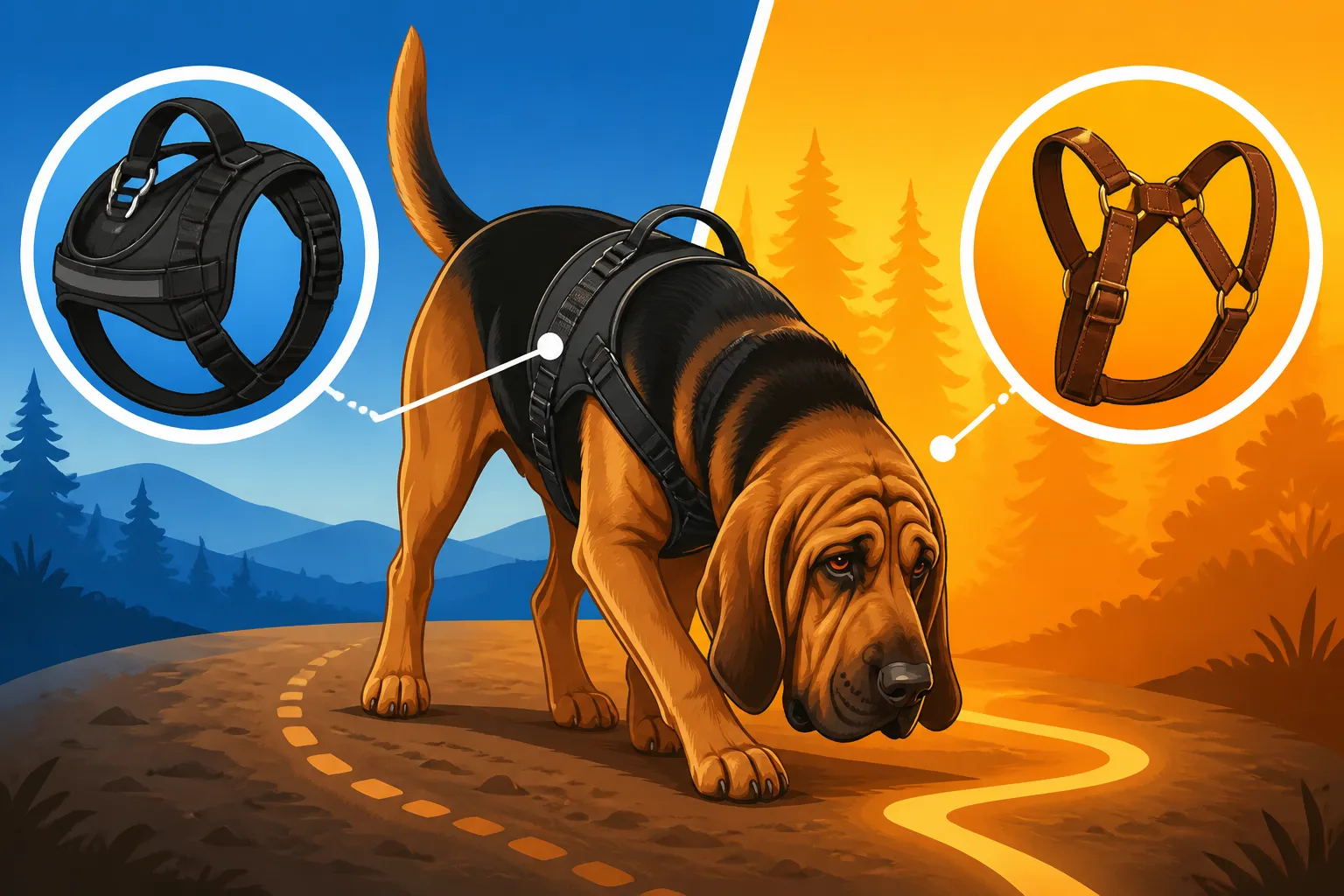
The most significant difference you'll notice in a proper trailing harness is its design, particularly around the chest and shoulders. Many effective trailing harnesses feature a Y-shaped front, or a design that distributes pressure much wider across the sternum and ribcage. This design is crucial because it leaves the shoulders completely free to move, allowing the Bloodhound to extend their forelegs fully with each stride without any restriction. This unimpeded movement is vital for efficiency and endurance on a long trail.
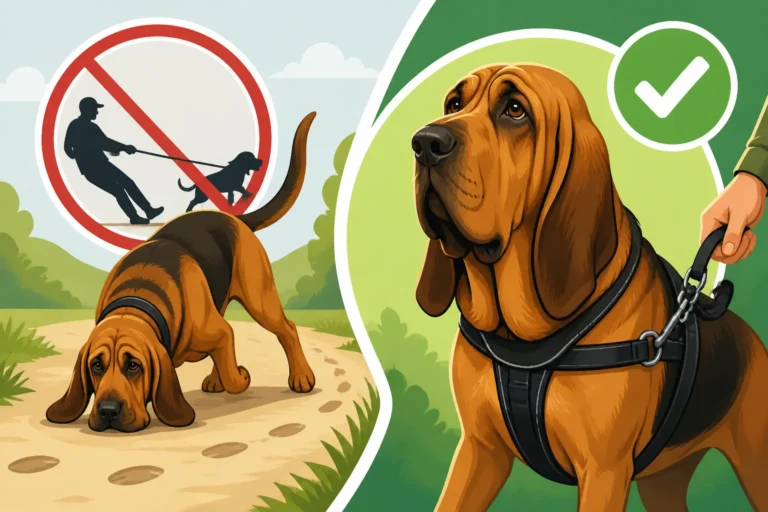
Furthermore, the leash attachment point on a trailing harness is almost always on the back, typically between the shoulder blades. This placement allows the Bloodhound to pull straight forward into the harness, distributing the pulling force evenly across their broad chest and back, rather than concentrating it on their neck or throat. This setup encourages them to lean into the work, giving them the freedom to follow the scent with unwavering focus. It enables the handler to maintain a consistent connection with the dog without constantly correcting or pulling them off balance.
Durability and Material Considerations
Bloodhounds are not delicate dogs, and their work can take them through challenging environments. A trailing harness needs to be built to withstand significant strain and the rigors of outdoor use. You'll find that these harnesses are often constructed from heavy-duty, robust materials like durable nylon webbing. This material is not only strong but also resistant to abrasions, tears, and various weather conditions.
Beyond strength, comfort for extended wear is paramount. Many quality trailing harnesses incorporate ample padding in key areas: across the chest, under the belly, and over the shoulders. This padding is often made from materials like fleece, neoprene, or breathable mesh, which prevent chafing and wick away moisture. Consider how much time your Bloodhound will spend with their nose to the ground, potentially pushing through brush or navigating uneven terrain. A well-padded harness ensures that they remain comfortable, even when working for hours. When shopping, you might find a good selection of these materials and designs on platforms like Amazon, offering a range of choices for various budgets and preferences.
Key Features to Look For in a Bloodhound Trailing Harness
When you're ready to invest in a trailing harness for your Bloodhound, you'll want to keep several key features in mind. These aren't just nice-to-haves; they are essential elements that contribute to your dog's comfort, performance, and safety on the trail.
Y-Front or H-Back Design
For a Bloodhound, a harness that allows for complete freedom of movement is non-negotiable. This usually means looking for designs that create a "Y" shape across the dog's chest from the front, or an "H" shape when viewed from above (often called an H-back or X-back harness, depending on the specific strapping). The primary benefit of these designs is that they distribute pressure away from the delicate throat area and allow the shoulder joints to articulate fully. When your Bloodhound is driving forward, their chest needs to expand, and their shoulders need to pump without resistance.
A Y-front design ensures that the chest strap sits low on the sternum, rather than high on the throat. This prevents choking and discomfort, especially when the dog is pulling hard. Similarly, an H-back or X-back harness usually features wide, padded straps that cross over the dog's back, distributing the pulling pressure broadly and comfortably. These designs are a stark contrast to harnesses that might have a horizontal strap running across the chest, which can restrict shoulder movement and apply pressure to the trachea.
Ample Padding and Adjustability
Given that your Bloodhound will be wearing this harness for potentially long periods and exerting significant effort, padding is crucial. Look for harnesses with soft, durable padding in areas that bear the most pressure or are prone to rubbing. The chest plate, the straps around the girth, and sometimes even the straps over the shoulders should be padded. Materials like fleece, neoprene, or breathable mesh are excellent choices as they prevent chafing and help manage moisture, keeping your Bloodhound comfortable even on warm days or long trails.
Just as important as padding is adjustability. Bloodhounds have unique proportions—deep chests, often with considerable loose skin around the neck and shoulders. A harness must have multiple adjustment points (at the neck, chest, and girth) to ensure a snug, yet comfortable fit. A harness that's too loose can shift and rub, or even allow the dog to back out of it. One that's too tight will restrict movement and cause discomfort. The ability to fine-tune the fit is essential for accommodating your Bloodhound's specific build and ensuring their safety and comfort.
Secure Hardware and Reflective Elements
Never underestimate the power of a determined Bloodhound. They can put immense strain on their gear. Therefore, the harness must be constructed with heavy-duty, reliable hardware. Look for strong metal D-rings, sturdy buckles that won't easily unclip, and reinforced stitching throughout. Cheap plastic buckles or flimsy attachment points are simply not safe for a working Bloodhound. This is particularly critical because your Bloodhound will be Why a Bloodhound Works on a Long Line, Not a Collar, meaning the harness and its hardware are the only connection you have to your dog.
Additionally, safety is paramount, especially if your scent work takes place in low-light conditions, such as early morning, dusk, or even at night. Many quality trailing harnesses incorporate reflective stitching or panels. These reflective elements significantly increase your Bloodhound's visibility to others, whether it's fellow handlers, motorists, or passersby. This small detail can make a huge difference in preventing accidents and ensuring your Bloodhound is easily seen in any environment. Whether a Bloodhound Handler Needs Reflective Gear is a good question to ponder as you assemble your trailing kit.
Types of Trailing Harnesses and Their Pros & Cons
Navigating the various types of harnesses on the market can be overwhelming, but understanding the core designs built for scent work will simplify your choice. Each has its nuances, and what works best might depend on your Bloodhound's specific build and the type of trailing you plan to do.
Standard Tracking/Trailing Harnesses
These are the workhorses of the scent world, purpose-built for dogs like Bloodhounds. They almost invariably feature a Y-front design that sits low on the sternum, distributing pressure evenly across the chest and allowing for unrestricted shoulder movement. The leash attachment point is typically a single D-ring located on the back, encouraging forward momentum without twisting or pulling the dog off course. Padding is usually generous in key areas, making them suitable for long hours on the trail.
The beauty of these harnesses lies in their singular focus: to enable a dog to track efficiently and comfortably. They are often made from very durable nylon webbing, sometimes layered with neoprene or fleece for added comfort and weather resistance. You’ll find a wide array of these specialized harnesses from various manufacturers, often available through online retailers like Amazon. When you search for "tracking harness" or "scent work harness," you'll typically see these robust, functional designs. Their main "con" might be that they are generally less aesthetically "pretty" than some fashion harnesses, but for a Bloodhound, function trumps form every time.
Multi-Purpose or Sport Harnesses
Some harnesses designed for active dog sports, such as canicross (running with your dog) or bikejoring (dog pulling a bicycle), can also be adapted for trailing. These harnesses often share key features with dedicated tracking harnesses, such as a Y-front chest design for shoulder freedom and a back attachment point. They are built for pulling, so they tend to be durable and often well-padded.
The advantage of a multi-purpose harness is its versatility; if you engage in several dog sports, one harness might serve multiple functions. However, they might not be perfectly optimized for trailing. For instance, some canicross harnesses are designed to encourage a higher pull point, which might be slightly different from the low-to-the-ground posture of a Bloodhound deep in scent work. They can be an excellent option for owners who are just starting out with scent work or who dabble in several activities, providing a good balance of comfort and functionality. Just be sure to carefully check their specific design to ensure it doesn't restrict your Bloodhound's natural trailing motion.
Avoiding Problematic Harness Styles
It’s just as important to know what kind of harness to avoid when it comes to trailing a Bloodhound. Two common types that are not suitable are front-clip harnesses and many "no-pull" harnesses. Front-clip harnesses have the leash attachment on the chest. While excellent for redirecting a dog that pulls on a leash during a walk (by turning them sideways), this design fundamentally works against the forward drive required for trailing. It would constantly be turning your Bloodhound off the scent line, frustrating both dog and handler.
Similarly, many "no-pull" harnesses achieve their effect by applying pressure to sensitive areas or restricting movement. These designs, while perhaps effective for discouraging pulling on a casual stroll, would make a Bloodhound's trailing experience uncomfortable, distracting, and potentially harmful. Their purpose is to prevent pulling, whereas a Bloodhound's job on a trail is to engage in controlled pulling. Using these types of harnesses for scent work would fundamentally contradict the dog's natural instinct and training goals, potentially leading to aversion or injury.
Here's a quick comparison of harness types for trailing:
| Harness Type | Key Features | Pros for Trailing Bloodhounds | Cons for Trailing Bloodhounds |
|---|---|---|---|
| Y-Front Tracking Harness | Chest strap forms 'Y'; back D-ring; often padded; durable | Allows full shoulder movement; distributes pressure evenly; encourages forward drive; comfortable for long sessions | Can be bulky; might require careful sizing for deep chests |
| H-Back/X-Back Harness | Straps form 'H' or 'X' over back; back D-ring; varied padding | Lightweight options available; good weight distribution; less restrictive than standard harnesses | Minimalist versions may lack sufficient padding for long trails |
| Multi-Purpose/Sport Harness | Often Y-front; padded; back D-ring; designed for pulling sports | Versatile for multiple activities; built for durability and pulling | May not be optimized purely for the low-head, forward drive of trailing |
| Front-Clip/No-Pull Harnesses | Front D-ring; often restrictive designs (e.g., tight chest bands, martingale action) | Not suitable for trailing – designed to prevent pulling or redirect | Restricts natural movement; can deter forward drive; uncomfortable for work |
Fitting a Bloodhound Trailing Harness Correctly
A harness, no matter how well-designed, is only as effective as its fit. For a Bloodhound, with their unique anatomy of deep chests and loose skin, getting the fit just right is particularly important. A poorly fitted harness can cause chafing, restrict movement, or even allow them to slip out.
Taking Accurate Measurements
Before you even think about putting a harness on your Bloodhound, you need to take accurate measurements. Don't guess, and don't rely solely on their weight; a Bloodhound's proportions can vary significantly even within the breed. You'll primarily need two measurements:
- Neck Circumference: Measure around the base of your Bloodhound's neck, where it meets the shoulders, often slightly lower than where a collar would sit. This ensures the neck straps of the harness won't be too tight or too loose.
- Chest Girth: This is the most critical measurement. Measure around the widest part of your Bloodhound's chest, typically just behind their front legs. This area is often much deeper on a Bloodhound than on many other breeds, so a generous measurement here is key.
Armed with these numbers, you can compare them to the sizing charts provided by harness manufacturers. Remember that Bloodhounds are known for their deep, narrow chests, so sometimes a harness that fits around the chest might be a bit loose around the neck, or vice-versa. This is where multiple adjustment points become invaluable. If in doubt, leaning towards a harness with slightly larger adjustability in the chest is often a safer bet.
The Two-Finger Rule and Movement Check
Once you have a harness on your Bloodhound, it's time to check the fit. A good general rule is the "two-finger rule": you should be able to comfortably slide two fingers flat underneath all the harness straps. If you can't, it's too tight. If you can fit more than two, it's likely too loose and could cause rubbing or allow your dog to slip out. Pay particular attention to the areas behind the elbows and under the armpits, as these are common spots for chafing if the harness is too tight or incorrectly positioned.
After adjusting all the straps, observe your Bloodhound moving around. Let them trot, turn, lie down, and most importantly, put their head down as if following a scent. Watch for any signs of restriction in their gait, especially around the shoulders. The harness should not interfere with their natural stride. Check for any rubbing, pinching, or areas where the harness digs into their loose skin. It should sit securely, not shift excessively, and allow for full, comfortable movement without causing any discomfort. If you notice any issues, readjust or consider a different harness style.
Acclimation and Training for Harness Acceptance
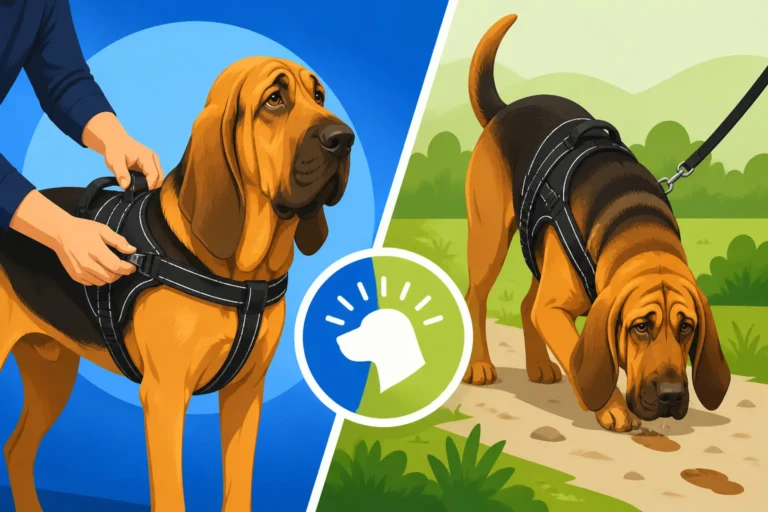
Even with the perfect fit, a new harness can feel strange to your Bloodhound. It's crucial to introduce it positively and gradually. Think of it as another step in their training and behavior journey. Start by simply letting them sniff the harness. Offer treats and praise when they show interest. Then, drape it over their back for a few seconds, immediately followed by treats. Gradually increase the time they wear it, starting with just a minute or two around the house.
Never force the harness on a reluctant Bloodhound. The goal is to create a positive association. You want them to think, "Oh, the harness means good things are about to happen!" You can integrate this with your general training, similar to how you might How to Introduce a Bloodhound Puppy to a Scent Article. Short, positive sessions are far more effective than long, frustrating ones. Platforms like BAXTER & Bella, known for their positive reinforcement training methods, offer resources that can help you introduce new equipment to your dog in a calm, encouraging way. Once they're comfortable wearing it, you can gradually introduce the long line and short, fun trailing sessions. Patience and positive reinforcement will ensure your Bloodhound happily accepts their new trailing gear.
Maintaining Your Bloodhound's Harness
A high-quality trailing harness is an investment, and like any important piece of equipment, it needs proper care to ensure its longevity and continued effectiveness. Bloodhounds, with their love for the outdoors, are prone to getting messy, and their gear will follow suit!
Regular Cleaning and Inspection
After every trailing session, especially if it was muddy, wet, or dusty, your Bloodhound's harness will accumulate dirt, sweat, and perhaps even some of the environment's scent. Regular cleaning is essential not just for hygiene, but also to prevent skin irritation on your dog and to keep the fabric from breaking down prematurely. A simple hand wash with mild soap and warm water is usually sufficient. Pay attention to the padded areas, as they can absorb the most grime and moisture. Rinse thoroughly to remove all soap residue, which could otherwise irritate your dog's skin.
Beyond cleaning, make it a habit to inspect the harness frequently. Look for any signs of wear and tear:
- Frayed stitching: This is a weak point that could lead to a strap coming undone.
- Cracked or bent buckles: Plastic buckles can become brittle over time, and metal ones can bend or corrode. Any compromise here means a risk of failure.
- Stretched or thinned webbing: Over time, the material can lose its integrity.
- Damage from chewing: If your Bloodhound decides to "help" clean their harness, check for any bite marks or tears.
- Rust or corrosion on metal hardware: This can weaken the D-rings and buckles.
Identifying and addressing these issues early can prevent a sudden failure on the trail, which could put your Bloodhound at risk.
Storage and Longevity Tips
Proper storage also plays a huge role in extending the life of your Bloodhound's harness. After cleaning and ensuring it's completely dry, hang the harness in a cool, dry place away from direct sunlight. Storing a damp harness can lead to mildew and unpleasant odors, which can also degrade the fabric over time. Avoid leaving it wadded up in a bag or tossed into a corner, as this can encourage creasing or damage.
Considering the importance of this gear, it's always a good idea to have a backup harness, especially if your Bloodhound is actively involved in frequent or serious scent work. This ensures that if one harness is wet, dirty, or needs repair, you always have a safe and functional alternative ready to go. By taking these simple steps for regular cleaning, inspection, and proper storage, you can ensure your Bloodhound's trailing harness remains a reliable and comfortable tool for many adventures to come. This kind of consistent care is just one part of The Weekly Routine a Bloodhound Owner Cannot Skip if you want a healthy, happy, and well-equipped scent hound.
Disclaimer
This article is for general informational purposes only and does not constitute professional advice. Laws, prices and regulations vary by location and change over time. Consult a qualified professional for guidance on your specific situation.