Whether a Bloodhound Handler Needs Reflective Gear
When you're out with your Bloodhound, whether it's for a casual evening walk or a dedicated training session, it's easy to get caught up in the incredible focus of their nose. However, this single-minded dedication to a scent can lead both you and your dog into situations where visibility becomes a serious concern. This guide will delve into why reflective gear isn't just a good idea, but an absolute necessity for Bloodhound handlers, covering essential equipment and crucial scenarios where it could be a literal lifesaver.
Why Visibility is Non-Negotiable for Bloodhound Handlers
Handling a Bloodhound, especially when they're "on the job" or even just intensely sniffing during a walk, is a unique experience. Their world shrinks to the ground beneath their nose, and ours often does too as we try to keep up. This intense focus, while incredible, means you both might not be as aware of your surroundings as you think.
The Bloodhound's Single-Minded Focus
A Bloodhound's nose is a force of nature. Once they lock onto a scent, their entire being is dedicated to following it. They don't look up, they don't glance left or right, and they certainly don't stop for traffic or obstacles unless physically prevented. This deep concentration is what makes them such exceptional trackers, but it also renders them oblivious to potential dangers like approaching vehicles, cyclists, or even other pedestrians in low light. As the handler, you're the one responsible for being their eyes and ears in these moments, and if you're not seen, neither are they. Imagine your Bloodhound pulling hard on the How Long a Line a Bloodhound Handler Buys across a dim parking lot, completely absorbed in a fascinating scent, and a car simply doesn't see you until it's too late. It’s a terrifying thought, but one that drives home the importance of being visible.
Operating in Low Light and Variable Conditions
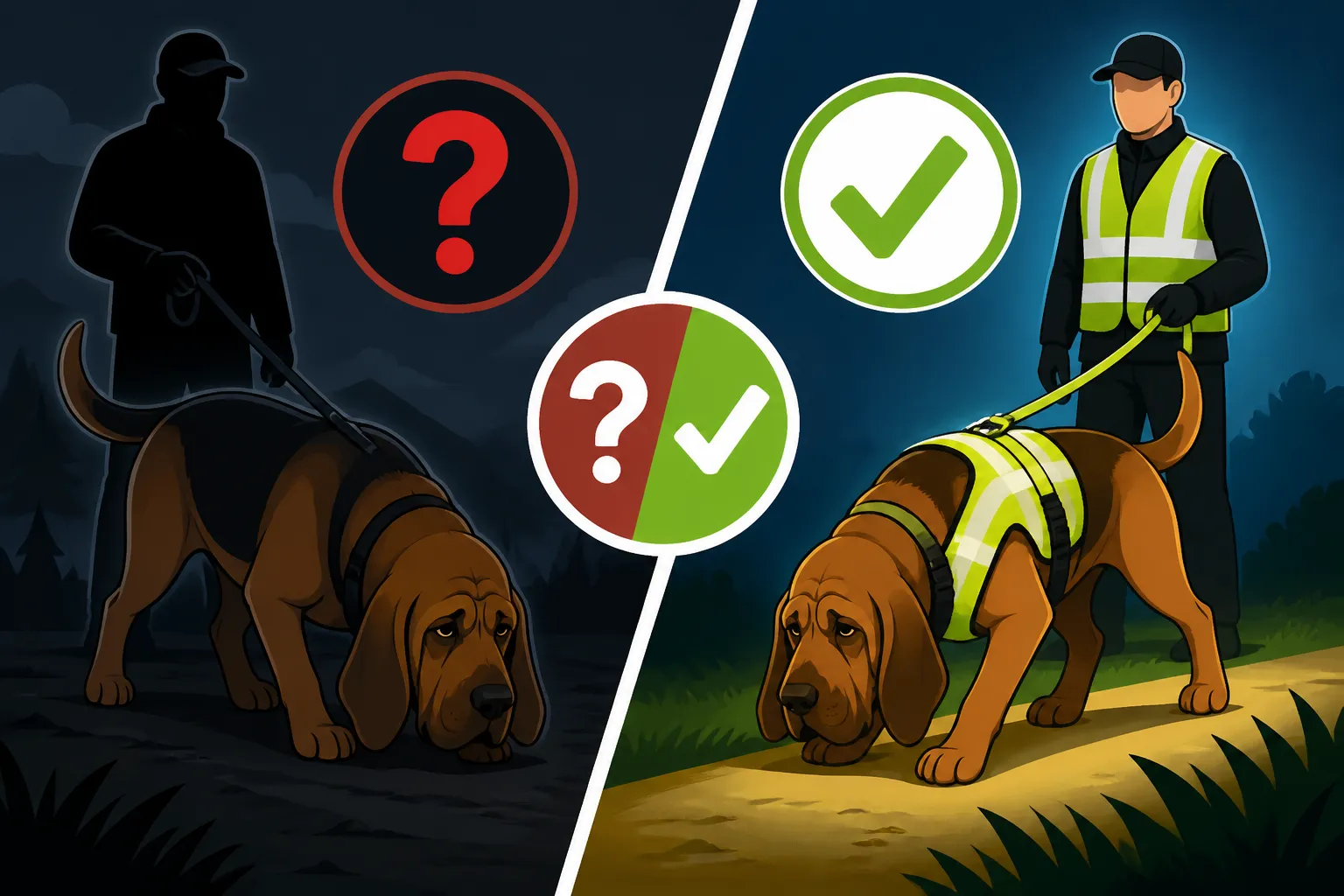
Life with a Bloodhound doesn't always happen in broad daylight with perfect weather. You might find yourself out at dawn, dusk, or even well into the night, whether it's for an emergency call-out, an early morning training session, or just a late potty break. Fog, rain, snow, or even just tree cover can drastically reduce visibility, turning familiar routes into hazardous zones. Even during the day, trails that cut through wooded areas can become quite dark, especially in winter. Without reflective gear, you and your Bloodhound blend into these backgrounds, becoming virtually invisible to anyone not actively looking for you. This isn't about being seen by other dog walkers; it's about being seen by drivers, hunters, or anyone else whose attention might be elsewhere.
The Handler as Part of the Team (and Target)
When your Bloodhound is working, you are inextricably linked. You move as one unit, often with the dog leading the way. If a vehicle approaches, or a cyclist rounds a corner, they're not just seeing a dog; they're seeing the combined mass of you and your large hound. A driver might see the glimmer of your dog's eyes and brake, but if they don't see you immediately behind or alongside, it still presents a significant hazard. Your visibility is paramount not just for your own safety, but for your Bloodhound's too. You're the one holding the lead, guiding them, and if you're not perceptible, your control and presence are compromised. This is especially true if you ever find yourself needing to physically intervene to steer your dog clear of a hazard. Being seen allows others to anticipate your movement and react appropriately.
Essential Types of Reflective Gear for Handlers
Equipping yourself and your Bloodhound for maximum visibility doesn't have to be complicated or incredibly expensive. The goal is to create as much reflective surface area as possible, breaking up your silhouette against the environment, and adding active light sources.
High-Visibility Clothing
This is your first line of defense. Think vests, jackets, and even pants or hats that incorporate bright, fluorescent colors like neon yellow, orange, or lime green, combined with retro-reflective strips. These materials are designed to be highly visible during the day by standing out against natural backgrounds, and then to reflect light directly back to its source (like headlights) in low light. A simple reflective vest, often available from stores like Chewy, can be slipped over your existing clothes and makes a huge difference. For more dedicated work or colder weather, a full reflective jacket offers better coverage and warmth. Remember, the larger the reflective surface, the better. Don't skimp on this. If you’re often out in the early mornings or late evenings for training, investing in a good quality high-vis jacket will be one of the best choices you make.
Headlamps and Flashlights
While reflective gear bounces light back, active light sources produce their own light, making you visible even when there are no external light sources like headlights. A good headlamp is invaluable. It keeps your hands free – which is critical when you're managing a strong Bloodhound on a long line – and directs light wherever you're looking. Choose one with multiple settings, including a red light option to preserve your night vision if you need to consult maps or gear without blinding yourself or your dog. A powerful handheld flashlight can also be useful for scanning ahead, illuminating specific areas, or signaling. This combination ensures that you're not just passively visible, but actively illuminating your path and presence. Imagine trailing through dense woods, where a Bloodhound's inherent curiosity might lead you down dark paths; a headlamp lights your way and ensures you can see potential trip hazards or unexpected wildlife.
Gear for the Bloodhound Itself
Don't forget your four-legged partner! Just like you, your Bloodhound needs to be seen. A reflective harness or collar is absolutely crucial. Many companies offer harnesses with integrated reflective stitching or strips. These are particularly effective because the harness sits high on the dog's body, making them visible from various angles. If your Bloodhound wears a separate What a Tracking Harness Costs for a Bloodhound or Mantrailing Harness and Long Line Cost, ensure that too has reflective elements. Some handlers even use light-up collars or clip-on LED lights that attach to the collar or harness. These provide active illumination, making your dog visible even in pitch-black conditions. Given their size and powerful scent drive, a visible Bloodhound is a safer Bloodhound. This is not just for your benefit but also for the safety of others who might encounter them unexpectedly, especially if your dog somehow gets away from you. This added visibility is particularly important given that How Far a Loose Bloodhound Will Travel.
Scenarios Where Reflective Gear Becomes Critical
The need for reflective gear isn't confined to a single type of activity. Bloodhounds and their handlers can find themselves in a myriad of environments where being seen is paramount.
Roadside and Urban Trailing
Think about those moments when a trail takes you along the shoulder of a busy road, or through a dimly lit urban park after sunset. Cars, bicycles, and even other pedestrians are moving at various speeds, and their attention might not be on the ground where your Bloodhound is intensely working. In these situations, high-visibility clothing and active lights are non-negotiable. Drivers need ample time to see you and react. If you're wearing a reflective vest, and your Bloodhound has a blinking light on their harness, you create a much larger and more noticeable target. This is especially true if you're navigating complex urban environments where Whether a Bloodhound Can Be Called Off a Scent quickly might not always be possible due to the intensity of their focus. Making yourself known to others mitigates risk dramatically.
Wilderness and Rural Tracking
While you might think of rural areas as less risky, the lack of ambient light in wilderness settings can make you completely invisible. You could be tracking through dense woods, across open fields, or along quiet country roads where vehicles travel at high speeds. Hunters, farmers, or other rural residents might be operating machinery or driving on private roads, and they won't expect to see people and dogs in the dark. Reflective gear, combined with headlamps, helps you stand out against natural backgrounds like trees and bushes. It also serves as a crucial identifier for search and rescue teams if you ever need assistance, especially if you're out on a long or challenging track. Even if you don't anticipate being out past dark, unpredictable circumstances or a particularly long track can mean you end up staying out longer than planned. It's always better to be prepared.
Nighttime or Dawn/Dusk Operations
Many professional search and rescue teams operate around the clock, meaning handlers and their Bloodhounds are frequently deployed during hours of reduced visibility. But even for the average owner who enjoys Mantrailing Is the Answer to a Bloodhound, Not Obedience as a hobby, early morning or late evening sessions are common. This is often when the air is cooler and scents might hold better. The transition from day to night, or night to day, is particularly dangerous as eyes adjust and light levels are constantly changing. Your reflective gear will work effectively during these 'transitional' times when natural light is low but artificial light sources (like car headlights) are common. Without it, you're relying entirely on the hope that someone will spot a dark shape against an already dark backdrop. This is where a reliable headlamp and reflective outerwear purchased from a reputable outdoor gear supplier (or even online through Chewy) truly proves its worth.
Beyond Reflective Gear: Other Safety Considerations
While reflective gear is a fundamental safety tool, it's part of a broader safety mindset that every Bloodhound handler should adopt. Safety is multifaceted, encompassing preparation, communication, and ongoing diligence.
Communication and Teamwork
Effective communication is crucial, whether you're working with a team or just informing family members of your plans. If you're part of a tracking team, clear communication about your route, estimated duration, and any encountered hazards is vital. Radios or cell phones are indispensable. For solo outings, always tell someone where you're going and when you expect to return. Consider carrying a personal locator beacon (PLB) for remote wilderness work. Moreover, training your Bloodhound to respond to directional cues and emergency stops, even when engrossed in scent, is a significant safety asset. While Why Off Leash Is Not a Goal With a Bloodhound is generally good advice, having a solid "leave it" or "come" command that can momentarily override their drive can be life-saving.
Preparing for the Unexpected
Even the most planned outing can go awry. Always pack essentials like water, snacks, a first-aid kit for both you and your dog, a fully charged cell phone, and a portable charger. Weather can change rapidly, so layer your clothing and consider waterproof outer layers. Carrying a whistle can be useful for signaling. If you're in an area with a lot of vehicle traffic, a high-quality, sturdy lead that won't snap under pressure is critical. For those serious about trailing, having a plan for vehicle support or extraction is also smart. Being prepared means thinking through potential problems before they happen, giving you the best chance to handle them safely. Knowing The First Year With a Bloodhound That Already Wants to Trail is about constant learning and adaptation.
Routine Gear Checks and Maintenance
Reflective gear, like all equipment, wears out. The reflective strips can crack, fade, or peel over time, especially with frequent washing or exposure to the elements. Headlamp batteries can die, and bulbs can burn out. Make it a habit to check all your safety gear before each outing. Are the reflective elements still bright? Are the batteries fresh in your headlamp and dog lights? Is your leash free of fraying? Does your What a Tracking Harness Costs for a Bloodhound fit properly and show no signs of weakness? Keep extra batteries on hand. If your gear is looking worse for wear, replace it. The safety benefits are entirely dependent on the gear performing as intended. This also extends to your dog's health; a robust Bloodhound is better equipped to handle the physical demands of trailing. Keeping them on a consistent, high-quality diet, perhaps like those offered by Ollie, ensures they have the energy and stamina needed. It's also wise to have pet insurance from providers like Healthy Paws, especially for a breed prone to specific health issues, as unexpected vet bills can derail even the best-laid plans.
Here's a quick look at common reflective gear and its primary uses:
| Gear Type | Primary Use | Key Features | Best For |
|---|---|---|---|
| Reflective Vest | Day & low-light visibility for handler | Fluorescent colors, reflective strips | Roadside, urban areas, general walking |
| Reflective Jacket | Day & low-light visibility for handler, warmth | Fluorescent colors, full coverage reflective panels, weather-resistant | Dedicated tracking, colder weather, extended outdoor periods |
| Headlamp | Active illumination for handler, hands-free | Adjustable beam, multiple light modes (white/red), battery-powered | Night tracking, navigating dark trails, hands-on tasks |
| Handheld Flashlight | Active illumination, signaling for handler | Powerful beam, robust construction | Spot-checking, signaling, backup light source |
| Reflective Leash/Line | Low-light visibility for lead | Reflective stitching or woven material | All trailing and walking, especially in low light |
| Reflective Harness | Day & low-light visibility for dog | Fluorescent colors, reflective strips, secure fit | All activities where dog needs to be seen from various angles |
| Light-Up Collar/Clip | Active illumination for dog | LED lights (blinking/solid), battery-powered | Nighttime, dense fog, making dog highly noticeable |
| Reflective Hat | Low-light visibility for handler's head | Fluorescent material, reflective logos/strips | General walking, adds head visibility |
Ultimately, investing in and consistently using reflective gear is a simple yet profoundly impactful way to ensure the safety of both you and your amazing Bloodhound. Don't let their incredible nose lead you into an unseen hazard.
Disclaimer
This article is for general informational purposes only and does not constitute professional advice. Laws, prices and regulations vary by location and change over time. Consult a qualified professional for guidance on your specific situation.