Whether a Bloodhound Can Learn a Reliable Emergency Stop
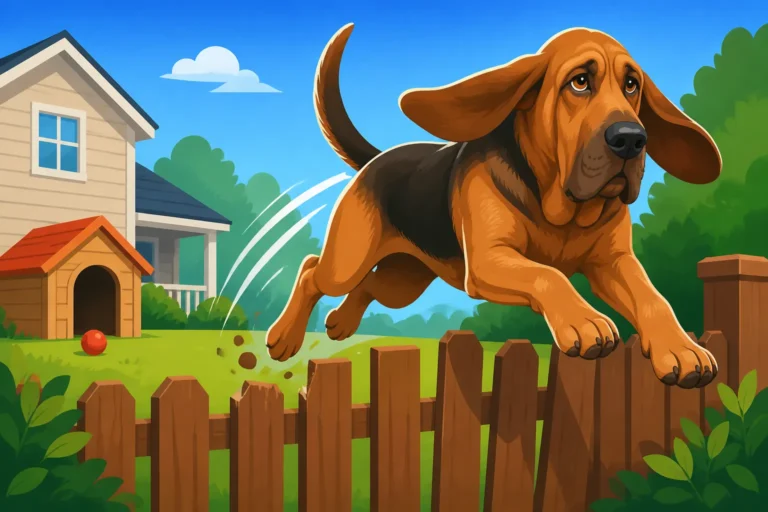
It's a common dream for dog owners: picturing your beloved companion trotting happily beside you, off-leash in a beautiful open field, knowing that with a single word, they'll halt or turn back to you. For most dog breeds, achieving a reliable emergency stop or recall takes dedication, but it's an attainable goal. For Bloodhounds, however, the very essence of their being makes this particular command less a matter of training difficulty and more a collision with their deepest instincts. This guide will delve into why teaching a Bloodhound a truly "reliable" emergency stop presents such a unique challenge, what you can realistically achieve, and how to keep your scent hound safe in a world full of tantalizing smells.
The Bloodhound's Drive: Why "Stop" Isn't Its First Thought
When you look at a Bloodhound, you see a majestic, wrinkly, calm-looking creature, often lounging serenely on the sofa. But beneath that placid exterior lies a highly specialized, millennia-old hunting machine with an unparalleled drive to follow scent. This isn't just a strong preference; it's a profound, almost spiritual calling that dictates their every move once a compelling odor hits their incredible nose.
The Power of the Nose: Explaining the Scent Drive's Dominance
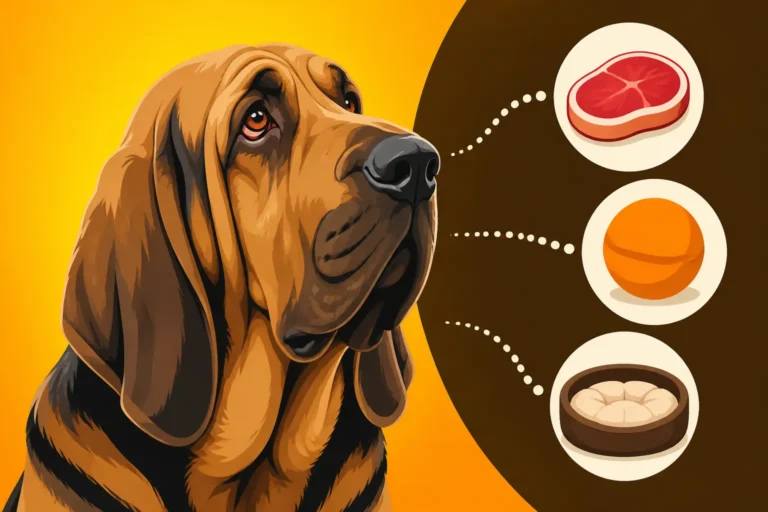
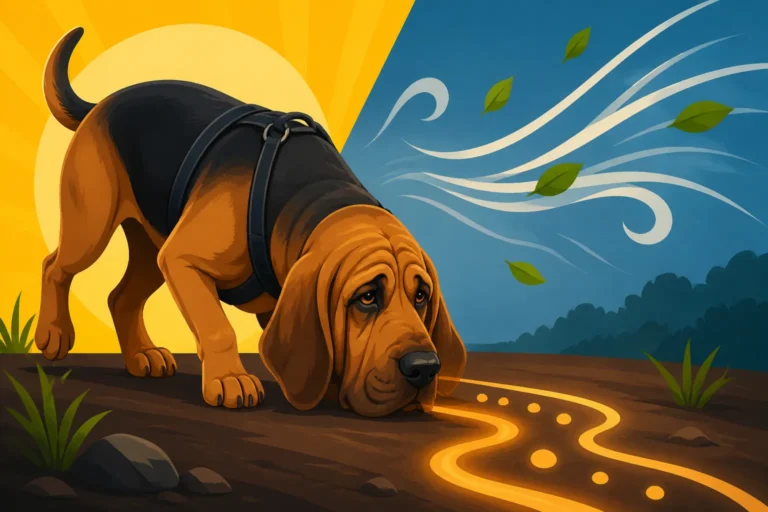
Imagine walking into a room, and suddenly every single conversation, every song, every sound, becomes magnified by a thousand times. You can't filter it out; it's all-encompassing. Now, imagine that, but with scent. That's a glimpse into the world of a Bloodhound. Their nose isn't just a sensory organ; it's their entire world, their prime directive. When they "turn on" to a scent trail, everything else fades into the background. It's not that they're being stubborn or disobedient; it's that the scent is a siren song so powerful that it physically and mentally overrides almost all other input.
This isn't a flaw in their character; it's their masterpiece. Their elongated skull, deep-set eyes, and those famously long, low-hanging ears are all designed to funnel and trap scent, creating a highly concentrated odor tunnel for them to follow. They literally have more scent receptors than almost any other breed, and the part of their brain dedicated to processing scent is enormous. To ask a Bloodhound to ignore a hot trail is akin to asking a concert pianist to ignore the music mid-performance or a chef to ignore a five-alarm fire in their kitchen. It's simply not how they're wired.
Single-Minded Focus: How Scent Overwhelms Other Stimuli
When a Bloodhound locks onto a scent, they enter a state of extreme focus, often described as "nose-blindness" or "ear-deafness." Your calls, your commands, the sound of a car horn, even a loud clap – they all become distant, muted background noise to the urgent, captivating narrative unfolding beneath their nose. This isn't a behavioral issue that can be trained out with enough treats or repetition. It's a physiological response that takes over.
Think of it this way: their brain is processing an overwhelming amount of data from the scent world, demanding all available cognitive resources. There's simply not enough bandwidth left to process "Stop!" or "Come!" with the same urgency. They are, in that moment, fulfilling their life's purpose, and anything that distracts from that is merely static. This intense focus is why they are so incredible at trailing, but it's also why reliable off-leash control in an uncontrolled environment is such a pipe dream for most owners.
Breed History and Purpose: What They Were Bred to Do
To truly understand the Bloodhound's challenge with an emergency stop, we must look at their history. These dogs weren't developed to be obedient family pets who would stick close by; they were developed to follow a scent trail relentlessly, for miles, over diverse terrain, often for days. Their original purpose, centuries ago, was to track game and, later, to track people—lost souls, escaped individuals, or even criminals. The Abbey of Saint Hubert Bred the Bloodhound's Ancestor with this unwavering focus in mind.
Their very DNA is programmed for persistence and independent thinking when on a trail. Unlike many herding or retrieving breeds that work with a handler, waiting for cues and direction, a Bloodhound works for its nose. The handler's job is often to keep up, read the dog, and provide support, not to micro-manage every step. This deep-seated instinct to follow a trail to its conclusion means that interrupting that process with an emergency stop is fundamentally asking them to betray their genetic heritage. It's a big ask, and one that often goes against the grain of their very being.
Understanding "Reliable" in Bloodhound Terms
When we talk about a "reliable" command, especially an emergency stop, for most breeds, it means the dog will respond immediately, almost instinctively, even when faced with significant distractions. For a Bloodhound, we need to adjust our definition of "reliable" significantly, understanding their unique challenges and focusing on safety and management strategies.
Defining "Reliable" for the Average Dog
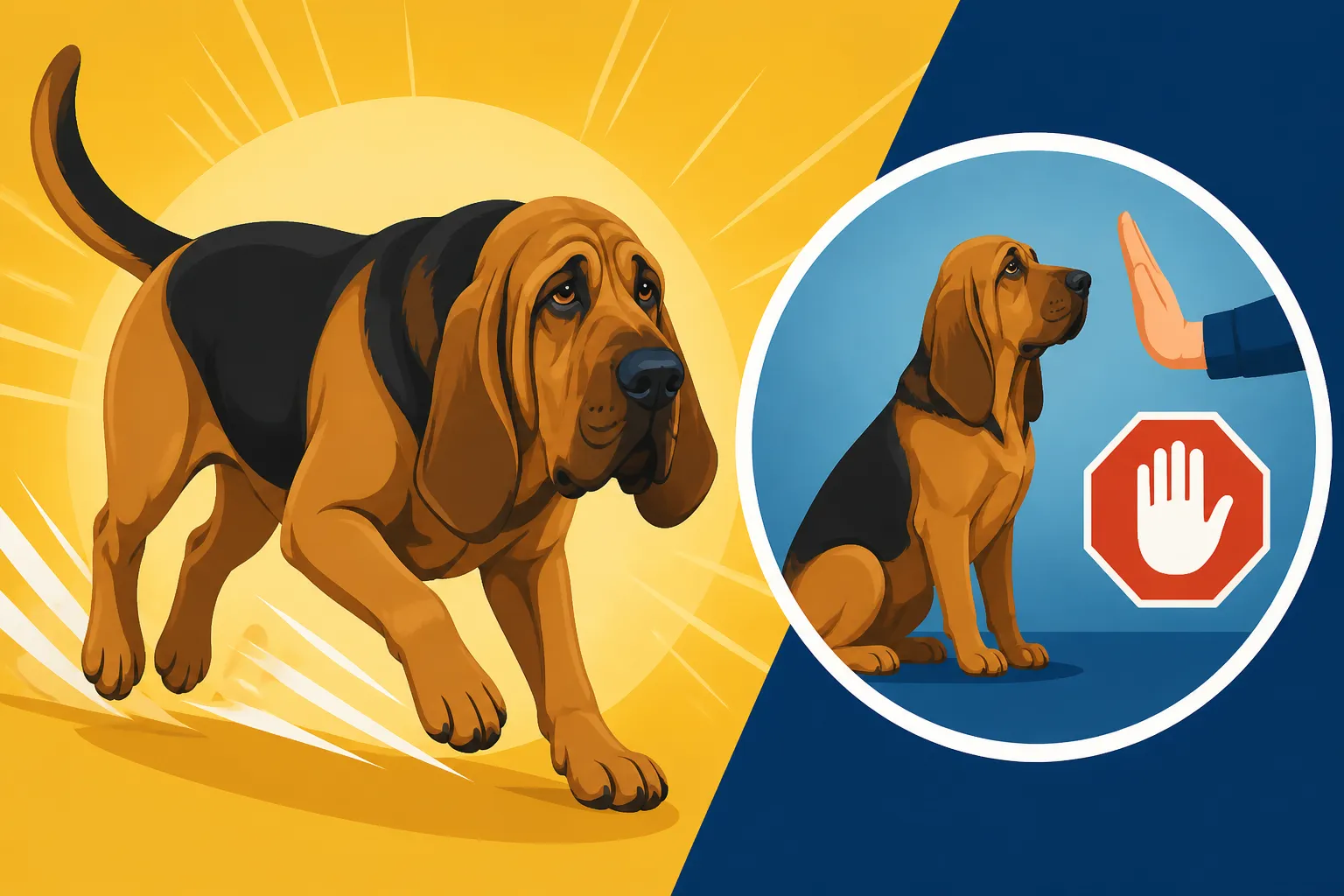
For many breeds, a reliable emergency stop means that if your dog bolts towards a busy road, a squirrel, or another dog, a sharp, urgent "Stop!" or "Down!" command will cause them to slam on the brakes, hit the dirt, and hold that position until released. This level of reliability is built on consistent, positive reinforcement, high-value rewards, and extensive proofing in various environments with escalating distractions. It requires a dog to prioritize the handler's voice over its own desires, even when those desires are incredibly strong.
This gold standard of reliability is what gives owners the confidence to walk their dogs off-leash in appropriate areas. It's a testament to the dog's training, temperament, and bond with its handler. It's also something that many owners dream of achieving, and rightly so, as it offers a profound level of freedom and safety. However, applying this same standard to a Bloodhound without modification is setting both you and your dog up for disappointment and potential danger.
The Bloodhound Exception: Why Their Reliability Is Different
With a Bloodhound, "reliable" emergency stop often means something far different. It means that if they hear you, if the scent isn't too overpowering, and if you have a very strong relationship built on consistent high-value rewards, they might pause, or at least slow down, for a moment. But even then, it's a gamble. The expectation should never be that they will instantaneously drop everything and hold a perfect stay like a Border Collie. Their nose simply has too much pull.
A more realistic "reliable" for a Bloodhound might be that they respond to a very loud, very high-pitched, happy "Come!" when they are not on a strong trail, or that they slow down enough on a long line for you to reel them in. It's about damage control and management rather than absolute control. It's about accepting that their nose is truly the boss, and your job is to keep them safe while they exercise that incredible gift, not to suppress it entirely. Why Recall Fails on a Bloodhound Outdoors delves deeper into this fundamental challenge.
Safety First, Obedience Second: Prioritizing Physical Control
Given the Bloodhound's intense scent drive, safety must always come first. This means prioritizing physical control over the aspirational goal of a perfect off-leash emergency stop. For a Bloodhound, "off-leash" is generally not a safe or realistic goal in unfenced areas. Why Off Leash Is Not a Goal With a Bloodhound is a crucial read for any Bloodhound owner.
This isn't to say you shouldn't try to train an emergency stop; it's just to say that your primary mode of ensuring their safety should be a quality harness and a long line or a securely fenced area. If you can get a "stop" or a "down" on a long line, that's fantastic. If you can get it in your securely fenced yard, even better. But expecting it to work when they are fully committed to a deer trail in an unfenced park is dangerous wishful thinking. Invest in a good, durable long line—you can find many excellent options on Amazon, designed for large breeds—and use it as your primary safety tool.
Foundational Training: Building Blocks for Control
Even if a truly "reliable" emergency stop remains elusive for a Bloodhound in high-distraction environments, foundational training is absolutely crucial. These skills don't necessarily lead to off-leash freedom, but they create a dog that is more manageable, responsive, and safer on a leash or long line. They also strengthen the bond between you and your hound.
Strong Recall: The Absolute Prerequisite
Before you can even dream of an emergency stop, you absolutely must have the strongest recall possible. While it may never be 100% reliable when a Bloodhound is on a hot scent, a solid recall in lower-distraction environments is your primary tool for communication and safety. This means making coming to you the most rewarding thing your Bloodhound can possibly do.
Start recall training from day one, in a contained, low-distraction environment. Use high-value treats – think cooked chicken, cheese, or hot dogs – and make a huge fuss when they come. Play games like "hide and seek" in the house or a secure yard, making yourself exciting and the reward even more so. Gradually introduce minor distractions, always setting your Bloodhound up for success. Remember, a Bloodhound's brain is processing How a Bloodhound Separates One Person's Scent From a Crowd, so you're competing with incredible sensory input. When they respond to you, it's a huge victory.
Leash Manners: The Importance of a Well-Behaved Dog on a Line
Since Bloodhounds should almost always be on a leash or long line when outside of a secure area, impeccable leash manners are non-negotiable. A Bloodhound pulling on a leash is not only unpleasant but also potentially dangerous, especially given their size and strength. Teaching them to walk nicely beside you, or at least not drag you down the street, is paramount for both your safety and theirs.
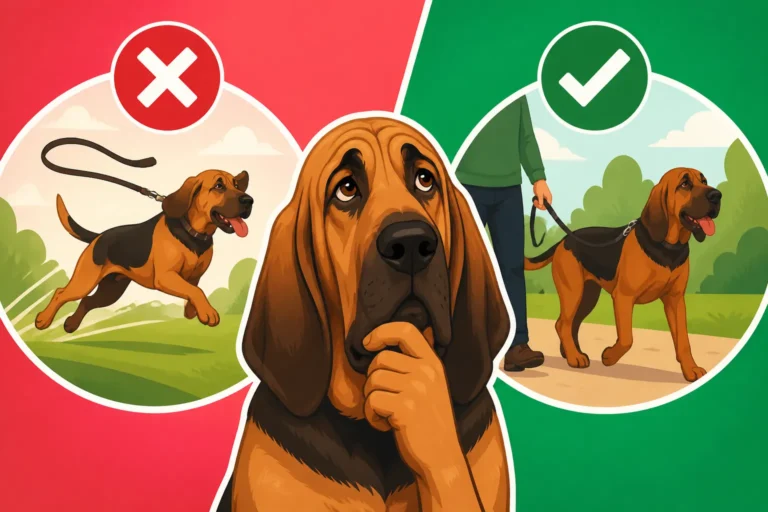
Start with loose-leash walking exercises in a quiet area. Use a front-clip harness or a head halter if needed, as these can provide better control for strong pullers. Reward heavily for any moments of slack in the leash. Practice changing directions frequently to keep their attention on you. Consistency is key here. Every walk is a training opportunity. This also builds a foundation for an emergency stop, as a dog that is aware of your presence and responsive to your movements is more likely to respond to a verbal cue, even if only to slow down, if a dangerous situation arises.
Engagement and Motivation: What Makes a Bloodhound Want to Listen
Bloodhounds are often described as "stubborn," but it's usually more accurate to say they're highly motivated by scent and less by traditional obedience. To get them to "listen" (or at least acknowledge you), you need to be more interesting than the environment, or at least the secondary smells in the environment. This means high-value rewards, enthusiastic praise, and making training a fun, engaging game.
Food is often a huge motivator, but finding what your Bloodhound considers high-value is critical. It might not be plain kibble. Experiment with different treats. Toys can also be a motivator, especially if you have a Bloodhound who loves a good tug game. Short, frequent training sessions are better than long, boring ones. Keep it positive, keep it fun, and always end on a success. Consider a program like BAXTER & Bella, which offers comprehensive online training resources; their methods focus on positive reinforcement and engagement, which can be particularly effective for independent thinkers like Bloodhounds. Building this strong, positive relationship is key to having any hope of them responding to an emergency stop cue.
Techniques for Teaching an Emergency Stop
While a truly reliable emergency stop for a Bloodhound in a high-scent environment is a long shot, you can still teach the mechanics of the command. The goal isn't necessarily off-leash reliability, but rather a tool to potentially buy you a critical second or two if an accident happens while they are on a long line, or to instill general responsiveness.
The "Watch Me" or "Look" Cue: Gaining Attention
Before you can ask your Bloodhound to stop, you need to get their attention. A "Watch Me" or "Look" cue is invaluable for this. It teaches your dog to make eye contact with you on command, momentarily disengaging from whatever else they're focused on. For a Bloodhound, this is a huge accomplishment.
Start in a quiet environment. Hold a high-value treat near your eye. As your Bloodhound looks at your eye, say "Watch Me!" (or "Look!") and immediately reward. Practice this many, many times. Gradually introduce minor distractions. The goal is that when you say "Watch Me," they briefly re-engage with you. This isn't a magical override for a full-blown scent trail, but it's your first step in trying to break their focus for that split second you might need.
The "Wait" or "Stay" Command: Building Duration and Distance
Once you have a "Watch Me," you can work on a "Wait" or "Stay" command. This teaches them to hold a position for a period of time. This is best practiced on a leash or long line, even in a fenced yard, to maintain physical control.
Start with short durations and minimal distance. Ask your Bloodhound to sit, then say "Stay" or "Wait." Take one step back, then immediately return and reward if they held the position. Gradually increase the distance and duration. The challenge with a Bloodhound is that their nose is constantly active. Even while staying, they are likely sniffing the ground or the air. The goal isn't stillness, but remaining in a designated spot. This is more about impulse control than an immediate stop, but it builds the mental muscle for holding a position. Remember to keep sessions short, as How Long a Bloodhound's Attention Lasts in a Session is not very long for repetitive, non-scent tasks.
Proofing and Distractions: The Ultimate Test for a Bloodhound
"Proofing" is the process of practicing a command in various environments with increasing levels of distraction. For most dogs, this is how you build true reliability. For a Bloodhound, this is where the limitations of an emergency stop become painfully clear. You can proof the command, but only to a certain extent.
Start with low-level distractions, like a few leaves blowing or a distant sound. Then move to more challenging ones, like another person walking by without a dog. Always start with your Bloodhound on a long line. When you attempt an emergency stop (a strong, clear "Stop!" or "Down!"), be prepared to reinforce it immediately with the long line if they don't respond. Reward heavily even for a brief pause. This is not about punishing them for not stopping, but about teaching them the consequence of not stopping is gentle pressure from the line, followed by a reward for compliance. Be realistic: the ultimate "distraction" for a Bloodhound is a potent scent trail, and that's the one you'll likely never fully proof against.
Real-World Application and Management
Given the Bloodhound's inherent drives, the most effective approach to their safety and your peace of mind isn't solely focused on a perfectly trained emergency stop, but on smart management and accepting their unique nature.
The Long Line as a Lifeline: Essential Equipment for Safety
For any Bloodhound owner, a long line isn't just a training tool; it's a way of life. This piece of equipment—often 15 to 30 feet long, available in various materials on platforms like Amazon—allows your Bloodhound to explore and follow scents with a sense of freedom, while still keeping them physically connected to you. It's your ultimate "emergency stop" and "recall" in one.
When using a long line, ensure it's attached to a secure, comfortable harness, not a collar, to prevent injury to their neck if they hit the end of the line. Allow them to drag it or hold it loosely, letting them investigate scents. If they start to bolt or head towards danger, you can step on the line, or gently reel them in. This provides immediate, physical feedback without harsh corrections. What a Mantrailing Harness and Long Line Cost and What a Long Line Suits a Bloodhound in the Open offer more details on this essential equipment. It's a fundamental part of responsible Bloodhound ownership, acknowledging their scent drive while prioritizing their safety.
Secure Environments: When and Where You Can Practice
While off-leash is generally a no-go in open, unfenced spaces, there are secure environments where your Bloodhound can safely enjoy more freedom and where you can practice your emergency stop commands without high stakes. These include:
- Your own securely fenced yard: Ensure the fence is high enough (a Bloodhound can be surprisingly agile if motivated) and that there are no gaps they can squeeze under or through. What Fencing Actually Holds a Bloodhound is a useful read here.
- Private, rented dog parks or training fields: Some facilities offer private rentals, allowing your Bloodhound to be the only dog in a large, secure area.
- Designated, fully enclosed dog parks with double-gated entries: Even here, stay vigilant. Other dogs, distracted owners, or even a strong whiff of something outside the fence can still trigger a dash.
Practicing your emergency stop in these secure environments allows you to build confidence in your hound's (limited) responsiveness without the anxiety of them running into traffic or getting lost. You can even set up "runaway" games, letting a trusted helper lay a short trail for your Bloodhound, then calling them back or asking for a "stop" before they complete the trail.
Compromise and Prevention: Accepting Limits and Planning Ahead
The reality of Bloodhound ownership is a constant dance of compromise and prevention. You must accept that their nose will often win out, and plan accordingly. This means:
- Never trust a Bloodhound off-leash outside a secure, truly hound-proof enclosure. Seriously, just don't do it.
- Always use a reliable harness and leash/long line.
- Scan your environment for potential dangers and tempting scents before your Bloodhound does. Prevention is your best tool. If you see a rabbit, guide your Bloodhound away before they get a full whiff.
- Embrace scent work as an outlet. Give them a job their nose was built for. Mantrailing Is the Answer to a Bloodhound, Not Obedience highlights how channeling their natural drive can fulfill them and make them happier, more settled companions. This can be as simple as hiding treats around the house or enrolling in formal Mantrailing Is the Answer to a Bloodhound, Not Obedience classes.
By adopting a mindset of prevention and embracing tools like the long line, you can provide your Bloodhound with a rich, fulfilling life while mitigating the risks associated with their incredible, yet challenging, scent drive.
| Command | Goal for Most Breeds | Realistic Goal for Bloodhounds (on leash/long line) |
|---|---|---|
| Emergency Stop | Immediate halt, drop, and stay regardless of distraction. | A pause, a slowdown, or a momentary re-engagement if scent isn't overwhelming. |
| Recall | Immediate return to handler, even off-leash. | Consistent return in low-distraction areas; requires physical intervention (long line) or extremely high value reward on trail. |
| "Watch Me" / "Look" | Immediate eye contact with handler. | Brief eye contact in low-medium distraction; often requires high-value treat. |
| "Wait" / "Stay" | Hold position for duration and distance. | Hold position while still actively sniffing, with handler nearby. |
When to Lower Your Expectations (and Why That's Okay)
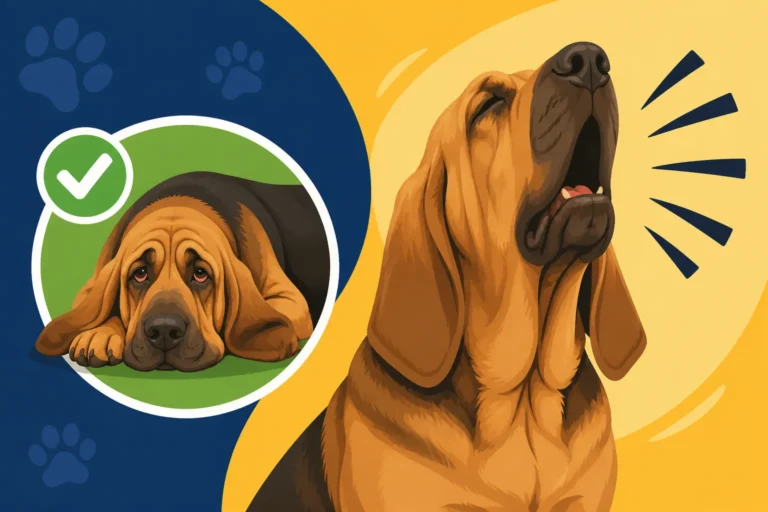
It's easy to fall into the trap of comparing your Bloodhound to other breeds, especially when you see perfectly behaved dogs at the park. But remember, your Bloodhound isn't "broken" because it doesn't have an instant emergency stop. It's a Bloodhound, and that's something truly special. Adjusting your expectations isn't a sign of failure; it's a sign of understanding and empathy for your unique companion.
Embracing the Bloodhound Nature: Accepting Their Unique Traits
The Bloodhound's unwavering dedication to scent is not a personality quirk; it's the very definition of the breed. It's what makes them extraordinary trackers and why their evidence holds up in court. To expect them to suppress this fundamental drive for the sake of a perfect "stop" is to misunderstand and disrespect their inherent nature.
Instead of fighting against their drive, embrace it. Celebrate their incredible nose. Watch them work a trail, even if it's just a squirrel's path in the yard, and marvel at their focus. Understand that their "stubbornness" is often just intense concentration on their most important work. This shift in perspective can transform your relationship with your Bloodhound, moving from frustration to appreciation. Whether a Bloodhound Is Stubborn or Just Busy clarifies this distinction.
Focusing on Management Over Cure: The Realistic Approach
For most Bloodhound owners, the journey is one of management, not a "cure" for their scent-driven tendencies. This means constantly thinking ahead, planning for contingencies, and using tools and strategies that ensure their safety. It's about creating a lifestyle where their nose can thrive in safe, controlled ways, rather than trying to force them into a mold they weren't designed for.
This realistic approach includes:
- Using secure leashes and harnesses always.
- Having a well-maintained, high fence.
- Providing appropriate outlets for scent work, like structured Nose Work Tires a Bloodhound More Than Walking games or actual mantrailing training.
- Being proactive rather than reactive.
- Never underestimating their nose.
It's less about training a perfect emergency stop, and more about consistently preventing situations where one would be desperately needed.
Celebrating Small Victories: Recognizing Progress, Not Perfection
Every Bloodhound owner knows that progress comes in small, delightful packages. A brief moment of eye contact when a leaf blows by, a hesitation before they follow a scent across an imaginary line, a recall that works when you're just outside the front door—these are huge victories. Don't discount them.
Celebrate every tiny step forward in responsiveness. Use praise, treats, and affection lavishly when they show even a flicker of attentiveness to your cues in a distracting environment. Building a strong, positive relationship where they want to engage with you, even when the world smells amazing, is the real goal. While the "reliable emergency stop" in the traditional sense might remain a myth for your Bloodhound, what you can achieve is a safe, happy, and well-managed companion who understands and respects you, even if their nose occasionally takes them on a brief, exhilarating detour.
Disclaimer
This article is for general informational purposes only and does not constitute professional advice. Laws, prices and regulations vary by location and change over time. Consult a qualified professional for guidance on your specific situation.