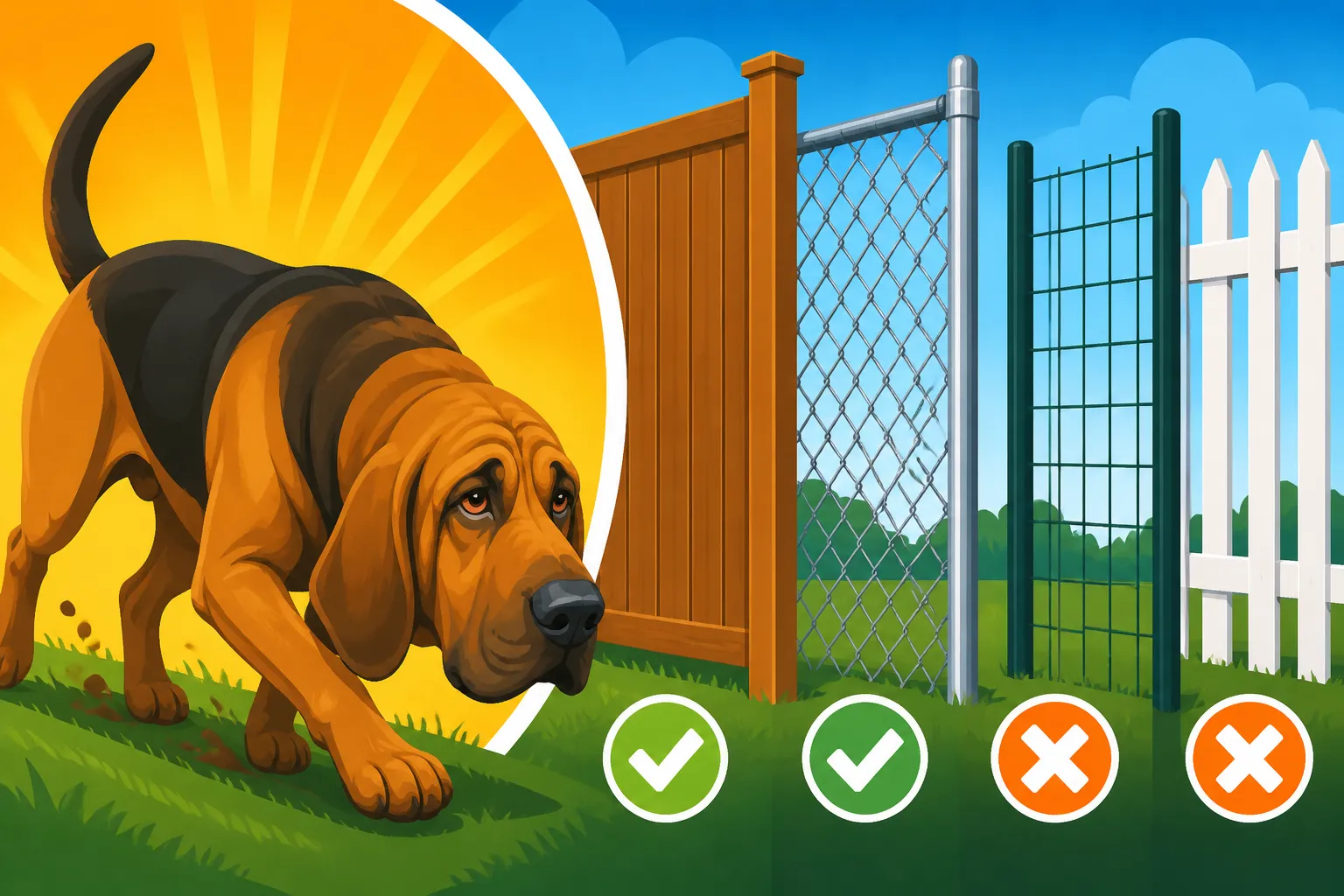
What Fencing Actually Holds a Bloodhound
One of the biggest anxieties for any Bloodhound owner is the thought of their beloved scent hound slipping out of the yard, nose to the ground, completely oblivious to calls. Their incredible drive to follow a trail means that what might be a perfectly adequate fence for another breed often proves to be merely a suggestion for a determined Bloodhound. This guide will walk you through understanding why Bloodhounds are such formidable escape artists and, more importantly, what kind of fencing and supplementary strategies are truly needed to keep them safe and sound in your yard.
Understanding the Bloodhound's Escape Motivation
Let's be honest, Bloodhounds aren't trying to escape because they don't love you or their home. They're trying to escape because their nose tells them there's an entire world of fascinating smells just beyond the fence, and that world is calling their name. Understanding this fundamental drive is the first step toward building a truly secure environment.
The Irresistible Call of Scent
Imagine a world where every single scent tells a story, a vibrant, unfolding narrative that demands to be followed. That's a Bloodhound's world. Their olfactory capabilities are legendary, far surpassing that of most other breeds, and once they latch onto a compelling trail – be it a rabbit, a deer, or a human stranger who walked by hours ago – it becomes their absolute singular focus. This isn't just a strong urge; it's a deep, primal instinct that can override years of training, a full stomach, and even the comfort of their familiar backyard.
When that tantalizing whiff hits their incredible nose, the rest of the world fades away. The gentle, loving dog you know transforms into a tracking machine, utterly deaf to your frantic shouts of "come!" This isn't disobedience; it's a breed trait that makes them exceptional at their job but challenging as a pet in an unsecured area. The strength of this drive is precisely why Why Off Leash Is Not a Goal With a Bloodhound is such a critical concept for Bloodhound owners to embrace. Their nose is the boss, and it will lead them on an adventure if given the chance.
The Bloodhound's Persistent Nature
Beyond just the scent drive, Bloodhounds possess a remarkable persistence. They aren't easily deterred. If a fence presents an obstacle, they don't typically give up after a single sniff or a cursory push. They will test it, leaning their substantial weight against it, nudging gates, and meticulously inspecting every crevice for a weakness. This breed was developed to follow a trail for miles, through all sorts of terrain, without flagging. That same tenacity applies to overcoming barriers that stand between them and an interesting smell.
They are surprisingly intelligent problem-solvers when motivated by a scent. A Bloodhound might spend a considerable amount of time working on a gate latch or slowly widening a gap in a fence that seems insignificant to a human eye. Their sheer determination, coupled with their physical strength and unique body mechanics, means that a flimsy gate or a shallowly set fence post is merely a temporary puzzle to be solved, not an insurmountable wall. Many an owner has come home to find their yard empty, utterly bewildered at how their dog managed to breach what seemed like a secure perimeter.
Overcoming Boredom and Under-Stimulation
While scent is the primary driver, a bored Bloodhound is an even more motivated escape artist. These dogs are working hounds; their minds are hardwired for activity, specifically tracking. If they aren't given adequate mental and physical exercise, particularly outlets for their phenomenal nose, they will find their own "work." And that work often involves exploring the world beyond the confines of their yard.
A Bloodhound left alone in a static backyard with nothing to do will quickly become restless. They'll start patrolling the fence line, and when their nose picks up an interesting trail, the temptation to follow it is amplified by their boredom. Providing enriching activities, such as regular scent work games, puzzle toys, and consistent walks, isn't just good for their well-being; it's a crucial component of your containment strategy. A tired, mentally stimulated Bloodhound is far less likely to dedicate its considerable energy and intelligence to planning a great escape. Consider incorporating something like Mantrailing Is the Answer to a Bloodhound, Not Obedience into their routine to truly satisfy their instincts.
Essential Characteristics of a Bloodhound-Proof Fence
Given the Bloodhound's unique blend of scent drive, persistence, and physical attributes, a "Bloodhound-proof" fence needs to go far beyond what might suffice for many other dog breeds. It's not just about height; it's about a multi-faceted approach to security that anticipates every one of their escape tactics.
Height is Just the Beginning
While Bloodhounds aren't typically known for scaling fences like some agile breeds, don't underestimate their ability to get over or through an inadequate barrier. A standard four-foot fence, common in many residential areas, is often laughably easy for a full-grown Bloodhound to overcome. They can lean against it, test its stability, and if it's not perfectly secure, they can sometimes even get enough purchase to "climb" or scramble over, especially if there's anything nearby to help them, like a pile of leaves, a snowdrift, or even a strategically placed shrub.
For true security, you're generally looking at a minimum of a five-foot fence, with six feet being far more advisable. But even then, height alone isn't enough. A Bloodhound's sheer weight and determination mean that a fence needs to be incredibly sturdy. They'll test every post, every panel, and any weak points. It's not just about preventing them from jumping, but also from pushing through or collapsing a section. Remember, they have a lot of body to throw around, and they use it! If you're wondering How High a Fence a Bloodhound Needs, the answer usually errs on the side of "higher than you think."
Digging Prevention: Going Deeper
This is where many otherwise sturdy fences fail the Bloodhound test. Bloodhounds are natural diggers. Whether it's to create a cool spot in the summer, bury a prized bone, or simply to follow a fascinating scent that goes under the fence, they will excavate with surprising speed and efficiency. A fence that simply ends at ground level is an open invitation for a Bloodhound.
To prevent tunneling, your fence needs to extend below ground. This can be achieved in several ways: burying the fence fabric itself at least 12-18 inches deep, installing an "L-footer" of heavy-gauge wire mesh that extends horizontally outwards from the bottom of the fence (making it uncomfortable to dig next to), or even pouring a concrete footer along the entire perimeter. Simply burying chicken wire or laying down large, heavy rocks along the inside base of the fence can also be effective deterrents, forcing them to give up or move on. Neglecting this crucial aspect is a common mistake; without proper underground reinforcement, your Bloodhound will discover Whether a Bloodhound Digs Under a Fence is a resounding "yes."
Gate Security and Weak Points
Gates are, almost without exception, the weakest link in any fence system. For a Bloodhound, a gate that isn't perfectly secured and meticulously designed is practically a revolving door. They will nudge, lean, and sometimes even manipulate latches with their noses or paws if they are simple enough.
You need robust, heavy-duty gates that match the strength and height of your fence. Latches should be dog-proof, preferably with a double-locking mechanism or a spring-loaded design that requires a human level of dexterity to open. Self-closing hinges are also a great idea, as they reduce the chance of a gate accidentally being left ajar. Ensure that the gate fits snugly within its frame, with no gaps wide enough for a determined nose or paw to get a purchase. Any space where the gate meets the post, or between the bottom of the gate and the ground, is a potential avenue for escape. Regularly inspect gates for sagging, loose hardware, or any signs of wear that could compromise their security.
Types of Fencing Materials and Their Suitability
Choosing the right material for your Bloodhound's fence involves weighing cost, aesthetics, maintenance, and, most importantly, its ability to withstand their unique escape tactics. No single material is perfect, but some are definitely better than others for these hounds.
Solid Wood or Vinyl Fencing
Solid wood or vinyl fences offer the distinct advantage of being a visual barrier, which can reduce a Bloodhound's temptation to chase what it can't see. They also offer a measure of privacy and can be quite attractive.
- Pros: The solid nature means your Bloodhound can't see potential "prey" or interesting people walking by, which can help reduce their drive to escape. They offer good privacy and can complement your home's aesthetic. Properly installed, they can be very sturdy.
- Cons: These fences are susceptible to digging underneath, requiring significant sub-surface reinforcement. Wood fences can rot, splinter, or warp over time, creating weak spots, and a determined Bloodhound might even chew through a soft spot if bored or highly motivated. Vinyl fences are generally more durable and chew-resistant but can be more expensive upfront. Both types still need to be tall enough to prevent jumping or scrambling. Maintenance for wood includes staining, painting, or sealing, while vinyl is generally lower maintenance but can still crack or become brittle over many years.
Chain Link Fencing
Chain link fencing is a common and often more affordable option, but it comes with its own set of challenges when it comes to Bloodhounds.
- Pros: It's generally less expensive to install than solid fences and offers good visibility, which some owners prefer for monitoring their dog. It's durable and can last a long time if properly maintained. It's also relatively easy to extend its height or add digging prevention measures to the bottom.
- Cons: The biggest drawback for Bloodhounds is that chain link is relatively easy for them to climb. The mesh provides footholds, and a determined dog can often "walk" right up and over, especially if it's less than six feet tall. To mitigate this, you need a heavy gauge chain link, ideally 9-gauge or thicker, and it absolutely must have anti-climb features (like a top rail that slopes inward or roller bars) and significant digging prevention. The visibility, while a pro for some, can be a con if your Bloodhound is constantly stimulated by sights beyond the fence, leading to increased barking and escape attempts.
Wrought Iron or Ornamental Fencing
Wrought iron or other ornamental metal fences are incredibly durable and can add a sophisticated look to a property, but they have specific considerations for Bloodhounds.
- Pros: These fences are extremely strong and durable, resistant to chewing, and can withstand a lot of abuse from a large dog leaning against them. They also have a classic, attractive aesthetic.
- Cons: The primary issue here is the spacing between the vertical bars. While a Bloodhound can't squeeze through, smaller dogs might, and more importantly, the horizontal bars often present perfect climbing aids for a determined dog. These fences are also typically quite expensive to install. Like other fences, they require robust digging prevention. Furthermore, the openness means your Bloodhound has full visual access to everything beyond the fence, which can keep their scent drive constantly engaged and lead to frustration if they can't access what they see and smell.
Specialized Enclosures and Kennels
Sometimes, a full yard fence isn't enough, or your property simply doesn't allow for the level of security required. In these cases, specialized enclosures or heavy-duty kennels can be an invaluable part of your Bloodhound's containment strategy, particularly for unsupervised time.
These are not your flimsy chain-link kennel panels from a big box store. We're talking about heavy-gauge, welded wire panels, often with a roof or inward-sloping top sections to prevent climbing. The panels should be bolted or clamped together securely, and the base should be set in concrete or have a robust anti-dig system. Many owners use these as secondary containment, even within a fenced yard, for times when they cannot provide direct supervision. You might find sturdy, modular kennel panels through suppliers on platforms like Amazon, offering different configurations to suit your space. These can be particularly useful if you need to create a temporary secure space or if your main yard fence needs additional reinforcement. Such dedicated spaces can provide peace of mind, knowing your Bloodhound is truly safe while you're away or busy.
Reinforcing Existing Fences and Adding Layers of Security
Many Bloodhound owners already have a fence and are looking for ways to make it more secure rather than replacing it entirely. Fortunately, there are many effective reinforcement strategies that can turn a "good enough" fence into a "Bloodhound-proof" fortress.
Preventing Digging Underneath
This is often the number one failure point for fences with Bloodhounds. Even a stout fence can be undermined by a persistent digger.
One popular and highly effective solution is to install an "L-footer" system. This involves digging a trench along the inside perimeter of your fence and burying a section of heavy-gauge wire mesh (like hog wire or even chain link) horizontally, forming an "L" shape where one side is attached to the bottom of your existing fence and the other extends 12-18 inches outwards into the yard. When your Bloodhound tries to dig, they immediately hit this buried mesh, which discourages them from continuing. You can often find rolls of suitable wire mesh and the necessary hardware on platforms like Amazon.
Another method involves burying concrete or landscaping ties directly under the fence line. This creates a solid, impenetrable barrier. Some owners simply lay large, heavy rocks, bricks, or concrete pavers along the fence base on the inside, which makes it incredibly difficult and uncomfortable for a Bloodhound to dig close to the fence. The key is to make digging unpleasant and unproductive, forcing them to abandon the effort.
Stopping the Climb and Jump
While Bloodhounds aren't natural climbers like some terriers or sighthounds, their size and persistence mean they can often leverage objects or even the fence itself to get over. If your fence is on the lower side (e.g., 4-5 feet), consider adding height extensions. These can be as simple as adding an extra section of lattice or wire mesh, or more sophisticated roller bars designed to prevent dogs (and even wildlife) from getting a grip to pull themselves over.
Another common tactic is to use angled fence toppers, which extend inwards at the top. These make it much harder for a dog to clear the top of the fence. Even a simple strand of electric wire (the kind used for livestock, not a shock collar) along the top of an otherwise sturdy fence can act as a powerful deterrent, though this is a more extreme measure and requires careful consideration and placement to ensure safety. Remember, the goal isn't to harm, but to create a boundary that your Bloodhound respects and can't easily breach.
Securing Gates and Access Points
As mentioned earlier, gates are notorious weak points. Reinforcing them is critical. Start by ensuring your gate posts are incredibly sturdy, preferably set in concrete, to prevent sagging over time. Install heavy-duty hinges that can handle the weight of the gate and any force a Bloodhound might apply.
For latches, move beyond simple hook-and-eye or spring-loaded clips. Invest in a double-latching system or a robust bolt lock that requires two actions to open. A popular choice is a gate latch that can be operated from both sides and has a strong, spring-loaded arm that clips firmly into place. Ensure there are no gaps around the gate that a Bloodhound's nose or paw could exploit. You might need to add a bottom piece of wood or metal to close the gap between the gate and the ground, especially if your yard isn't perfectly level. Regularly check all hardware for rust, looseness, or damage, as these can quickly compromise security.
Beyond the Physical Fence: Management and Training
Even the most robust physical fence is only one part of keeping a Bloodhound safe. Their intelligence, drive, and sheer size mean that proper management and training are equally, if not more, important. A fence is a tool, but you are the ultimate guardian.
Supervision is Non-Negotiable
This cannot be stressed enough: a physical fence, no matter how well-built, should never be considered a substitute for supervision, especially with a Bloodhound. These dogs are master escape artists when motivated, and any lapse in vigilance can have serious consequences. Leaving a Bloodhound alone in a yard for extended periods, even a fenced one, significantly increases the risk of escape. They will find that one loose board, that one rusty hinge, or that barely perceptible soft spot to dig under.
Think of your fence as a primary layer of defense, but your presence is the secondary, and often most critical, layer. When your Bloodhound is in the yard, be out there with them. Engage them, play with them, or at the very least, keep a watchful eye. This allows you to immediately intervene if they start investigating a weak spot, trying to dig, or fixating on a scent at the fence line. It's a proactive approach that prioritizes their safety above all else.
Mental and Physical Enrichment
A bored Bloodhound is a dangerous Bloodhound, at least to your fence lines! These dogs are bred to work, and if they aren't given appropriate outlets for their incredible noses and stamina, they will create their own entertainment. This often manifests as destructive behaviors, excessive baying, or, you guessed it, escape attempts. How Much Exercise a Bloodhound Actually Needs is more than just a quick walk around the block.
Mantrailing and Scent Work: This is hands-down the best way to satisfy a Bloodhound's instincts. Formal mantrailing, tracking, or even simple "nose work" games in your yard or house can exhaust them mentally in a way that physical exercise alone cannot. Enroll in a class or get a good book on canine nose work. This taps into their core purpose and provides immense satisfaction.
Long Line Walks: Even if you can't trail every day, regular walks on a long line (15-30 feet) in a safe, open area allow them to explore scents and cover ground without the risk of an off-leash bolt. This provides crucial physical and mental stimulation. Many excellent long lines are available on Amazon for active dogs.
Interactive Toys and Puzzle Feeders: Don't just put food in a bowl. Use puzzle feeders that make them work for their meals. Rotate toys regularly to keep things interesting. Engage them in games of hide-and-seek with treats. A mentally tired Bloodhound is a happy, well-behaved Bloodhound who is less likely to plot an escape.
Training for Containment
While a Bloodhound's scent drive is powerful, consistent training can still play a role in reinforcing boundaries and ensuring safety, even within a fenced area. The goal isn't to eliminate their instincts, but to teach them appropriate behaviors within their designated space.
Boundary Training: Even inside a secure fence, you can teach your Bloodhound a "boundary" command that discourages them from lingering at the fence line. Use positive reinforcement to reward them for staying away from the fence, especially if they are fixated on something beyond it. This helps them understand that while the fence contains them, there's an additional invisible boundary they should respect.
Recall Training: While a reliable recall off-leash is often impossible with a Bloodhound once they're on a trail, a strong recall within your fenced yard is invaluable. If you see them intently focused on a weak spot, a quick and enthusiastic recall back to you for a high-value treat can interrupt their escape attempt before it even begins. Continue to practice this regularly in a low-distraction environment, ensuring their response is immediate and joyful. Consider programs like BAXTER & Bella, which offer comprehensive online training resources, many of which focus on positive reinforcement and engagement that can be adapted for a scent-driven breed. While they may not specifically address Bloodhound tracking, their core principles of building a strong bond and reliable cues are universally beneficial.
Consistency and Patience: Bloodhounds are smart but can be deliberate. Consistency is key. Every time they are in the yard, the rules and boundaries must be the same. Patience is also paramount; they are not always the quickest to respond, but with positive reinforcement, they will learn.
Important Considerations and Common Mistakes
When it comes to fencing for Bloodhounds, there are some specific pitfalls to avoid and crucial long-term perspectives to adopt. Skipping these considerations can lead to frustration, expense, and heartbreak.
"Invisible" or Electronic Fences
Let's get this out of the way: relying solely on an "invisible" or electronic fence for a Bloodhound is, in almost all cases, a recipe for disaster. While these systems can sometimes work for breeds with lower prey drive or less determination, they are woefully inadequate for the vast majority of Bloodhounds. Whether an Invisible Fence Stops a Bloodhound is a question many new owners ask, and the answer is typically "no, not reliably."
Here's why: a Bloodhound's scent drive is so powerful that it will almost certainly override the momentary discomfort of a static correction. Once they've picked up a truly compelling trail, the urge to follow is far stronger than the aversion to a zap. They might yelp, but they will likely run right through the boundary, and once they're out, they have no incentive to come back through the pain barrier. This can also lead to other problems, such as barrier frustration, anxiety, or even a fear of their own yard. These systems offer no physical barrier against external threats or other animals entering your property. They should only ever be considered as an additional layer of containment within an already secure physical fence, perhaps to reinforce a "no go" zone near a gate or weak point, but never as the primary means of keeping a Bloodhound safe.
The Cost vs. Security Balance
Investing in a truly Bloodhound-proof fence is not cheap. It can be a significant upfront cost, leading some owners to cut corners or opt for less secure options. However, it's essential to view this as a long-term investment in your dog's safety and your peace of mind. The cost of a lost Bloodhound, potential veterinary bills from accidents, or even the emotional toll of constant worry far outweighs the cost of a proper fence.
Think about the long-term value. A well-built fence will last for many years and provide a safe haven for your dog. Cutting corners now might save you a few dollars upfront, but it almost guarantees a future full of anxiety, potential escapes, and potentially higher costs down the road if your dog gets lost or injured. Prioritizing security from the start will save you heartache and likely more money in the long run. When considering What It Costs to Put a Bloodhound on a Trail, remember that the foundational security of your home environment is equally crucial.
Regular Maintenance and Inspections
No fence is truly "set it and forget it," especially when you have a large, persistent dog like a Bloodhound. Fences degrade over time due to weather, settling ground, and the sheer wear and tear from a dog leaning against them. Regular inspections are critical to maintaining security.
Make it a habit to walk your fence line at least once a month, paying close attention after heavy rain, snow, or high winds. Look for:
- Loose posts or panels: Give them a good shake.
- Gaps: Are there any new spaces emerging where panels meet or at the bottom?
- Digging attempts: Check for fresh holes or areas where your Bloodhound has started to excavate.
- Damaged hardware: Inspect latches, hinges, and attachment points for rust, looseness, or bending.
- Vegetation: Trim back any bushes or trees that could provide a foothold for climbing or obscure weak spots.
By being proactive with maintenance, you can catch potential vulnerabilities before they become escape routes. This ongoing vigilance is a vital, yet often overlooked, part of truly Bloodhound-proofing your yard.
Comparison of Bloodhound Fencing Options
Here's a quick overview of common fencing types and how they stack up for a Bloodhound owner:
| Fence Type | Minimum Recommended Height | Digging Prevention Required? | Climbability Risk | Visual Containment | Typical Cost (Relative) | Maintenance Level | Notes |
|---|---|---|---|---|---|---|---|
| Solid Wood | 6 feet | Yes (L-footer/concrete) | Low | High | Medium-High | Medium | Good visual barrier, can rot/warp. |
| Solid Vinyl | 6 feet | Yes (L-footer/concrete) | Low | High | High | Low | Durable, chew-resistant, but still needs ground reinforcement. |
| Chain Link | 6 feet (or more) | Yes (L-footer/buried wire) | High | Low | Low-Medium | Low | Needs heavy gauge, anti-climb features, and significant digging deterrence. High visibility can be distracting. |
| Wrought Iron | 6 feet | Yes (L-footer/concrete) | Medium (bars) | Low | Very High | Low | Very durable, aesthetically pleasing, but gaps between bars and horizontal rails are considerations. |
| Specialized Kennel | 6-8 feet (with roof) | Yes (concrete floor/panels) | Very Low | Medium | Medium-High | Low | Excellent for secure, supervised outdoor time, or as secondary containment. Often modular. |
Remember, this table provides general guidelines. The exact suitability and effectiveness of any fence depend heavily on its specific installation, the materials' quality, and your Bloodhound's individual temperament and escape motivation.
Disclaimer
This article is for general informational purposes only and does not constitute professional advice. Laws, prices and regulations vary by location and change over time. Consult a qualified professional for guidance on your specific situation.