The First Year With a Bloodhound That Already Wants to Trail
Bringing a Bloodhound puppy into your home is an adventure, but many new owners quickly realize that these incredible creatures aren't just "big dogs." They arrive with an almost overwhelming, inherent drive to use their nose, and if you're not prepared, this powerful instinct can lead to frustration for both of you. This guide is all about understanding that profound desire to trail from day one and learning how to gently and effectively channel it throughout your Bloodhound's pivotal first year, setting both of you up for a lifetime of sniffing success and a strong, understanding bond.
Understanding the Innate Trailing Drive from Day One
Your Bloodhound isn't just a pet; they are the living embodiment of centuries of selective breeding for one single purpose: scent work. From the moment they arrive, whether they're eight weeks old or a bit older, their world revolves around odors. This isn't something they learn; it's hardwired into their very being, a primal urge that dictates much of their behavior and how they interact with the world around them. Ignoring or trying to suppress this drive is like trying to stop a river from flowing – it's an exercise in futility and often leads to unhappy outcomes.
Recognizing the Early Signs: Even Young Puppies Exhibit Behaviors
You might think a tiny puppy is too young to show serious trailing aptitude, but you'd be mistaken. Even before their eyes are fully open, Bloodhound puppies are nudging and rooting with their noses. Once they can move around, you'll see them nose-to-the-ground, following invisible trails across the floor, often completely oblivious to your presence. They might "lose" a toy only to diligently sniff it out, or fixate on a spot where someone recently stood. These aren't just cute puppy antics; they're the first stirrings of a powerful working instinct.
Pay attention to how your puppy explores new environments. While other puppies might dash and play, a Bloodhound will systematically quarter the area, nose to the ground, absorbing every scent detail. They might stop suddenly, intensely focused on an invisible trail, their tail giving a low, slow wag. This deep engagement with scent is a clear indicator of their inherent purpose. Understanding these early signs means you can validate their behavior rather than misinterpreting it as distraction or naughtiness.
The Genetic Imperative: Why a Bloodhound Must Use Its Nose
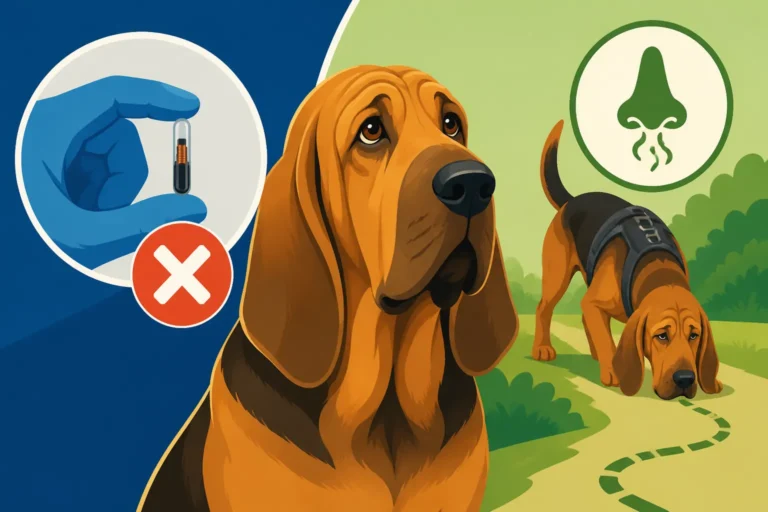
The Bloodhound's genetic makeup is a masterpiece of olfactory design. They possess an astounding number of scent receptors – far more than most other breeds – and their unique physical characteristics, like long, pendulous ears and abundant dewlaps, are all designed to funnel and trap scent molecules, literally enhancing their ability to track. This isn't just a hobby for them; it's a physiological and psychological need. Depriving a Bloodhound of scent work is like asking a Border Collie not to herd or a Greyhound not to run.
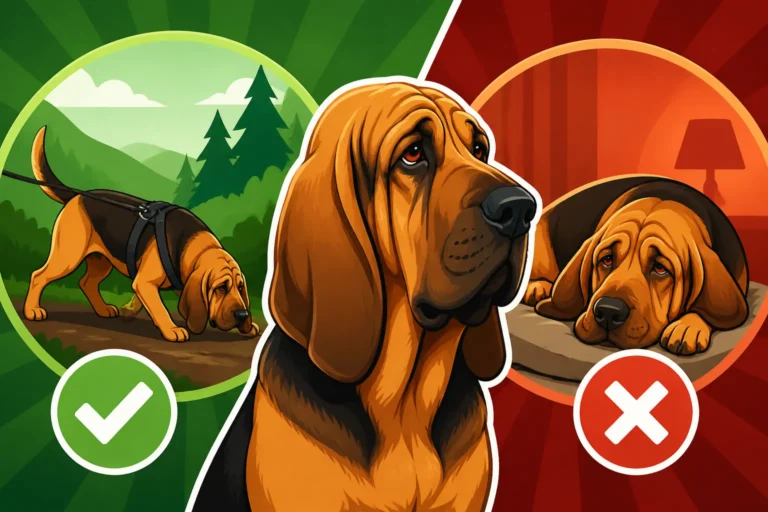
Their brain is wired to process scent information with incredible detail and persistence. When they catch a scent, it's not just a passing whiff; it's an immersive experience that commands their full attention, overriding other stimuli. This explains Why a Bloodhound's Nose Outvotes Its Handler in almost every situation. For a Bloodhound, using their nose is their primary way of understanding and interacting with the world, and fulfilling this need is crucial for their mental well-being and overall happiness.
What a Bloodhound Is Actually Smelling: It's Not Just "Stuff"
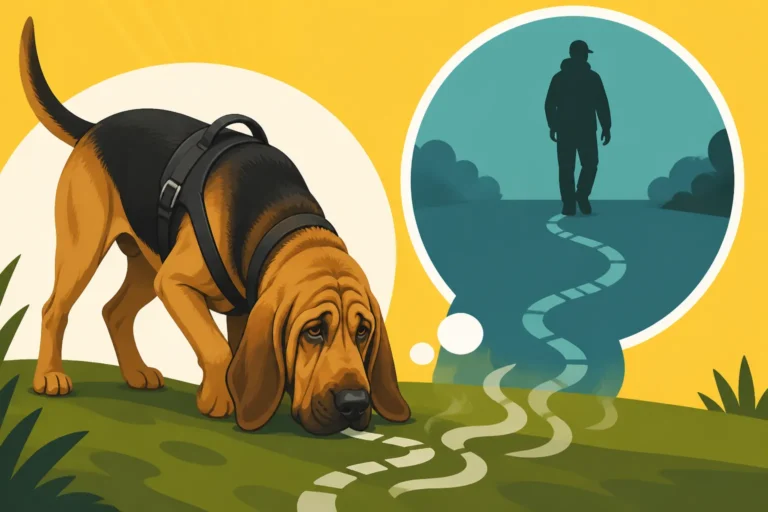
When your Bloodhound puppy has their nose glued to the ground, they're not just smelling "dirt" or "grass." They are detecting a complex tapestry of odors: shed skin cells, bacteria, hormones, environmental factors like humidity, and even minuscule changes in the soil. They're capable of distinguishing individual human scents, even in a crowded park. Imagine a world where every step leaves a distinct, persistent signature, almost like a visual map, and you begin to understand your Bloodhound's reality.
This isn't about smelling a steak in the kitchen; it's about dissecting the subtle decay of organic material, the unique chemical signature of an individual's presence, and the environmental factors that influence scent dispersal. They're reading a novel with their nose, picking up plot points that are invisible to us. Recognizing this depth helps us appreciate their efforts and channel their natural talent toward productive, engaging scent activities, which can range from simple hide-and-seek games to serious trailing.
Preparing Your Home and Routine for a Scent-Driven Puppy
Bringing any puppy home requires preparation, but a Bloodhound puppy demands a special kind of readiness, particularly when it comes to their natural trailing instincts. Their incredible nose will lead them into, over, and through obstacles that other breeds might ignore. Proactive measures in your home and a structured daily routine are vital to keep your inquisitive, scent-driven pup safe and to help them thrive without constantly running into trouble.
Securing Your Environment: Fencing and Escape Artist Prevention
Bloodhounds are legendary escape artists, not because they're disobedient, but because their nose tells them there's something fascinating just beyond your fence line. A typical four-foot fence might as well be an open invitation. You'll need substantial fencing, ideally six feet high and potentially reinforced at the bottom to prevent digging. Think of it less as containing a dog and more as securing a highly motivated, scent-following tracker.
Beyond the physical barriers, consider the sensory landscape. If your yard backs onto a busy walking path or a wildlife corridor, your Bloodhound will constantly be tempted by the parade of scents. While you can't eliminate all external stimuli, having a secure, engaging space within your yard for them to explore and play can make a huge difference. Regular checks of your fence line for weak spots or new digging projects will become part of your routine. Remember, a Bloodhound doesn't escape because they don't love you; they escape because their nose tells them there's a world of information out there that simply must be investigated.
Routine Is Your Friend: Structure for a Busy Nose
A predictable routine provides comfort and security for any puppy, but for a Bloodhound, it's also a way to manage their intense sensory input. Scheduled feeding times, potty breaks, play sessions, and rest periods help your puppy know what to expect. This structure also creates opportunities for dedicated scent work. For instance, after a potty break, a short, engaging scent game can satisfy their need to sniff before settling down.
Consistency in routine helps your Bloodhound understand when it's "work time" (nose engaged) and when it's "rest time." This helps prevent them from feeling constantly stimulated and overwhelmed by scents, which can lead to restlessness or destructive behaviors. Even if it's just a 10-minute game of finding hidden treats in the house, weaving scent-focused activities into your daily schedule provides vital mental exercise. This mental workout can be just as tiring, if not more so, than physical exercise for a Bloodhound.
Essential Gear for the Budding Trailer: Harnesses, Long Lines, Snoods
Equipping yourself with the right gear from the start will make your first year with a Bloodhound infinitely smoother. A comfortable, well-fitting harness is non-negotiable. It protects their delicate throat and allows you to safely guide them without interfering with their natural gait, especially when they're pulling on a scent. Avoid neck collars for walks, as they can cause discomfort and potential injury when your Bloodhound inevitably surges forward on a trail.
A long line (15-30 feet) is another absolute essential. This allows your puppy to explore and follow scent trails safely, giving them a sense of freedom while keeping them connected to you. It's a fundamental tool for teaching them to work on a line and for safe outdoor exploration, as Why Off Leash Is Not a Goal With a Bloodhound is something every owner must understand early on. Many excellent options for harnesses and long lines can be found on platforms like Amazon, offering a wide range of styles and lengths. Finally, consider a snood for meal times. These fabric tubes slip over your Bloodhound's long ears, keeping them out of their food and water bowls, preventing messy ears and potential infections.
Early Introduction to Scent Work: Gentle Beginnings
The moment your Bloodhound puppy steps paw into your home, they are ready to learn about scent work. This isn't about rigorous training, but rather about nurturing their natural instincts through fun, low-pressure games. Starting early builds confidence, strengthens your bond, and teaches them that engaging their nose is a rewarding activity, all while laying the groundwork for more advanced trailing later on.
First Steps: Scent Games in the House
Begin with simple "find it" games indoors. Hide a favorite treat or a small, strongly scented toy in plain sight, then encourage your puppy to use their nose to locate it. As they get the hang of it, gradually increase the difficulty by hiding items under a blanket, behind a piece of furniture, or in another room. Celebrate every find with enthusiastic praise and a tasty reward. The goal is to make using their nose an incredibly positive experience.
These games teach your puppy to trust their nose and to associate searching with a happy outcome. You're not "training" them in the traditional sense; you're simply giving them permission and encouragement to do what they were born to do. These early successes are crucial for building their confidence and reinforcing the idea that their nose is their superpower. For some owners, online puppy training resources, such as those from BAXTER & Bella, might offer creative ideas for scent games to integrate into a broader curriculum.
Introducing the Scent Article: The Foundation of Trailing
A scent article is an item that carries the unique scent of the person your Bloodhound will eventually trail. For puppies, start with a piece of cloth (like a bandana or old sock) that you've worn for a few hours. Let them sniff it, then put it away. The next step is to introduce the concept of "the game starts with this."
You can play a modified "shell game" where you let your puppy sniff the scent article, then hide it under one of several overturned cups or small boxes. Encourage them to find it, rewarding them heavily when they do. This simple exercise teaches them to focus on a specific target scent, a critical skill for formal trailing. Keep these sessions short, fun, and always end on a high note, leaving your puppy wanting more. This early association helps cement the idea that the "game" is about a particular human scent, not just any interesting smell.
The Short, Simple "Runaway": Building Confidence
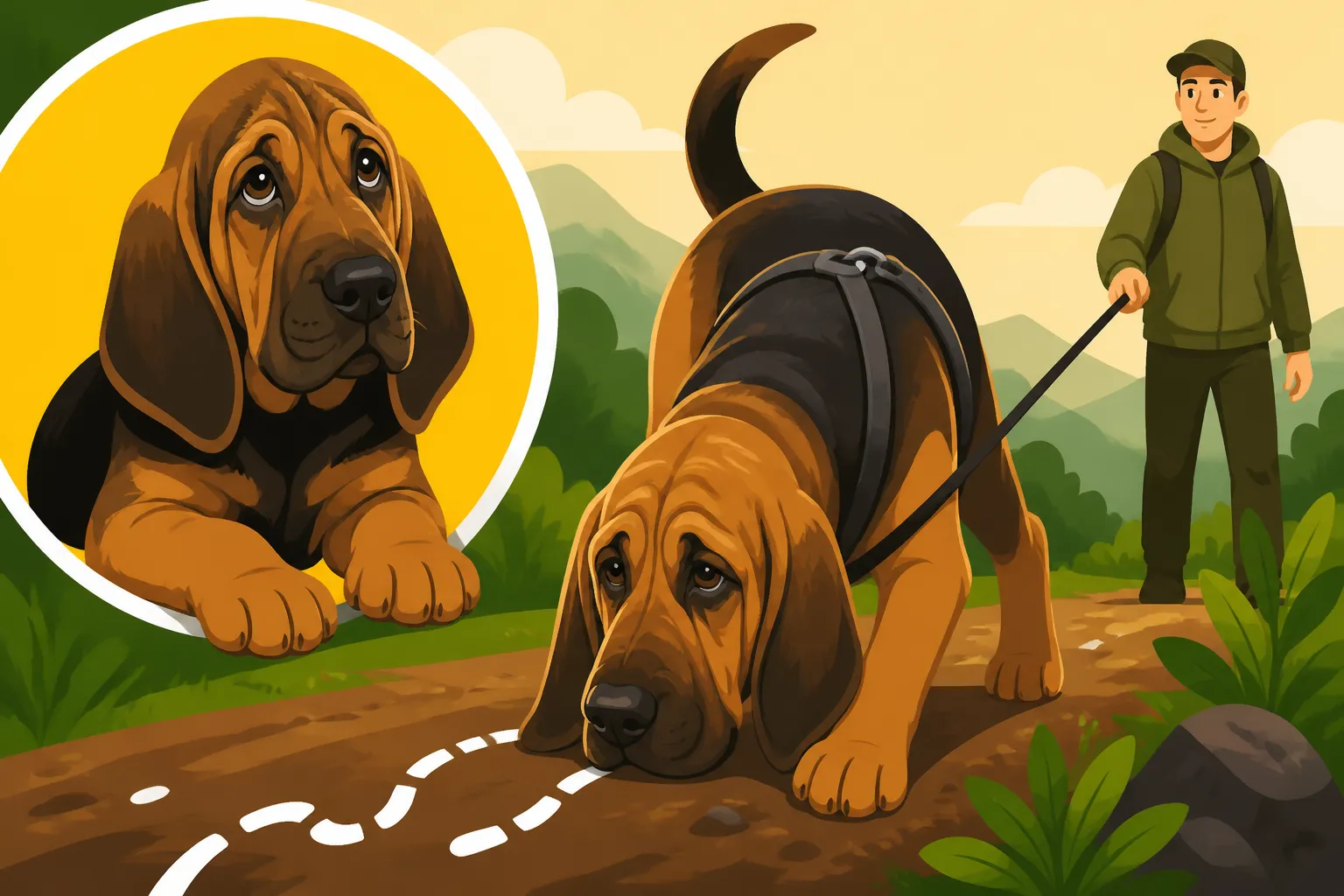
Once your puppy understands the scent article, you can introduce their first "runaway" trail. This is a very short, straight trail laid by a familiar person (the "quarry"). Have someone your puppy knows walk a short distance (maybe 10-20 feet) away from you and the puppy, dropping a high-value treat at the end, and then disappear from sight. Let your puppy sniff the scent article, then point them towards the direction the person went, encouraging them with a command like "Find!" or "Seek!"
The goal here is not distance or complexity, but to build the connection between the scent article, the trail, and the reward (finding the person and the treat). Keep these early trails incredibly simple, ensuring success every time. Over time, you can gradually increase the distance and introduce very gentle turns, but in the first year, success and positive reinforcement are paramount. Remember, Starting a Bloodhound Puppy on a Trail should always be about fun and building their intrinsic motivation.
Managing the Overwhelming World: Socialization and Desensitization
The world is a cacophony of scents, sounds, and sights for a Bloodhound puppy. While their incredible nose is a gift, it can also be overwhelming. Proper socialization isn't just about meeting other dogs; it's about helping your Bloodhound learn to navigate complex environments without becoming overstimulated or anxious, and understanding how to function when their nose is constantly pulling them in a thousand different directions.
Beyond the Backyard: Exposing Your Bloodhound Safely
Early, positive exposure to various sights, sounds, and textures is essential. Take your puppy to different types of environments: quiet parks, sidewalks, pet-friendly stores (if allowed), and even just sitting in your car in a busy parking lot. The key is controlled exposure, ensuring your puppy feels safe and has positive experiences. Don't force interactions; allow them to observe and process at their own pace. Always prioritize their comfort over checking off a "socialization checklist."
For a Bloodhound, exposure to different scent environments is particularly important. A grassy field smells vastly different from a concrete sidewalk or a carpeted store aisle. Allowing them to sniff and process these various scent profiles helps them build a mental library, making future trailing in diverse locations easier. Remember to keep walks short and focused on exploration rather than speed, especially for a growing puppy whose joints are still developing.
Navigating Public Spaces: How a Working Nose Reacts to Distractions
When you take a Bloodhound puppy into public, prepare for them to be intensely focused on the ground. A busy street isn't just a street; it's a tapestry of human and animal scents, food odors, exhaust fumes, and damp earth. This can make walking them a challenge, as their nose will constantly pull them from side to side, or cause them to stop abruptly to investigate an irresistible trail. What seems like distraction to us is actually deep concentration for them.
Instead of fighting it, try to work with it. Allow them moments to investigate interesting scents, then gently redirect them. This isn't about perfect heel work, but about mutual understanding. For busy environments, use a shorter leash on your harness and keep sessions brief. The goal is exposure and calm acceptance, not flawless obedience. This teaches them to cope with high-stimulus environments without shutting down or becoming overwhelmed, a valuable skill for any future trailing work.
Leash Manners with a Mission: Walking with Purpose
Teaching a Bloodhound puppy good leash manners is a unique challenge. While traditional obedience might aim for a loose-leash heel, with a Bloodhound, you're often aiming for a controlled pull. When they are on a scent, they are designed to pull, using their body weight to maintain forward momentum. Trying to constantly correct this natural behavior can lead to frustration and diminish their drive.
Instead, focus on teaching them a "working gait" on the long line, where they are allowed to pull gently forward, with their nose down. Also teach a "casual walk" where they can walk by your side without pulling, perhaps using a different harness or leash to differentiate the activity. This distinction helps them understand when their nose is "on duty" and when they're simply enjoying a stroll. Reinforce polite walking with praise and treats, but understand that when the "nose switch" flips, their natural instincts will take over. This is where the long line becomes invaluable, giving them the freedom to explore safely while remaining attached to you.
Dealing with the Inevitable: Baying and 'Selective Hearing'
Living with a Bloodhound means accepting certain quintessential breed traits, and two of the most prominent are their deep, resonant bay and their notorious "selective hearing." These aren't signs of a poorly trained dog; they are expressions of their profound genetic programming. Understanding why these behaviors occur is the first step toward managing them realistically and empathetically during your Bloodhound's first year.
The Bloodhound Bay: It's Not Just Barking
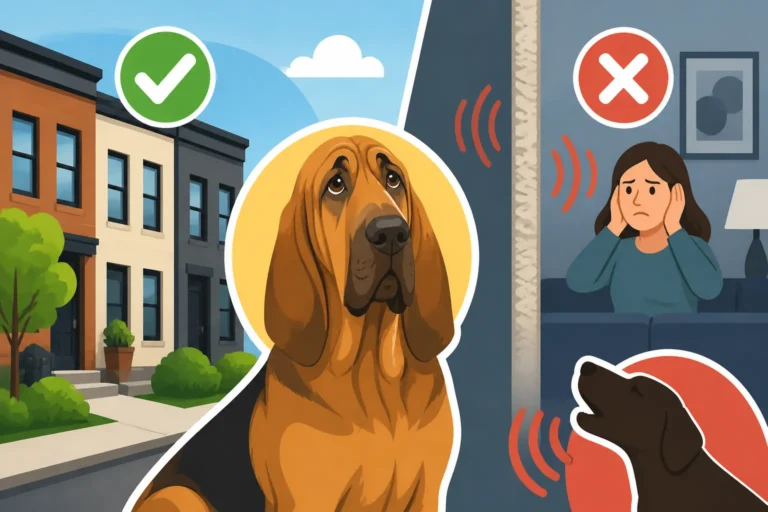
A Bloodhound's bay is distinct from a typical dog bark. It's a deep, mournful, and often surprisingly loud vocalization, designed to carry across vast distances and signal a find or to communicate with their pack. Your Bloodhound puppy might start baying early on, often when they're excited, lonely, or, most commonly, when they've picked up an interesting scent. This isn't a behavior you can "train out" entirely, nor should you necessarily want to; it's part of their identity.
Instead of trying to eliminate the bay, focus on understanding its triggers and managing its frequency. If your puppy bays when they're bored, increase their mental stimulation through scent games. If they bay when they hear distant sounds, work on desensitization. Most importantly, accept that The Baying a Bloodhound Cannot Be Trained Out Of is a fact. Learning to appreciate it as a unique form of communication, rather than a nuisance, can greatly improve your relationship with your hound. Consider soundproofing solutions if you live in close quarters, but ultimately, a Bloodhound will bay.
When the Nose Takes Over: Why Recall Fails and What to Do Instead
This is perhaps the most critical lesson for any new Bloodhound owner: once their nose is engaged on a compelling scent, very little else matters. Their instinct to follow that trail overrides almost everything, including your most enthusiastic recall cue. This isn't defiance; it's simply their brain prioritizing its primary function. Many a Bloodhound has become lost because an owner mistakenly believed their recall was reliable.
Understanding Why Recall Fails on a Bloodhound Outdoors means adjusting your expectations and management strategies. The simple truth is, a Bloodhound should almost never be off-leash in an unfenced, uncontrolled environment. A long line allows them the freedom to explore a scent without the risk of them disappearing over the horizon. In a securely fenced area, you can practice recall, but always with the knowledge that it's a practiced skill, not an unbreakable bond against the power of scent.
Channeling Frustration: Redirecting Undesirable Behaviors
Because their scent drive is so powerful, Bloodhounds can become frustrated if they can't pursue a scent or if they're not given enough mental outlets. This frustration can manifest as destructive chewing, excessive baying, digging, or even pushy behaviors. It's vital to recognize these as symptoms of an unmet need rather than simple misbehavior.
The best way to channel this energy is through structured scent work. If your puppy is chewing the furniture, redirect them to a scent puzzle toy. If they're incessantly baying, take them outside for a short, fun trail. Providing appropriate outlets for their nose often mitigates these unwanted behaviors. This approach aligns perfectly with the philosophy that Mantrailing Is the Answer to a Bloodhound, Not Obedience, as it provides a meaningful way for them to express their natural instincts in a way that is satisfying for them and manageable for you.
Progressing Your Bloodhound's Trailing Skills
The first year is a fantastic time to build upon those gentle introductions to scent work, gradually increasing the complexity and duration of trails. As your Bloodhound puppy grows in size and confidence, their ability to focus and follow will also develop, opening up exciting new avenues for their innate talent.
Extending the Trail: Age-Appropriate Challenges
Once your Bloodhound puppy consistently succeeds on short, straight trails, you can slowly begin to increase the challenge. Introduce gentle curves, then sharper turns. Extend the distance of the trail gradually, perhaps from 20 feet to 50, then 100 feet, always ensuring success before moving on. Vary the surfaces they trail on – grass, concrete, gravel – to expose them to different scent-holding properties. You might even introduce a very short "age" to the trail, laying it down 5-10 minutes before your puppy works it.
The key is progressive difficulty. Never make a trail so hard that your puppy fails repeatedly, as this can lead to frustration and a loss of confidence. Always end on a positive note. Remember that a young Bloodhound's physical endurance and attention span are still developing, so keep sessions short and sweet, typically no more than 15-20 minutes for puppies under a year old. They should be excited to start the next trail, not burned out from the last.
Working with a Helper: The Importance of a "Quarry"
As your Bloodhound advances, the concept of a "quarry" – the person whose scent they are following – becomes crucial. Initially, this might be a family member, but as your puppy matures, introducing new "quarries" (friends, neighbors) helps them generalize their trailing skills. The quarry should be someone who understands the game, is patient, and knows how to reward the Bloodhound appropriately at the end of the trail.
The quarry's role isn't just to lay the trail; it's to be the ultimate reward. When your Bloodhound successfully follows a trail and finds the quarry, the interaction should be highly positive – enthusiastic praise, petting, and a fantastic treat or favorite toy. This reinforces the idea that finding the person is the ultimate goal, not just the treat at the end. This collaborative effort between handler, Bloodhound, and quarry is the heart of effective trailing.
Finding a Mentor or Class: Professional Guidance
While much of the early scent work can be done at home, finding an experienced mentor or joining a mantrailing class can be invaluable. A good instructor can help you read your Bloodhound, understand their subtle cues, and guide you in creating appropriate challenges. They can also provide a safe, structured environment to practice with distractions and different scenarios you might not be able to replicate on your own.
Look for classes or mentors specifically focused on mantrailing or human remains detection, as these align best with a Bloodhound's natural abilities. Basic obedience classes might touch on nose work, but they often don't delve into the depth required for a true Bloodhound. This professional guidance can help you avoid common pitfalls, refine your handling skills, and maximize your Bloodhound's potential in a supportive community. It's an investment that pays dividends in both your Bloodhound's development and your own understanding of the breed.
Balancing Trailing with General Puppy Development
While scent work is paramount for a Bloodhound, they are still a growing puppy with all the usual needs for foundational training, physical development, and proper nutrition. The trick is integrating their trailing drive into these other aspects of their development, ensuring a well-rounded and healthy hound without stifling their natural instincts.
Foundation Obedience (with a Bloodhound Twist): It's Different
Traditional obedience can be a bit of a square peg in a round hole for a Bloodhound. They are intelligent, but their primary focus isn't pleasing you with quick responses to commands. Their brain is processing scent information, which often takes precedence. This means obedience training requires extra patience, creativity, and a high-value reward system. Focus on practical commands like "sit," "stay," and "come" within a controlled, low-distraction environment.
Understand that a Bloodhound might take longer to respond, or they might offer an alternative behavior while still processing a scent. Don't interpret this as stubbornness; it's just how they're wired. Short, frequent training sessions using positive reinforcement work best. Consider enrolling in a puppy kindergarten class, but be prepared to adapt the lessons to your Bloodhound's unique personality and nose-first approach to life. The goal is a cooperative partner, not a robotic one.
Physical Development and Exercise Limits: Protecting Growing Joints
Bloodhounds are large, fast-growing dogs, and their bones and joints need time to mature. This means careful management of their physical exercise during the first year is critical to prevent developmental orthopedic issues like hip and elbow dysplasia. While their minds need constant stimulation, their bodies need a more measured approach.
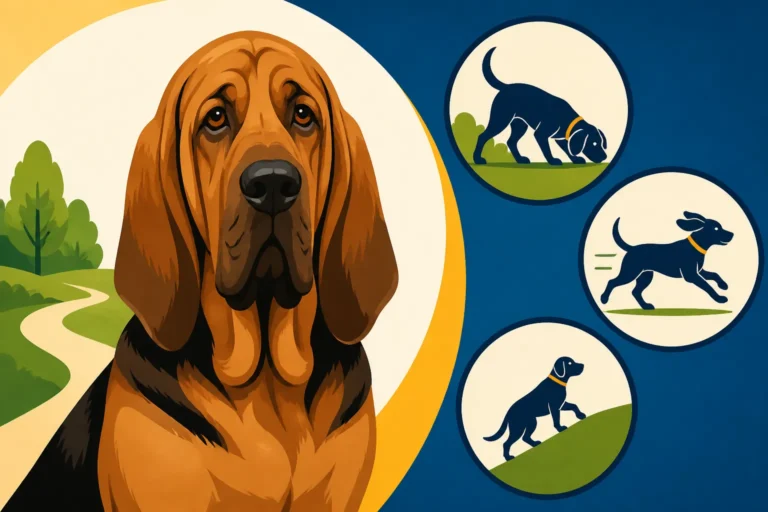
Avoid forced, repetitive exercise like long runs or intense jumping, especially on hard surfaces. Instead, focus on moderate, controlled exercise: short walks (allowing plenty of sniffing!), gentle play in the yard, and controlled off-leash time in a securely fenced area. Remember How Much Exercise a Bloodhound Actually Needs is often more about mental stimulation through scent work than endless physical exertion. Always consult your veterinarian about appropriate exercise levels for your individual puppy, and keep an eye out for any limping or discomfort, which could be signs of joint issues.
Nourishment for a Working Dog: Fueling the Nose
A growing Bloodhound puppy, especially one engaging in scent work, needs a high-quality diet that supports healthy growth without promoting excessive weight gain, which can stress developing joints. Choose a large-breed puppy formula that is specifically designed for their slower growth rate and balanced calcium-to-phosphorus ratio.
Feeding multiple smaller meals throughout the day (e.g., three meals) is generally recommended for Bloodhounds. This helps reduce the risk of bloat, a life-threatening condition that Bloodhounds are particularly prone to due to their deep chests. Always ensure your puppy has adequate rest before and after meals. While you're at it, consider a slow feeder bowl to prevent them from gulping their food too quickly. You can find a variety of slow feeder options on Amazon that can also keep those long ears out of the food. Ensuring proper nutrition is key to supporting their active minds and growing bodies.
Looking Beyond the First Year: What Comes Next
The first year with your Bloodhound puppy is a whirlwind of discovery, growth, and endless sniffing. As they transition from puppyhood to adolescence and then adulthood, their innate drive to trail will only deepen. This period lays the essential groundwork for a lifetime of partnership, whether you pursue formal trailing or simply enjoy their incredible nose on daily adventures.
Certification and Advanced Training Paths: For Serious Enthusiasts
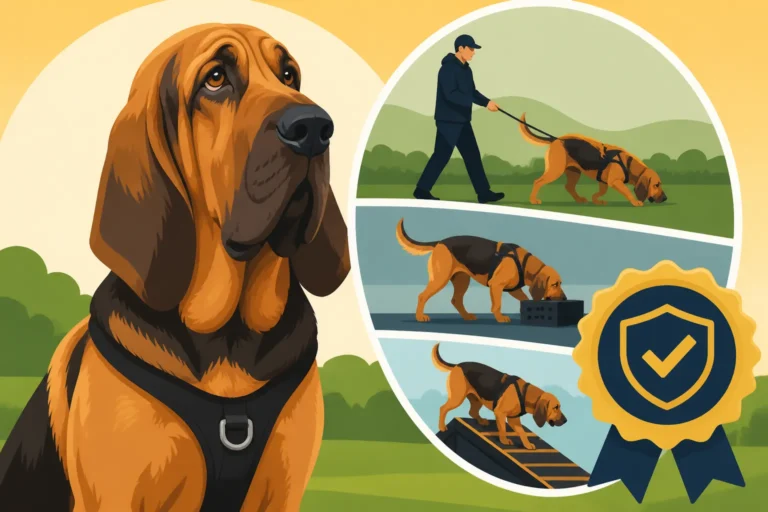
If you and your Bloodhound have truly fallen in love with trailing, there are many avenues for advanced training and even certification. Organizations like the American Bloodhound Club offer trailing tests and titles, recognizing a Bloodhound's ability to follow complex trails under various conditions. These certifications often require extensive training, working with experienced handlers, and demonstrating proficiency in tracking human scent.
Beyond organized tests, some owners pursue training for actual search and rescue (SAR) work. This is a serious commitment, requiring dedication, specialized training for both handler and dog, and often involves working with local law enforcement or volunteer SAR teams. It's a demanding but incredibly rewarding path that leverages a Bloodhound's unparalleled abilities to help others. Understanding How a Bloodhound Is Certified for Search Work can give you a roadmap if this is your ultimate goal.
The Lifelong Commitment to the Nose: It Never Stops
Even if you don't pursue formal trailing titles or SAR work, the commitment to providing outlets for your Bloodhound's nose is a lifelong one. Their desire to sniff, investigate, and follow scent will not diminish with age. Continue to integrate scent games into their daily routine, whether it's hiding treats, playing "find the person," or simply allowing them ample time on walks to thoroughly investigate interesting smells.
A Bloodhound that is regularly engaged in scent work is a happy, well-adjusted Bloodhound. It prevents boredom, reduces anxiety, and strengthens the unique bond you share. This isn't just about "exercise"; it's about fulfilling their very nature. Embrace their magnificent nose, and you'll have a devoted, fascinating companion for life.
Bloodhound Puppy's First Year: Traditional vs. Scent-Focused Milestones
This table outlines how a Bloodhound's specific needs and instincts shift the focus of typical puppy milestones.
| Traditional Puppy Milestone (Example) | Bloodhound Puppy's Scent-Focused Milestone (First Year) | Rationale for Bloodhound Focus |
|---|---|---|
| 8-12 Weeks: Basic potty training & crate training | 8-12 Weeks: Indoor scent games, simple "find it" treats, positive association with own scent article | Builds confidence in nose, fulfills innate drive, early positive reinforcement of scent. |
| 3-4 Months: Learning to "sit" and "stay" in low distraction | 3-4 Months: First short, straight "runaway" trails (10-20 ft) in quiet yard with known quarry | Introduces the concept of following a specific human scent to a reward. |
| 5-6 Months: Loose-leash walking in quiet areas | 5-6 Months: Expanding trail length (up to 50 ft), gentle turns, varying surfaces (grass/dirt) | Increases mental challenge, adapts to different scent-holding environments. |
| 7-9 Months: Improved recall in fenced yard, basic dog park visits | 7-9 Months: Introduction to new quarry, slightly older trails (10-15 mins), using long line for exploration | Generalizes trailing skills, emphasizes management over perfect recall outdoors. |
| 10-12 Months: Refining obedience commands, adolescent "testing" boundaries | 10-12 Months: Working with a mentor/class, introducing mild distractions on trail, focus on endurance and focus | Prepares for more formal training, acknowledges adolescent drive, reinforces positive mental outlets. |
Disclaimer
This article is for general informational purposes only and does not constitute professional advice. Laws, prices and regulations vary by location and change over time. Consult a qualified professional for guidance on your specific situation.