What a Bloodhound’s Ear and Eye Check Adds to a Vet Visit
It's a common scenario: you take your beloved Bloodhound to the vet for a routine check-up, expecting a fairly standard bill, only to find the cost significantly higher than anticipated once the specific ear and eye examinations are added. Bloodhound owners often face unique challenges with their magnificent hounds' prominent features, and these traits, while iconic, come with a particular set of care requirements and associated veterinary expenses. This guide is here to shed light on what a Bloodhound's ear and eye check typically adds to your vet visit bill, helping you understand the "why" behind the costs and how to best prepare.
Why Bloodhounds Need Special Attention for Ears and Eyes
Let's be honest, those glorious, long ears and soulful, often droopy eyes are what make a Bloodhound instantly recognizable and utterly charming. But what makes them unique also makes them prone to specific health issues that require consistent, and sometimes costly, veterinary attention. It’s not just about aesthetics; it’s about preventing serious discomfort and even pain for your hound.
The Anatomy of a Bloodhound's Ears (and Why It's a Problem)
A Bloodhound's ears are truly something else – long, pendulous, and heavily folded, often dragging on the ground as they follow a scent. While perfect for funneling those amazing smells up to their nose, this design creates a warm, moist, and poorly ventilated environment within the ear canal. Think of it like a dark, damp cave – the perfect breeding ground for bacteria and yeast. This anatomical predisposition means that a Bloodhound's ears are a standing infection risk.
During a routine check-up, your vet isn't just glancing at those ears; they're meticulously examining them for signs of trouble that other breeds might not experience as frequently. They're looking for redness, swelling, discharge, and any foul odor that signals an impending or active infection. Because these issues can escalate quickly, catching them early is paramount, and that often means a more thorough, time-consuming examination, potentially requiring special tools or procedures that add to your bill. You'll soon discover How Often a Bloodhound's Ears Need Cleaning, which contributes to ongoing care costs.
The Unique Characteristics of a Bloodhound's Eyes (and Why It's a Problem)
Then there are those expressive, deep-set eyes. Bloodhounds often have noticeable "haw" or lower eyelid droop, a condition known as ectropion, which is part of the breed standard. This contributes to their mournful expression, but it also leaves the delicate conjunctiva and globe of the eye more exposed to dust, dirt, debris, and environmental irritants. This exposure can lead to chronic irritation, dryness, and a higher risk of developing corneal ulcers. Similarly, some Bloodhounds can suffer from entropion, where the eyelid rolls inward, causing eyelashes to rub against the cornea. Both are significant concerns.
When your vet checks your Bloodhound's eyes, they're not just looking for brightness and clarity. They're carefully assessing the eyelids for proper alignment, checking for any signs of irritation, excessive tearing, or discharge. They might perform diagnostic tests specifically because of these breed traits. All of this extra scrutiny and specialized testing, which might not be standard for a less predisposed breed, contributes to the overall cost of the visit. To understand more about these issues, it's helpful to know about The Four Eye Problems a Bloodhound Is Born Toward, as these can significantly impact veterinary expenses.
The Cost of Neglect vs. Proactive Care
It's tempting to think that if your Bloodhound isn't showing obvious signs of distress, you can skip the thorough ear and eye checks. However, this is a classic "pay now or pay much, much more later" scenario. Neglecting these areas can lead to chronic, painful conditions that require extensive, expensive treatment down the line, potentially involving specialist consultations, long courses of medication, or even surgery.
For instance, a minor ear infection, if left untreated, can become a deep-seated, painful issue requiring sedation for thorough cleaning and multiple rounds of expensive prescription medication. Untreated eye irritation can quickly develop into a severe corneal ulcer that can threaten your dog's vision. Proactive, regular checks might add a bit to your routine visit, but they are an investment in your Bloodhound's long-term health and can save you a significant amount of heartache and money in emergency situations. This is where companies like Healthy Paws, which offers pet insurance, can really make a difference by helping to offset unexpected veterinary costs.
What Happens During an Ear and Eye Check-Up?
When your Bloodhound goes for their vet visit, the ear and eye check is often integrated into the general physical exam, but it goes beyond a quick look. Your vet is performing a series of specific evaluations and tests tailored to the potential issues common in the breed.
The Ear Examination
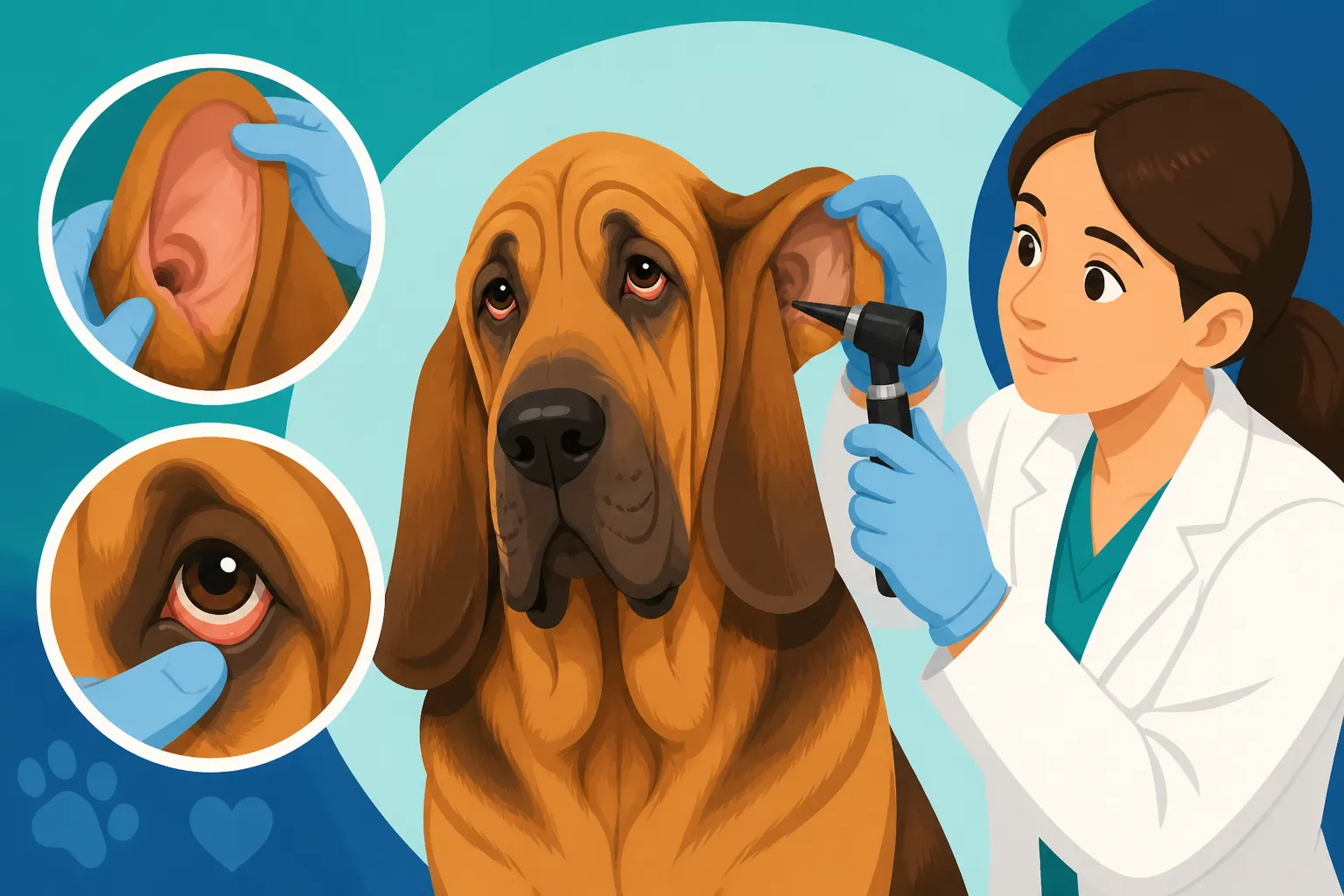
The ear examination starts visually. Your vet will gently lift those long ear leathers, inspecting the outer ear flap (pinna) and the visible part of the ear canal for any redness, swelling, or discharge. They'll also give the ears a good sniff – a tell-tale sign of infection is an unpleasant odor.
Next comes the otoscope. This is a special instrument with a light and magnifying lens that allows the vet to look deep into the ear canal, past the bend. This is crucial for Bloodhounds, as their long, winding canals can hide a lot of trouble. They're checking for foreign bodies (grass awns are a common culprit for a trailing hound!), excessive wax buildup, inflammation, and the condition of the eardrum. If there's discharge or debris, a sample might be taken with a cotton swab for cytology – looking at it under a microscope to identify yeast, bacteria, or mites. This is where costs can start to add up, as a cytology adds a lab fee. If your Bloodhound is resistant to having their ears handled, sometimes mild sedation might be necessary for a thorough and safe examination, which also increases the bill.
The Eye Examination
The eye examination is equally thorough. The vet will first observe your Bloodhound's eyes in a general sense: are they bright, clear, symmetrical? Is there any squinting, excessive tearing, or discharge? They'll carefully pull down the lower eyelid to examine the conjunctiva and sclera (the white part of the eye). This is where What Ectropion Looks Like on a Bloodhound becomes evident, and the vet can assess its severity and any associated irritation.
Specific tests might follow. A Schirmer tear test measures tear production to check for "dry eye" (keratoconjunctivitis sicca), a condition that often requires lifelong medication. A fluorescein stain test involves putting a special dye in the eye; if there's any corneal damage, the dye will stick to it, highlighting ulcers or abrasions. This test is vital because even a tiny scratch can lead to serious infection. In some cases, if glaucoma is suspected, a tonometry reading (measuring eye pressure) might be performed. Each of these specialized tests adds a separate charge to your vet bill.
Standard vs. Specialized Care
It’s important to understand the difference between a routine ear and eye check performed by your general veterinarian and a referral to a specialist. For most initial concerns and ongoing maintenance, your family vet is perfectly equipped. They can diagnose common infections, prescribe appropriate medications, and advise on Daily Eye Care for a Bloodhound.
However, if your Bloodhound has a persistent or severe problem, such as chronic, recurring ear infections that don't respond to treatment, or significant eyelid abnormalities like severe entropion or ectropion that might require surgical correction, your vet may recommend seeing a veterinary ophthalmologist or a veterinary dermatologist. These specialists have advanced training and equipment, and while their consultations and procedures are more expensive, they can provide specialized care that your general vet cannot. These referrals can add hundreds or even thousands to your overall cost, emphasizing the need for robust pet insurance like Healthy Paws.
Breaking Down the Costs: What to Expect on Your Bill
Understanding your vet bill for an ear and eye check on your Bloodhound can feel a bit like deciphering a complex code. It's usually not just one lump sum for "ears and eyes"; rather, it's a breakdown of services, diagnostics, and any necessary treatments.
The Basic Exam Fee
Every vet visit starts with a basic examination fee. This covers the vet's time for the general physical assessment, taking your Bloodhound's history, and often includes the initial visual inspection of the ears and eyes. This is your baseline cost. From there, specific charges related to any in-depth ear and eye work will be added.
Specific Ear-Related Charges
Once the initial exam is done, if your vet finds something concerning with your Bloodhound's ears, additional line items will appear. These might include:
- Ear Cleaning: If there's excessive wax or debris, a therapeutic ear cleaning might be performed. This involves specific cleaning solutions and often requires a skilled hand and patience.
- Ear Swab/Cytology: As mentioned, if an infection is suspected, a sample will be taken and analyzed under a microscope. This is a distinct lab fee.
- Medications: If an infection is diagnosed, you'll be sent home with prescription ear drops or oral antibiotics. The cost of these medications can vary greatly depending on the type and duration of treatment. Remember, What a Bloodhound's Ear Infection Costs to Treat can really add up.
- Sedation: For Bloodhounds who are anxious, painful, or simply not cooperative, a thorough ear exam or cleaning might necessitate light sedation. This adds the cost of sedatives, monitoring, and recovery time.
- Recheck Exams: Often, after starting treatment, your vet will want to see your Bloodhound again to ensure the infection is clearing up. This is another exam fee.
Specific Eye-Related Charges
Similarly, specific issues with your Bloodhound's eyes will generate additional charges:
- Schirmer Tear Test: A simple, quick test to measure tear production, but it's a separate charge.
- Fluorescein Stain Test: This diagnostic dye helps detect corneal abrasions or ulcers and comes with its own fee.
- Ophthalmic Medications: If your Bloodhound has dry eye, allergies, or an ulcer, you'll be purchasing prescription eye drops or oint. What a Bloodhound's Eye Drops Cost Each Year can become a significant ongoing expense, as many conditions require lifelong treatment. You might find some over-the-counter options on sites like Chewy for daily maintenance, but prescription medications typically need to be filled through your vet or a veterinary pharmacy.
- Specialist Consultations: Should your vet recommend seeing a veterinary ophthalmologist, that initial consultation will be a separate, higher fee, often followed by further diagnostic tests and treatment plans that carry their own costs.
How to Manage These Costs
Facing these potentially hefty bills can be daunting, but there are ways to prepare and manage them.
- Pet Insurance: This is arguably the most crucial tool for Bloodhound owners. A good pet insurance policy, like those offered by Healthy Paws, can reimburse a significant portion of unexpected veterinary costs, including those for ear infections, eye conditions, diagnostics, and even specialist care (after your deductible). While routine check-ups often aren't fully covered, the diagnostics and treatments that arise from them usually are. Consider What Insuring a Bloodhound Costs Monthly as a budget item.
- Budgeting: Set aside a dedicated emergency fund for your Bloodhound's care. Even with insurance, you'll have deductibles and co-pays.
- Buying Supplies Smart: For routine ear cleaning solutions or non-prescription eye rinses recommended by your vet, you might find more economical options through online retailers like Chewy. Just make sure to always clear any non-prescription products with your vet first to ensure they are safe and appropriate for your Bloodhound.
- Overall Health: Maintaining your Bloodhound's general health through a high-quality diet (brands like Ollie offer customized, fresh food options) and appropriate exercise can contribute to a stronger immune system, potentially reducing the frequency or severity of some issues. Healthy dogs can still get ear and eye problems, but overall wellness is always a good foundation.
Proactive Care and Long-Term Savings
It might sound counterintuitive, but consistent, proactive care is truly the best way to save money on your Bloodhound's ears and eyes in the long run. Skipping routine maintenance is a shortcut to bigger, more expensive problems.
Daily Home Care Routines
Incorporating daily or weekly home care into your routine is essential. For their ears, this means regular cleaning with a vet-approved solution. You'll need to learn Cleaning a Bloodhound's Ears Every Week for Life because it's truly a lifelong commitment. Gently lifting the ear leather, wiping the visible parts, and ensuring they are dry can prevent moisture buildup. For the eyes, a gentle wipe with a damp cloth can remove discharge and keep the folds clean. Always keep an eye out for any changes – redness, excessive tearing, or your dog pawing at their ears or eyes are all signals to contact your vet. You might even find Whether a Bloodhound Owner Should Keep Cloths in Every Room helpful for quick clean-ups!
The Value of Regular Vet Visits
Those routine vet visits aren't just for vaccinations; they're vital opportunities for your vet to conduct these thorough ear and eye checks. Catching a budding infection or an early sign of an eye issue before it becomes a full-blown crisis can make all the difference in treatment complexity and cost. Your vet can show you proper cleaning techniques, recommend specific products, and monitor any chronic conditions your Bloodhound might have. These visits help establish a baseline for your dog's health, making it easier to spot when something is amiss.
Planning for the Unexpected
Even with the best proactive care, Bloodhounds are predisposed to certain conditions. Having a plan for unexpected vet bills is crucial.
| Aspect of Care | Proactive Approach | Reactive Approach (Often More Costly) |
|---|---|---|
| Ear Health | Regular cleaning, routine vet checks | Emergency vet visit for severe infection, sedation |
| Eye Health | Daily wiping, monitoring, routine vet checks | Emergency visit for corneal ulcer, specialist referral |
| Financial Planning | Pet insurance (e.g., Healthy Paws), emergency fund | Credit card debt, difficult treatment decisions |
| Medication Sourcing | Vet-prescribed, online pharmacies (Chewy) | Emergency clinic markup, limited options |
| Overall Wellness | Quality diet (e.g., Ollie), exercise | Addressing preventable issues with higher costs |
Building up an emergency savings fund, even if it's just a small amount each month, can provide peace of mind. And as mentioned, pet insurance like Healthy Paws can be a lifesaver. Look into plans early, before any pre-existing conditions develop. While it's an upfront cost, the potential savings if your Bloodhound faces a serious health issue can be immense. Ultimately, being a Bloodhound owner means embracing their unique needs, and that includes budgeting for their specialized ear and eye care. It’s a small price to pay for the unwavering devotion and companionship these incredible hounds offer.
Disclaimer
This article is for general informational purposes only and does not constitute professional advice. Laws, prices and regulations vary by location and change over time. Consult a qualified professional for guidance on your specific situation.