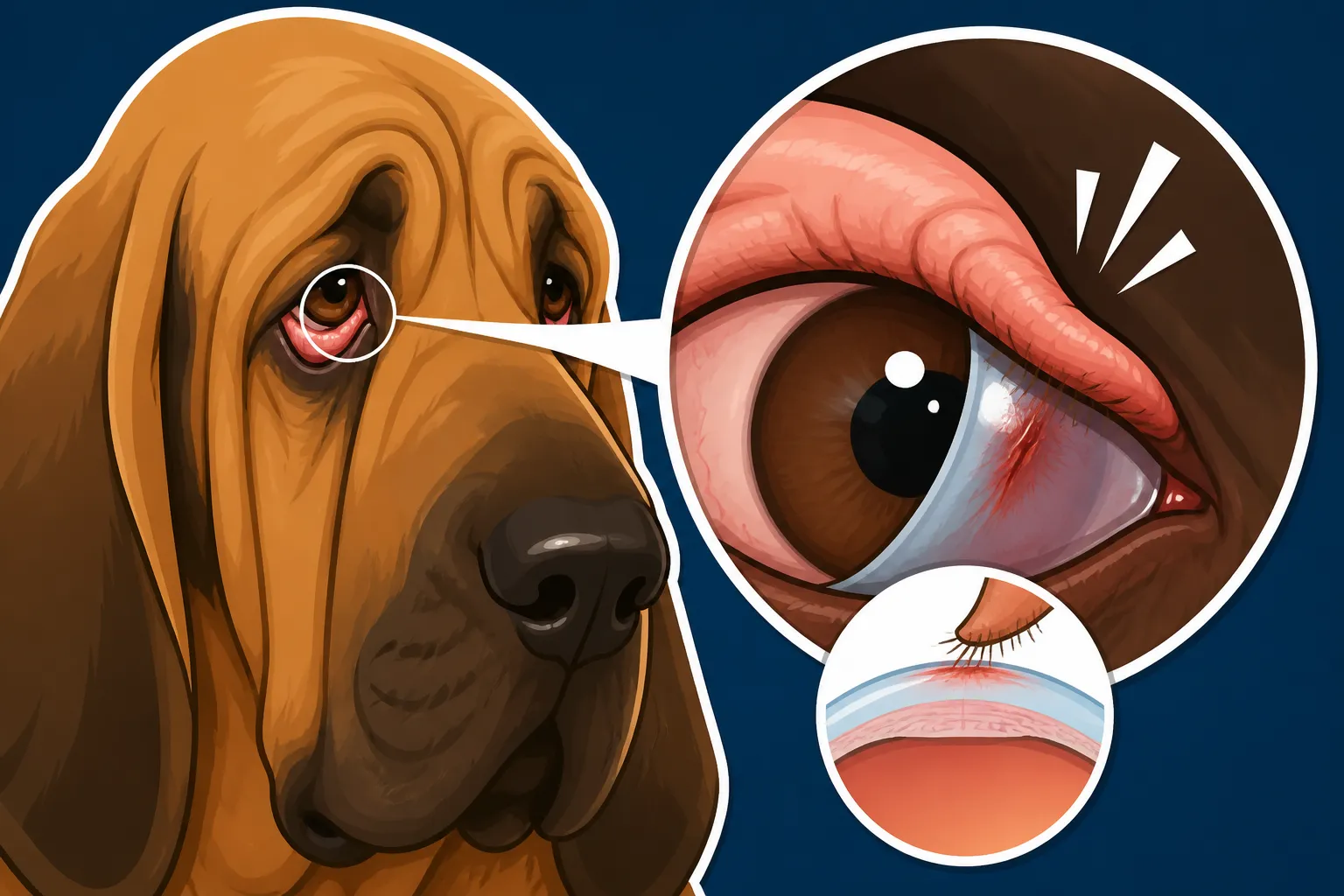
How a Bloodhound’s Rolled Lid Scratches the Cornea
One of the toughest challenges of owning a Bloodhound is navigating the unique health issues that come with their magnificent, yet sometimes complicated, anatomy. Among these, the seemingly innocent droop of their eyelids can become a serious problem, particularly when that lower lid rolls inward, causing constant irritation and damage to their precious corneas. This guide is dedicated to helping you understand exactly how this condition, known as entropion, can scratch your Bloodhound's cornea, what to look for, and how to get your beloved hound the help they need before permanent damage occurs.
The Inward Roll: Understanding Entropion in Bloodhounds
That signature soulful gaze of a Bloodhound is largely due to their deep-set eyes and loose facial skin. While it contributes to their unmistakable charm and aids in scent tracking by "cupping" scent, this unique facial structure also makes them highly prone to certain eye conditions. Entropion is one of the most common and potentially damaging, where the eyelid, usually the lower one, rolls inward towards the eyeball. Instead of protecting the eye, it becomes a source of constant friction and irritation.
What Entropion Truly Means for Your Hound
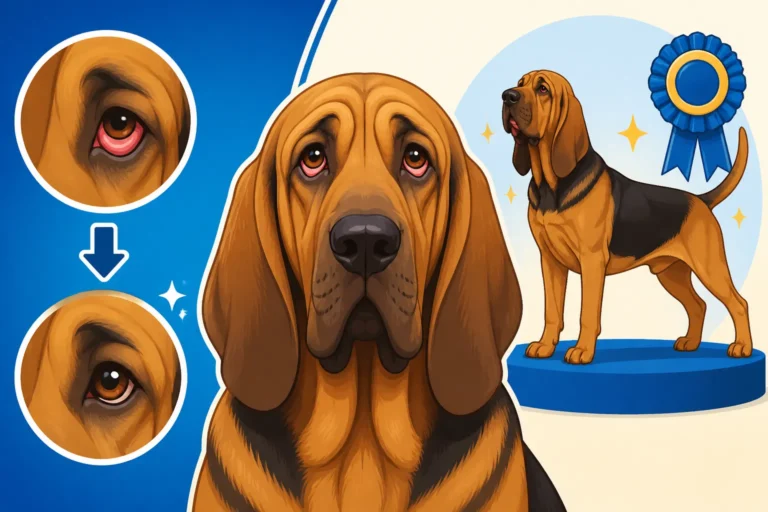
When we talk about entropion, visualize the rim of your Bloodhound's lower eyelid turning inward. This isn't just a minor cosmetic issue; it means that the eyelashes and the coarse hair on the outer surface of the eyelid are perpetually rubbing against the delicate surface of the cornea. Imagine having a tiny, stiff brush constantly sweeping across your eye – that's essentially what your Bloodhound is experiencing, day in and day out, unless the condition is addressed. This persistent mechanical irritation is the primary way a Bloodhound's rolled lid scratches the cornea, leading to pain and potential vision impairment. This is distinct from What Ectropion Looks Like on a Bloodhound where the lid droops outward, exposing the conjunctiva.
Why Bloodhounds Are So Prone to This Condition
Bloodhounds are unfortunately genetically predisposed to entropion, a trait that's often linked to the very features that define the breed. Their abundant, loose facial skin and deep-set eyes, while perfect for trailing, create an environment where the eyelids can easily sag and roll inward. It's often seen as one of The Four Eye Problems a Bloodhound Is Born Toward. This predisposition means that even well-bred Bloodhounds can develop the condition, though responsible breeders strive to minimize its occurrence through careful genetic screening. It's not usually something they grow out of; in fact, it can sometimes worsen as they mature or if they experience significant weight fluctuations.
Recognizing the Difference Between Entropion and Ectropion
It’s easy to confuse entropion with its counterpart, ectropion, because both involve the eyelid not sitting quite right. However, they are opposite problems. Ectropion is when the eyelid rolls outward, exposing the delicate conjunctiva, often seen as a pronounced "haw" or red tissue below the eye. This can lead to dryness and chronic irritation from foreign debris. Entropion, as we're discussing, is the inward rolling, where the eyelashes and fur scrape the cornea. While both conditions can cause discomfort and require veterinary attention, the mechanism of damage to the cornea is fundamentally different. It's important for your vet to accurately diagnose which condition, or sometimes both, your Bloodhound is experiencing to ensure the correct treatment. You can read more about Whether a Bloodhound's Drooping Lid Is a Defect or the Standard.
The Mechanics of Corneal Damage from Inward-Rolling Lids
When an eyelid constantly rubs against the cornea, the clear outer layer of the eye, it doesn't take long for problems to arise. This persistent abrasion isn't just uncomfortable; it physically damages the corneal surface, creating microscopic scratches that can escalate into more serious issues. Understanding this process is key to appreciating the urgency of addressing entropion.
Constant Abrasion and Its Consequences
The most immediate and obvious consequence of entropion is the mechanical abrasion of the cornea. Each blink, each movement of the eye, causes the stiff hairs and lashes on the inverted eyelid to scrape across the delicate corneal surface. Initially, this might cause mild irritation, excessive tearing, and squinting. However, over time, these repeated micro-traumas can erode the outer layers of the cornea, leading to painful corneal erosions and eventually, full-blown corneal ulcers. These ulcers are open sores on the eye, which are not only extremely painful but also provide an entry point for bacteria, leading to secondary infections that can rapidly compromise vision and even the structural integrity of the eye. This is why What Entropion Does to a Bloodhound's Eye is so serious.
The Threat of Secondary Infections
A damaged cornea is a vulnerable cornea. The constant rubbing weakens its natural protective barriers, and the open sores of a corneal ulcer become prime breeding grounds for bacteria. Even normal bacteria present around the eye can seize this opportunity to proliferate, leading to severe bacterial infections. These infections can cause rapid deterioration of the eye, potentially leading to pus accumulation, deepening ulcers, and in severe cases, even rupture of the eyeball. Without prompt and aggressive treatment, such infections can result in permanent blindness or necessitate surgical removal of the eye. This is a terrifying prospect for any Bloodhound owner, emphasizing why timely intervention for entropion is crucial.
Impact on Your Bloodhound's Vision and Quality of Life
Beyond the immediate pain and risk of infection, chronic corneal irritation and ulceration have a significant impact on your Bloodhound's long-term vision and overall quality of life. Repeated scarring from healed ulcers can leave opaque areas on the cornea, leading to reduced vision. Your dog might become more hesitant to navigate in low light, bump into objects, or show reluctance to engage in activities they once enjoyed, like sniffing around the yard or going for walks. Imagine trying to trail a scent with constantly painful, impaired vision – it's simply not possible for a Bloodhound whose world revolves around their nose and eyes. The discomfort can also make them generally more withdrawn, irritable, or less playful, changing their beloved personality.
Recognizing the Signs of Corneal Ulcers in Your Bloodhound
It can be heartbreaking to see your usually vibrant Bloodhound in pain, and eye issues can be particularly distressing. The good news is that corneal ulcers often present with clear, unmistakable signs. Being vigilant and knowing what to look for can make all the difference in getting prompt veterinary care and preserving your hound's vision.
Visible Symptoms to Watch For
The first indicators of corneal damage are usually quite visible. You might notice your Bloodhound squinting or holding one eye partially or completely shut – this is a clear sign of pain. Increased tearing or a watery discharge is also common, as the eye tries to flush out the irritant. The eye itself might appear red or inflamed, particularly the white parts (sclera) and the conjunctiva. In some cases, you might even see a cloudiness or a bluish-white haze on the cornea, which indicates swelling or scarring. Sometimes, the third eyelid (nictitating membrane) may be partially visible, attempting to cover and protect the irritated surface. Any of these signs should prompt an immediate call to your veterinarian. These are critical Signs a Bloodhound Has a Corneal Ulcer.
Behavioral Clues That Indicate Pain
Besides the visible changes, your Bloodhound's behavior will often signal discomfort. They might paw at their eye frequently, rub their face against furniture or the floor, or become sensitive to light, preferring darker areas of the house. You might notice a decrease in appetite or energy levels, as pain can take a toll on their overall well-being. A Bloodhound with a painful eye might also be less enthusiastic about walks or playtime, or even become unusually grumpy or withdrawn. If they're usually an eager eater but suddenly turn away from their bowl, it could be a subtle sign of pain. Remember, our hounds are masters at hiding pain, so even subtle changes warrant investigation.
The Urgency of Veterinary Intervention
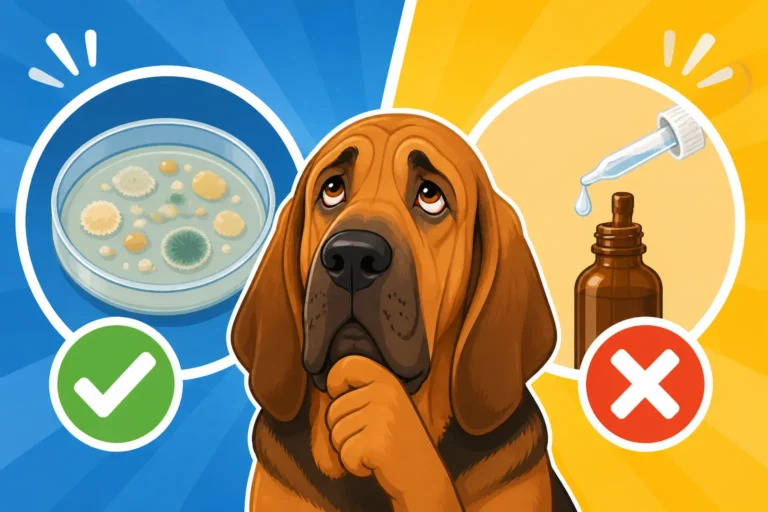
If you suspect your Bloodhound has a corneal ulcer, it is absolutely an emergency. Whether a Bloodhound's Corneal Ulcer Is an Emergency is not a question – it is always urgent. Corneal ulcers can progress very rapidly, sometimes within hours, leading to significant vision loss or even loss of the eye if not treated aggressively. Do not wait to see if it gets better on its own. Contact your veterinarian immediately, or an emergency veterinary clinic if it's after hours. They will typically perform a fluorescein stain test, where a special orange dye is applied to the eye. This dye adheres to any damaged areas of the cornea, glowing bright green under a blue light, making even tiny abrasions visible. This diagnostic tool is crucial for confirming the presence and extent of an ulcer.
Here's a quick comparison of common Bloodhound eye issues:
| Condition | Description | Primary Effect on Eye | Common Treatment | Urgency |
|---|---|---|---|---|
| Entropion | Eyelid rolls inward, lashes/hair rub cornea | Corneal irritation, scratches, ulcers | Surgery (tacking, permanent) | High |
| Ectropion | Eyelid droops outward, exposing conjunctiva | Dryness, irritation from debris, infection | Surgery (corrective), lubrication | Moderate |
| Corneal Ulcer | Open sore on the cornea | Pain, infection, vision loss, rupture | Medicated drops, antibiotics, surgery | Critical |
| Cherry Eye | Prolapsed third eyelid gland | Dryness, irritation, obstruction of vision | Surgical tucking | Moderate |
| Dry Eye | Insufficient tear production | Chronic irritation, infection, vision loss | Lifelong medicated drops | High |
Treatment and Management of Entropion and Corneal Issues
Discovering your Bloodhound has entropion or, worse, a corneal ulcer, can feel overwhelming. But rest assured, both conditions are treatable. The key is timely intervention and working closely with your veterinarian or a veterinary ophthalmologist to develop the right plan. Addressing entropion is often a multi-step process, focusing on immediate relief and long-term correction.
Surgical Correction for Entropion
The definitive treatment for entropion, especially when it's causing corneal damage, is typically surgical correction. This procedure aims to permanently reposition the eyelid so that it no longer rolls inward. For puppies or young Bloodhounds, a temporary "tacking" procedure might be performed first. This involves placing temporary sutures in the eyelid to pull it into the correct position, allowing the puppy to grow and the facial structures to mature without further corneal damage. This can sometimes buy time or even correct mild cases permanently.
For adult Bloodhounds with persistent entropion, a permanent surgical procedure called blepharoplasty is usually recommended. This involves carefully removing a small, crescent-shaped piece of skin and muscle from the eyelid to tighten it and roll the margin outward to its correct position. The goal is to correct the inward roll without over-correcting and causing ectropion. This delicate surgery is often best performed by a veterinary ophthalmologist who specializes in eye procedures. It's a significant decision, but one that brings immense relief and protects your Bloodhound's vision for life. Considering the cost, many owners find that a good pet insurance policy, like one from Healthy Paws, can be invaluable for covering such specialist surgical expenses. Understanding When a Bloodhound's Eyelids Need Surgery is crucial for making informed decisions.
Medical Management of Corneal Ulcers
If your Bloodhound already has a corneal ulcer, the primary focus initially will be on healing the ulcer and preventing infection, often before addressing the entropion surgically. Your vet will likely prescribe a regimen of medicated eye drops. These often include antibiotics to combat or prevent bacterial infections, and atropine drops to relieve painful muscle spasms in the eye. Pain management might also involve oral medications. The frequency of these drops can be intense, sometimes every few hours, round the clock.
It's absolutely vital to administer all medications as prescribed, even if your Bloodhound seems to be improving. Stopping treatment too soon can lead to a relapse or allow a minor infection to become severe. Regular recheck appointments with your vet are crucial to monitor the ulcer's healing progress. The healing time depends on the depth and severity of the ulcer; superficial ulcers might heal within a week, while deeper ones can take several weeks or even require more advanced surgical interventions like a conjunctival flap if they are non-healing.
Long-Term Care and Monitoring
Even after successful surgical correction of entropion and healing of any corneal ulcers, long-term care and vigilance remain important for your Bloodhound. While surgery dramatically reduces the risk of future entropion-related corneal issues, it's essential to monitor their eyes for any signs of irritation or recurrence. Regular Daily Eye Care for a Bloodhound can help keep their eyes clean and healthy.
Maintaining good general health, including a lean body weight, can also indirectly support eye health, as obesity can sometimes exacerbate skin fold issues. If your Bloodhound has loose facial folds elsewhere, like the lip folds, make sure they are cleaned regularly to prevent other skin issues. Some Bloodhounds may still require occasional lubricating eye drops, particularly during dry seasons or if they spend a lot of time outdoors in dusty environments. Consistent check-ups and open communication with your veterinarian are your best tools for ensuring your Bloodhound enjoys clear, comfortable vision throughout their life. Investing in pet insurance from a provider like Healthy Paws early on can help cover costs not just for surgery, but potentially for ongoing medications like the kind needed for What a Bloodhound's Dry Eye Medication Costs Monthly.
Disclaimer
This article is intended for informational purposes only and does not constitute veterinary advice. Always consult with a qualified veterinarian for any health concerns or before making any decisions about your Bloodhound's care.