Whether a Bloodhound Loses Its Spleen to Bloat
When you’re facing the absolute terror of your Bloodhound potentially bloating, every worst-case scenario flashes through your mind. It’s a gut-wrenching experience for any owner, and the thought of complications like organ removal only amplifies the fear. One common, and deeply worrying, question that often arises is whether a Bloodhound might lose its spleen to bloat. It's a valid concern, and unfortunately, it's a very real possibility that surgeons must consider during these emergency situations.
The Devastating Cascade of Gastric Dilatation-Volvulus (Bloat)
Bloat, medically known as Gastric Dilatation-Volvulus (GDV), is a life-threatening condition that strikes large, deep-chested breeds like our beloved Bloodhounds with alarming speed and severity. It's not just a bad stomach ache; it's a catastrophic event where the stomach first fills with gas and fluid, then, terrifyingly, twists on its axis. This twisting cuts off blood supply to the stomach and often other vital organs, leading to rapid tissue death and systemic shock.
The initial distension of the stomach, often caused by a rapid ingestion of food or water, or sometimes seemingly out of nowhere, is already a medical emergency. The pressure builds up inside the stomach, compressing nearby blood vessels and making it incredibly painful for your dog. But it's the volvulus – the actual twisting – that makes it so deadly. When the stomach rotates, it acts like a knot in a hose, trapping everything inside and preventing anything from moving in or out. This includes food, gas, and even blood, leading to a rapid decline in your Bloodhound's health. The rapid onset of symptoms and the quick progression of the disease are why Bloat Is What Kills Most Bloodhounds. Owners often describe their dog going from seemingly fine to critically ill in a matter of minutes.
Our Bloodhounds, with their distinctive deep, narrow chests, are particularly predisposed to this nightmare scenario. This unique body shape creates more room for the stomach to swing and twist, which is a major factor in Why a Deep Narrow Chest Puts a Bloodhound at Risk for bloat. It's a genetic lottery that no owner wants their dog to win, and understanding this underlying predisposition is crucial for proactive care.
The Spleen's Close Connection and Vulnerability During Bloat
The spleen, a vital organ located in the abdomen, plays several crucial roles in your Bloodhound's body. It acts as a blood filter, removing old red blood cells, and serves as a reservoir for blood. It's also a significant part of the immune system, helping to fight off infections. Given its important functions, any damage to the spleen is a serious concern.
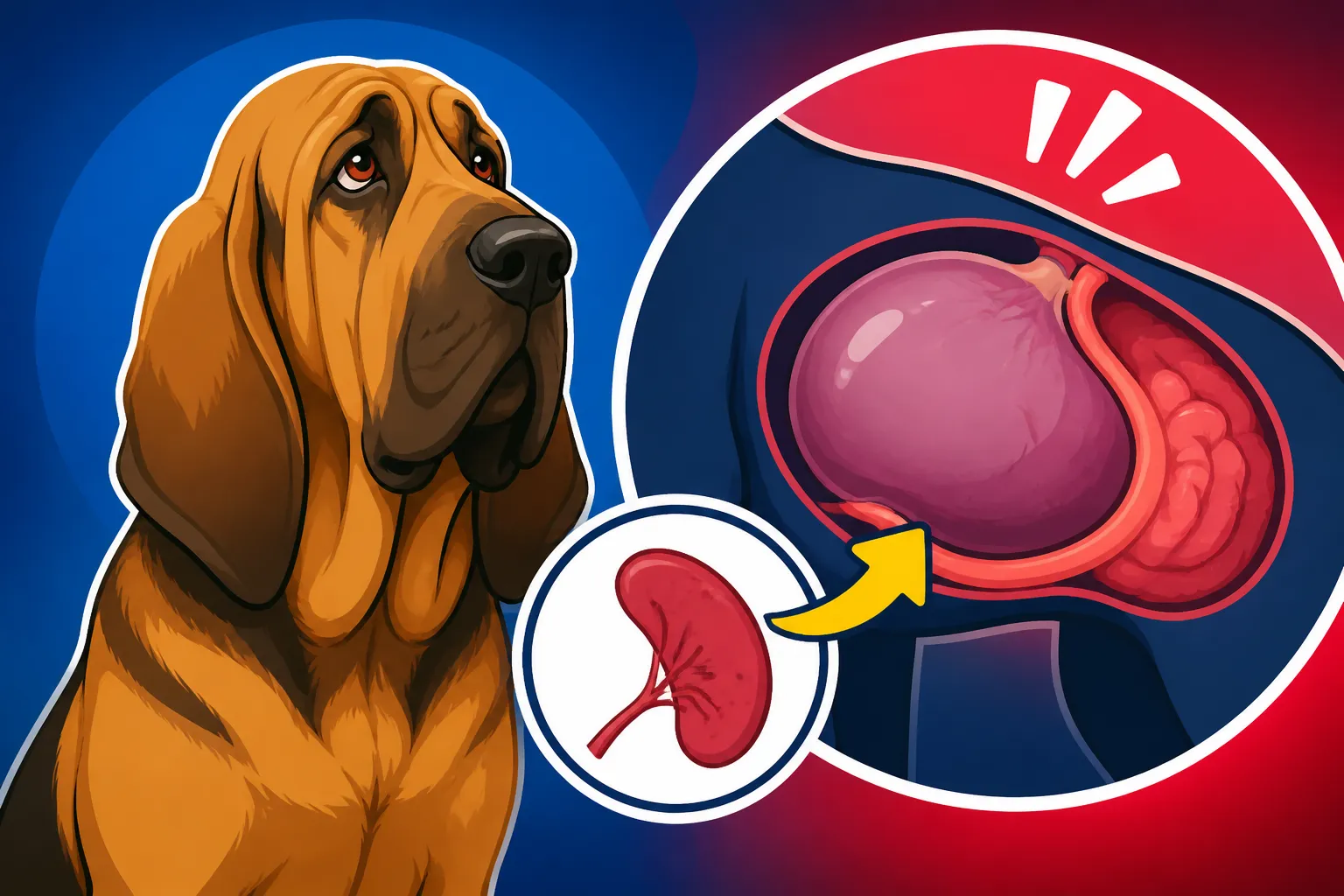
Unfortunately, due to its anatomical proximity to the stomach and the ligaments that connect them, the spleen is incredibly vulnerable when a Bloodhound’s stomach twists. When the stomach undergoes volvulus, it doesn't just twist in isolation; it often takes the spleen along for the ride. The ligaments that normally hold the spleen in place and connect it to the stomach can become stretched, torn, or, most critically, twisted with the stomach. This twisting of the spleen's blood supply (its vessels) results in what’s known as splenic torsion or congestion.
When the spleen's blood vessels are twisted, blood can still flow into the spleen, but it can't easily flow out. This leads to massive congestion, where the spleen becomes engorged with blood, swells dramatically, and takes on a dark, purplish-black appearance. This lack of proper blood flow means the spleen isn't getting enough oxygen or nutrients, and its cells begin to die. This is called necrosis. In some cases, the spleen itself may even twist independently of the stomach, though it’s far more common for it to be a secondary complication of the stomach’s rotation. A veterinarian performing What Emergency Bloat Surgery Does for a Bloodhound will carefully assess the spleen's condition.
The decision to remove the spleen during bloat surgery isn't taken lightly. It's an emergency call made by the veterinary surgeon based on the visible damage to the organ. Here’s a quick overview of the scenarios:
| Spleen Condition During Bloat Surgery | Outcome for Spleen | Rationale |
|---|---|---|
| Untwisted, good blood flow | Spleen left in place | No significant damage; re-positioning of the stomach resolves issue. |
| Twisted, mild congestion | Spleen left in place | Untwisted by surgeon; blood flow returns; monitored for recovery. |
| Severely twisted, poor blood flow | Spleen removal likely | Significant damage or necrosis observed; untwisting unlikely to restore viability or poses future rupture risk. |
| Ruptured or actively bleeding | Spleen removal required | Immediate and life-threatening hemorrhage; splenectomy necessary to save the dog's life. |
When Spleen Removal Becomes Necessary Splenectomy
The decision to remove a Bloodhound's spleen during bloat surgery, a procedure called a splenectomy, is one of the most critical judgments a veterinary surgeon makes under immense pressure. It’s not something they want to do if they can avoid it, but sometimes it’s the only way to save your dog’s life.
A splenectomy becomes necessary when the spleen has suffered irreversible damage due to the lack of blood flow caused by the stomach's twisting. The most common indicators for removal include:
- Necrosis: This is when a significant portion, or the entire spleen, has turned black or dark purple, indicating that the tissue is dead or dying. If left in place, necrotic tissue can lead to severe infection, blood poisoning (sepsis), or even rupture later on, which would be fatal.
- Severe Congestion and Edema: While some congestion can be resolved by untwisting the stomach and restoring blood flow, if the spleen is severely swollen and hard, with evidence of internal bruising or hemorrhage, it might not recover its normal function even if untwisted.
- Rupture: In some extreme cases, the pressure and torsion can cause the spleen to rupture, leading to internal bleeding. This is an immediate, life-threatening situation that requires urgent removal of the damaged spleen to stop the hemorrhage.
During the emergency surgery, after the stomach has been carefully untwisted and decompressed, the surgeon meticulously inspects the spleen. They will try to gently untwist any splenic vessels that have also torqued and assess whether blood flow returns to the organ. Sometimes, a few minutes of waiting and warming the area can help determine if the spleen is viable. If, after these efforts, the spleen remains dark, swollen, and unresponsive, the surgeon will make the difficult but necessary decision to remove it.
Life without a spleen for a Bloodhound is generally quite manageable. Dogs, like humans, can live full and happy lives without a spleen, as other organs (like the liver and bone marrow) can take over many of its filtering and blood storage functions. However, there can be some long-term considerations. Because the spleen is part of the immune system, dogs without a spleen might have a slightly increased susceptibility to certain types of infections, particularly those caused by blood-borne parasites. Your vet will discuss any specific post-operative care and monitoring needed, which might include antibiotics or ongoing observation.
The cost associated with a splenectomy adds to an already significant emergency bill. What a Bloodhound's Bloat Surgery Bill Looks Like Line by Line can be daunting, and having a plan, like pet insurance from providers like Healthy Paws, can offer crucial financial relief during such a crisis. Knowing that the vet's focus can remain solely on your dog's health, rather than your wallet, is invaluable. The overall Survival Rate for a Bloodhound That Reaches Surgery is higher than you might expect, but complications like splenectomy do impact the recovery process, and owners need to be prepared for potentially more intensive post-operative care and a slightly longer stay at the clinic. After such a major surgery, special attention to What a Bloodhound Eats After Bloat Surgery will be paramount to ensure smooth recovery.
Preventing Bloat and Its Complications, Including Spleen Issues
The best way to address the horrifying possibility of a splenectomy due to bloat is to prevent bloat from happening in the first place, or at least to prevent the deadly gastric torsion. For Bloodhound owners, this often means considering a prophylactic gastropexy.
A gastropexy is a surgical procedure where the stomach is permanently attached to the abdominal wall. It doesn't prevent the stomach from filling with gas or fluid (the "dilatation" part of GDV), but it absolutely prevents it from twisting (the "volvulus" part). By anchoring the stomach securely, it cannot rotate, thereby preventing the life-threatening torsion that cuts off blood supply to the stomach and, crucially, minimizes the risk of the spleen twisting with it.
This preventive measure is a game-changer for breeds like Bloodhounds. While a dog can still experience non-torsion bloat (where the stomach fills with gas but doesn't twist), this is far less deadly and typically treatable with medication and decompression. The true killer is the twist, and a gastropexy eliminates that risk. Many owners opt for a gastropexy to safeguard their Bloodhound, especially given the breed's high risk. This procedure is often done at the same time as spaying or neutering when the dog is already under anesthesia, making it a very practical choice. Understanding The Gastropexy Decision Every Bloodhound Owner Faces is a critical part of responsible Bloodhound ownership.
Even with a gastropexy, responsible feeding practices are still important. Whether a Gastropexied Bloodhound Still Needs Split Meals is a common question, and generally, splitting meals into two or three smaller portions throughout the day is still recommended. This helps prevent rapid ingestion of food and air, which can lead to gas accumulation even if the stomach can't twist. Reducing stress during mealtimes, using slow feeder bowls, and avoiding vigorous exercise immediately before or after eating are all valuable strategies to minimize bloat risk, gastropexy or not.
The cost of a preventive gastropexy is a fraction of what an emergency bloat surgery with potential splenectomy would be. What a Preventive Gastropexy Costs on a Bloodhound is a significant investment, but it's an investment in peace of mind and, potentially, your dog's life. Having an emergency fund or pet insurance, like a policy from Healthy Paws, can cover a large percentage of this cost if it's not considered a pre-existing condition (which it wouldn't be if done preventatively). It's wise for any Bloodhound owner to have a financial buffer, regardless, so consider building up How Much a Bloodhound Owner Should Keep Liquid for emergencies.
Ultimately, while the possibility of losing a spleen to bloat is a frightening reality, informed owners have options to mitigate this risk. By understanding the mechanisms of GDV, recognizing the signs, and taking proactive steps like gastropexy, you can significantly improve your Bloodhound's chances of avoiding this tragic outcome and living a long, healthy life.
Disclaimer
The information provided in this article is for general informational purposes only and is not a substitute for professional veterinary advice. Always consult with a qualified veterinarian for any health concerns or before making any decisions related to your Bloodhound's care.