Where Nick Carter Worked
Nick Carter was not a police dog stationed at one precinct. He was a famous American Bloodhound associated with Captain G. V. Mullikin and based in Kentucky, where he was called on to follow human trails for law officers. This guide explains what is known about his home base, the kinds of places he worked, and why the surviving record can be hard to pin down.
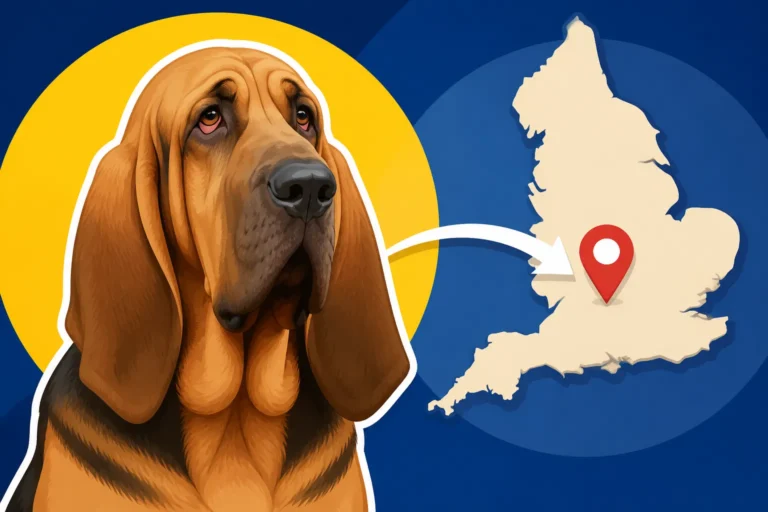
Nick Carter’s home base was in Kentucky
A tracking dog, not a dog assigned to one station
Nick Carter is remembered as a working Bloodhound owned and handled by Captain G. V. Mullikin, a Kentucky-based handler associated with Louisville. That connection makes Louisville and the wider state of Kentucky the clearest answer to where Nick Carter worked from. It does not mean he was permanently housed at a city police station or employed like a modern department K-9.
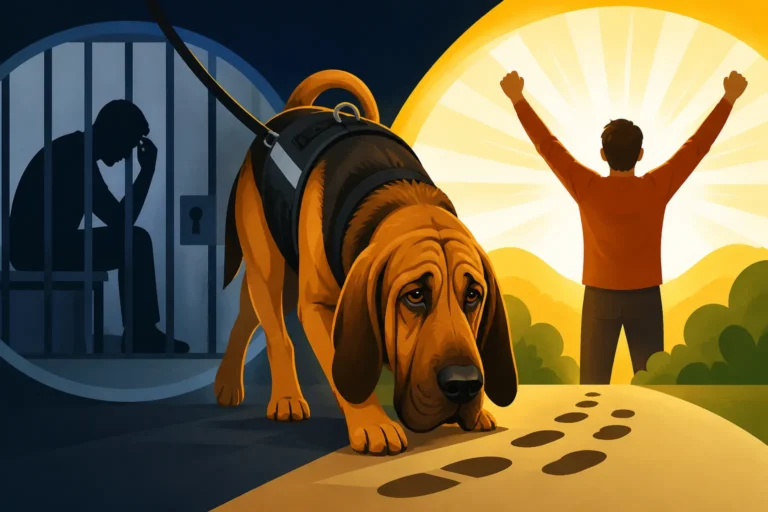
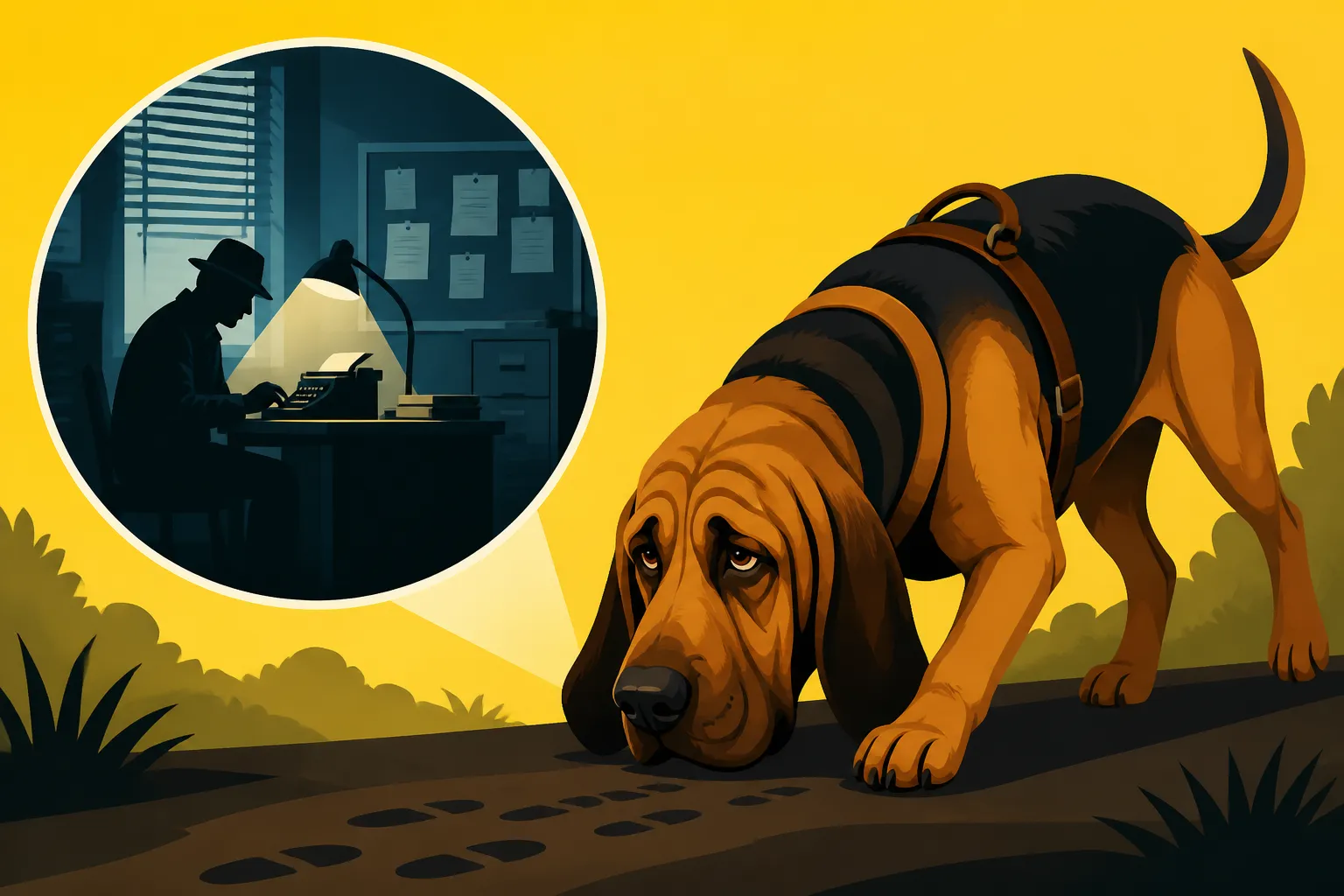
Bloodhounds were commonly used as specialist trackers. A sheriff, police officer, or other authority might request help after a person had fled or gone missing. The handler would bring the dog to the place where the person was last known to have been, offer a scent article if one was available, and allow the dog to work the trail. Nick Carter’s role was therefore tied to particular cases, not to routine patrols on fixed streets.
That distinction helps make sense of his reputation. A dog might be known across a large area because people asked for his services, even if his home and handler were based in one place. For more on that partnership, see Who Owned the Bloodhound Nick Carter.
Kentucky was the base, but not necessarily the whole territory
Historical accounts associate Nick Carter with work beyond a single Louisville neighborhood. He is often described as traveling to assist with cases in different places, including areas outside his home base. That broader reach fits the way a celebrated tracking dog could be used: local authorities might call on a handler whose dog had a reputation for following difficult trails.
It is safest, though, to avoid turning that general picture into a precise route map. The surviving popular accounts do not always provide a consistent, complete list of every town, county, or state Nick Carter visited. A report saying that a famous dog worked “throughout” a region can also refer to a handful of widely publicized cases rather than regular service across every part of it.
So the careful answer is that Nick Carter was based in Kentucky and was called to work cases in other locations. If you encounter a claim naming a long list of states or an exact number of journeys, look for the underlying case descriptions before treating that list as settled fact. The distinction between a documented home base and a wider claimed working range matters especially when discussing a dog whose fame grew through newspaper stories and retellings.
What “worked” meant for a Bloodhound in Nick Carter’s era
Following a person’s scent from a starting point
Nick Carter’s work was trailing: he was expected to follow the scent associated with a particular person from a place connected to the case. That could mean starting at a scene, a point where someone was last seen, or an item believed to carry that person’s scent. The dog’s job was not to search randomly for anyone nearby; the handler needed to give him a meaningful starting point and interpret how he moved.
A trail could lead through very different surroundings. A Bloodhound might work across a road, through a field, along a fence line, into brush, or near homes and outbuildings. In a town, the route might cross busy streets or places where many people had passed. A dog’s progress would depend on conditions such as weather, ground surface, elapsed time, and how much other human scent was present.
This is one reason “where Nick Carter worked” cannot be answered with a simple list of workplaces. The practical location changed from case to case. One call might begin at a rural property, while another might involve a town or a route between settlements. The dog and handler were brought to the trail rather than assigned to patrol one defined district.
For a broader explanation of how this kind of work is understood, see What a Bloodhound Is Actually Smelling on a Trail and Why a Bloodhound Trails a Person Rather Than a Path.
The handler and local officers shaped each search
A Bloodhound’s work depended on more than the dog’s nose. The handler had to learn where the trail began, manage the dog safely, notice changes in its behavior, and communicate what was happening to the people at the scene. Local officers, witnesses, and property owners could also affect the search by identifying the last known location or explaining which routes were accessible.
That teamwork mattered in the early twentieth century just as it does in modern scent work. A handler arriving in an unfamiliar county would need to understand the case circumstances and the terrain. A trail crossing private land, a road, or a populated area could require cooperation and practical decisions. The dog could indicate a direction of travel, but the people involved still had to investigate what that meant.
Nick Carter’s fame can make his work sound like a solo feat: a dog arrives, takes a scent, and solves a case. Real trailing is less theatrical. The dog follows scent; the handler observes and manages the search; investigators assess what the trail does and does not establish. To compare that historical arrangement with organized contemporary searches, see Whether a Sheriff's Office Trains Its Own Bloodhounds and Whether a Volunteer Bloodhound Can Be Called Out.
Why the record of Nick Carter’s work is difficult to map
Famous claims are not the same as a case-by-case log
Nick Carter is often associated with an impressive number of captures or successful finds. Those claims helped make him one of the best-known Bloodhounds in American history, but a total repeated in a profile is not automatically a complete, independently checked record of every case. Different accounts may count different outcomes: a person located, a suspect identified, an arrest made, or a case in which the dog was said to have contributed.
The word “conviction” can also cause confusion. A tracking dog might help officers locate a person, but a court case involves evidence beyond the fact that a dog followed a trail. A capture is not itself proof of guilt, and a dog’s trail does not tell a reader exactly what happened after the search ended. For a closer look at the numbers and their limits, see How Many Convictions Nick Carter's Nose Produced in 1903 and Whether Nick Carter's Finds Were Documented.
The same caution applies to place names. A newspaper account might identify where a search started, where a person was found, or where an arrest occurred. Those are not necessarily the same location. Later retellings can compress the details into a phrase such as “worked in Kentucky” or “tracked across several states,” leaving out the route and the handler’s role.
A reputation can travel farther than the dog
A well-known tracking dog could attract requests from outside the area where he lived. News stories about a dramatic search could travel widely, and the dog’s name might become familiar to people who had never seen him work. That public reputation helps explain why Nick Carter is remembered nationally, even though his strongest geographic association is Kentucky and his handler’s base was linked with Louisville.
A useful way to separate the evidence is to distinguish home base, reported working locations, and later reputation:
| Question | Careful answer |
|---|---|
| Where was Nick Carter based? | He was associated with Captain G. V. Mullikin in Kentucky, with Louisville commonly connected to the handler’s base. |
| Did he work at one police station? | He is better understood as a specialist tracking dog called to cases, not as a dog assigned to one fixed station. |
| Did he work outside Louisville? | Accounts describe work beyond a single city, but a complete, consistent itinerary is not easy to establish. |
| What kind of work did he do? | He followed human scent trails in connection with searches and law-enforcement cases. |
| Do reported success totals prove every case? | No. Totals need to be read alongside the details and definitions used in the individual accounts. |
This is the most grounded way to answer the title question: Nick Carter worked from a Kentucky base, especially associated with Louisville, and was reportedly called to track people in other places. The exact boundaries of his working territory are less certain than his connection to Mullikin and his reputation as a celebrated trailing Bloodhound.
His story also sits within a broader history of questions about the use of dogs in investigations. A trail may help direct a search, but whether it can serve as courtroom evidence—and how much weight it deserves—depends on the legal setting and the evidence around it. Related reading includes Which Court First Accepted a Bloodhound's Trail and Whether a Bloodhound's Nose Counts as Evidence in Every State.
How to read claims about Nick Carter’s locations
Check what each place name refers to
When you see a specific town attached to Nick Carter, ask what the account actually says happened there. Was that where the trail began? Where the dog was taken? Where the person was found? Or simply the place where the story was published? These details can get blurred when a short historical summary is repeated without the original context.
Also check whether the account names Mullikin, describes a particular case, or provides a date. A concrete case description is more useful than a sweeping statement about a dog working across a region. If the story gives no location beyond a state or broad area, it is better not to invent a county or route to fill the gap.
Keep the achievement in perspective
Nick Carter’s historical importance does not depend on claiming that every reported detail is certain. He remains a striking example of how Bloodhounds were used as tracking specialists and how one dog’s reputation could extend well beyond his home base. At the same time, the work should be understood as a collaboration between dog, handler, and investigators—not as an infallible test that independently established guilt.
That balanced view makes the question easier to answer without overstating the record: Nick Carter was a Kentucky-based Bloodhound, closely associated with Louisville through Captain G. V. Mullikin, who was called to work trails in other locations. The surviving accounts support that general picture more clearly than they support a definitive map of every place he visited.
Disclaimer
This article is for general informational purposes only and does not constitute professional advice. Laws, prices and regulations vary by location and change over time. Consult a qualified professional for guidance on your specific situation.