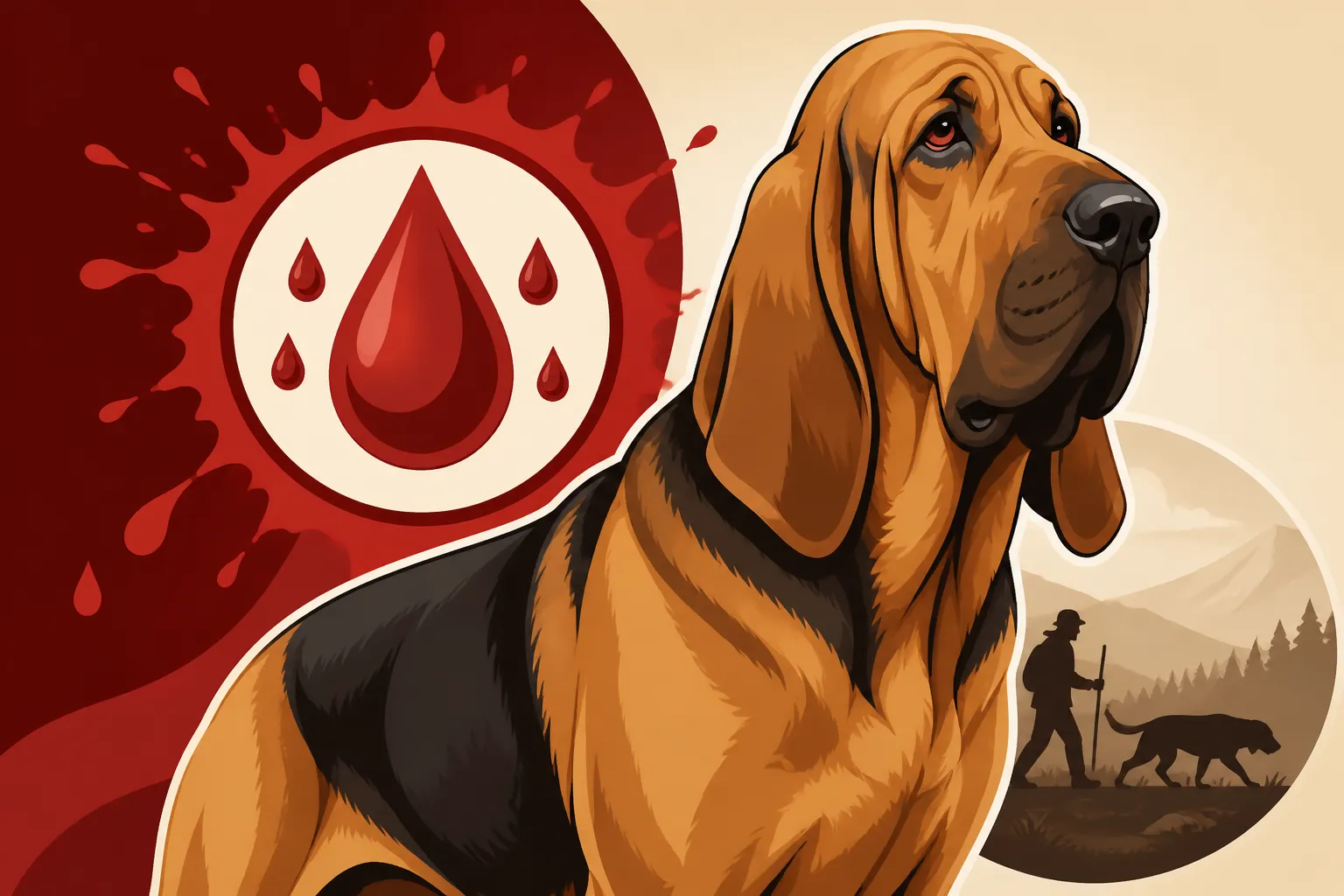
What Blooded Stock Meant When the Bloodhound Was Named
It’s a name that conjures images, doesn't it? "Bloodhound." For many, the very word sparks a sense of intrigue, perhaps even a touch of trepidation, immediately leading to thoughts of tracking blood trails or a fierce, unrelenting nature. But that initial gut reaction often misses the true, historical elegance behind this magnificent breed's designation. This guide is here to untangle the historical threads of the Bloodhound's name, especially that captivating phrase "blooded stock," to reveal a much richer and more accurate story than the one popularly imagined.
Unraveling the Misconception: The "Blood" in Bloodhound
When you hear "Bloodhound," what's the first thing that springs to mind? For most folks, it's the image of a dog relentlessly pursuing a scent, perhaps even a lost person or, in grimmer historical contexts, a fugitive. The "blood" part of the name often leads people to assume it refers to the dog's ability to track actual blood, or worse, to a bloodthirsty temperament. It's a common misconception, and honestly, who can blame anyone for thinking that? The name itself is quite evocative!
The Common, Yet Incorrect, Associations
The human mind naturally seeks connections, and when presented with "blood" and "hound," it's easy to jump to conclusions. Many people associate the name with hunting wounded game, assuming these dogs were specifically bred to follow a blood trail left by an injured animal. While Bloodhounds are certainly adept at tracking, this particular interpretation is a misdirection. The phrase "tracking blood" implies a focus on a very specific type of scent, which isn't the primary historical or functional emphasis behind their name.
Then there's the more unfortunate association with ferocity or aggression. History hasn't always been kind to the Bloodhound's public image, sometimes painting them as savage beasts in pursuit of humans. This narrative, often fueled by fiction and misrepresentation, has unfairly tarnished the breed's reputation. It’s a real shame because anyone who has spent time with a Bloodhound knows them to be among the most gentle, affectionate, and even goofy dogs out there. The idea that their name implies a predisposition for violence couldn't be further from the truth.
Why the Name Can Be Misleading Today
In our modern world, where dogs are primarily cherished family pets, the name "Bloodhound" can still create a lingering shadow of misunderstanding. Potential owners might hesitate, wondering if such a dog would truly fit into a family environment, especially with small children or other pets. They might hear the name and imagine a dog that is difficult to control or inherently dangerous, based solely on that powerful, slightly intimidating word. It’s a challenge the breed has faced for centuries, and it’s why understanding the true etymology is so important.
Moreover, the sheer intensity of their scenting ability, often sensationalized, can also play into these misconceptions. We know they are incredible trackers— The Bloodhound Is the Only Dog Whose Evidence Stands in Court is a testament to that—but connecting this ability directly to "blood" in the literal sense detracts from the true scientific wonder of their olfactory prowess. It's not about tracking blood; it's about the pure, undiluted power of their nose to follow human scent over incredible distances and time.
The Historical Context of "Blooded Stock"
To truly understand what "blooded stock" meant when the Bloodhound was named, we need to take a step back in time, far before modern pet breeds as we know them. We're talking about an era where lineage, purity, and the specific capabilities derived from generations of careful breeding were paramount, especially in the hunting field. This wasn't just about owning a dog; it was about owning a tool of the hunt, refined and perfected.
Aristocracy, Purity, and Pedigree in Medieval Europe
In medieval Europe, hunting was far more than a sport; it was an integral part of aristocratic life, a means of provisioning, and a display of wealth and power. Dogs were essential to this pursuit, and certain breeds, or lines of dogs, were highly prized for their specific aptitudes. Just as noble families traced their own genealogies with meticulous care, so too did they value the pure lines of their hunting hounds. A dog from "good stock" was a dog with a proven heritage of successful hunting traits, such as an unparalleled nose, stamina, or a particular hunting style.
This emphasis on purity was about predictability. When a lord or a monastery invested time and resources into breeding, they wanted to ensure that the offspring would possess the same desirable characteristics as the parents. They weren't breeding for aesthetics as much as for function, and consistency in that function was directly tied to the purity of the bloodline. Interbreeding with lesser, untrained, or unknown dogs would dilute those traits, making the outcome of a hunting pack unreliable. This concept of purity was the bedrock of what would later become known as "blooded stock."
The Concept of "Pure Blood" in Hunting Hounds
So, when people spoke of "pure blood" in the context of hunting hounds, they weren't talking about the fluid that flows through veins in a literal sense. Instead, "pure blood" was a metaphor for a clean, unmixed lineage. It referred to dogs whose ancestry was entirely known and documented, free from any cross-breeding with common curs or dogs of unknown origin. These were the elite of the canine world, dogs whose parents, grandparents, and even great-grandparents had all been proven performers in the field.
Imagine a specialized breeding program run by a monastery, like The Abbey of Saint Hubert Bred the Bloodhound's Ancestor. Their goal was to produce hounds with an exceptional sense of smell and the stamina to follow a trail for hours, even days. To achieve this, they would meticulously select breeding pairs, ensuring that only dogs exhibiting the desired traits and belonging to the established line were allowed to reproduce. This deliberate, selective breeding across generations created a "pure blood" line, a genetic heritage untainted by outside influences that might diminish their unique abilities. This commitment to an unbroken, highly specialized lineage is central to understanding the Bloodhound's historical name.
How "Blooded" Signified Lineage, Not Ferocity
Therefore, when the term "blooded hound" or "Bloodhound" emerged, it was a descriptor of quality and pedigree, not of aggression or an ability to track literal blood. It signified a dog of pure, unmixed breeding, a hound whose ancestry was "blooded" or aristocratic, meaning it came from a distinguished and unbroken line of exceptional hunting dogs. Think of it like a thoroughbred racehorse – the "blood" in "thoroughbred" refers to its pure lineage, not to its capacity for violence or its ability to track blood.
This purity of blood was crucial because it meant these hounds were reliably excellent at their specific job: scent trailing. They were considered the "blue bloods" of the canine world, animals whose consistent performance was guaranteed by generations of careful selection. This is also why these dogs carried such prestige; they were living proof of a dedicated breeding program and a valuable asset to any noble household or religious institution. The name, far from suggesting a savage nature, was originally a badge of honor, proclaiming the hound's noble and unblemished heritage. What the Name Bloodhound Actually Means is tied directly to this concept of pure, unadulterated lineage.
Here's a quick comparison of the common misconception versus the historical reality:
| Aspect | Common Misconception | Historical Reality |
|---|---|---|
| "Blood" meaning | Literal blood tracking; savage temperament | Pure lineage, noble ancestry, unmixed breeding |
| Breed function | Primarily tracking injured game or humans | Scent trailing any human scent with high accuracy |
| Origin of name | Related to violence or gruesome tasks | A testament to careful, selective breeding |
| Dog's nature | Potentially aggressive or fierce | Generally gentle, calm, and highly sociable |
| Value of lineage | Less emphasized; focus on individual dog | Paramount; guaranteed consistent working ability |
The Chien de Saint Hubert: A Lineage of Purity
The story of the Bloodhound's name and its "blooded" status truly begins with its ancient ancestors, most notably the Chien de Saint Hubert. This esteemed line of hounds didn't just appear; it was meticulously developed and maintained over centuries, a testament to the dedication of those who understood the value of a pure, specialized hunting dog. This European origin is key to understanding the breed's very identity. Which Country the Bloodhound Comes From originally is deeply intertwined with this monastic history.
Monastic Breeding and the Preservation of a Line
Centuries ago, long before the establishment of modern kennel clubs, certain monasteries in Europe became centers for specialized animal breeding. Among them, the Abbey of Saint Hubert in the Ardennes forest region was particularly renowned. The monks there, with their disciplined approach and long-term vision, undertook the monumental task of preserving and refining a specific type of scent hound. When the Monks Began Breeding the Bloodhound's Ancestor, they weren't just letting dogs mate randomly; they were engaging in a deliberate, generations-long project to create and maintain hounds with exceptional scenting abilities, stamina, and a stable temperament.
This monastic breeding program was critical because it provided the consistency needed to establish a "pure blood" line. Unlike individual hunters who might breed opportunistically, the monastery had the resources, knowledge, and continuity to follow specific breeding practices over vast stretches of time. They kept records, observed traits, and made intentional choices about which dogs to breed, ensuring that the desired characteristics were passed down reliably. This meticulous effort created a truly distinct and recognizable line of hounds, known for their unwavering devotion to a trail.
Distinguishing Purebred from Common Hounds
In an era before formalized breed standards and genetic testing, how did one distinguish a "purebred" Chien de Saint Hubert from a common hound? It was primarily through reputation, physical characteristics, and, crucially, performance. The Chien de Saint Hubert dogs were known for their distinctive appearance: their heavy bone, long pendulous ears, deeply wrinkled face, and powerful build. More importantly, they were renowned for their unparalleled scenting ability and their calm, persistent nature on a trail. What the Chien de Saint Hubert Was Used For was specifically trailing game, often large deer, with incredible accuracy and endurance.
A "common hound," in contrast, might be a mixed-breed dog, or one whose lineage was unknown, exhibiting a wider range of physical traits and less predictable hunting prowess. While these dogs certainly had their uses, they lacked the consistent, specialized genetic heritage that defined the monastic hounds. The very term "blooded" served to differentiate these superior, consistently bred animals from the general population of hunting dogs. It was a mark of authenticity and a guarantee of the specific traits these purebred dogs embodied.
The Journey to English Soil and Name Evolution
The fame of the Chien de Saint Hubert eventually spread beyond the European continent. These prized hounds were highly sought after, and over time, some were brought to England. How the Bloodhound Reached England is a tale of diplomatic gifts and noble imports, as English royalty and aristocracy recognized the superior qualities of these hounds for their own hunting parks. It's even speculated that Whether William the Conqueror Brought Bloodhounds Over could be true, highlighting their ancient presence in Britain.
Once on English soil, the name evolved. The "Chien de Saint Hubert" gradually became known as the "Bloodhound," reflecting the English interpretation of their "blooded" or pure lineage. What English Breeders Changed About the Bloodhound was less about drastically altering the breed and more about preserving and refining the existing characteristics within their own cultural context. The emphasis remained on their tracking ability and their noble heritage. The very act of calling them "Bloodhounds" in English was a direct nod to their status as "hounds of the blood"—pure-blooded animals from a venerable line, making Whether Bloodhound Once Meant a Hound of Pure Blood a resounding yes.
Impact of the Name on the Bloodhound's Reputation
The historical meaning of "blooded stock" as a mark of purity is beautiful and noble, but it's undeniable that the name "Bloodhound" has carried a different, often darker, connotation through the ages. This disconnect between intent and perception has significantly shaped how the breed is viewed, sometimes unjustly. It's crucial for us, as admirers of this remarkable breed, to actively work against those lingering myths.
Dispelling Myths of Aggression and Bloodlust
Perhaps the most damaging impact of the name has been the myth that Bloodhounds are inherently aggressive or possess a "bloodthirsty" nature. This is simply not true. Historically, the tales of "bloodhounds tracking fugitives" often conflated their incredible scenting ability with a menacing disposition, particularly during periods when they were used in unsavory ways, such as tracking enslaved people. These unfortunate historical applications, though deviations from their true purpose, led to a public image that was far from reality. Whether the Bloodhound's Reputation Was Damaged by Fiction is undoubtedly true, with popular culture often amplifying these aggressive stereotypes.
In reality, Bloodhounds were (and are) bred for patience, persistence, and a focused drive on scent, not for aggression towards humans. Their job is to follow a trail, not to attack or injure. Any display of aggression would actually hinder their ability to perform their primary function. It's a fundamental misunderstanding that we, as Bloodhound enthusiasts, constantly strive to correct, highlighting their true character as gentle giants.
The Gentle Giant Behind the Intense Name
If you've ever had the pleasure of spending time with a Bloodhound, you know the truth: they are typically incredibly gentle, placid, and affectionate dogs. They are famously tolerant, patient, and good-natured, often making wonderful family pets. Their intense focus is reserved for scent work; in a home environment, they are usually calm, quiet (unless they catch a whiff of something interesting or decide to bay!), and surprisingly docile. Whether the Bloodhound Is Actually Gentle is an unequivocal yes.
Their deep wrinkles and mournful eyes, far from indicating sadness or ferocity, often give them a perpetually bewildered or thoughtful expression that is utterly endearing. They crave human companionship and are known for their unwavering loyalty to their families. The contrast between their powerful, historic name and their soft, loving personality is one of the most charming paradoxes of the breed. They are, in essence, big, floppy, scent-driven cuddle bugs who happen to have the most powerful noses in the canine kingdom.
Advocating for the True Nature of the Breed
It falls to us, those who know and love Bloodhounds, to be their best advocates. By understanding and sharing the true meaning of "blooded stock," we can help dispel the old, unfair stereotypes. We can educate potential owners and the public alike that the name speaks to their noble heritage and pure lineage, not to any aggressive tendencies. This education helps foster a more accurate appreciation for these incredible hounds and encourages responsible ownership.
When people consider bringing a Bloodhound into their lives, they need accurate information about their temperament, exercise needs, and unique care requirements—like cleaning those magnificent ears regularly! Whether a Bloodhound Suits a First Time Owner often comes down to managing expectations based on accurate information. By focusing on their true history as pure-blooded scenting specialists and their gentle, loving disposition, we honor the Bloodhound for what it truly is: a devoted companion with an extraordinary gift, a testament to centuries of careful, dedicated breeding.
Disclaimer
This article is for general informational purposes only and does not constitute professional advice. Laws, prices and regulations vary by location and change over time. Consult a qualified professional for guidance on your specific situation.