Why Bloodhound Does Not Mean a Hound That Tracks Blood
It's easy to look at a majestic Bloodhound, with its deep-set eyes, long velvety ears, and famous nose, and assume that its very name means it's a specialist in tracking blood. We see them in movies, chasing escaped convicts through forests or finding lost children, and the assumption feels perfectly natural. But the truth behind the Bloodhound's name is actually quite a bit more nuanced and steeped in history, reflecting something far deeper than just their incredible scenting ability. This guide will take a fascinating dive into the true origins of the breed's name, dispelling common myths and uncovering the rich heritage behind these magnificent hounds.
The Common Misconception About the Name
For many, the name "Bloodhound" instantly conjures images of a hound relentlessly pursuing a trail, often implying a connection to literal blood—perhaps from a wounded animal or a crime scene. It's a powerful and evocative image, deeply ingrained in our collective understanding of the breed, and it's completely understandable why this perception exists.
The Image of the Bloodhound in Popular Culture
Think about all the detective stories, old cartoons, and even news reports you've seen over the years. Bloodhounds are consistently depicted as the ultimate trackers, noses to the ground, baying mournfully as they follow an invisible path. This constant portrayal reinforces the idea that their purpose, and thus their name, must be directly linked to their phenomenal ability to follow a scent, often through difficult terrain. The image is so strong that few people ever stop to question it, accepting it as fact without a second thought. It's almost as if their legendary status as a tracker has overshadowed the actual etymology of their name.
Why the Misconception is Understandable
Honestly, when you watch a Bloodhound at work, it’s hard not to connect their name to their skill. Their scenting prowess is truly unparalleled in the canine world. They can follow trails that are days old, distinguish one person's scent from hundreds, and work through incredibly complex environments. Given this extraordinary talent, it seems perfectly logical to assume that "Bloodhound" refers to their ability to track "blooded" prey or even blood itself. After all, what else could such a specialized tracker be named for? The visible signs of their intense focus – the low-slung head, the sweeping ears, the deep inhale – all point to an animal utterly consumed by scent, making any association with the word "blood" feel instantly appropriate to their task.
Unpacking the "Blood" in Bloodhound: Historical Context
While the Bloodhound's tracking abilities are legendary, the "blood" in its name doesn't actually refer to the physical substance of blood or even the act of tracking it. Instead, it refers to something far more fundamental to its lineage: pure blood, or "blooded" stock. This term, used centuries ago, was a mark of aristocratic breeding and lineage, setting these hounds apart from common curs and mixed breeds.
What "Blooded Stock" Truly Meant
In medieval times, owning "blooded stock" meant possessing animals of pure, unmixed lineage. These were dogs bred meticulously for generations, their pedigrees carefully recorded, ensuring they were direct descendants of a specific, esteemed line. This was especially important for hunting hounds owned by nobility and royalty, where purity of breed was a status symbol and a guarantee of specific working traits. A "bloodhound" was, therefore, literally a "hound of pure blood," a testament to its distinguished ancestry and the careful breeding practices that maintained its unique qualities. It distinguished them from the general population of hunting dogs, many of whom were of unknown or mixed parentage. These were the elite of the canine world, recognized for their superior genetics and proven capabilities.
The Role of Monasteries and Noble Houses
The preservation and development of these "blooded" lines were often undertaken by institutions with the resources and dedication required for such a task. Monasteries, particularly the Abbey of Saint Hubert in the Ardennes, played a crucial role. Monks meticulously bred and maintained strains of large scent hounds, focusing on their working ability and purity. These hounds became highly prized, gifted to royalty and nobility across Europe. Noble houses also maintained their own kennels, safeguarding and selectively breeding these precious animals. This careful husbandry over centuries ensured the distinct characteristics of the breed were preserved, making them truly "hounds of pure blood." The reputation of these hounds was built not just on their performance in the field, but on the unblemished record of their ancestry. The Abbey of Saint Hubert Bred the Bloodhound's Ancestor speaks to this pivotal period in their history.
The Saint Hubert Hound: The Bloodhound's Ancestor
To truly understand the Bloodhound, we have to travel back in time to its roots in continental Europe, specifically to a region that fostered the development of some of the most impressive scent hounds. The modern Bloodhound owes a significant debt to the ancient St. Hubert Hound, a breed developed with purpose and precision.
Origins in the Ardennes
The lineage of the Bloodhound can be traced back to the Ardennes region, a dense, forested area spanning parts of present-day Belgium, Luxembourg, and France. Here, the monks of the Abbey of Saint Hubert were renowned for breeding powerful, scent-driven hounds. These were large, slow-moving dogs with incredible noses, developed to track large game such as deer and wild boar. They were not fast pursuit hounds, but rather deliberate, methodical trackers, valuing accuracy over speed. Their development was a testament to the monks' dedication to creating a dog with an unrivaled sense of smell, making them highly sought after by European royalty for hunting and trailing. This ancient line was the foundational "blooded stock" from which today's Bloodhound emerged.
How the Breed Reached England
The St. Hubert Hounds' reputation for their extraordinary scenting abilities spread, catching the attention of nobility beyond the European mainland. It's believed that William the Conqueror himself brought some of these hounds to England in 1066. Whether this is precisely true, or if they arrived shortly after with other Norman nobles, the impact was profound. These pure-blooded continental hounds were revered and carefully maintained, primarily by English aristocracy and eventually, by dedicated breeders. They became known as "blooded hounds" to distinguish them from the native British hounds, highlighting their superior lineage and meticulous breeding. This infusion of the St. Hubert Hound's genetics into England was a critical step in the evolution of what we now know as the Bloodhound.
The English Development of the Bloodhound
Once established in England, the descendants of the St. Hubert Hounds underwent further refinement, adapting to new purposes and contributing to the distinct characteristics we recognize in the Bloodhound today. English breeders, with their own traditions and requirements, began to shape the breed into the magnificent tracker it would become.
Refinement and Purpose
In England, the focus on preserving the "pure blood" of these hounds continued, but their specific purpose began to broaden. While still used for hunting large game, their incredible scenting ability naturally lent itself to tracking humans. This wasn't necessarily for law enforcement in the modern sense, but often for finding lost people, runaway serfs, or even deer poachers. The English gentry recognized the invaluable asset these hounds were, and continued selective breeding to enhance their already formidable noses, while also developing the physical characteristics – the loose skin, the pendulous ears, the deep flews – that contribute to their scenting prowess. This period solidified the Bloodhound's reputation as an unsurpassed trailer, even before its legal standing was established.
The Evolution of Its Role
Over time, the Bloodhound's role evolved from exclusively tracking game for the gentry to becoming an indispensable tool for human trailing. This shift was gradual but significant. As communities grew and the need for public safety became more formalized, the Bloodhound’s unique skill set was increasingly utilized for tracking criminals, finding lost individuals, and even recovering stolen property. Their pure lineage meant they were trusted, reliable, and consistent in their work. This is where the Bloodhound truly came into its own as a specialized human tracker, a role that would eventually cement its place in legal history. This evolution, from aristocratic hunting dog to a public service animal, truly showcases the versatility and incredible talent inherent in the breed.
The Bloodhound's Unparalleled Nose (And Why It Doesn't Mean "Blood")
So, while the name "Bloodhound" speaks to its noble ancestry, its actual work often involves tracking, which can certainly lead to misunderstanding. What makes their nose so exceptional that it earns them a reputation for being the best in the business? It's a combination of unique physical attributes and sheer olfactory power.
The Physiological Advantage of the Bloodhound's Scenting Ability
A Bloodhound's nose isn't just "good"; it's a marvel of evolution. Their olfactory system is incredibly sophisticated, featuring an estimated 300 million scent receptors, compared to about 6 million in humans. But it's not just the number of receptors. Their long, pendulous ears, known as "leathers," actually sweep scent particles from the ground into their nasal passages as they work. The distinctive wrinkles and loose skin on their face also act as scent traps, holding airborne scent close to their nose, further enhancing their ability to pick up and analyze even the faintest trails. This combination of highly sensitive organs and physical design makes them living scent vacuums, allowing them to differentiate between individual human scents, even on contaminated ground or trails that are days old. When they're focused, nothing distracts them; they are literally built for the job. How Many Scent Receptors a Bloodhound Has delves deeper into this incredible ability.
The Legal Precedent and Human Trailing Work
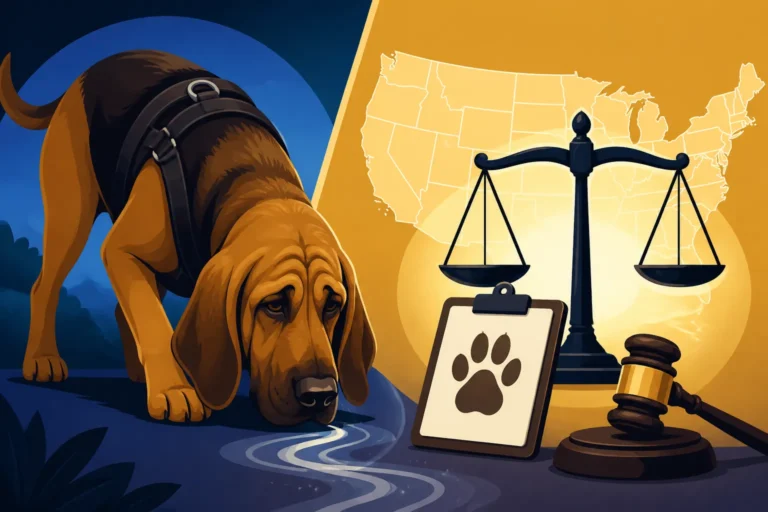
Perhaps the most remarkable aspect of the Bloodhound's scenting ability is its unique legal standing. In many courts of law, a Bloodhound's testimony – that is, its identification of a specific trail or individual – is admissible evidence. No other dog breed holds this distinction. This legal precedent wasn't granted lightly; it was earned through centuries of consistent, accurate tracking work in various scenarios, from hunting escapees to finding lost children. Their reliability and the scientific understanding of their olfactory capabilities convinced legal systems that their "testimony" was credible. This reputation for unwavering accuracy in human trailing is why, even though their name signifies pure lineage, their public image is so strongly linked to finding people, often in critical situations. The Bloodhound Is the Only Dog Whose Evidence Stands in Court explains this fascinating legal position in detail.
Preserving the Bloodhound's Legacy
Understanding the true meaning behind the Bloodhound's name and its incredible history helps us appreciate these dogs even more. It underscores the importance of responsible breeding and ownership to ensure this magnificent legacy continues for future generations.
Maintaining Breed Purity Today
Even without the medieval concept of "blooded stock" defining their name, maintaining breed purity is still paramount for Bloodhound enthusiasts and ethical breeders. This isn't just about appearance; it's about preserving the unique working abilities, temperament, and health characteristics that define the breed. Reputable breeders meticulously screen their dogs for genetic health issues common in the breed, such as hip and elbow dysplasia, eye problems, and heart conditions. They strive to produce healthy, stable dogs that embody the true spirit of the Bloodhound. Organizations like the American Bloodhound Club provide guidelines and resources to help ensure these standards are met, helping preserve the breed's integrity and health for years to come. What the American Bloodhound Club Asks Breeders to Screen gives insight into these crucial efforts.
| Feature | Common Misconception Meaning of "Bloodhound" | Historical & True Meaning of "Bloodhound" |
|---|---|---|
| "Blood" Term | Tracking actual blood or wounded prey | "Blooded" – of pure, aristocratic lineage |
| Primary Purpose | Primarily focused on tracking blood | Primarily focused on maintaining pure breed lines for superior tracking |
| Historical Roots | Implies a connection to violent hunts | Stemmed from meticulous monastic breeding and noble ownership |
| Breed Identity | Defined by scent work alone | Defined by documented ancestry and inherent qualities |
| Modern Relevance | Still revered for tracking | Still valued for pure lineage, which enables superior tracking |
Understanding Their Unique Needs as Owners
Bringing a Bloodhound into your home is a commitment to a dog with very specific needs, many of which stem directly from their unique physical traits and their incredible scenting drive. Their long, heavy ears are prone to infections and need regular cleaning. Their loose skin creates folds that require routine wiping to prevent skin irritation and infection. Drooling is a constant companion for a Bloodhound owner, so be prepared with plenty of towels. You can find specialized ear cleaners and gentle wipes, even from places like Chewy, to help manage these daily care tasks.
Beyond physical care, their powerful nose means they need an outlet for their instincts. "Off-leash" is generally not an option for a Bloodhound outside of a securely fenced area because once that nose hits a scent, they are gone. Many owners find immense joy and fulfillment in activities like mantrailing or scent work, which provides mental stimulation and allows their hound to do what it was born to do. Providing these outlets, along with a high-quality diet (you might find specific large-breed formulas at retailers like Chewy that cater to their needs), is crucial for a happy, well-adjusted Bloodhound. Everything on a Bloodhound Hangs Down and Has to Be Cleaned offers practical advice on their unique grooming needs. Furthermore, understanding their exercise requirements, such as ensuring they get appropriate activity without over-exertion as puppies, is vital. How Much an Adult Bloodhound Eats and Mantrailing Is the Answer to a Bloodhound, Not Obedience provide further guidance on their care and training. It's a dog that demands dedication, but offers unparalleled companionship and the profound satisfaction of truly understanding and honoring a magnificent, ancient breed.
Disclaimer
This article is for general informational purposes only and does not constitute professional advice. Laws, prices and regulations vary by location and change over time. Consult a qualified professional for guidance on your specific situation.