Why No Other Breed Has the Bloodhound’s Legal Standing
It’s a frustrating reality for many dog owners: while our beloved companions might be the smartest, most loyal creatures on earth, their capabilities often aren't taken seriously in a court of law. When it comes to legal standing, most dogs are just pets, their actions and instincts not considered concrete evidence. But then there’s the Bloodhound, a breed that stands in a league of its own, possessing a unique legal status. This guide will delve into the remarkable reasons why no other dog breed has earned the same level of trust and acceptance in legal proceedings as the venerable Bloodhound.
A Deep Dive into Scenting Superiority
The cornerstone of the Bloodhound's unparalleled legal standing lies squarely in its nose. This isn't just a slightly better sniffer; it's an olfactory marvel, a biological masterpiece designed for one singular purpose: to follow scent with an almost unbelievable precision and tenacity. Understanding this incredible capability is the first step to grasping why these dogs are treated differently when the stakes are high.
The Anatomy of a Scent Machine
When you look at a Bloodhound, you see the droopy ears, the wrinkled face, and the overall majestic appearance. But beneath that exterior lies an intricate system perfectly evolved for scent detection. Their nasal cavity is vast, containing an extraordinary number of olfactory receptors – estimates suggest up to 300 million, compared to a human's mere 5-6 million. This sheer volume of receptors means they can detect and differentiate odors at concentrations utterly undetectable to us. It's like having a super-powered microscope for scent.
Beyond the internal hardware, their physical features contribute significantly to their tracking prowess. The long, pendulous ears, for instance, don't just add to their noble aesthetic; they serve a practical purpose. As the Bloodhound moves, these ears actually sweep the ground, creating a miniature vortex that helps to funnel scent particles directly towards their nose. Imagine a living, breathing vacuum cleaner for scent! This, coupled with the abundant loose skin around their face and neck, creates folds and crevices that can actually trap and hold scent molecules close to their face, further intensifying their ability to pick up even the faintest of trails. Why a Bloodhound's Ears Sweep Scent Toward Its Nose offers a deeper explanation of this fascinating adaptation. These anatomical traits aren't just for show; they are critical components that elevate the Bloodhound's scenting ability far beyond that of any other breed.
Unraveling the Invisible Thread
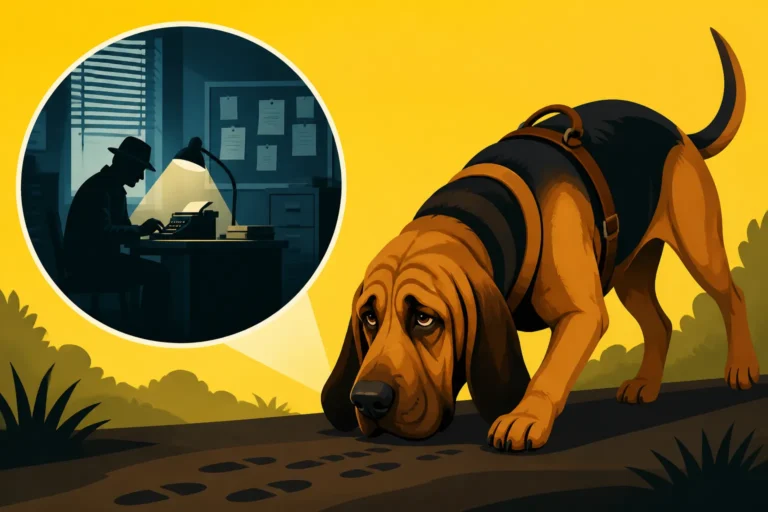
What truly sets a Bloodhound apart isn't just its ability to detect scent, but its capacity to differentiate and follow a specific "human odor" trail, even when it's hours or days old and contaminated by countless other smells. They aren't tracking footprints; they're tracking a unique chemical signature left by a particular individual. This "invisible thread" of scent is composed of dead skin cells, sweat, hormones, and bacteria, shed constantly from a person's body. The Bloodhound's nose can pick out this specific tapestry of odors belonging to one person, ignoring the hundreds or thousands of other scents in a busy environment.
This specialization means that while other dogs might be great at detecting general narcotics or explosives, or even locating a buried person through pooled scent, a Bloodhound excels at discriminating individual human scent and following its trajectory over long distances and varied terrain. They can often follow trails that are surprisingly old, sometimes days past, a testament to the persistence of human odor and their own incredible sensitivity. How Old a Trail a Bloodhound Can Follow goes into more detail about just how long their keen noses can work. This ability to follow a specific person's trail, rather than simply indicating the presence of a human, is what makes their work so valuable in missing persons cases and criminal investigations, providing a unique form of evidence that can lead directly to an individual.
Historical Precedent and Legal Acceptance
The Bloodhound's journey from a hunting companion to a courtroom witness is steeped in centuries of recognized performance. Their legal standing isn't a recent phenomenon or a quirk; it's a testament to a long history of documented success and judicial acknowledgment. This deep-rooted acceptance is what separates them from all other canine breeds.
From Game Trailing to Human Tracking
The ancestors of modern Bloodhounds were initially bred in medieval Europe, particularly by the monks of the Abbey of Saint Hubert, for tracking game. These 'St. Hubert Hounds' were renowned for their ability to follow cold trails of deer and boar. This ancient lineage of dedicated, relentless scent work laid the genetic foundation for the Bloodhound's unique capabilities. It wasn't long before people realized that a dog capable of tracking a specific animal through dense forests could also track a specific person.
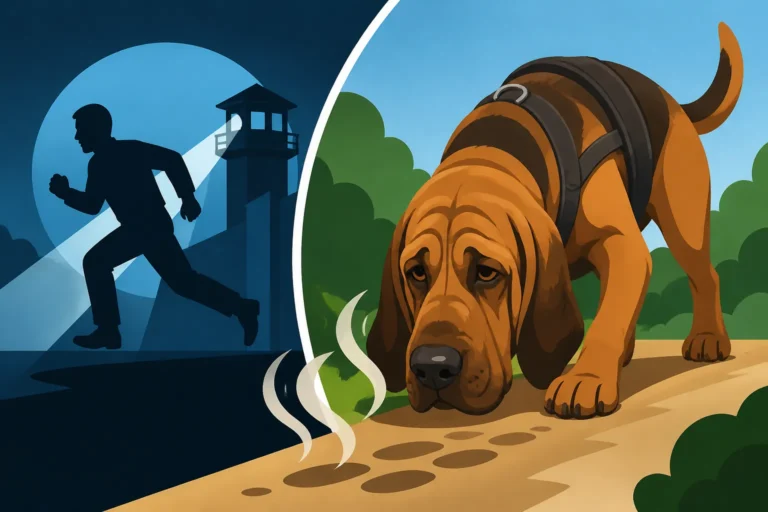
By the 16th century, Bloodhounds were already being used in England to track poachers and re-capture escaped prisoners, earning them the nickname "sleuth hounds." Over time, their role shifted more definitively towards human tracking, especially in law enforcement. Their consistent success in locating individuals, often under challenging circumstances, began to build a reputation that transcended mere anecdote. Police departments in various regions, including historical figures like Nick Carter's handler, relied on these dogs for their unparalleled abilities. Whether Police Departments Still Keep Bloodhounds explores their continued role in modern law enforcement. This long, unbroken chain of documented success in human tracking is a critical part of their unique legal standing.
The Doctrine of Stare Decisis
The concept of Bloodhound evidence isn't something that sprung up overnight. It's been built on a foundation of legal precedent, often referred to as stare decisis, where courts are bound by previous rulings. Decades, even centuries, of court cases have systematically evaluated, tested, and ultimately accepted the reliability of Bloodhound trailing evidence. This isn't to say it's accepted without question; every case still involves scrutiny, but the principle of its admissibility is firmly established.
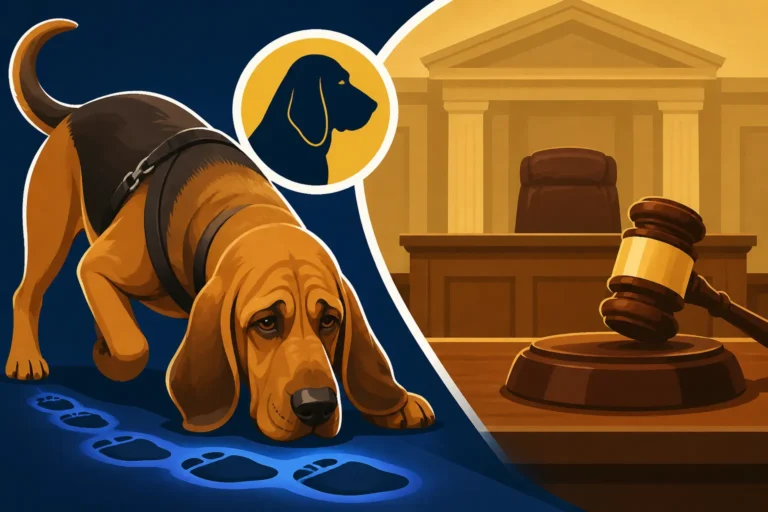
Early cases, particularly in the United States, carefully considered expert testimony regarding the Bloodhound's capabilities, the training of both dog and handler, and the specific conditions of each trail. Over time, a body of case law developed, confirming that a Bloodhound's trail, when properly conducted and documented, could be presented as circumstantial evidence. It's usually not enough to convict someone solely based on a Bloodhound's trail, but it provides powerful corroborating evidence that can link a suspect to a crime scene or a missing person's last known location. This careful, measured acceptance, through countless individual judicial decisions, means that The Bloodhound Is the Only Dog Whose Evidence Stands in Court is not just a popular saying, but a recognized legal truth in many jurisdictions.
The Rigor of Training and Certification
The legal acceptance of Bloodhound evidence isn't a blank check for any dog with a good nose. It is entirely dependent on the incredibly stringent training and certification standards applied to both the Bloodhound and its handler. This rigorous preparation ensures that the evidence presented in court is as reliable and scientifically sound as possible.
Beyond Basic Obedience
Training a Bloodhound for legal trailing is far removed from teaching 'sit' and 'stay.' It's a highly specialized discipline that hones their innate scenting abilities into a precise, court-admissible skill. Puppies often begin with playful games of 'find the person,' gradually increasing the difficulty, age, and complexity of trails. They learn to ignore distractions, follow a single scent line (even when it crosses many others), and indicate a 'find' in a clear, consistent manner. This isn't about obedience in the traditional sense; it's about channeling their relentless drive and focus.
Trainers employ specific methods to ensure the dog remains focused solely on the target scent, even when tempting deer trails, stray cats, or delicious dropped food intervene. The goal is a dog that will follow the person, not any person, and certainly not an animal. This requires thousands of hours of training across diverse environments—urban, rural, wooded, concrete—and varying weather conditions. Consistency in training and the ability of the dog to perform reliably under pressure are paramount. These extensive training protocols contribute directly to the credibility of their work in court.
The Handler's Crucial Role
While the Bloodhound's nose is the star, the handler is the essential director. A Bloodhound's legal standing hinges as much on the handler's competence as on the dog's ability. Handlers undergo intensive training themselves, learning how to "read" their dog's subtle cues, manage the long line, understand scent dynamics, and meticulously document every aspect of a trail. They are essentially the human bridge between the dog's natural talent and the legal system's requirements for evidence.
For a Bloodhound's trail to be admissible, the handler must be a qualified expert. This often involves certifications from reputable organizations, extensive experience, and a deep understanding of scent theory and Bloodhound behavior. They are responsible for laying down the scent article (an item handled by the missing person), managing the dog on the trail without influencing its direction, and accurately recording the dog's actions. Most critically, the handler is the one who will testify in court, explaining the process, the dog's behavior, and the findings. Their credibility and expertise are often as scrutinized as the dog's performance itself. Whether a Bloodhound Handler Must Be Qualified to Testify underscores this critical legal requirement, emphasizing that the human element is just as vital as the canine. Many dedicated handlers rely on top-quality gear and supplies, often found on platforms like Chewy, to support their rigorous training and operational needs.
Distinguishing Bloodhounds from Other Scent Hounds
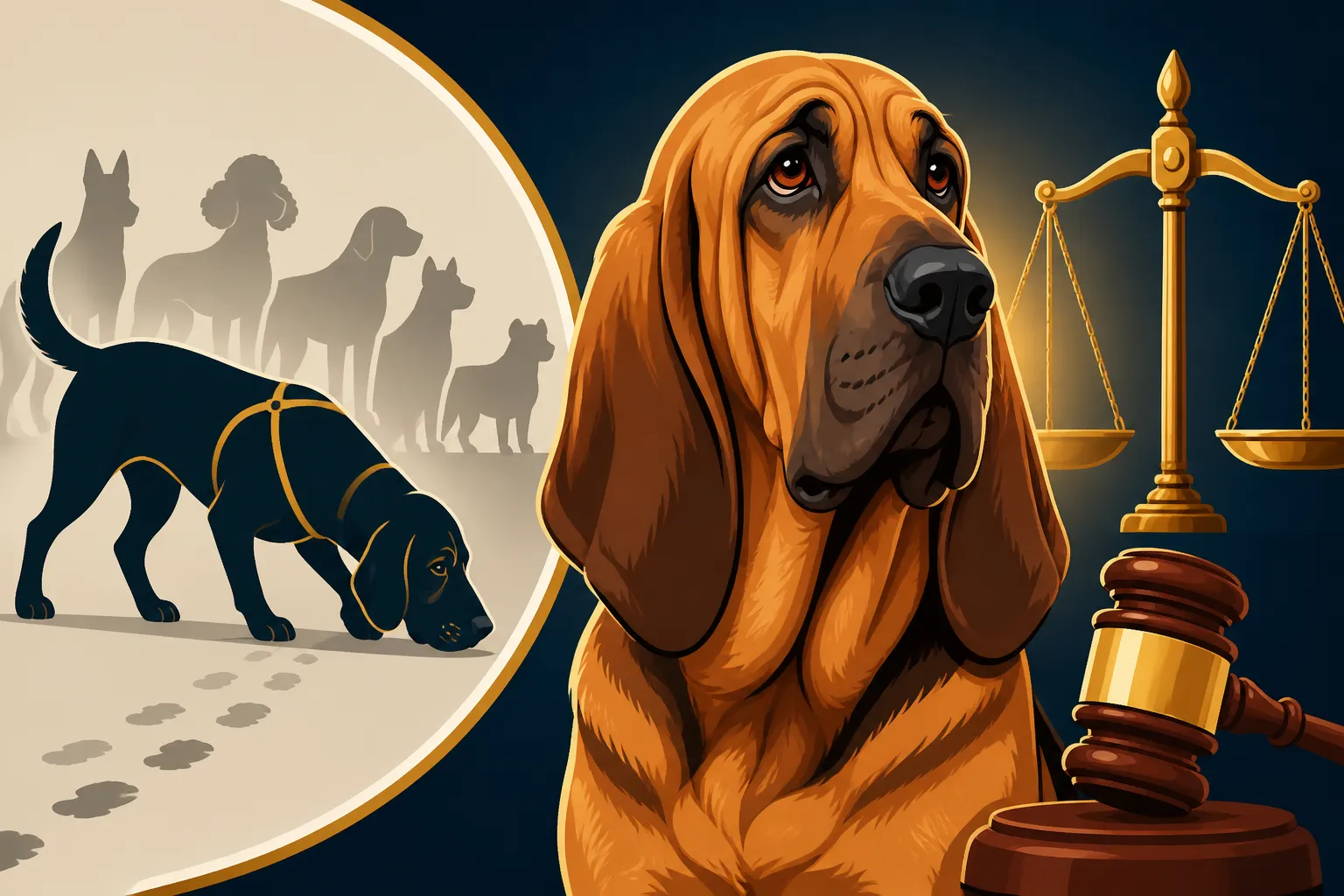
It's easy to assume that any dog with a good nose could do what a Bloodhound does, but this simply isn't true. While many breeds excel in various forms of scent work, the Bloodhound's specialization and unparalleled capacity for individual human scent discrimination set it apart from other scent hounds and working breeds.
The Bloodhound vs. Coonhounds and Beagles
Coonhounds (like Black and Tans, Blueticks, or Redbones) and Beagles are also hounds renowned for their incredible noses and vocal abilities. They are formidable trackers, primarily bred for following animal game trails, particularly raccoons (hence "coonhound") or rabbits. Their scenting capabilities are impressive, allowing them to follow cold animal trails for miles. However, their focus and drive are different from a Bloodhound's.
Coonhounds and Beagles are typically bred to follow a type of animal scent, and their trailing style can often be more frenetic or wide-ranging. While they can and do follow human scent, their genetic programming and centuries of selective breeding lean towards identifying and pursuing game. When confronted with a human trail amidst a myriad of other animal and environmental scents, their tendency is often to generalize rather than hyper-focus on the unique signature of one specific person. Their "baying" is often a strong indicator of finding any trail of interest, rather than a specific individual. The Bloodhound, by contrast, has been selectively bred over an even longer period specifically for that unique ability to isolate and follow a specific human's trail, making it a specialist in a way other generalist scent hounds are not. The Bloodhound Against the Other Scenthounds provides a broader comparison of their respective strengths.
The Bloodhound vs. German Shepherds and Malinois
Breeds like German Shepherds and Belgian Malinois are widely recognized for their roles in police and military work, often seen as versatile, intelligent, and highly trainable. They excel in protection work, apprehension, drug detection, and even some forms of search and rescue. Their "nose work" is certainly excellent, and they can be trained for various scent detection tasks, including locating cadavers or detecting narcotics.
However, their strength lies in their versatility and their ability to perform multiple tasks, often requiring a direct command from a handler. While they possess good noses, they generally don't have the same specialized physiological adaptations (like the vast number of olfactory receptors or the scent-trapping facial folds) or the centuries of selective breeding specifically for tracking individual human scent over long, cold distances. A German Shepherd might quickly locate a package of drugs, or even a person hiding nearby, but following a 24-hour old trail of a specific individual through a crowded urban park is a Bloodhound's domain. Their training often focuses on a faster, more direct search pattern, whereas the Bloodhound's methodical, head-down tracking style is designed for persistence on an aged or complex trail. These differences in innate ability and specialized training explain why, despite their impressive capabilities, other breeds haven't achieved the same unique legal standing for trailing evidence.
Challenges and Limitations of Bloodhound Evidence
Despite their remarkable abilities and historical legal acceptance, Bloodhound evidence is not infallible. It's crucial to understand that their work, like any form of evidence, is subject to various environmental, operational, and legal challenges. Acknowledging these limitations ensures a balanced and realistic view of their role in justice.
Factors Affecting Trail Reliability
The success and reliability of a Bloodhound's trail are not guaranteed; they can be significantly influenced by a multitude of factors. Environmental conditions play a massive role. Wind can disperse scent, rain can wash it away, and extreme heat or cold can degrade scent particles more quickly. A trail laid on asphalt will degrade faster than one on moist soil because asphalt doesn't hold scent as well. The age of the trail is also paramount; while Bloodhounds can follow old trails, the older the trail, the fainter and more degraded the scent will be, increasing the difficulty.
Contamination is another major concern. If many people have walked over the area where a person was, or if the "scent article" provided to the dog (e.g., a piece of clothing) has been handled by multiple individuals, it can complicate the dog's ability to isolate the specific target scent. Even the emotional state of the missing person can play a role, as stress hormones can alter scent. A Bloodhound handler must meticulously document these factors, as they can all be used by defense attorneys to challenge the reliability of the trail. The inherent variability in these factors means that while a Bloodhound's nose is exceptional, it's not a magic bullet. Whether a Bloodhound Can Be Wrong addresses the complexities inherent in their work.
Defense Challenges and Legal Scrutiny
In a courtroom setting, Bloodhound evidence is always subject to intense scrutiny, and rightly so. Defense attorneys are trained to challenge any form of evidence that might implicate their client, and Bloodhound trails are no exception. They may question the handler's qualifications, the dog's training history, the conditions under which the trail was conducted, or the possibility of contamination. A common line of questioning might involve suggesting that the dog was simply "following the easiest path" or that the handler inadvertently cued the dog.
Courts generally require a foundation of reliability to be established before Bloodhound evidence is admitted. This often means providing expert testimony on the breed's capabilities, the specific training of the dog and handler, and the detailed log of the trail itself. Some jurisdictions have even specific criteria that must be met. The evidence is almost always considered circumstantial, meaning it provides a link but is rarely considered definitive proof of guilt on its own. The standard often applied is that the Bloodhound must be of pure breed, trained, and reliable, and the trail must be initiated from an uncontaminated scent article. Whether a Defense Can Challenge a Bloodhound's Trail explores these legal avenues in more detail. This continuous legal vetting process, while challenging for handlers, ultimately strengthens the credibility of Bloodhound evidence when it stands up to such rigorous examination.
Disclaimer
This article is for general informational purposes only and does not constitute professional advice. Laws, prices and regulations vary by location and change over time. Consult a qualified professional for guidance on your specific situation.