Whether Any Bloodhound Has Passed a Hundred and Thirty Pounds
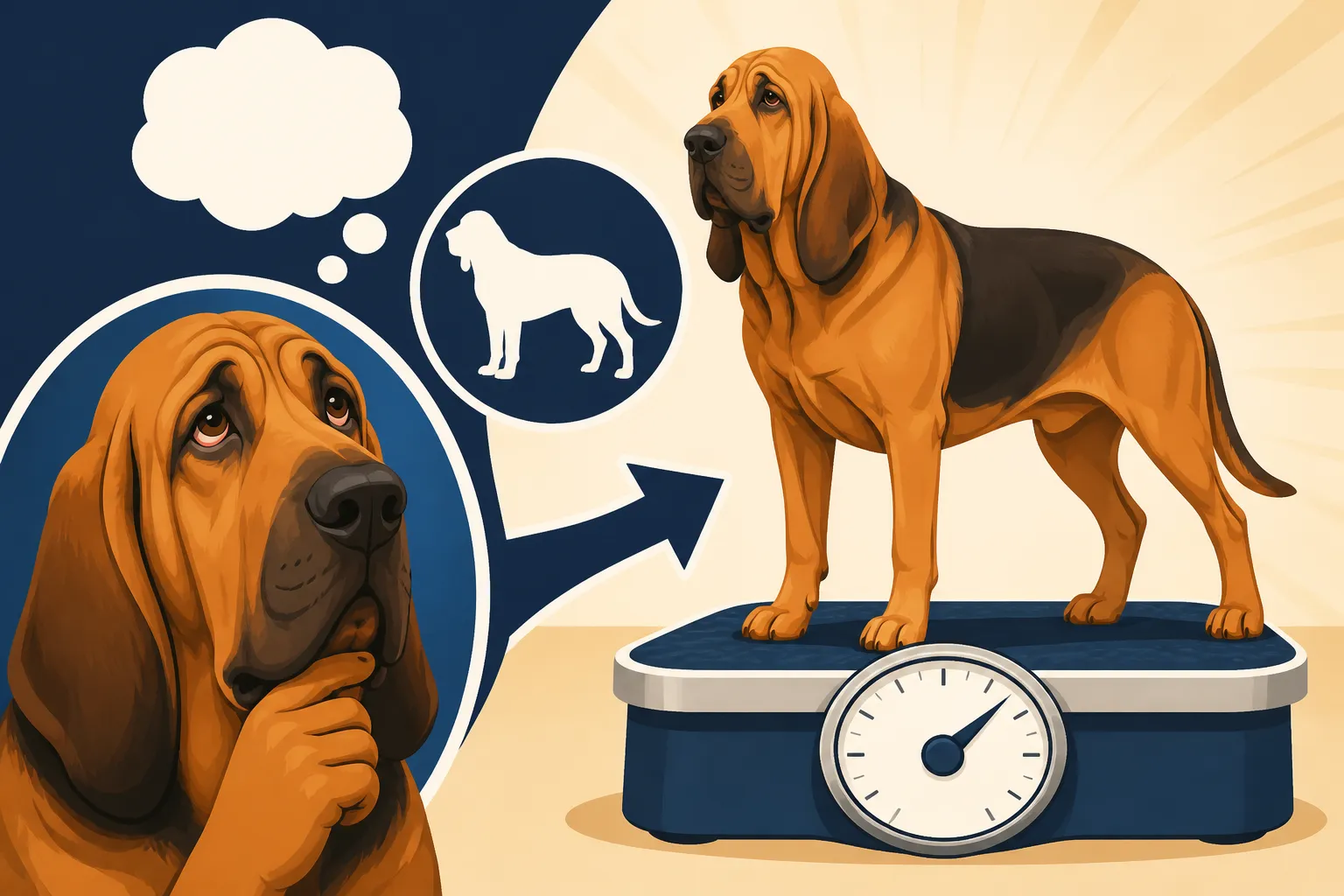
A Bloodhound weighing more than 130 pounds is possible, but that would be an exceptional outlier—not a typical target for the breed. When you hear about a dog that size, the useful questions are whether the weight was measured reliably, whether the dog was purebred, and whether its body condition was healthy. This guide explains how to assess the claim and your own hound’s weight.
Can a Bloodhound weigh more than 130 pounds
Possible does not mean typical
Yes, a Bloodhound may be reported at more than 130 pounds. A very large frame, sex, genetics, and body condition can all influence the number on the scale. But a report of an unusually heavy dog is not the same as proof that this is normal for the breed—or that the dog was in good health at that weight.
The weight ranges commonly associated with adult Bloodhounds are considerably lower. Males are often described as weighing around 90 to 110 pounds, while females are often described as weighing around 80 to 100 pounds. These are general reference ranges, not a diagnosis or a promise about what every healthy dog will weigh. For more context on typical size, see What a Bloodhound Weighs and How Tall It Stands.
A dog above 130 pounds is therefore far outside the usual range. It may be exceptionally tall and broad, overweight, or both. Without reliable information about its measurements, body condition, and identity, a reported number alone cannot tell you which explanation fits.
Why very large weight claims are hard to verify
There is no single, universal registry that records the lifetime weights of all Bloodhounds. A claim may come from an owner’s recollection, an old article, a social media post, or a scale reading that was never independently checked. Even when the number is honest, the dog’s breed, age, and body condition may not be documented.
Scale conditions matter, too. A large dog may be weighed on a household scale that is not designed for its size, or a person may estimate the dog’s weight by stepping on a scale while holding it. Those methods can be useful for rough tracking, but they are not as dependable as a veterinary clinic’s large-animal or floor scale.
Breed identification can also be uncertain. A dog may look very much like a Bloodhound without having verified pedigree records. Mixed ancestry, mistaken identification, and dramatic retellings can all complicate a claim. This does not mean every unusual weight report is false; it means that the details behind the number matter.
What a 130-pound reading may mean
A naturally large frame is only one possibility
Some Bloodhounds are larger or heavier-built than others. Males are generally larger than females, and individual dogs can vary substantially even within the same sex and family. A very tall, broad dog with substantial bone may weigh more than a smaller-framed Bloodhound without carrying the same amount of excess fat. Whether a Male Bloodhound Is Much Larger Than a Female offers more context on that difference.
Still, a large frame does not automatically make 130 pounds a healthy weight. The number should be interpreted alongside the dog’s body shape, movement, and veterinary assessment. A dog can be big and fit; it can also be big and carrying too much weight. The scale alone cannot distinguish between those situations.
A young dog is another special case. Bloodhounds grow for a long time, and their weight changes as they mature. A puppy’s growth should be assessed over time rather than judged by comparison with a fully grown adult. Rapid or excessive weight gain during growth can put extra strain on developing joints, so ask your veterinarian about an appropriate growth pattern. You can also read Whether Overfeeding a Bloodhound Puppy Harms Its Joints.
Excess body fat can push the number up
Extra weight is a common reason a dog may exceed the expected range. It can build gradually: a few extra treats, generous meal portions, less activity during bad weather, or a change in routine after a family move. Because Bloodhounds have heavy bodies and loose skin, it may not be obvious at a glance that weight has crept up.
A veterinary team can assess body condition by examining the ribs, waist, and abdominal outline, then consider the dog’s build and medical history. At home, you can gently feel along the ribs: they should generally be detectable beneath a modest layer of tissue, rather than buried under a thick covering. This is only a rough check, not a substitute for an examination. For practical guidance, see Signs a Bloodhound Is Overweight and Keeping a Bloodhound Lean on Purpose.
Excess weight can make daily life harder, particularly for a large dog already dealing with joint strain or reduced stamina. It may also make it more difficult to notice other changes in health. If a Bloodhound seems unusually tired, reluctant to walk, or short of breath, do not assume weight is the only explanation; arrange a veterinary check.
| What may explain a reading above 130 pounds | What to check |
|---|---|
| Very large individual | Confirm height, frame, sex, age, and veterinary body-condition assessment |
| Excess body fat | Ask a veterinarian to assess ribs, waist, abdominal outline, and a safe weight plan |
| Inaccurate weighing | Repeat the measurement on a suitable clinic scale |
| Unverified breed identity | Check pedigree or adoption records where available |
| Temporary weight change | Compare consistent weigh-ins and ask about changes in appetite, fluid balance, or health |
How to check whether your Bloodhound’s weight is healthy
Use repeatable measurements, not a one-off number
Start with a reliable weight from a veterinary clinic. If your dog is being monitored over time, try to use the same scale and similar conditions for each check. A single reading can be useful, but a series of measurements is more informative: it can show whether weight is stable, rising, or falling.
Keep a simple record with the date, weight, food routine, and any major changes in activity or appetite. If your household orders food through Chewy, keeping the product label or order details with that record can help you note which formula and feeding directions were in use. The label’s suggested portions are a starting point, not a personalized prescription.
Tell the veterinarian about treats, chews, table scraps, and food used for training. These can add up even when the main meal looks reasonable. If more than one person feeds the dog, agree on who gives meals and treats so the daily amount does not quietly multiply.
Ask for a body-condition assessment
At an appointment, ask the veterinarian to explain what they see rather than focusing only on a target number. A body-condition assessment considers how easily the ribs can be felt, whether there is a visible waist from above, and whether the abdomen rises behind the rib cage when viewed from the side. Bloodhound skin and body shape can make these checks less straightforward, so a professional’s hands-on assessment is useful.
If weight loss is appropriate, ask for a gradual plan tailored to your dog. Do not sharply cut food or start intense exercise without guidance, especially for an older Bloodhound or one with joint problems. The veterinarian may suggest adjusting meal portions, choosing a different feeding strategy, or checking for health issues that could affect weight.
When you buy food through Chewy or another retailer, use the feeding directions for the exact product as a reference, then follow the plan agreed on with your veterinarian. A product label cannot account for every dog’s age, activity level, body condition, or medical needs.
How to interpret stories about record-sized Bloodhounds
Treat extraordinary figures as claims that need context
If you come across a Bloodhound said to weigh more than 130 pounds, look for details beyond the headline figure. Is there a dated measurement from a veterinary clinic? Is the dog’s breed documented? Does the report describe the dog’s body condition, or only its size? Do independent accounts give the same information?
A photograph rarely settles the question. Perspective, camera angle, and the size of a person or object beside the dog can make an animal look much larger or smaller. Even a photograph showing a large dog cannot establish its exact weight or whether that weight was healthy.
It is also helpful to separate several different claims: “this dog once weighed 130 pounds,” “this dog was a healthy 130 pounds,” and “130 pounds is normal for Bloodhounds.” The first may be an anecdote; the second needs clinical context; the third is not supported by the usual breed-size ranges.
Focus on your own dog, not the biggest number
It is understandable to wonder whether your Bloodhound is unusually large, especially when people compare dogs at a park or online. But a record-sized story is a poor yardstick for deciding whether your own dog is healthy. A dog that weighs less than 130 pounds may still be overweight, while an unusually large dog needs an individualized assessment rather than automatic approval or alarm.
Ask the veterinarian to record your dog’s weight and body condition at routine visits. If there is a notable change, mention it even if the number still falls within a commonly quoted range. For a comparison of adult weights by sex, see What an Adult Male Bloodhound Weighs and What an Adult Female Bloodhound Weighs. You may also find Whether Breeders Are Making Bloodhounds Heavier useful when considering how breeding and individual build affect size.
When ordering food through Chewy, avoid increasing portions just because your dog looks large or reducing them sharply because an online weight chart suggests a lower number. Keep the label information available, but let your veterinarian help set an appropriate amount for the individual dog.
A Bloodhound over 130 pounds is possible, but it is far beyond the usual range and should prompt a closer look at measurement accuracy, body condition, and health—not a celebration of size by itself. The best guide is a reliable weigh-in paired with an assessment from a veterinarian who knows your dog.
Disclaimer
This article is for general informational purposes only and does not constitute professional advice. Laws, prices and regulations vary by location and change over time. Consult a qualified professional for guidance on your specific situation.