Whether a Bloodhound Can Hike Off Trail Safely
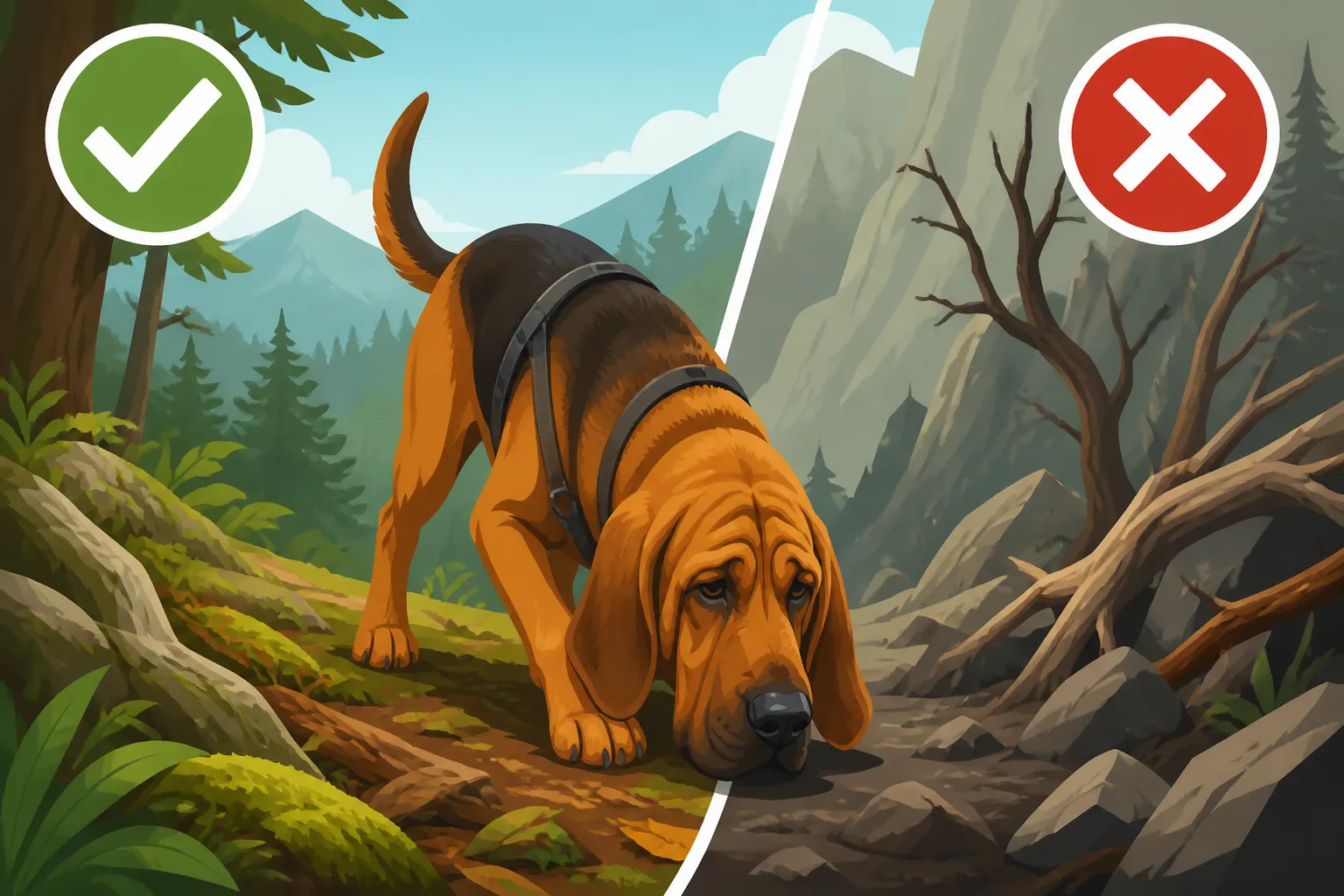
Many Bloodhound owners dream of letting their noble hounds run free, bounding through forests or across open fields, enjoying the wilderness off-leash. It’s a beautiful vision, but for a Bloodhound, it's also an incredibly dangerous one. This guide will delve into why hiking off-trail with an unleashed Bloodhound is rarely a safe option and how you can still enjoy nature's wonders with your beloved scent hound responsibly.
The Unwavering Scent Drive: Why "Off-Leash" is a Dangerous Concept
The idea of letting a Bloodhound roam freely off-leash in nature sounds idyllic, a perfect picture of canine freedom. The reality, however, is often a heart-stopping scramble to catch a dog that has vanished into the woods, driven by a scent that you can't even perceive. Understanding the sheer power of their nose is paramount to appreciating why this breed is different.
The Bloodhound's Nose: A Master, Not a Pet
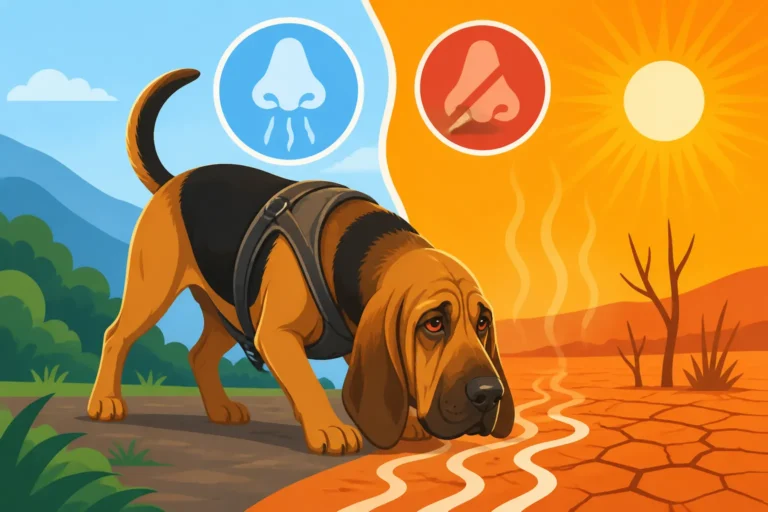
You might think your Bloodhound loves you more than anything, and that's probably true. But for a Bloodhound, their nose isn't just a part of their face; it's their entire world, their guiding star, their obsession. They possess an astounding number of scent receptors – far more than any other breed – and their unique facial structure, with those long, sweeping ears and wrinkled flews, actually helps funnel scent particles towards their nostrils. It's truly a marvel of evolution.
When a Bloodhound catches a compelling scent, it's not just a passing interest; it's an undeniable, primal call to follow. This isn't naughtiness or a lack of respect for your commands; it's their fundamental purpose coming to the forefront. Their brain is literally rewired to prioritize following a trail above all else. This means that if you're on a trail, or worse, off-trail, and your Bloodhound picks up the faint, irresistible scent of a deer, a rabbit, or even another human from hours ago, they will be gone. Their entire being becomes dedicated to that trail, and everything else, including your desperate calls, fades into the background. It's a testament to their incredible ability, but it poses an immense challenge for owners seeking off-leash freedom. Their nose is not just better than yours; it operates on an entirely different plane of existence.
The Illusion of "Good Recall"
Many owners work tirelessly on recall, practicing in controlled environments, and sometimes even achieving what they believe is a reliable "come" command. With most breeds, this can translate to safe off-leash experiences in appropriate areas. With a Bloodhound, however, "good recall" often becomes an illusion the moment a truly captivating scent enters the picture. It's not that they don't know the command; it's that the drive to follow a scent overrides their cognitive ability to respond to it. Their focus is 100% on the trail, and the sound of your voice might as well be a whisper in the wind.
This can be incredibly frustrating for an owner who has invested so much time and effort into training. You might think, "But he always comes when I call him in the park!" The difference between a familiar park and a wild, off-trail environment is the sheer volume and potency of novel scents. In the park, the scents might be diluted, predictable, or less thrilling. In the wilderness, every rustle, every overturned leaf, every faint animal track is a fresh headline in their olfactory newspaper, pulling them deeper into an untamed world. Trying to call a Bloodhound off a hot trail is often like trying to stop a freight train with a feather. It simply won't work, no matter how much you love each other. This is precisely Why Recall Fails on a Bloodhound Outdoors.
How Far a Scent Can Lead
Once a Bloodhound commits to a scent, there's virtually no limit to how far they will follow it. They are bred for endurance and relentless pursuit. Stories abound of Bloodhounds tracking for miles and miles, through varied terrain, ignoring hunger, thirst, and fatigue. If your Bloodhound catches a scent and slips away off-trail, they aren't going to circle back to where they last saw you. They are on a mission, and that mission only ends when the scent fades, or they physically can't go any further – which can be many, many miles away.
Think about the sheer panic of realizing your 100+ pound dog is gone, potentially crossing roads, entering private property, or venturing into areas with dangerous wildlife. Their single-minded focus on the scent makes them oblivious to these external threats. They won't look both ways before crossing a rural road, they won't recognize a "No Trespassing" sign, and they certainly won't deter a territorial coyote or an angry landowner. This profound dedication to their nose is why many Bloodhound experts reiterate Why Off Leash Is Not a Goal With a Bloodhound. The risk of them becoming lost, injured, or worse, is simply too high. How Far a Loose Bloodhound Will Travel can be truly astounding and terrifying.
Navigating Terrain: Physical Challenges and Risks Off-Trail
Even if, by some miracle, your Bloodhound could be reliably recalled off-scent (they can't), the physical act of hiking off-trail presents its own unique set of dangers for this heavy, often clumsy, and heavily-built breed. It’s not just about getting lost; it’s about what they might encounter or how their own physicality can betray them.
Physical Risks of Off-Trail Adventures
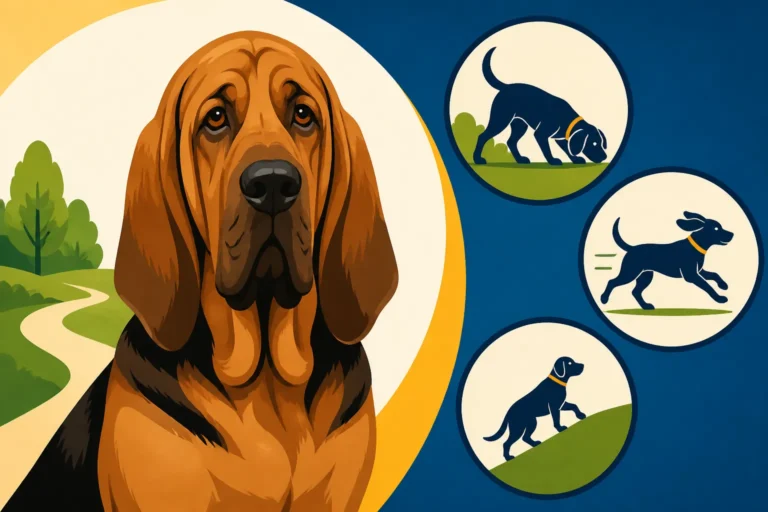
Bloodhounds, while sturdy, are not agile mountain goats. Their large, heavy bodies, deep chests, and relatively short legs, combined with that loose, pliable skin, mean they are prone to certain physical mishaps off the beaten path. Think about stumbling over hidden roots, navigating steep or uneven terrain, or squeezing through dense underbrush. These aren't just minor inconveniences; they can lead to serious injuries.
Their long, pendulous ears are also highly susceptible to trauma. They can easily get snagged on thorns, branches, or sharp rocks, leading to cuts, tears, or even painful hematomas from vigorous head shaking if something bothers them. Similarly, their loose skin, while amazing for scent work, can be torn or scratched by brush, creating open wounds susceptible to infection. A simple trip or fall on rocky ground could result in sprains, fractures, or deep bruising, especially given their weight and momentum. Navigating a dense, unfamiliar forest can be a minefield for a Bloodhound, and the risk of injury is significantly higher than on a clear, maintained trail.
Environmental Hazards You Might Encounter
Beyond physical injuries from the terrain itself, off-trail environments are teeming with unseen dangers. Wild animals, poisonous plants, stagnant water, and human-made hazards can all pose serious threats to a curious, scent-driven Bloodhound.
Imagine your Bloodhound, nose to the ground, blindly following a trail right into a patch of poison ivy or a thorny blackberry bush. Or what if they encounter a territorial wild animal, like a coyote, bobcat, or even a bear? While Bloodhounds are generally gentle, their size might not deter a protective mother animal, and a confrontation could lead to serious injury for your dog. They might also find and ingest something toxic – wild mushrooms, discarded human food that's spoiled, or even rodenticides left in remote areas. Stagnant puddles or ponds could harbor leptospirosis or giardia, leading to severe illness. Off-trail also means greater exposure to ticks carrying Lyme disease, ehrlichiosis, and anaplasmosis. Even seemingly harmless items like broken glass or rusty metal can cause deep lacerations on their paws. Without the clear boundaries and managed risks of a designated trail, you are opening your Bloodhound up to a myriad of dangers that can quickly turn a fun outing into an emergency.
Safety Measures: Enjoying Nature with Your Bloodhound (Responsibly)
So, if off-leash hiking is largely out of the question, does that mean you can't enjoy the great outdoors with your Bloodhound? Absolutely not! It just means adapting your expectations and employing appropriate safety measures. The goal isn't to deny their nature, but to channel it safely and fulfillingly.
The Indispensable Long Line
For a Bloodhound, the long line is your absolute best friend when exploring open spaces or off-trail areas. It allows them the freedom to roam, investigate scents, and stretch their legs without ever truly being "off-leash." A long line can range from 15 to 50 feet or more and is typically made of biothane or heavy-duty nylon, designed to withstand a large, powerful dog. You attach it to a well-fitting, secure harness (never a collar, as a sudden stop on a long line could injure their neck).
Using a long line requires active handling. You're not just letting it drag; you're managing the length, ensuring it doesn't get tangled, and reeling it in or letting it out as needed. This allows your Bloodhound to dive into a particularly interesting scent puddle, investigate a bush, or trot ahead on a path, all while you maintain control and safety. It protects them from running onto roads, chasing wildlife too far, or getting into trouble. Investing in a good quality long line and learning how to use it effectively is the single most important step for safe wilderness exploration with your Bloodhound. Many excellent options are available on platforms like Amazon, and choosing one that's both durable and easy to clean (especially after a muddy adventure) is key. For more on this, check out How Long a Line Suits a Bloodhound in the Open.
Essential Gear for Safe Exploration
Beyond the long line, a few other pieces of gear are non-negotiable for safe off-trail (or even on-trail) adventures with your Bloodhound.
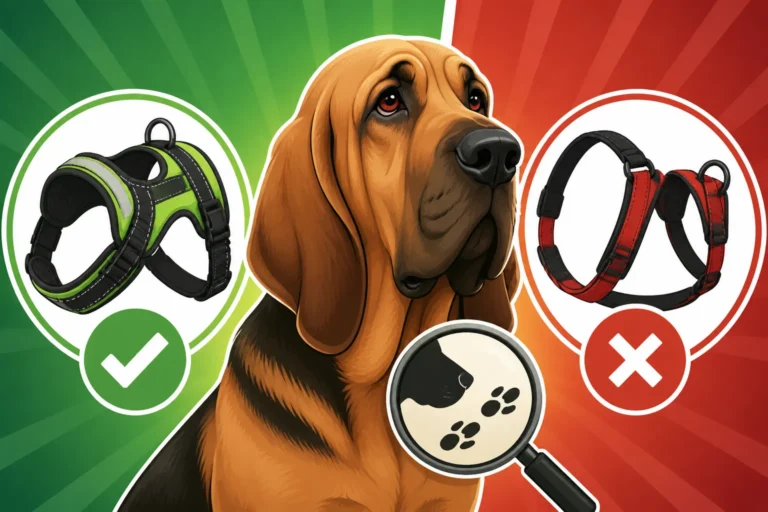
First, a sturdy, well-fitting harness is crucial. Avoid harnesses that restrict shoulder movement or put pressure on their throat. A Y-front harness or a tracking harness is often ideal, distributing pressure evenly across their chest and shoulders. Second, consider a GPS tracking collar. Even with a long line, accidents can happen – a line could slip, or a clip could fail. A GPS tracker provides immense peace of mind, allowing you to quickly locate your Bloodhound if they do manage to get loose. There are many reliable models available, often found on Amazon, that offer real-time tracking through your phone. Third, a basic canine first-aid kit is a must-have. Small cuts, scrapes, or burrs are common occurrences. Having antiseptic wipes, gauze, vet wrap, and tweezers can address minor issues on the spot, preventing them from escalating. Finally, ensure your Bloodhound has up-to-date identification on their collar and is microchipped. While you hope never to need it, these provide essential avenues for reunion if your Bloodhound ever gets separated from you.
Training for Off-Trail Realities (Even If Not Off-Leash)
Even with a long line, ongoing training and a strong bond with your Bloodhound are vital. While true off-leash recall is a unicorn for this breed, you can still train for better cooperation and engagement. Focus on building a strong foundation of communication and trust. This means rewarding engagement with you, even when there are distractions.
Working on a "check-in" command, where your Bloodhound voluntarily looks back at you, can be incredibly helpful. You can use their natural drive to your advantage by incorporating controlled scent work into your hikes. Hide treats along the trail and encourage them to find them on command, or practice short "runaways" with a helper on a long line in a secure area. This allows them to use their nose in a structured, rewarding way under your supervision. Resources from online training platforms like BAXTER & Bella can offer structured courses on building engagement and managing a high-drive dog, which can translate to more enjoyable and safer outdoor experiences. Remember, the goal is not to suppress their nature but to manage it so you both can safely enjoy the adventures the world offers. Consider classes in actual Mantrailing Is the Answer to a Bloodhound, Not Obedience, which harnesses their instincts in a controlled and incredibly rewarding way, often starting with short, simple trails. This provides the mental and physical exercise they crave.
By understanding your Bloodhound's incredible scent drive, acknowledging the physical and environmental risks, and committing to responsible management tools like the long line and appropriate training, you can still create a rich and adventurous life for your dog. It might not be the carefree off-leash fantasy, but it will be a safe, fulfilling, and equally joyful reality.
Disclaimer
This article is for general informational purposes only and does not constitute professional advice. Laws, prices and regulations vary by location and change over time. Consult a qualified professional for guidance on your specific situation.