How Loud a Bloodhound’s Bay Is
A Bloodhound bay uses a deep chest, loose flews, and pendulous ears to produce a prolonged, resonant bellow triggered by scent.
Work with the temperament you have.
House-training and crate work, recall, leash manners, separation anxiety, and the behaviors this breed is wired for.
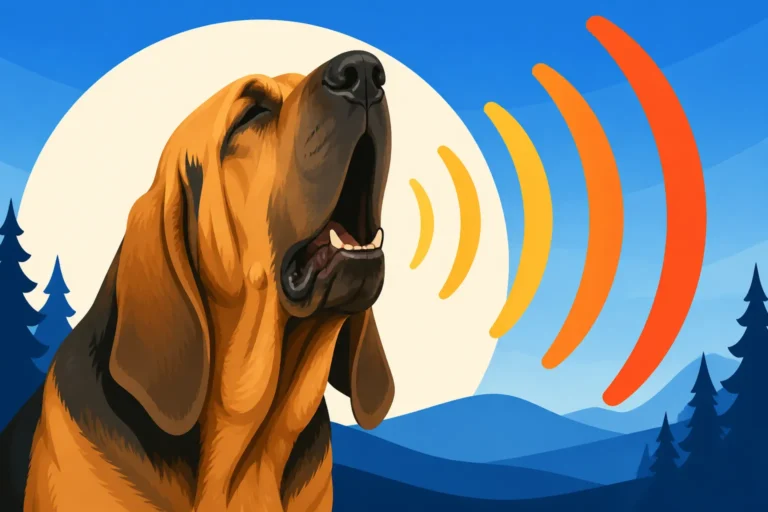
A Bloodhound bay uses a deep chest, loose flews, and pendulous ears to produce a prolonged, resonant bellow triggered by scent.
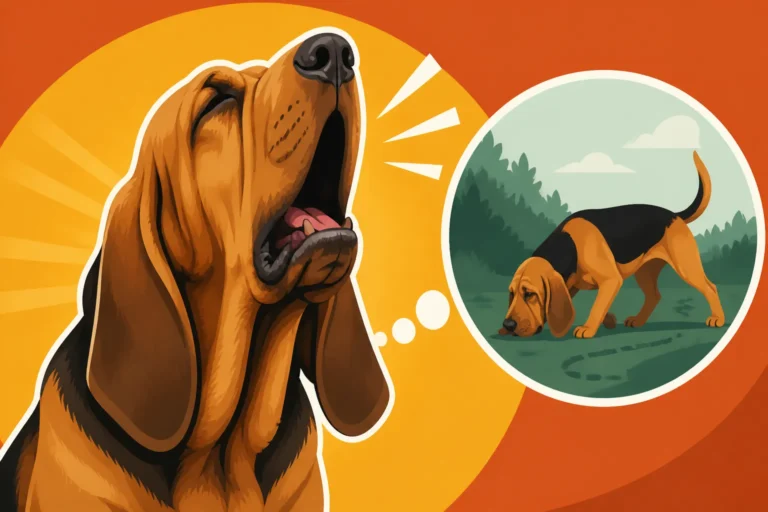
Bloodhound baying behaviors stem from ancient hunting instincts and unique vocal anatomy that helped scenthounds communicate over long distances.

Bloodhound trailing abilities allow average pet owners to train their dogs using natural scenting instincts and proper frameworks.
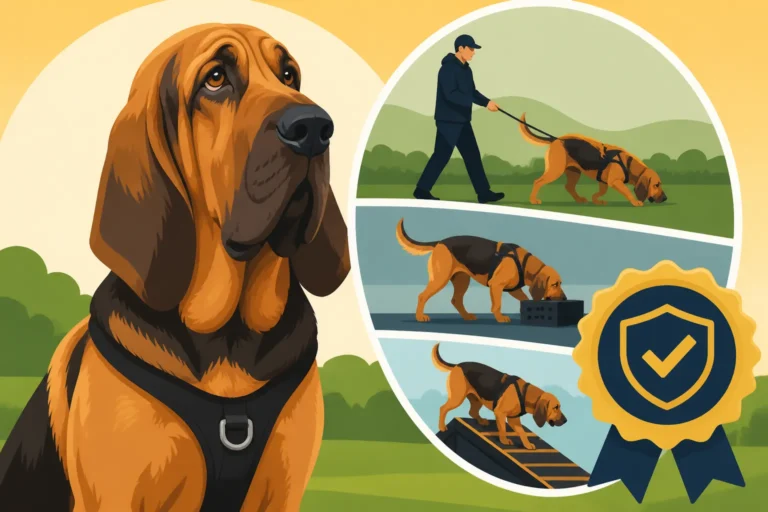
Bloodhound certification for search work requires specialized mantrailing training and understanding unique scent tracking physiology.
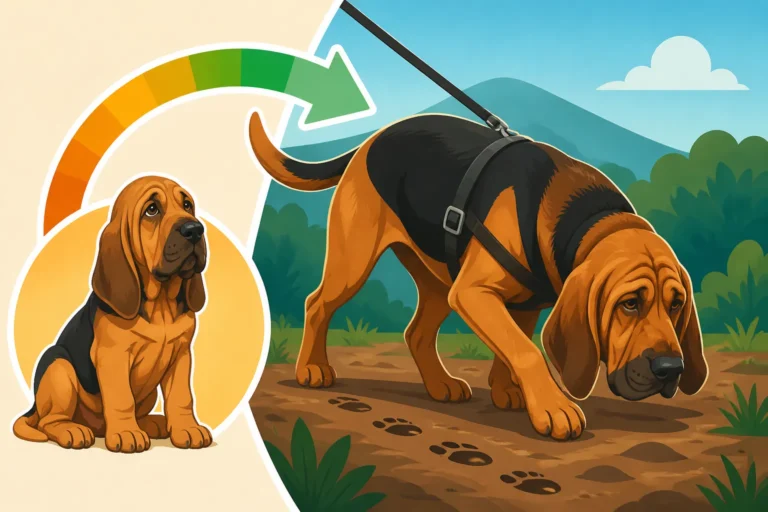
Bloodhound puppy scent training stages explain when young dogs gain the mental maturity and physical stamina for serious trailing work.
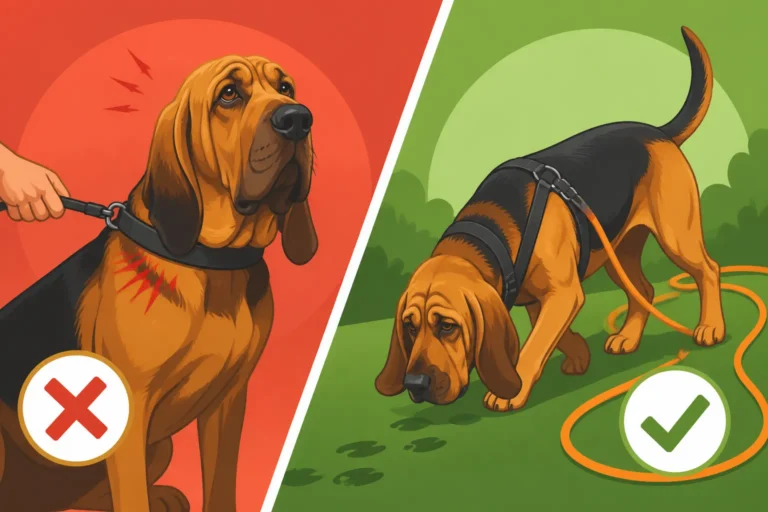
Bloodhound walking safety explains why standard collars cause neck strain and why a long line works for this scent tracking breed.
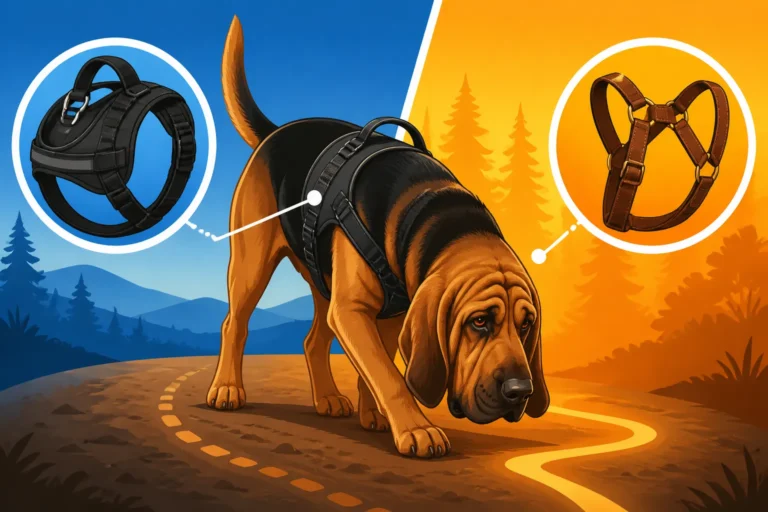
Bloodhound trailing harnesses support working dogs with proper chest design, preventing shoulder restriction and chafing during scent work.
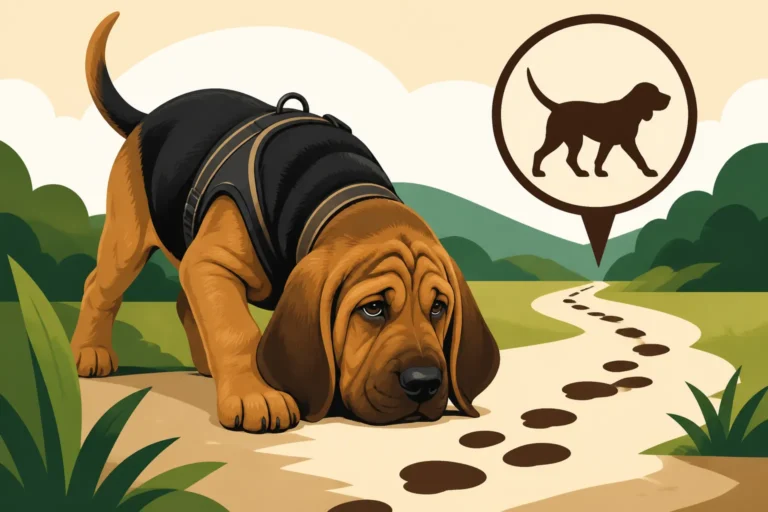
Bloodhound puppy scent games and a well-fitting tracking harness build confidence for that very first runaway trail.
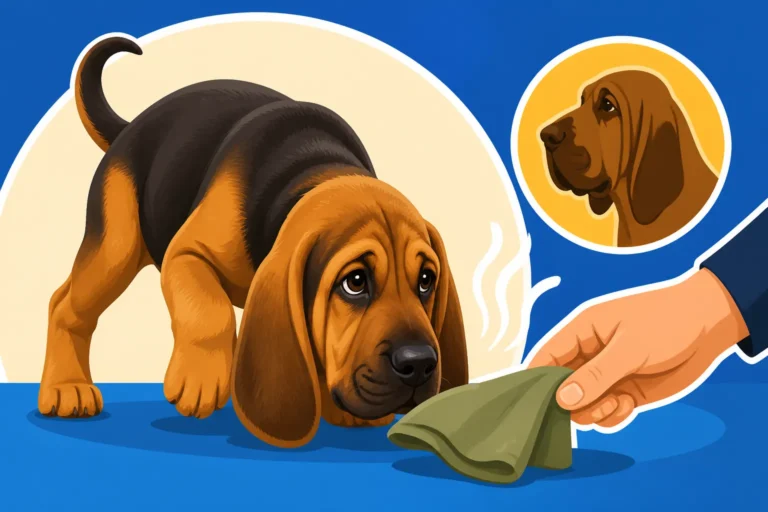
Bloodhound puppy scent training channels natural trailing instincts through early exposure to specific target scent articles.
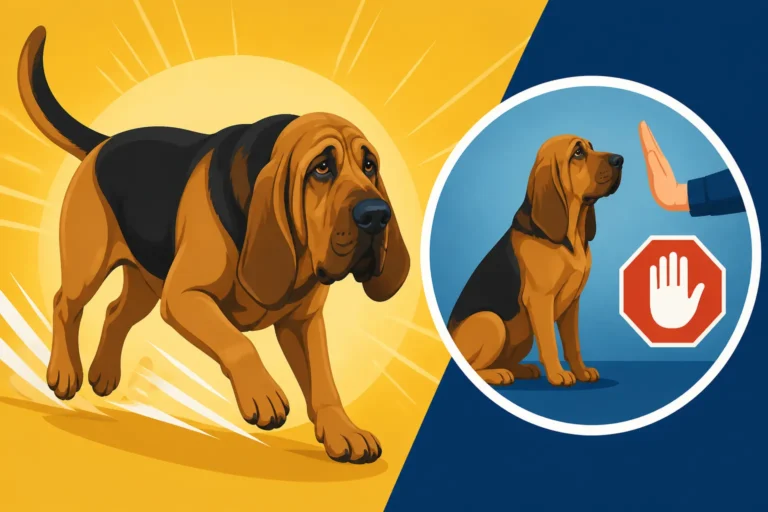
Teaching a Bloodhound a reliable emergency stop fails because their immense scent drive physically and mentally overrides training.