Whether a Bloodhound Trails Better in Morning Air
Morning air creates ideal trailing conditions because cool temperatures and high humidity keep scent particles concentrated near the ground.
Work with the temperament you have.
House-training and crate work, recall, leash manners, separation anxiety, and the behaviors this breed is wired for.

Morning air creates ideal trailing conditions because cool temperatures and high humidity keep scent particles concentrated near the ground.
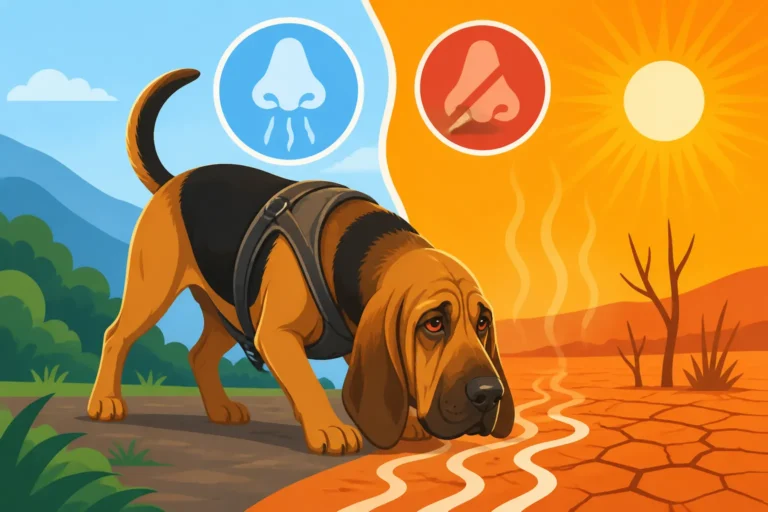
Warm weather physiological challenges, overheating risks, and cooling limits explain how high temperatures reduce Bloodhound trailing performance.
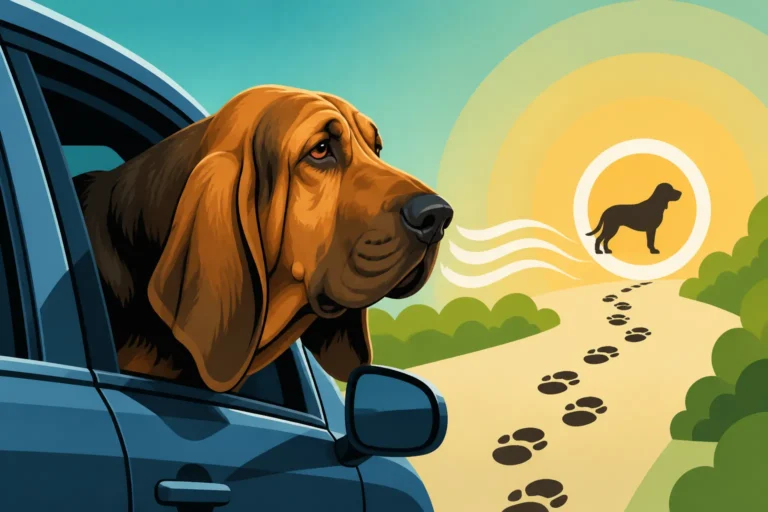
Bloodhound trailing from a moving car window fails because vehicle speed and wind turbulence scatter the ground scent particles.
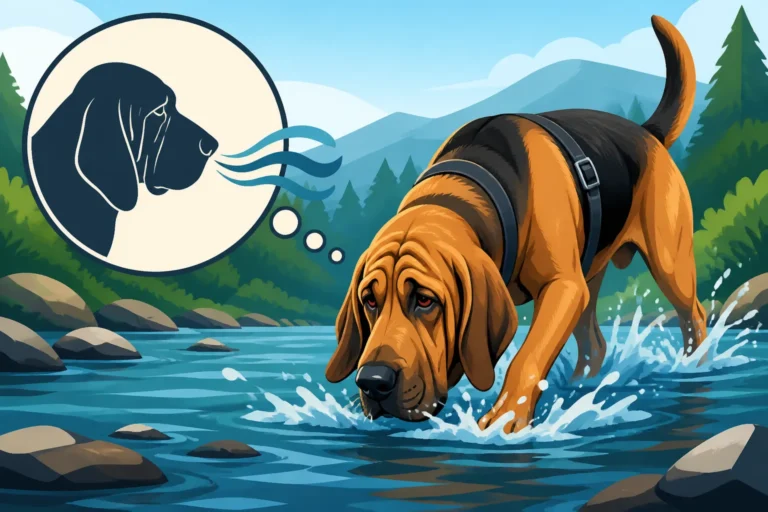
Bloodhound scent tracking across water streams and creeks, explaining how scent particles behave and how handlers help dogs.
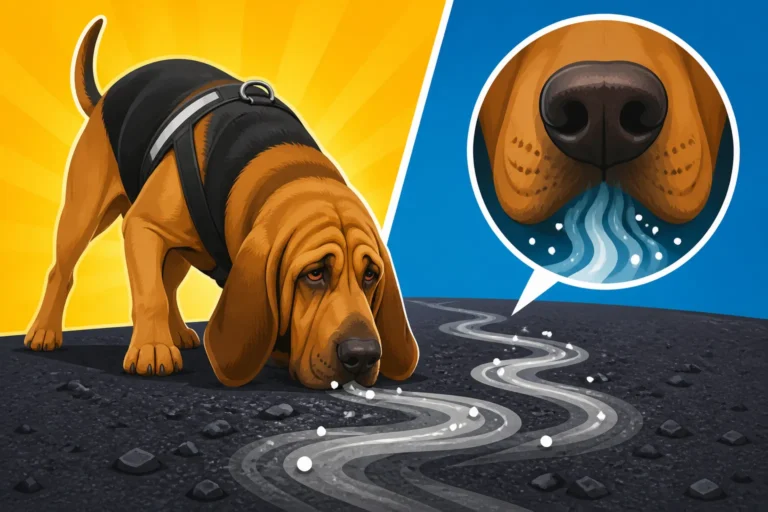
Bloodhound tracking on asphalt presents unique challenges because heat and smooth surfaces make scent particles evaporate and scatter quickly.
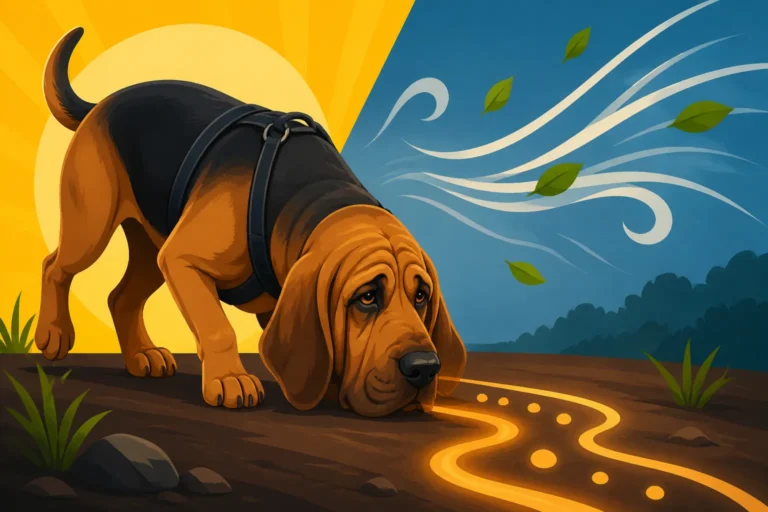
Wind moves, spreads, and dilutes human scent particles, creating a scent plume that challenges bloodhounds and handlers.
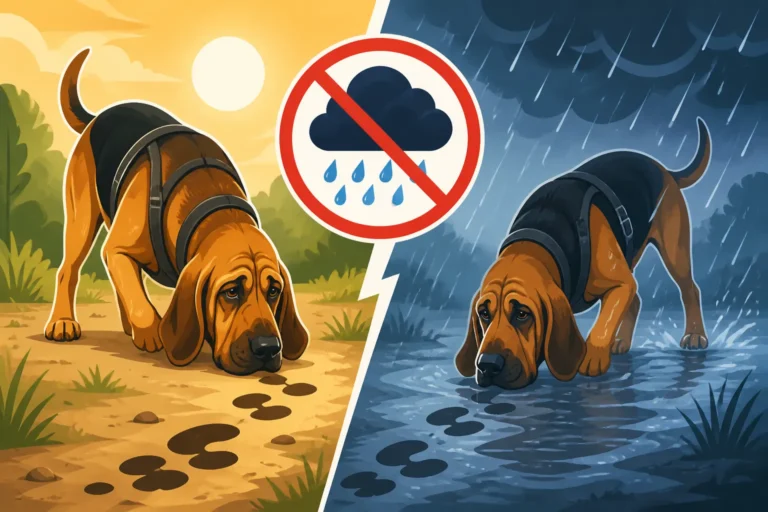
Rain changes Bloodhound scent tracking by dispersing skin rafts and saturating soil, altering how dogs follow human trails.
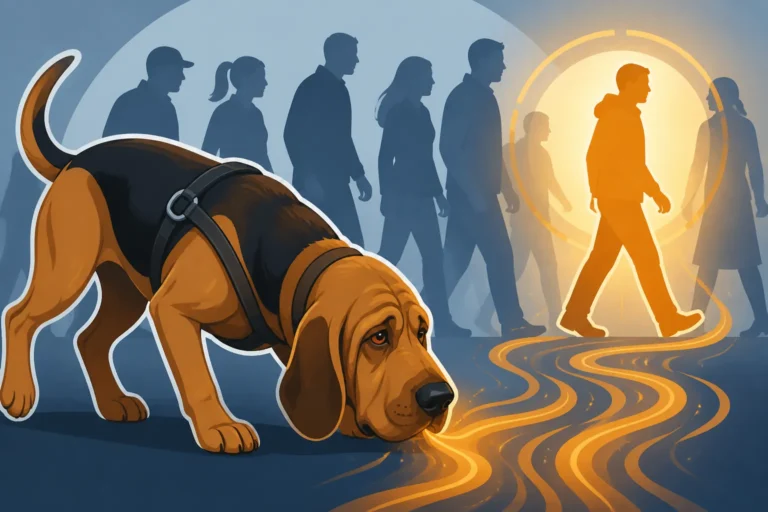
The Bloodhound olfactory system uses three hundred million receptors and unique physical adaptations to isolate individual human scent cones.

Bloodhound and German Shepherd scent detection abilities are compared through genetics, anatomy, and specialized working skills.
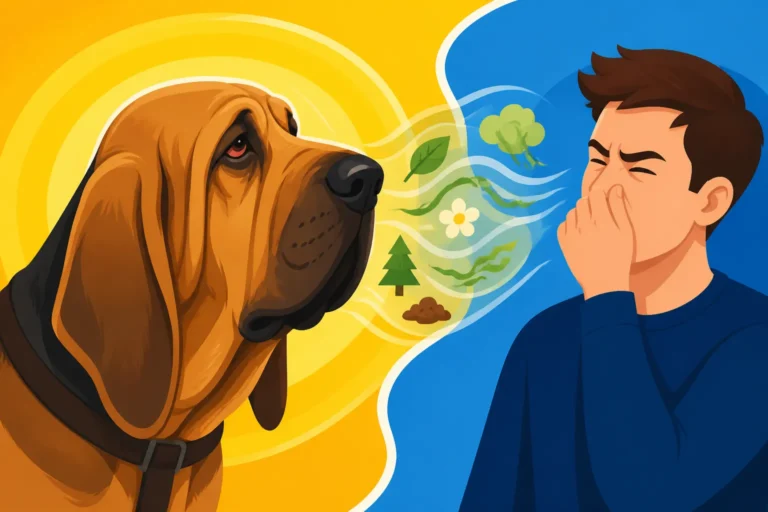
Bloodhound scent perception compared to human smell, and why precise numerical multipliers remain difficult to quantify scientifically.