Whether a Bloodhound’s Drooping Lid Is a Defect or the Standard
Bloodhound eyelid droop and loose facial skin distinguish normal American Kennel Club breed standards from real medical conditions.
Know what to watch for.
Breed-specific conditions, screening and DNA tests, what surgery actually costs, and the daily habits that stretch a healthy lifespan.
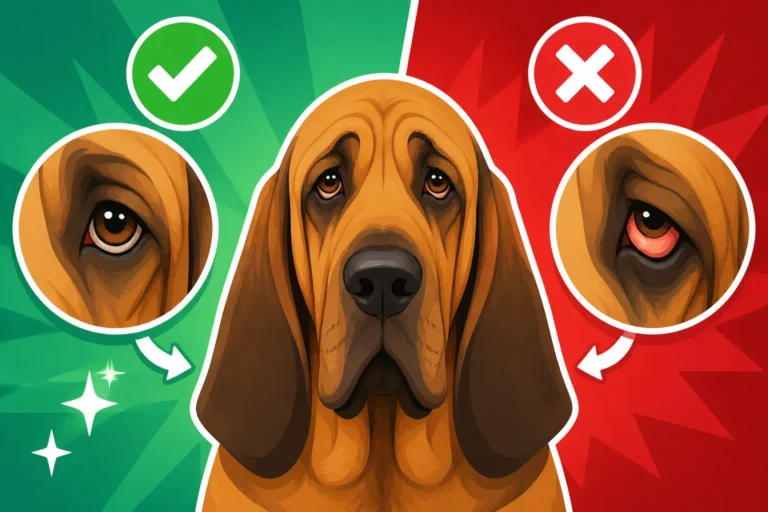
Bloodhound eyelid droop and loose facial skin distinguish normal American Kennel Club breed standards from real medical conditions.
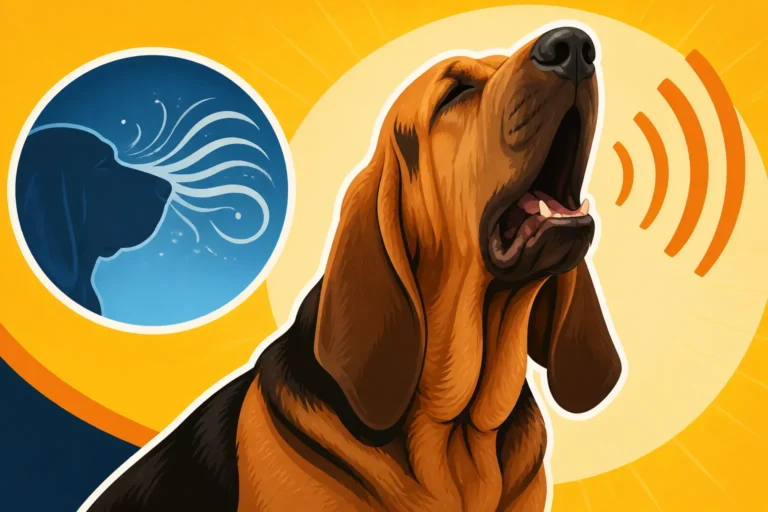
Bloodhound loose facial skin and loose lower eyelids explain why the pink third eyelid and ectropion show in this breed.
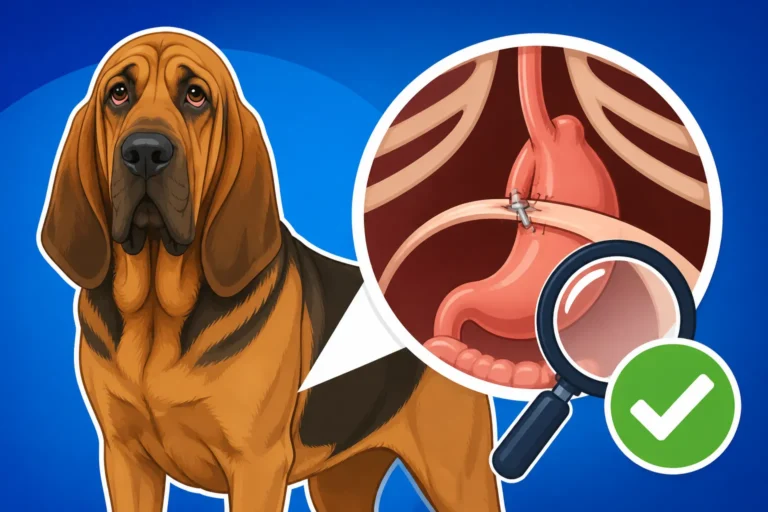
Bloodhound gastropexy identification methods explain physical and record clues to determine past preventative bloat surgery status.
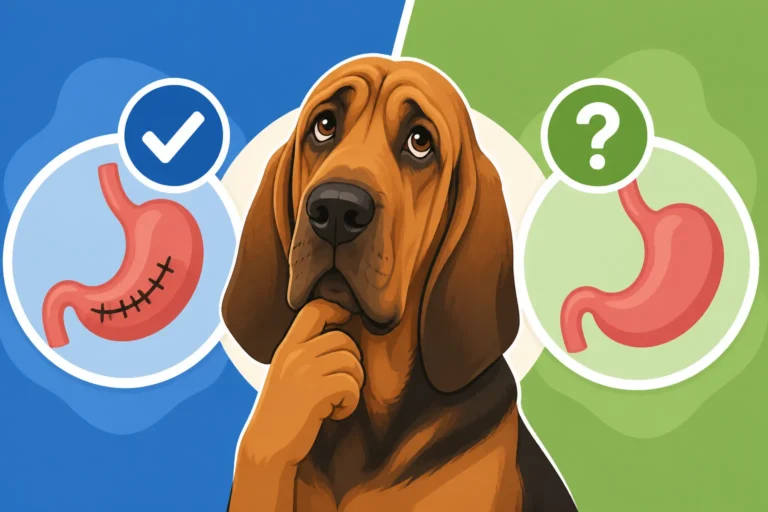
Rescue Bloodhound medical records, veterinary surgical reports, and adoption paperwork reveal if your dog received a gastropexy.
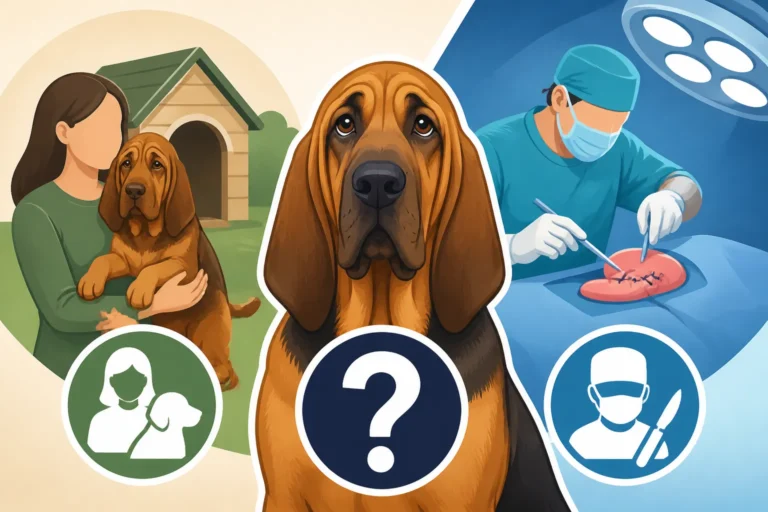
Bloodhound breeder involvement in arranging preventive gastropexy surgery and protecting puppies from fatal bloat risks.

Bloodhound meal management with split meals remains necessary because the surgical gastropexy prevents stomach twisting while dilation risks persist.
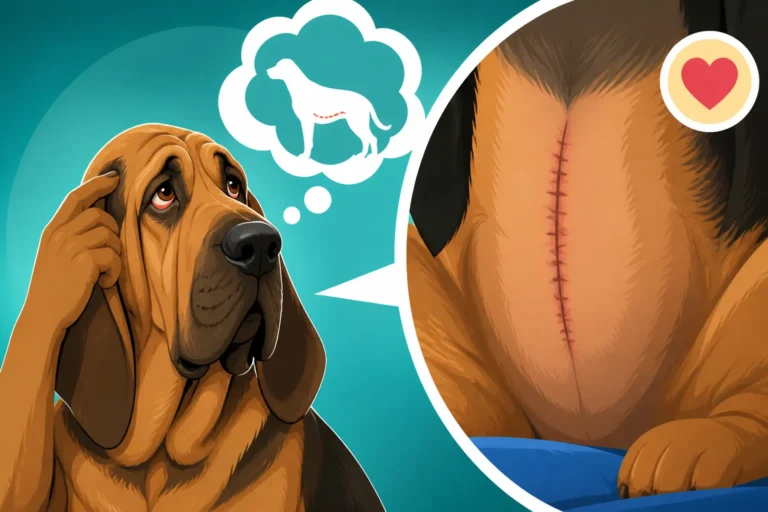
Gastropexy scars in Bloodhounds and how these preventive stomach surgeries impact long-term canine comfort and recovery.
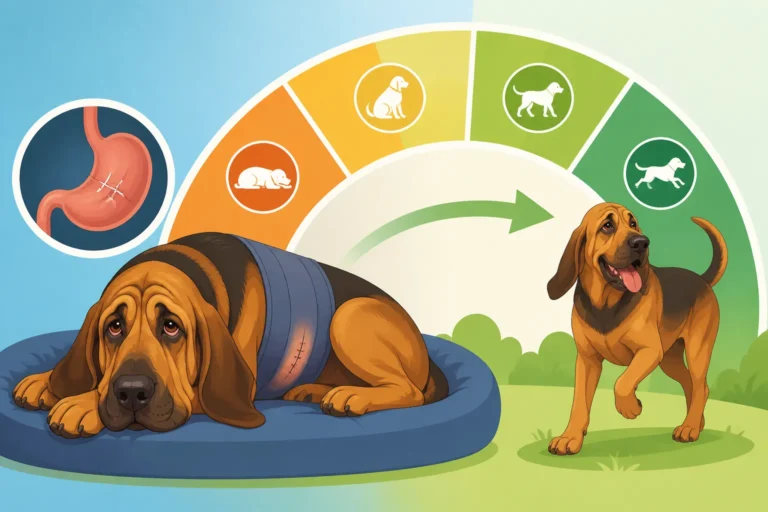
Bloodhound gastropexy recovery timelines, first forty-eight hours care, pain medication schedules, and incision monitoring instructions.
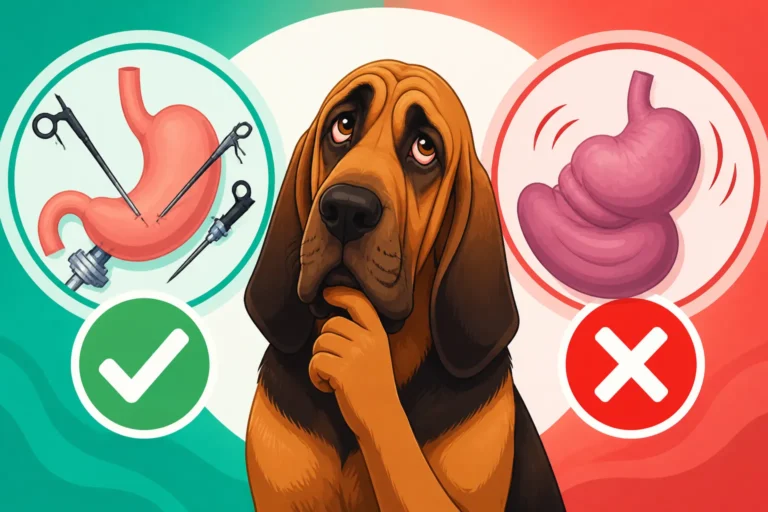
Laparoscopic gastropexy for Bloodhounds prevents fatal stomach twisting using minimally invasive surgery and small abdominal incisions.
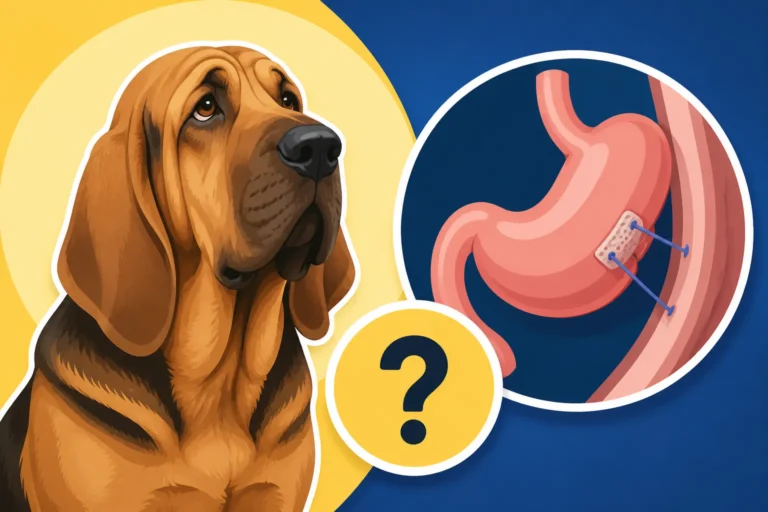
Preventive gastropexy surgery tacks a Bloodhound stomach to the abdominal wall to stop life-threatening twisting and bloat.