Whether Kibble Size Matters for a Bloodhound
Bloodhound kibble size affects eating speed, air swallowing, and the risk of life-threatening bloat emergencies.
The daily stuff, done right.
Feeding amounts by life stage, coat and skin routines, dental and nail care, exercise needs, and what changes as they age.

Bloodhound kibble size affects eating speed, air swallowing, and the risk of life-threatening bloat emergencies.

Soaking a Bloodhounds kibble offers digestion benefits and increased daily water intake, but does this practice truly prevent bloat?

Bloodhound post-meal water drinking and the associated bloat risks, plus practical strategies for safe hydration management.

Bloodhound feeding schedules and exercise timing rules to minimize the fatal risk of gastric dilatation volvulus.

Proper meal timing before exercise helps prevent gastric dilatation-volvulus in deep-chested Bloodhounds prone to fatal stomach twisting.
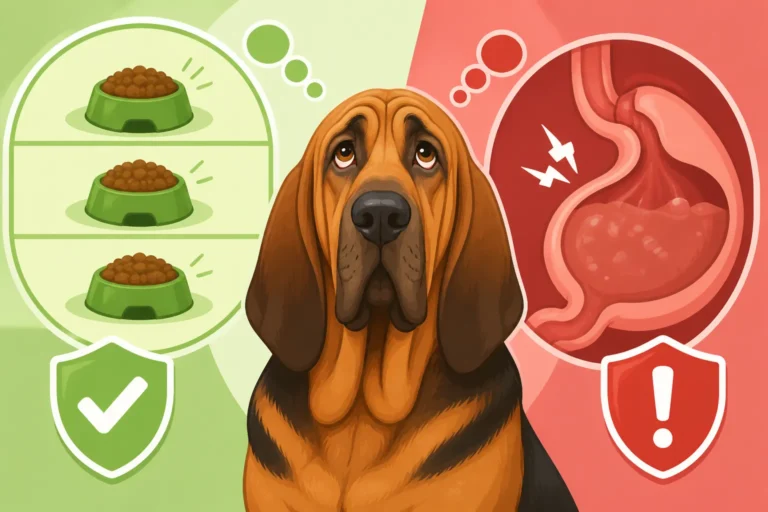
Feeding three daily meals instead of two for Bloodhounds to examine effects on bloat and gastric dilatationvolvulus risk.

Bloodhound feeding schedules and the health risks of bloat explain if two daily meals safely meet their nutritional needs.

Bloodhound eyelashes protect eyes from dust and debris, serving as a natural shield during tracking and daily outdoor activities.

Bloodhound car window safety explains flying debris hazards, eye injuries, and ear damage during sensory travel.

Bloodhound eye health and dust exposure risks, including conjunctivitis and corneal abrasions, explained for owners.