Whether a Bloodhound Chases Livestock
The idea of a majestic Bloodhound trotting calmly through a pasture, peacefully coexisting with sheep, goats, or chickens, is a lovely image. But for many Bloodhound owners living near or with livestock, the stark reality is often a flurry of worry: will my hound chase, harass, or even harm these animals? This guide will explore the powerful instincts that drive a Bloodhound, assess the true risk they pose to farm animals, and, most importantly, provide actionable strategies for managing their natural tendencies to ensure a safe and harmonious environment for everyone.
The Bloodhound's Deep-Seated Instincts and Their Impact on Livestock
Let's be real about Bloodhounds: they are incredible animals, known for their unparalleled noses and unwavering focus when on a scent. This very trait, while a gift in tracking, is precisely what makes livestock interactions a potential minefield. Their world is dictated by scent, and a chicken, a goat, or a cow all leave a very compelling one.
A Nose That Leads, A Body That Follows: Understanding Scent Drive
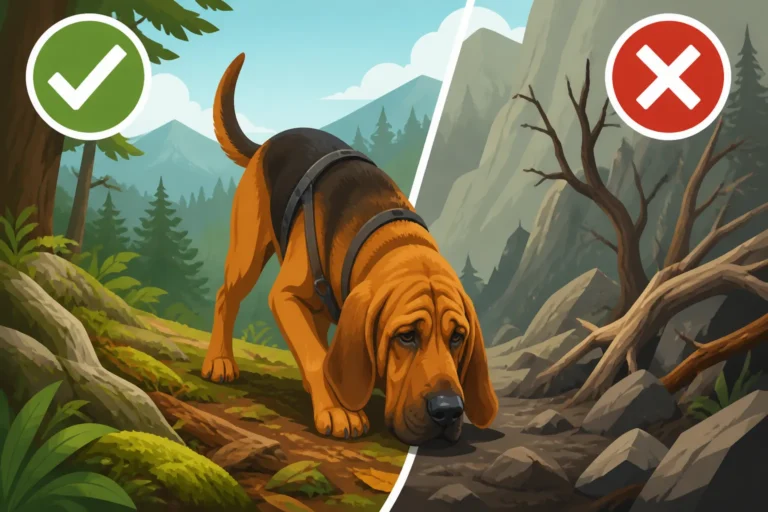
Imagine living in a world where every single whiff tells a story, painting a detailed picture of who was where, doing what, and how long ago. That's a Bloodhound's reality. Their long ears sweep scents upwards, their loose skin traps scent particles, and their incredible nasal passages are equipped with hundreds of millions more scent receptors than ours. When a Bloodhound catches the scent of a moving animal, especially one exhibiting natural escape behaviors like fleeing or flapping, their instinct kicks in. It's not necessarily a malicious desire to harm, but an overwhelming, deeply ingrained drive to follow that fascinating, moving scent trail.
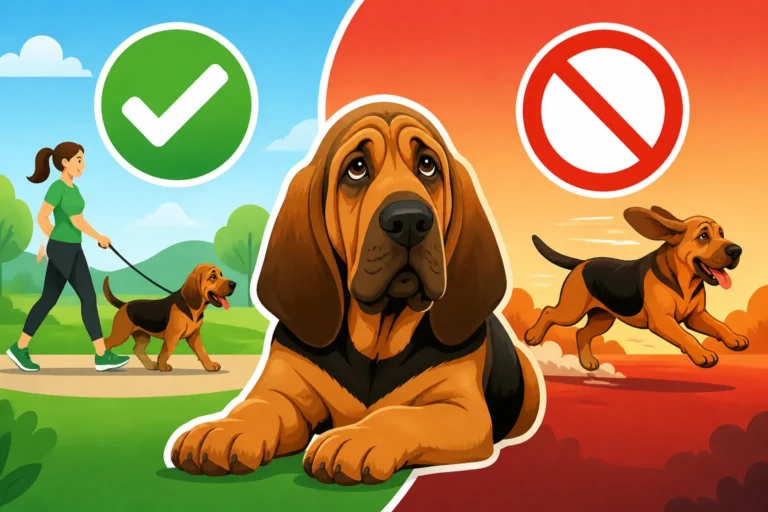
This powerful scent drive means that even the most well-behaved Bloodhound, trained diligently in basic obedience, can seemingly "turn off" its ears when a novel scent, particularly a fresh animal trail, hits its nose. The world shrinks to that scent, and the hound becomes single-minded. This intense focus, combined with their sheer size and power, can easily escalate from a curious follow to an accidental chase, or even a misguided "game" that can be terrifying and potentially dangerous for smaller, more fragile livestock. This is also why Why Off Leash Is Not a Goal With a Bloodhound is such a critical piece of advice for this breed.
Unpacking the "Prey Drive" in a Bloodhound
While often called "prey drive," it's important to clarify what this usually looks like in a Bloodhound versus, say, a terrier or a sighthound bred for actively killing vermin or chasing down game. Bloodhounds were historically bred to track game, not necessarily to make the kill. Their job was to follow, bay, and corner. However, the initial chase sequence – the orienting, eye-stalking, chasing, and grabbing – is still very much present.
For a Bloodhound, the sight and scent of a flock of chickens scattering, or a young lamb darting away, can easily trigger this chase instinct. They might not intend to kill, but their sheer mass – a fully grown Bloodhound can easily weigh over 100 pounds – means that even a playful bump or an excited lunge can cause severe injury or death to smaller animals. A terrified chicken could suffer a broken leg, a lamb could be trampled, and even larger animals like goats or calves could be spooked into fences or dangerous situations, leading to injury. The stress alone that a large, baying hound can inflict on livestock can cause problems, particularly in pregnant animals or those with young.
Real-World Scenarios: Bloodhounds Living Alongside Livestock
It's tempting to think your Bloodhound will be the exception, the one who just ignores the barn animals. And while some can learn to coexist, it's crucial to understand the inherent risks and prepare for them. The reality is often a spectrum of reactions, influenced by many factors.
The Spectrum of Reactions: From Indifference to Intense Pursuit
Some Bloodhounds, particularly those raised from puppyhood in a barn environment with calm, well-socialized livestock, might develop a remarkable indifference. They might sniff a sheep, then continue on their way, or simply give the chickens a passing glance. However, this is usually the exception, not the rule, and often requires meticulous, consistent training and supervision from day one. Most Bloodhounds, by their very nature, will be intensely curious about livestock. This curiosity is the first step on the ladder to a chase.
The interaction might start innocently: a deep sniff, a gentle nudge. But if the livestock then moves quickly or makes a noise, the Bloodhound's interest can rapidly escalate. A playful "tag" can become a full-blown chase across the yard. For a dog that doesn't understand its own strength, this can be disastrous. I've heard stories of Bloodhounds accidentally knocking over small goats in their excitement, or scattering a flock of geese simply by running through them, causing injuries in the panic. It’s not about malice; it’s about powerful instincts and a lack of understanding of consequences. Think of it like a How a Bloodhound Treats a Cat – often with intense curiosity and a strong desire to chase, even if the intent isn't to kill.
Factors Influencing a Bloodhound's Behavior Around Farm Animals
A Bloodhound's behavior around livestock isn't a fixed switch; it's influenced by a combination of genetics, age, and environment.
- Age: Young Bloodhound puppies might be more easily distracted and their chase drives less developed. This is the prime time for careful, controlled socialization. An adolescent Bloodhound, however, often sees an explosion in their scenting and chase drives, making them more challenging. Older Bloodhounds might slow down, but their instincts remain.
- Individual Temperament: Just like people, every Bloodhound has a unique personality. Some are naturally more mellow and less inclined to chase, while others are perpetually "on the hunt" for a new scent adventure. When looking for a puppy, talking to a reputable breeder about the temperaments of the parents and how they interact with different stimuli can be very helpful. Some breeders might even be able to tell you if they place puppies by nose drive, which could be an indicator of how intense their scenting focus will be, potentially impacting livestock interaction.
- Early Exposure and Socialization: This is perhaps the most significant environmental factor. A Bloodhound puppy introduced to livestock calmly and positively from a young age, always under strict supervision, might learn to view them as part of the normal landscape rather than a chase opportunity. However, "socialization" doesn't mean allowing free-for-all interaction; it means controlled exposure to foster calm acceptance.
- Type of Livestock: A Bloodhound might show less interest in large, slow-moving animals like cows, especially if they stand their ground. But fast-moving, smaller animals like chickens, ducks, or young lambs are almost irresistible to many Bloodhounds. Their erratic movements mimic what a predator would seek to chase.
- Handler Presence and Training: Your ability to intervene, redirect, and consistently reinforce desired behaviors is paramount. A strong "leave it" or "come" cue, even if not 100% reliable off-leash, provides a crucial tool in managing interactions. However, don't underestimate the power of their nose. As mentioned earlier, once on a hot trail, even the best-trained Bloodhound can seem to forget everything it knows.
Strategic Management and Training to Prevent Livestock Chasing
Living with a Bloodhound and livestock requires a proactive, multi-pronged approach. You cannot rely solely on training to overcome centuries of instinct; instead, you must combine training with robust management strategies.
Fortifying Boundaries: The Non-Negotiable Fence Line
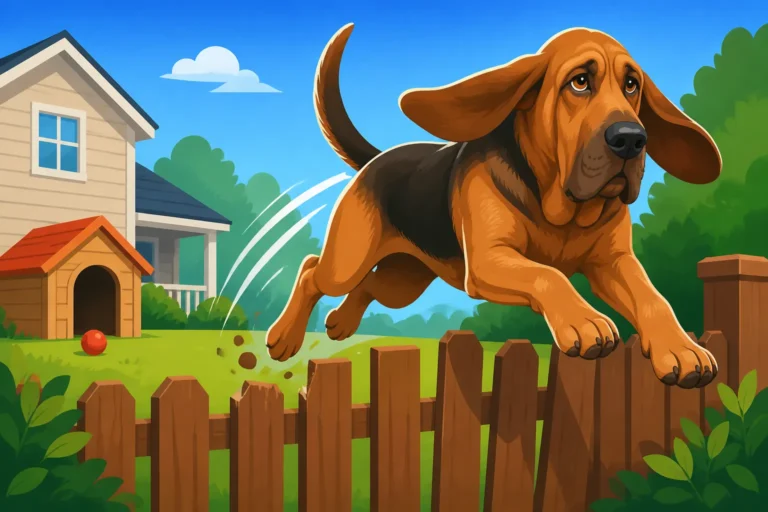
If you have livestock, a secure fence is not optional; it's absolutely essential. Bloodhounds are intelligent, persistent, and driven by an urge that far outweighs their desire to stay in a comfortable yard when a compelling scent beckons. They will follow a trail through, under, or over almost anything.
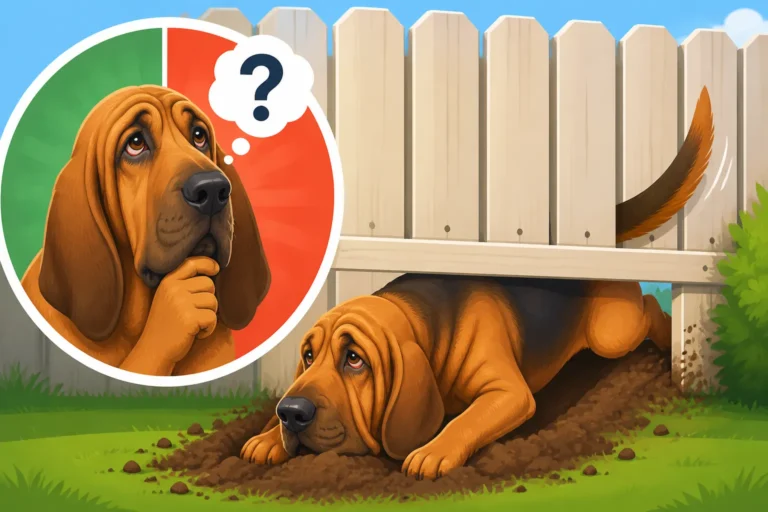
Your fencing needs to be robust. For a Bloodhound, a standard four-foot picket fence might as well be an open invitation. You're generally looking at a minimum of five to six feet in height, potentially with an inward-sloping top or a hot wire if your Bloodhound is a climber. More importantly, the fence needs to extend below ground to prevent digging escapes. A Bloodhound can dig a surprisingly fast and deep tunnel, especially if it smells something interesting on the other side. Some owners find that a second, inner fence, creating a "no-man's land" between your Bloodhound's area and the livestock's area, adds an extra layer of security. Remember to check your fences regularly for weak spots or damage. For more on this, check out What Fencing Actually Holds a Bloodhound.
Training for Impulse Control and Reliable Recall
While achieving a perfect, off-leash recall for a Bloodhound when on a hot scent is a unicorn, building a strong foundation of impulse control and obedience is still incredibly valuable. Start young, as early as eight weeks, with basic commands like "sit," "stay," and "leave it." Programs like BAXTER & Bella, which focus on positive reinforcement and building a strong relationship, can provide excellent tools for this. The goal is to teach your Bloodhound to look to you for direction, even when tempted.
- "Leave It": This command is critical. Practice it with increasingly tempting distractions, eventually working up to having a person (or another calm dog) move a piece of food or a toy near them, then eventually practicing with a chicken on the other side of a secure fence. Reward calm disengagement.
- Recall: While challenging, a reliable recall in controlled environments is vital. Practice in your fenced yard, in low-distraction areas, and make coming back to you the most rewarding thing ever with high-value treats and praise. Use a long line, perhaps 30-50 feet long (see How Long a Line Suits a Bloodhound in the Open), to give them freedom while retaining control.
- Redirection: Instead of simply saying "no," offer an alternative. If your Bloodhound fixates on a bird, immediately redirect their attention to a game of fetch with a favorite toy or a quick scent game you've set up. This helps channel their natural drives into acceptable activities.
- Scent Work: Remember, a Bloodhound's brain thrives on scent work. Engaging them in structured activities like mantrailing or nose work satisfies their instincts in a positive way. This can significantly reduce their urge to create their own "scent games" with your livestock. It's often said that Mantrailing Is the Answer to a Bloodhound, Not Obedience because it truly taps into their core drive.
Constant Supervision and Controlled Interactions
Even with the best training and most secure fencing, direct, unsupervised interaction between a Bloodhound and livestock is a gamble you likely don't want to take.
- Never Leave Them Alone: This is the golden rule. If your Bloodhound is in an area with livestock, you need to be actively supervising. This isn't just about preventing harm; it's about reinforcing calm behavior and intervening immediately if interest escalates.
- Leashed Introductions: When first introducing your Bloodhound to new livestock, or re-introducing them after a period, always do so on a sturdy leash, ideally with a second person to help manage both the dog and the environment. Keep sessions short, positive, and end them before your dog gets over-stimulated. Reward calm observation.
- Designated Areas: Consider creating completely separate areas for your Bloodhound and your livestock. Your hound might have a securely fenced yard or kennel run where they can be when you're not actively supervising them. Their exercise time might involve long line walks in areas away from the livestock, or structured scent work sessions.
- Routine: A predictable routine can help. If your Bloodhound knows when and where they will get their mental and physical exercise (see How Much Exercise a Bloodhound Actually Needs), they might be less inclined to seek out "fun" in forbidden places.
What to Do if Your Bloodhound Does Chase Livestock
Despite all your best efforts, sometimes accidents happen. A gate might be left ajar, or your Bloodhound might catch a scent trail stronger than any command. Knowing how to react calmly and effectively in the moment is crucial.
Immediate Action and Safely Halting the Chase
The moment you see your Bloodhound engaging in an undesirable chase, your immediate priority is to safely stop the situation without escalating it further.
- Stay Calm, Don't Chase: Yelling or chasing after your Bloodhound will likely only fuel their excitement and speed up the chase. They might think you're joining the game. Instead, try to use a calm, firm, attention-grabbing command like their recall cue, even if you know it's unlikely to work initially. A sharp whistle or a sudden, loud clap can sometimes break their focus for a split second, giving you an opening.
- Use Tools if Available: If your Bloodhound is on a long line, carefully gather it up to stop their progress. If you have a training clicker or a high-value treat pouch handy, sometimes shaking it can get their attention, offering a positive alternative to the chase.
- Prioritize Safety: If the livestock are small or vulnerable, your first instinct might be to protect them. However, putting yourself directly between a large, excited Bloodhound and a fleeing animal can be dangerous for you. Try to create a barrier or use your body position to gently guide your dog away from the livestock if possible, without confronting them head-on.
- Secure Immediately: Once the chase is stopped, get your Bloodhound back on a leash and into a secure area, away from the livestock. Do not punish them harshly in the moment, as they might associate the punishment with coming to you, not with the chase itself. The moment is for management and safety.
Learning from the Incident and Adjusting Your Strategy
An incident where your Bloodhound chases livestock is not a failure of your dog; it's an indication that your management or training strategy needs adjustment.
- Analyze the Cause: Take a moment to honestly assess what went wrong. Was a gate unlatched? Did you underestimate their interest in a particular animal? Was there a lapse in supervision? Did a new type of livestock arrive? Understanding the trigger is key to preventing future occurrences.
- Reinforce Training: Double down on impulse control and recall training, perhaps increasing the frequency of sessions or seeking help from a professional trainer specializing in scent hounds or farm dog management. They can offer tailored strategies for your specific situation. Consider enrolling in a puppy class if you have a young dog, like those offered by BAXTER & Bella, to solidify basic manners early.
- Tighten Management: This is where the biggest changes usually need to happen. Can you add another layer of fencing? Can you ensure your Bloodhound is never left unsupervised in a situation where they could access livestock? Are there specific times of day or activities that increase the risk? For example, if your Bloodhound gets zoomies after eating, perhaps ensure they are securely contained during that time. Think about How Many Minutes a Day a Bloodhound's Upkeep Takes and dedicate that time to their safety and your peace of mind.
- Consider the Future: For some Bloodhounds with extremely high prey drive and consistent chasing behavior despite all efforts, it might mean accepting that they simply cannot be around certain types of livestock. This is a tough realization, but sometimes it’s the most responsible choice for the safety of all animals involved. Remember, owning a Bloodhound is a significant commitment, and sometimes people discover Whether a Bloodhound Is Too Much Dog for Most People if their lifestyle doesn't align with the breed's needs.
Here’s a quick overview of managing Bloodhounds around livestock:
| Area of Concern | High Risk Scenario | Mitigation Strategy | Key Takeaway |
|---|---|---|---|
| Instinct | Unchecked scent trail leading to chase | Engage in structured scent work (e.g., mantrailing). | Redirect their powerful nose. |
| Containment | Standard fence insufficient; dig or climb potential | Install minimum 5-6 ft fence, bury wire, double-fence. | Security must be foolproof. |
| Supervision | Leaving Bloodhound unsupervised with livestock | Never leave them alone; constant active supervision. | Vigilance is non-negotiable. |
| Training | Reliance on recall during active chase | Prioritize "leave it," impulse control, and consistent recall in low-distraction environments. Use long lines. | Build foundation, but respect instinct's limits. |
| Socialization | Random, uncontrolled exposure to farm animals | Controlled, positive introductions from puppyhood on leash. | Positive, managed exposure. |
| Accidents | Panicking when a chase occurs | Stay calm, use recall (even if unlikely), secure dog immediately. | Respond calmly, then analyze and adjust. |
Ultimately, owning a Bloodhound and living alongside livestock is absolutely possible, but it demands an extraordinary level of commitment, understanding, and proactive management from the owner. Their incredible noses are a marvel, but they require a handler who can consistently guide and manage that powerful drive.
Disclaimer
This article is for general informational purposes only and does not constitute professional advice. Laws, prices and regulations vary by location and change over time. Consult a qualified professional for guidance on your specific situation.