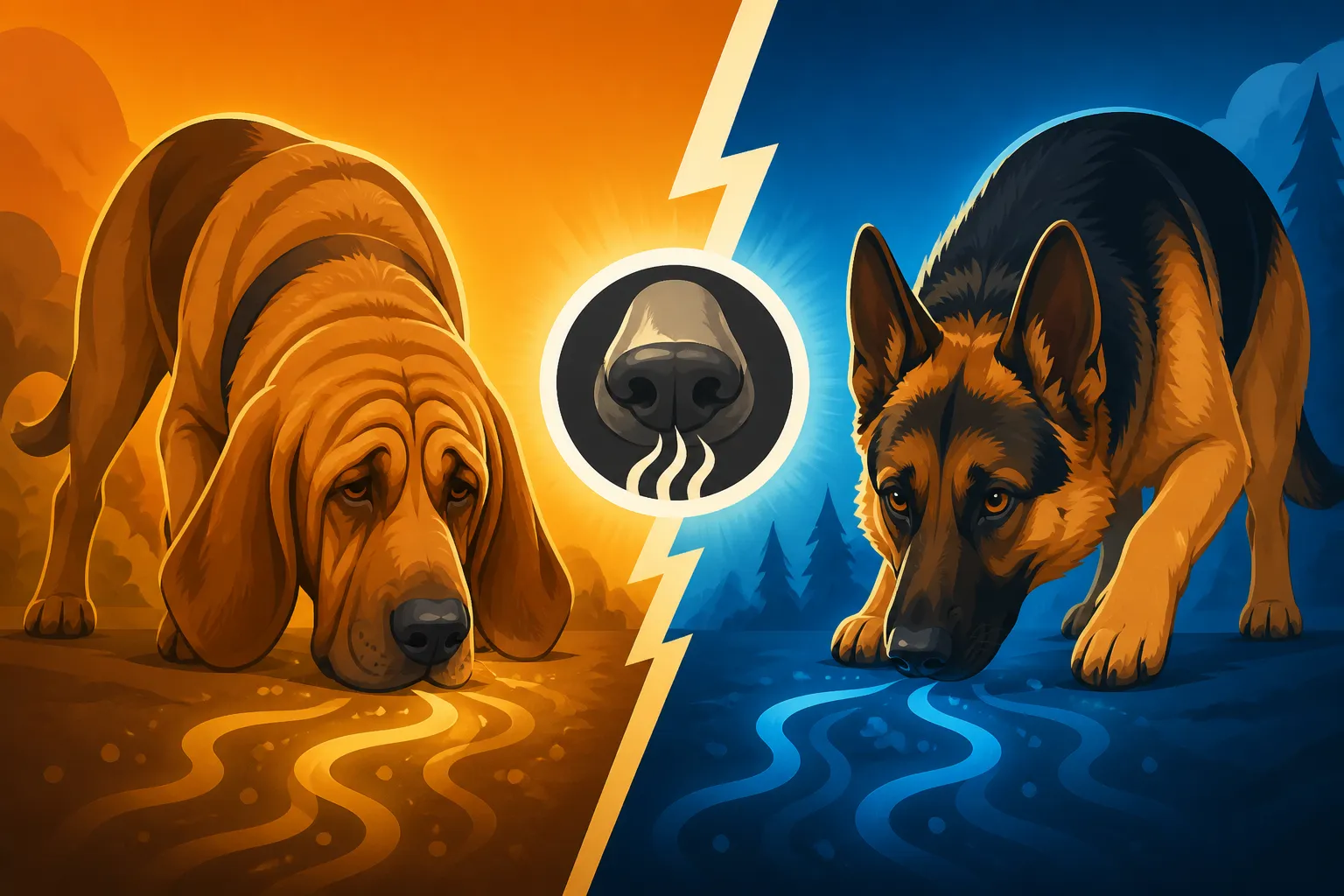
Whether a Bloodhound Beats a German Shepherd on Scent
It's a common question among dog enthusiasts and working dog handlers: which breed truly reigns supreme in the world of scent detection, the venerable Bloodhound or the ever-versatile German Shepherd? Many people, often relying on popular perception, might assume one is definitively "better" than the other, leading to endless debates at dog parks and training facilities. The truth, however, is far more nuanced, deeply rooted in genetics, physical adaptations, and centuries of selective breeding for very specific purposes. This guide will dive deep into the unique olfactory strengths of both the Bloodhound and the German Shepherd, comparing their specialized skills, physical attributes, and innate drives to help you understand why each excels in its particular niche within the vast realm of canine scent work.
Understanding the Bloodhound's Unrivaled Olfactory System
When we talk about scenting ability, the Bloodhound almost always comes to mind first, and for good reason. They are, quite simply, nature's most sophisticated and dedicated scent-tracking machines. Their entire being is designed for one purpose: following a trail, often a human one, for miles and days, regardless of distractions.
The Anatomy of a Bloodhound's Nose
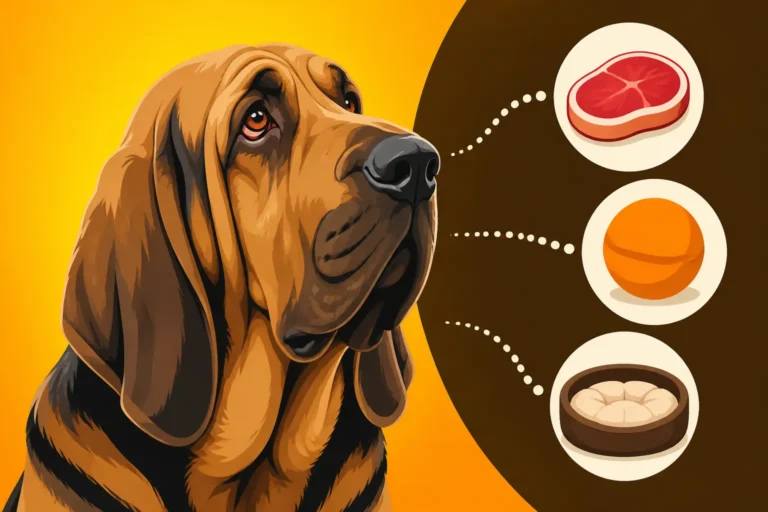
A Bloodhound's nose isn't just a nose; it's a finely tuned biological instrument. They possess an astounding number of olfactory receptors, estimated to be around 300 million, which is significantly more than most other breeds. Imagine trying to identify a single spice in a complex dish; a Bloodhound can discern countless individual scent particles in the air or on the ground, even when they're incredibly faint or diluted.
Beyond the internal hardware, their external features are equally critical. The Bloodhound's long, pendulous ears, often reaching past its nose, act like natural scent sweeps. As the dog moves, these ears drag along the ground, stirring up scent particles and directing them towards the nose, almost like a natural funnel. This helps concentrate the scent molecules, making them easier to pick up. Then there's their famously loose, wrinkled skin, particularly around the face and neck. These deep folds and wrinkles are not just for aesthetics; they serve a functional purpose. They create more surface area to trap and hold scent particles, essentially acting as tiny scent reservoirs. This means that even after lifting their head, a Bloodhound still has scent particles clinging to its face, reinforcing the trail they're on. It's a truly ingenious design for relentless trailing. Their deep-set eyes are also thought to minimize visual distractions, keeping their focus entirely on the scent.
The Bloodhound's Scenting Specialization
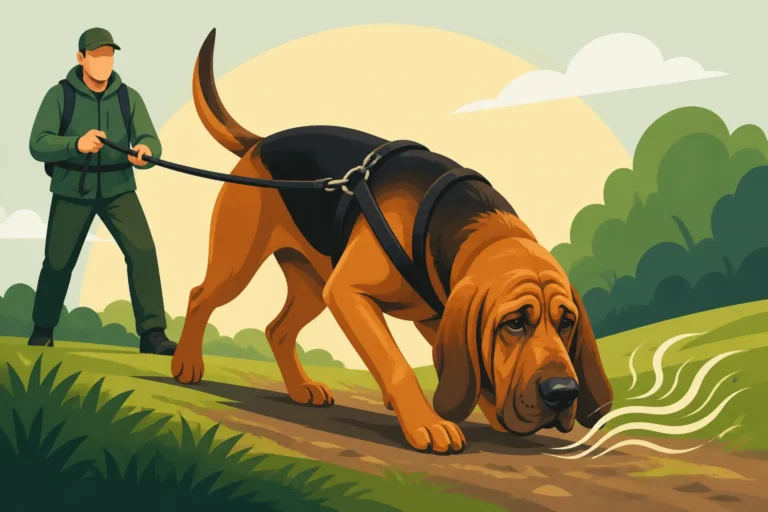
The Bloodhound's unparalleled ability lies in its absolute specialization in trailing human scent. They are hardwired for mantrailing, which is the process of following a specific individual's unique odor signature. This isn't about finding a general area where someone might be; it's about following that person's exact path, step by step, over varying terrain and through different environments. Their genetic programming gives them an almost obsessive focus on a trail, often to the exclusion of all else. This isn't just a strong desire; it's a profound, almost trance-like immersion in the scent world.
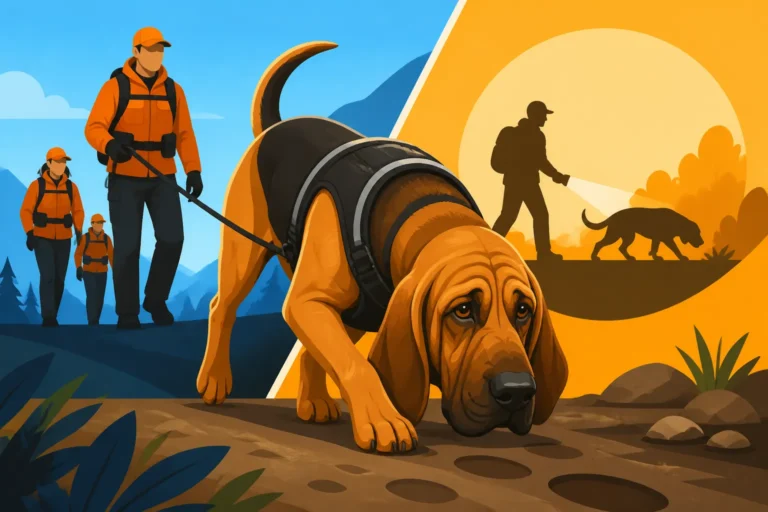
They excel at following "cold" trails—scents that are hours or even days old. This remarkable persistence is what gives their work such immense value in search and rescue operations and law enforcement. The Bloodhound's findings are even accepted as evidence in courts of law, a unique distinction among canine breeds. Their relentless pursuit, often for miles and over long periods, demonstrates incredible physical and mental endurance when it comes to scent work. Once a Bloodhound commits to a trail, it's incredibly difficult to divert them, illustrating why Mantrailing Is the Answer to a Bloodhound, Not Obedience is often said, and Why Off Leash Is Not a Goal With a Bloodhound is a golden rule for owners.
The German Shepherd's Versatile Scenting Capabilities
While the Bloodhound is the undisputed king of trailing, the German Shepherd is the multi-talented utility player of the scent world. Known for their intelligence, trainability, and powerful work ethic, German Shepherds have proven themselves indispensable in a vast array of scent detection tasks.
The German Shepherd's Olfactory Strengths
German Shepherds also possess an incredibly keen sense of smell, though perhaps not with the sheer volume of olfactory receptors as a Bloodhound. Estimates typically place them around 225 million scent receptors, which is still light years ahead of a human's paltry 6 million. Their nasal structure is efficient and well-suited for both air-scenting (picking up airborne odors) and ground-scenting (following a trail on the ground).
Their working dog heritage means they are bred for intelligence, agility, and a strong desire to please and work alongside a handler. These traits make them highly adaptable to various scent detection roles. You'll find German Shepherds excelling in narcotics detection, sniffing out illicit substances in luggage, vehicles, or buildings. They are equally adept at explosive detection, cadaver recovery, and broad-area wilderness search and rescue. In these roles, they often need to detect specific target odors and indicate their presence, rather than follow a continuous trail. This requires a different kind of focus and problem-solving ability than a Bloodhound's pure trailing.
The German Shepherd's Drive and Trainability
What sets the German Shepherd apart in the scenting world, beyond their physical nose, is their unparalleled drive, intelligence, and trainability. They possess a strong desire to work and a deep bond with their handlers, making them highly responsive to training cues and commands. This allows them to be taught a wide range of scenting tasks and to operate effectively in complex, dynamic environments.
A German Shepherd can be trained to "generalize" a scent, meaning they can learn to detect any specific odor within a class (e.g., all types of explosives) rather than just one. Their ability to switch tasks, search large areas systematically, and respond to environmental changes or handler directives makes them incredibly versatile. They can be deployed in urban disaster zones, dense forests, or wide-open fields, adapting their search strategy based on the situation. This inherent versatility and trainability often make them the go-to breed for police K9 units, where they perform multiple duties, including scent detection, apprehension, and protection.
Direct Comparison: Bloodhound vs. German Shepherd on Scent
When putting these two magnificent breeds head-to-head, it's not about which one is inherently "better" but rather which one is better suited for a specific task. Their strengths lie in different areas of the scenting spectrum.
Specialization vs. Versatility
The core difference lies in their approach to scent work. A Bloodhound is a specialist; its focus is so narrow and intense on following a specific individual's unique scent trail that it often tunes out all other stimuli. This single-mindedness is what allows them to follow incredibly faint or aged trails, ignoring the myriad of other smells in a busy environment. They are designed to track, not necessarily to "find" and "indicate" a specific object or substance. What a Bloodhound Is Actually Smelling on a Trail is far more complex than just "person smell"—it's an intricate tapestry of individual biological odors.
Conversely, the German Shepherd is a generalist. While they can trail, their true forte is often in detection work. They are trained to search an area, find a target odor (like drugs, explosives, or cadavers), and then clearly indicate its location. This requires an ability to process many scents, identify the specific one they're looking for, and then communicate that discovery to their handler. They are adept at air-scenting, covering large areas quickly, and systematically searching structures or vehicles. Their work involves a broader spectrum of cognitive tasks, combining their scenting prowess with their intelligence and obedience.
Consider a scenario where a child has wandered away from a campsite. A Bloodhound would be deployed to follow the child's specific path, navigating through the woods, identifying each step. A German Shepherd might be used to conduct a grid search of the wider area, quickly covering ground to locate any trace of the child's presence or perhaps a dropped item.
Environmental Factors and Endurance
Environmental factors play a huge role in how effectively each breed performs. Bloodhounds are phenomenal at following ground-borne human scent, even in challenging conditions like urban concrete, water, or through varied terrain. They can follow trails that are incredibly old, sometimes days or even weeks post-event. This endurance and stubborn persistence on a specific trail are unmatched. Their low-slung body and deep muzzle keep them close to the ground, maximizing their ability to pick up even the most dissipated scent particles. They are the marathon runners of the scent world.
German Shepherds, while capable of trailing, are often more effectively utilized in scenarios requiring agile movement, rapid searching, and adaptability to sudden changes in environment. They might cover ground more quickly than a Bloodhound in some search patterns, and their ability to air-scent gives them an advantage in situations where the ground trail is severely compromised or inaccessible. Their endurance is geared more towards bursts of intense activity and sustained mental focus over varied tasks rather than the single-minded, often slow and methodical, grind of a Bloodhound's trail. For a Bloodhound, a common question is How Old a Trail a Bloodhound Can Follow, whereas for a German Shepherd, it might be how quickly they can clear a building.
Here's a comparison table highlighting their key scenting characteristics:
| Feature | Bloodhound | German Shepherd |
|---|---|---|
| Olfactory Receptors | ~300 million | ~225 million |
| Primary Scent Task | Mantrailing (specific human trail) | Detection (specific target odors), SAR, trailing |
| Focus | Single-minded, unwavering on one trail | Versatile, task-oriented, handler-responsive |
| Endurance | High for prolonged, methodical trailing | High for varied, active searching |
| Trainability | Good, but often independent, scent-driven | Excellent, highly compliant, eager to please |
| Legal Standing | Unique; evidence accepted in court | Evidence accepted, but less unique legal precedent |
| Physical Aids | Long ears, loose skin, deep muzzle | Athletic build, efficient nose |
Why the "Best" Depends on the Job
Ultimately, the question of "whether a Bloodhound beats a German Shepherd on scent" is like asking if a screwdriver beats a hammer. Both are excellent tools, but they serve different, albeit sometimes overlapping, purposes.
When a Bloodhound Excels
The Bloodhound is the undisputed champion when the task is to follow a specific human scent trail, especially if that trail is old, faint, or in a complex environment. If you need to track a missing person who has been gone for days, or trace the path of a suspect through a busy urban area, the Bloodhound is likely your best bet. Their incredible ability to differentiate one person's scent from many others, even hours later, is simply unmatched. They are forensic tools with four legs. In these scenarios, How a Bloodhound Separates One Person's Scent From a Crowd is its superpower. Their work is precise, methodical, and often leads directly to the source.
For hobbyists interested in deeply engaging with their dog's natural abilities, pure mantrailing is an incredible pursuit. Finding the right gear, like a well-fitting tracking harness and a long line, often found on platforms like Amazon, is essential.
When a German Shepherd Is Preferred
A German Shepherd shines brightest when versatility, speed, and clear indication are paramount. For tasks like detecting contraband, explosives, or searching a large area for any sign of human presence (as opposed to a specific track), the German Shepherd's capabilities often make them the more efficient choice. Their trainability allows them to be proficient in multiple detection disciplines, making them invaluable for police and military K9 units that require a dog capable of many jobs.
They are fantastic general-purpose search and rescue dogs, able to cover ground quickly, work off-leash in specific circumstances (with advanced training), and readily indicate findings. Their physical prowess also allows them to navigate diverse terrains with ease, making them excellent partners for active handlers. For German Shepherd puppies, early training is key to channeling their intelligence and drive. Resources like BAXTER & Bella can provide structured online courses to help build a strong foundation, whether for basic obedience or preparing for more advanced scent work. For a police K9 unit, the choice of Bloodhound or German Shepherd for Search Work often comes down to the unit's specific, varied needs.
In conclusion, both the Bloodhound and the German Shepherd are extraordinary scenting dogs, each a testament to the power of selective breeding. The Bloodhound, with its ancient lineage and specialized anatomy, is the unrivaled master of following a specific human trail, often where no other dog can. The German Shepherd, with its intelligence, adaptability, and eager-to-please nature, is the versatile detection specialist, excelling in a broader range of scent work applications. Your choice between them depends entirely on the specific scenting challenge you're trying to solve.
Disclaimer
This article is for general informational purposes only and does not constitute professional advice. Laws, prices and regulations vary by location and change over time. Consult a qualified professional for guidance on your specific situation.