What Harsh Handling Does to a Bloodhound
It's incredibly frustrating when you're trying to communicate with your beloved Bloodhound, and it feels like they're just not "getting it." We've all been there, wondering if we're doing something wrong or if our hound is just particularly stubborn. This guide delves into the often-misunderstood consequences of harsh handling methods on these magnificent, sensitive creatures, offering insight into why they react the way they do and how to build a stronger, more positive relationship.
The Bloodhound's Sensitive Nature and Training Philosophy
When you welcome a Bloodhound into your life, you're bringing home a dog with an ancient lineage, bred for a very specific purpose: to follow a scent with unwavering focus. What many people don't realize is that beneath their formidable size and powerful drive lies a remarkably sensitive and affectionate soul. Their emotional landscape is often underestimated, leading owners down paths of training that can be counterproductive and even damaging. Understanding their inherent nature is the first step to truly connecting with them.
Understanding a Bloodhound's Temperament
Bloodhounds are not your typical "eager to please" working dog in the way a retriever might be. Their intelligence is undeniable, but it's expressed through their nose, not necessarily through a desire for traditional obedience drills. They are notoriously independent thinkers, often described as gentle giants, patient, and deeply devoted to their families. However, this independence can sometimes be mistaken for stubbornness, especially when their nose is engaged. They aren't trying to defy you; they're simply following their instincts, which are literally hardwired into their being. This profound connection to scent means they live in a different world than most other breeds, one where smells tell a far more compelling story than human commands.
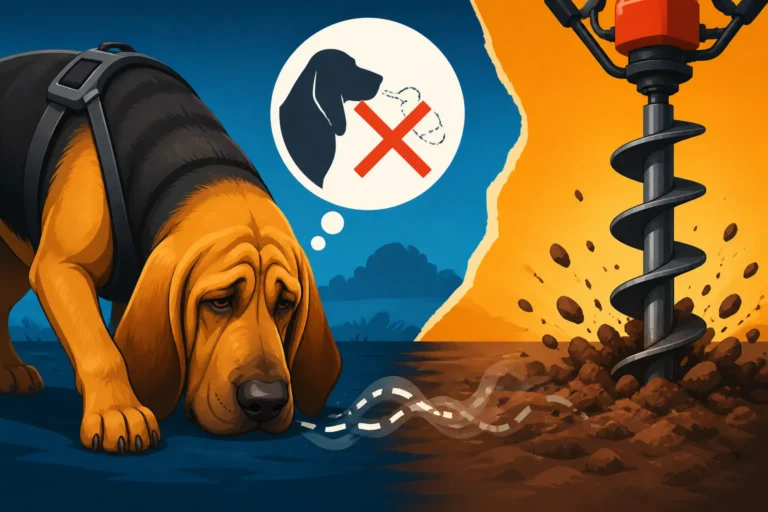
Imagine your Bloodhound outside, head down, utterly immersed in a trail. To them, that scent is a symphony, a novel unfolding, and your voice, no matter how loud or stern, is just background noise. Their focus is so intense that interrupting it abruptly or with force can be jarring, even frightening. They thrive on routine, kindness, and clear communication, not on intimidation. A Bloodhound who feels respected and understood will always be a better partner than one who fears consequences.
Why Force-Based Training Fails Scent Hounds
Traditional, force-based training methods, which rely on corrections, harsh verbal reprimands, or physical punishment, often backfire spectacularly with Bloodhounds. These methods are designed to suppress unwanted behaviors, but they don't teach the dog what to do, nor do they consider the dog's internal state. For a Bloodhound, who is already inclined to "tune out" distractions when on a scent, such methods can lead to confusion and distrust rather than compliance. They might shut down, appear to ignore you even more, or become visibly stressed. When a dog like a Bloodhound is constantly corrected for following its most powerful instinct – sniffing – it can lead to a breakdown in communication and a sense of hopelessness.
Consider the immense strength of their olfactory system; it's practically a superpower. Expecting them to ignore an irresistible scent because you’ve given a sharp leash correction is like asking a human to ignore the siren call of their favorite food placed directly in front of them, simply because you gave them a disapproving glance. It fundamentally misunderstands their nature. Instead of teaching them to not sniff, it teaches them to associate you or the training environment with discomfort, anxiety, or pain. This is why techniques like "alpha rolling" or strong leash jerks are not only cruel but entirely ineffective for a breed whose entire world is smell.
The Impact on Their Innate Drive
Harsh handling can have a devastating impact on a Bloodhound's innate drive – specifically, their drive to trail. This drive isn't just a hobby for them; it's a fundamental part of who they are. When training methods rely on punishment for perceived "mistakes" or for simply being a Bloodhound, it can extinguish that spark. A dog that is constantly reprimanded for using its nose might eventually stop engaging with scents as enthusiastically, or worse, become hesitant and fearful to explore its world. This is a tragedy for a breed whose entire purpose revolves around scent.
Imagine the excitement a young Bloodhound puppy feels when it first truly locks onto a trail. It's exhilarating for them! If that natural, joyous pursuit is met with anger or pain, they learn to suppress that feeling. This can lead to a dog that is withdrawn, less confident, and less effective at what they were born to do. For owners who wish to engage in scent work or Mantrailing Is the Answer to a Bloodhound, Not Obedience, preserving and nurturing that drive with positive reinforcement is absolutely crucial. You want your Bloodhound to associate finding a scent with pleasure and reward, not with the fear of correction.
Behavioral Consequences of Harsh Handling
The ripple effects of harsh handling extend far beyond the training session itself. A Bloodhound subjected to such methods will often exhibit a range of undesirable behaviors, all stemming from a damaged sense of security and trust. These aren't intentional acts of defiance but rather manifestations of stress and fear.
Loss of Trust and Relationship Breakdown
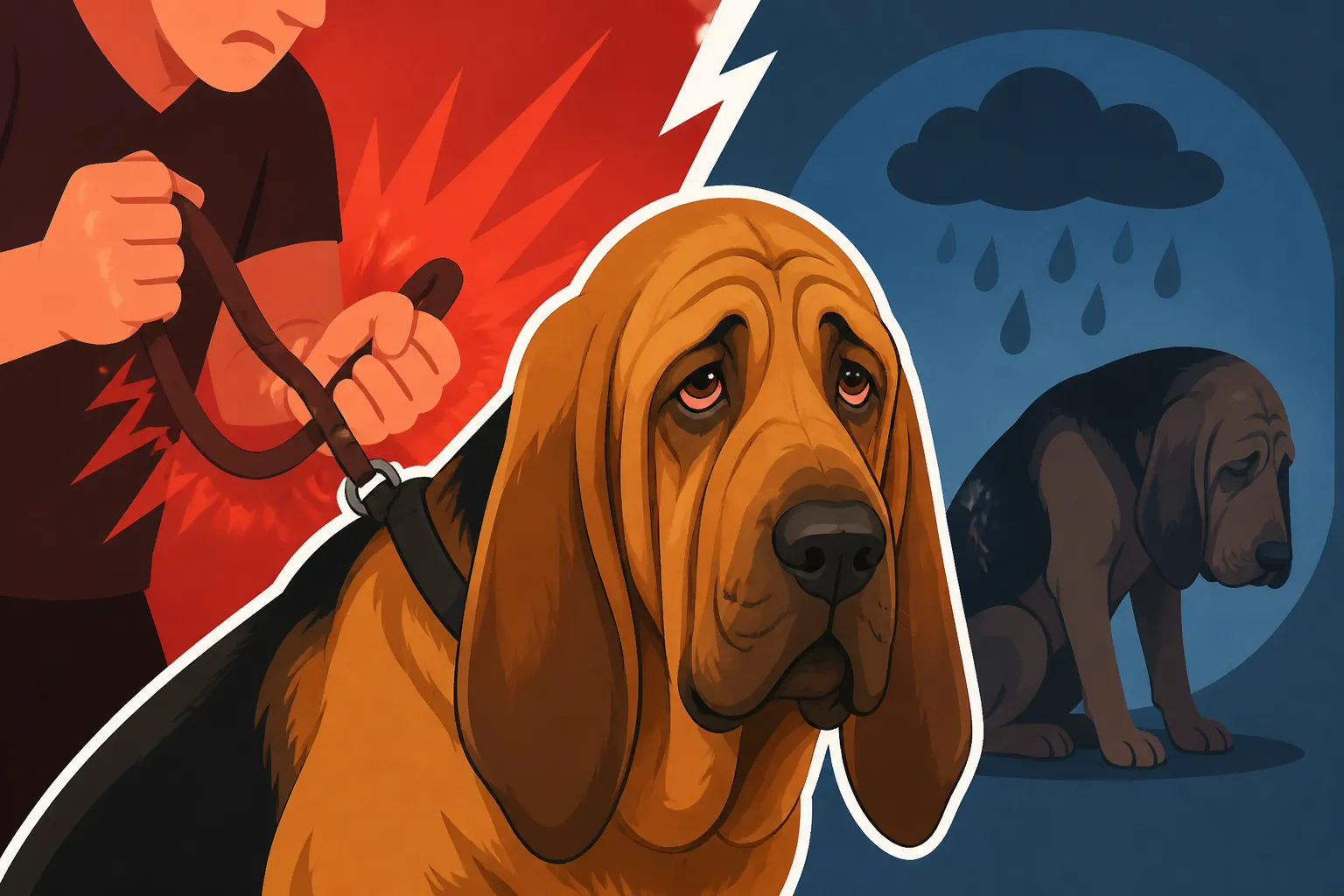
A Bloodhound's bond with its owner is paramount. They are incredibly loyal creatures, but that loyalty is built on trust, consistency, and mutual respect. When harsh handling enters the picture, that trust erodes rapidly. If your Bloodhound associates your presence with discomfort, fear, or pain, they will naturally become wary of you. They might avoid eye contact, shy away from your touch, or simply try to put distance between you and them. This isn't just sad; it makes genuine communication and cooperation almost impossible. The whole point of having a dog is to share a life together, and that becomes difficult when one party feels perpetually threatened by the other.
Think of it from their perspective: the person who is supposed to be their protector, their provider of safety and comfort, is now causing them distress. This profound betrayal can be incredibly damaging to their psyche. Once broken, this trust is exceptionally difficult to rebuild, requiring immense patience and consistent positive interactions. You'll find yourself chasing a dog who is actively trying to avoid you, rather than working alongside a willing partner.
Increased Fear and Anxiety
One of the most common outcomes of harsh handling is a significant increase in fear and anxiety in Bloodhounds. Dogs learn through association. If a certain environment, object, or even a specific command is consistently paired with an unpleasant experience, the dog will begin to fear it. This can manifest in many ways:
- Generalized anxiety: A dog might become jumpy, startle easily, or appear withdrawn even in familiar surroundings.
- Specific phobias: They might develop fear of the leash, the training area, or even the sound of your voice if it's often raised.
- Submissive behaviors: Excessive licking, tucking their tail, crouching, or even urinating when approached.
- Avoidance: Actively trying to escape situations or interactions they anticipate will be negative.
A Bloodhound who is afraid isn't learning effectively; they're merely trying to survive the situation. Their cortisol levels rise, and their ability to think and respond rationally is impaired. This is particularly noticeable when they are on a trail, as fear can completely override their ability to focus on scent. Imagine trying to solve a complex problem while constantly fearing reprisal for a wrong answer – it’s paralyzing.
Suppressed Natural Behaviors
A Bloodhound's most natural behavior is to follow its nose. They are driven by an insatiable curiosity about the world of scent. When harsh handling is used to punish sniffing, pulling on the leash, or baying, these natural, instinctual behaviors become suppressed. While an owner might see this as "success" because the dog is no longer exhibiting the "problem" behavior, it comes at a great cost. The dog isn't learning self-control or alternative behaviors; it's learning to suppress itself out of fear.
This suppression can lead to a duller, less engaged dog. A Bloodhound that is afraid to use its nose is a shadow of its true self. They might hesitate to investigate new smells, even when it's appropriate, or stop engaging in exploratory behaviors that are vital for their mental stimulation. This can lead to boredom, frustration, and eventually, other behavioral problems as their unmet needs boil over. For a breed like the Bloodhound, whose entire existence is so intrinsically linked to their nose, inhibiting this fundamental drive is a grave disservice. Why a Bloodhound Ignores a Cue It Knows often stems from this conflict between instinct and fearful training.
Physical and Psychological Manifestations
The emotional toll of harsh handling doesn't remain hidden; it often expresses itself through both subtle and overt physical and psychological signs. These aren't always immediately obvious to the untrained eye, but understanding them is crucial for recognizing when a Bloodhound is struggling.
Signs of Stress and Aversion
Bloodhounds communicate their stress in various ways. These "calming signals" or stress signs are often missed by owners focused on compliance. Look for:
- Yawning: Not when sleepy, but in stressful situations.
- Lip licking/tongue flicking: Quick, repetitive licks of the muzzle.
- Head turning/averting gaze: Avoiding direct eye contact.
- Tail tucked low or clamped: Indicates fear or submission.
- Crouching or lowering body: Making themselves appear smaller.
- Shaking/trembling: A clear sign of acute fear.
- Excessive shedding: Stress can cause sudden, heavy hair loss.
- Panting (when not hot or exercising): Rapid, shallow breathing.
- Excessive drooling: More than their usual Bloodhound drool!
- Ears flattened or pulled back: Indicates apprehension.
These are not signs of a dog being "stubborn" or "dominant"; they are desperate pleas for the pressure to stop. A Bloodhound that shows these signs repeatedly during training is a dog that is suffering psychologically. They are telling you, in the only way they know how, that they are uncomfortable and distressed by your approach. Recognizing these signals is key to shifting your training strategy to a more humane and effective one.
Development of Apathy or Aggression
Prolonged exposure to harsh handling can lead to one of two extreme outcomes: apathy or aggression. Neither is a desirable trait for a companion animal.
- Apathy (Learned Helplessness): This is when a Bloodhound simply gives up trying to respond or react. They become compliant, but devoid of joy or initiative. They might perform commands but with a flat affect, lacking enthusiasm or engagement. This "shut down" state is heartbreaking, as it means the dog has learned that nothing it does matters, and it's safer to simply exist without expressing itself. They no longer offer behaviors, positive or negative, because they've learned that any attempt to communicate or act on their own volition will be met with an unpleasant response. Whether a Bloodhound Sulks After a Correction isn't sulking, it's often the precursor to learned helplessness.
- Aggression: While Bloodhounds are generally not an aggressive breed, chronic fear and stress from harsh handling can indeed lead to aggression. This is often defensive aggression, meaning the dog is trying to protect itself from perceived threats. A dog that feels cornered, misunderstood, and constantly punished might eventually lash out as a last resort. This could be a snap, a growl, or even a bite, and it's almost always a desperate attempt to create distance or stop an uncomfortable interaction. This is particularly dangerous, as it can damage the human-animal bond irrevocably and put others at risk. It's a tragic outcome, often entirely preventable, and a clear sign that the training approach has failed disastrously.
The Long-Term Toll on Health
Beyond the immediate behavioral and psychological impacts, chronic stress from harsh handling can have a significant long-term toll on a Bloodhound's physical health. Constant fear and anxiety keep a dog's body in a perpetual state of "fight or flight," which has measurable physiological consequences.
- Weakened immune system: Dogs under chronic stress are more susceptible to illness, infections, and slower recovery times.
- Gastrointestinal issues: Stress can manifest as digestive upset, including diarrhea, vomiting, or exacerbating conditions like irritable bowel syndrome. For a breed already prone to issues like Bloat Is What Kills Most Bloodhounds, adding chronic stress to the equation is incredibly risky.
- Increased inflammation: Chronic stress is linked to systemic inflammation, which can worsen joint pain, skin conditions (Skin Fold Dermatitis on a Bloodhound), and other inflammatory diseases.
- Shorter lifespan: While not always directly measurable, a dog living in a constant state of anxiety and fear often experiences a reduced quality of life, and potentially, a shortened lifespan, as their body is under constant strain.
It's clear that the damage from harsh handling isn't just about a broken spirit; it's about a compromised physical body as well. Our Bloodhounds deserve better than to live in a state of perpetual distress.
The Counterproductive Nature of Punishment
Many owners resort to punishment because they genuinely believe it's the fastest or most effective way to stop an unwanted behavior. They might have been advised to use certain tools or techniques that rely on corrections. However, understanding why punishment is counterproductive, especially with a sensitive breed like the Bloodhound, is crucial for pivoting to more successful methods.
Why Punishment Doesn't Teach
The core problem with punishment is that it tells a dog what not to do, but it completely fails to teach them what you want them to do instead. When you correct a Bloodhound for pulling on the leash, you stop the pulling in that moment, but you haven't taught them how to walk politely on a leash. All they've learned is that pulling (or perhaps walking near you) results in an unpleasant sensation. They might try to avoid the sensation by stopping the pulling momentarily, but without an understanding of the desired alternative, they'll often revert to the behavior or simply shut down.
Moreover, punishment doesn't address the underlying motivation for the behavior. A Bloodhound pulls on the leash because What a Bloodhound Is Actually Smelling on a Trail is overwhelmingly interesting, not because they are trying to annoy you. Punishing the pulling doesn't make the scent less interesting; it just makes the act of exploring that scent unpleasant when you're around. This can lead to a dog that still wants to pull but tries to do so sneakily, or one that pulls with a nervous energy, constantly anticipating a correction. It's a cycle of frustration rather than a path to true learning and cooperation.
Creating Association with the Handler, Not the Action
One of the most insidious effects of punishment is that dogs don't always associate the punishment with their action; they often associate it with you, the environment, or other concurrent events. If you consistently yank the leash when your Bloodhound strains towards a tantalizing scent, they might not conclude "I shouldn't pull." Instead, they might conclude:
- "When I'm on a walk with my owner, bad things happen."
- "That harness means pain."
- "Approaching other dogs causes discomfort."
This misassociation can severely damage your relationship. Instead of learning to modify their own behavior, they learn to fear you or the tools you use. This is particularly true for tools like prong collars or electric collars. Why a Prong Collar Is Wrong for a Bloodhound is because it relies on pain to suppress behavior, and the dog learns to fear the collar itself, or the hand holding the leash, rather than understanding what you're asking. Similarly, Why an Electric Collar Is Wrong for a Bloodhound is that it provides an aversive sensation that the dog doesn't understand the origin of, leading to confusion and fear, not learning. A dog that is constantly anticipating pain cannot truly learn or perform optimally.
The Cycle of Frustration for Both Dog and Owner
Harsh handling creates a vicious cycle of frustration for both the Bloodhound and its owner. The owner gets frustrated because the "corrections" aren't leading to lasting change, making them feel like the dog is stubborn or defiant. This often leads to harsher corrections, escalating the problem. The Bloodhound, in turn, becomes more stressed, confused, and fearful, leading to more undesirable behaviors (or a complete shutdown), which then fuels the owner's frustration further.
This cycle can quickly sour the relationship and make life together miserable. Many Bloodhounds are surrendered to rescues because owners become overwhelmed by what they perceive as untrainable stubbornness, when in reality, the methods being used are simply incompatible with the breed's nature. It’s a sad reality that could often be avoided with a shift to more positive, understanding approaches.
Building a Better Bond Through Positive Reinforcement
Instead of breaking a Bloodhound's spirit with punishment, the goal should always be to foster a strong, collaborative relationship built on trust and positive motivation. This approach respects their intelligence and their unique drives, leading to a much happier, more engaged companion.
Valuing Collaboration Over Coercion
With a Bloodhound, you want to be a partner, not a dictator. Collaboration means finding ways to motivate your dog to want to perform desired behaviors, rather than coercing them through fear of consequence. This means understanding What a Bloodhound Will Work For – typically high-value food, favorite toys, or the opportunity to do scent work. When training, instead of forcing compliance, you create scenarios where the correct choice is easy and incredibly rewarding. For instance, if you want your Bloodhound to walk politely on a leash, you reward them heavily for every moment they walk with a loose leash, gradually increasing the duration.
This collaborative approach taps into their natural intelligence and willingness to engage, especially when they understand what's in it for them. It fosters a thinking, engaged dog who is an active participant in training, rather than a passive recipient of commands. It transforms training from a battle of wills into a shared activity that strengthens your bond and makes your Bloodhound eager to learn with you.
Effective Motivation for a Bloodhound
Bloodhounds are driven by their stomach and their nose. These are your most powerful motivational tools! High-value treats (like cooked chicken, cheese, or specialized training treats found on platforms like Amazon) are often incredibly effective. For a breed so focused on scent, incorporating scent games or short bursts of trailing as a reward can be profoundly motivating. Ending a successful obedience session with a short, fun "find it" game using a favorite toy or treat can make them eager for the next session.
It's also important to understand that a Bloodhound needs time to process information. They aren't always immediate in their responses, and that's okay. Patience and clear, consistent cues are more effective than rushing or becoming agitated. How a Bloodhound Responds to a Raised Voice is usually with withdrawal or confusion, not increased effort. Keep your tone positive and encouraging, and celebrate every small success. Even working with trainers through online programs like BAXTER & Bella can help owners understand these nuances and implement effective positive reinforcement strategies.
Rebuilding Trust After Negative Experiences
If your Bloodhound has experienced harsh handling, rebuilding trust is a slow, but incredibly rewarding, process. It requires:
- Stop all aversive methods immediately: Remove any tools or techniques that cause fear or discomfort.
- Become predictable and gentle: Approach your dog calmly, use a soft voice, and make every interaction positive.
- Offer choices: Allow your Bloodhound to choose to engage with you, rather than forcing interaction. Let them come to you for pets or play.
- Use high-value rewards: Make your presence synonymous with good things. Hand-feed meals, offer special treats, and initiate gentle play sessions.
- Small steps: Start with very easy training exercises in a calm environment, rewarding heavily for any engagement. Don't push them too far too fast.
- Seek professional guidance: A certified professional dog trainer specializing in positive reinforcement can provide invaluable support and guidance tailored to your Bloodhound's specific needs and history.
Rebuilding trust can take weeks or even months, but the transformation of a fearful, withdrawn Bloodhound into a confident, affectionate companion is one of the most fulfilling experiences an owner can have.
Practical Alternatives and Recommended Tools
Moving away from harsh handling means embracing new methods and tools that support a positive, force-free approach. This involves understanding what works with a Bloodhound's nature, not against it.
Gentle Training Methods and Techniques
For Bloodhounds, success lies in techniques that engage their minds and their noses, while keeping their sensitive nature in mind.
- Lure and Reward: This involves using a high-value treat to physically guide your Bloodhound into the desired position (e.g., sitting) and then immediately rewarding them. It clearly shows them what you want.
- Capturing: This means waiting for your Bloodhound to naturally offer a desired behavior (like sitting) and then immediately marking and rewarding it. This encourages them to offer more good behaviors.
- Shaping: For more complex behaviors, you reward successive approximations of the final behavior. For example, to teach "down," you might first reward a head dip, then a crouch, then a full down.
- Conditioned Emotional Responses (CERs): Pair something your Bloodhound fears (like the sound of the doorbell) with something they love (like treats). Over time, their emotional response to the feared stimulus changes from negative to positive.
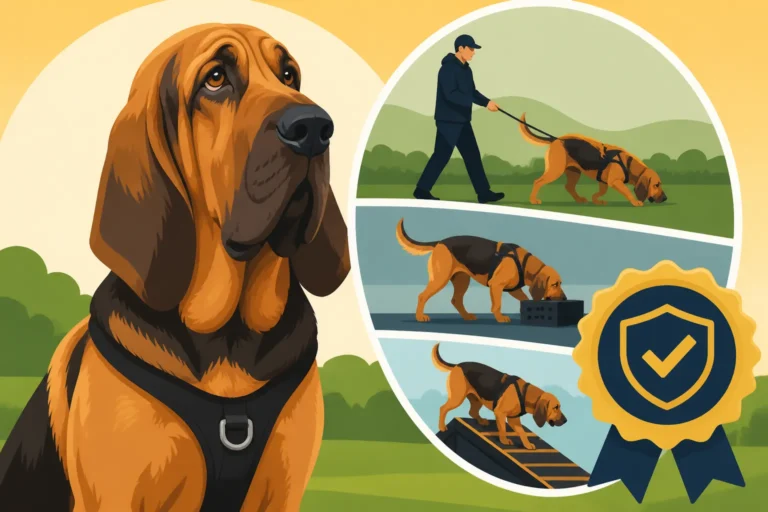
- Mantrailing/Scent Work: This is perhaps the ultimate "gentle training" for a Bloodhound. It leverages their natural abilities, provides immense mental and physical enrichment, and builds a strong working relationship. Engaging in activities like these with guidance, perhaps through programs or equipment found on Amazon, can be incredibly beneficial. Whether a Pet Bloodhound Should Do Scent Work Classes is almost always a resounding yes!
These methods rely on positive reinforcement, making learning a fun and rewarding experience, rather than a source of stress.
Appropriate Equipment Choices
The right equipment can make a world of difference in preventing the need for harsh corrections and ensuring your Bloodhound's comfort and safety.
- Harnesses: A well-fitting, comfortable front-clip harness is often ideal for Bloodhounds. It discourages pulling by redirecting their momentum without putting pressure on their sensitive throat or causing pain. Avoid harnesses that restrict shoulder movement or cause chafing.
- Long Lines: Since off-leash is generally not safe for a Bloodhound due to their powerful scent drive (Why Recall Fails on a Bloodhound Outdoors), a long line (15-30 feet) allows them freedom to explore scents safely in a controlled environment. Ensure the long line is made of durable, comfortable material. What a Mantrailing Harness and Long Line Cost is a worthy investment for their enrichment and your peace of mind.
- Proper Collar: A wide, flat buckle collar should be used for identification tags only, not for leash attachment during walks. If you must attach a leash to a collar for very short, calm moments, ensure it's wide enough to distribute pressure evenly across their neck.
- Snoods: While not a training tool, snoods are essential for Bloodhounds to keep their long ears out of food and water bowls, preventing infections and keeping them clean. What a Snood Does for a Bloodhound is to protect their unique anatomy.
| Training Approach | Focus | Primary Method | Impact on Bloodhound | Relationship with Owner | Effectiveness for Bloodhounds |
|---|---|---|---|---|---|
| Harsh Handling | Suppressing unwanted behaviors | Punishment, Correction | Fear, Anxiety, Apathy, Aggression | Damaged Trust, Avoidance | Low; short-term suppression, long-term problems |
| Positive Reinforcement | Teaching desired behaviors | Reward, Motivation | Confidence, Engagement, Joy | Strong Trust, Collaboration | High; fosters willingness and lasting learning |
Seeking Professional Guidance
If you're struggling with a Bloodhound who has a history of harsh handling or are new to positive reinforcement, seeking professional guidance is one of the best investments you can make. Look for trainers who are:
- Certified Professional Dog Trainers (CPDT-KA/KPA-CTP): These certifications indicate a commitment to ethical, science-based training methods.
- Force-Free/Positive Reinforcement Only: Ensure they explicitly state they do not use aversive tools or methods.
- Experienced with Scent Hounds: A trainer who understands the unique drives and challenges of Bloodhounds can offer tailored advice.
- Offer in-home or virtual consultations: This allows the trainer to observe your Bloodhound in their natural environment and provide personalized strategies.
A good trainer can help you understand your Bloodhound better, develop effective communication strategies, and create a positive training plan that sets both you and your hound up for success. Remember, Bloodhounds are incredible companions, and with the right approach, they can truly flourish.
Disclaimer
This article is for general informational purposes only and does not constitute professional advice. Laws, prices and regulations vary by location and change over time. Consult a qualified professional for guidance on your specific situation.