Whether a Long Line Replaces Off Leash for a Bloodhound
That dream of letting your Bloodhound bound freely across an open field, ears flying in the wind, only to come galloping back to your side the moment you call their name? It’s a beautiful picture, isn’t it? But for most Bloodhound owners, that vision exists purely in the realm of fantasy. The reality of a Bloodhound’s profound scent drive makes true, reliable off-leash freedom a dangerous pipe dream. This guide will explore why a long line isn't just a training tool, but a crucial, permanent replacement for off-leash activity, offering a safe and enriching compromise for these incredible scent hounds.
The Irresistible Call of the Scent: Why Off-Leash Is a Fantasy for Most Bloodhounds
Let's be brutally honest: owning a Bloodhound means acknowledging that their nose dictates their world. While we might dream of leisurely strolls with our dogs trotting amiably by our side, a Bloodhound's brain is constantly processing an overwhelming tapestry of scents. To ask them to ignore this rich, fascinating world for the sake of an arbitrary human command is, quite frankly, asking them to be something they are not.
The Bloodhound's Nose Reigns Supreme
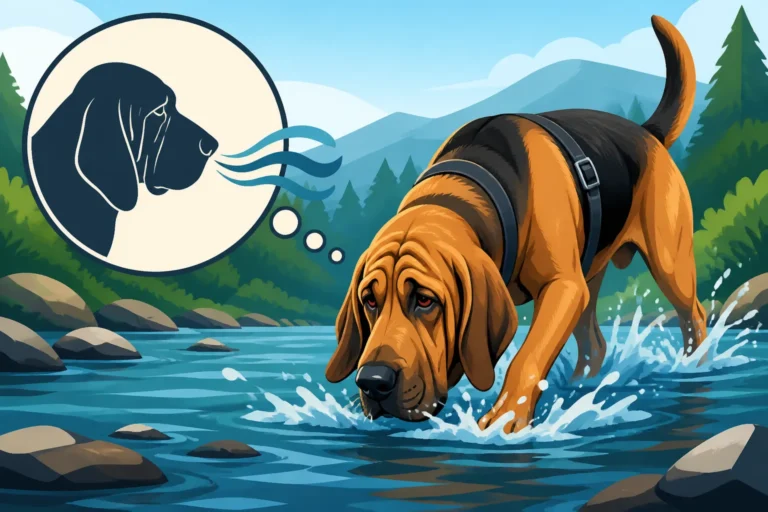
Imagine having a superpower, an ability so profound it overrides all other senses and instincts. For a Bloodhound, that superpower is their nose. They possess an astounding number of scent receptors – estimates often put it at hundreds of millions more than humans – and their unique facial structure, with those magnificent long ears and dewlaps, actually aids in sweeping and trapping scent particles. When a Bloodhound catches a compelling trail, it’s not merely interesting; it’s an urgent, all-consuming mission.
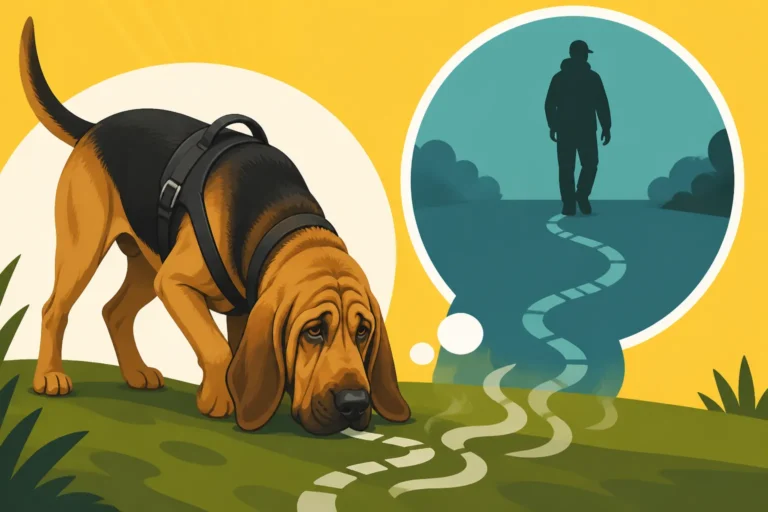
This isn't them being "stubborn" or "disobedient" in the way we might think of other breeds. It's a primal, hardwired drive that evolved over centuries. Their very purpose was to follow a scent to its conclusion, regardless of terrain, distractions, or fatigue. A Bloodhound on a hot trail essentially enters a trance-like state. Your voice, your treats, your presence – they all become distant, muffled echoes in the face of that overwhelming olfactory data. It’s not that they don’t know your commands; it’s that their brain has temporarily rerouted all processing power to the pursuit of scent.
The Disconnect Between Command and Instinct
This brings us to the common frustration: "My Bloodhound knows 'come' perfectly well in the backyard, but outside, they just ignore me!" This isn't a flaw in your training (though we can always improve!), but a fundamental aspect of the breed. When a Bloodhound "ignores a cue it knows" outdoors, it's often because the instinct to trail has completely eclipsed their learned responses. The reward of finding the source of that fascinating smell is infinitely more compelling than the treat you might offer or the praise you might bestow.
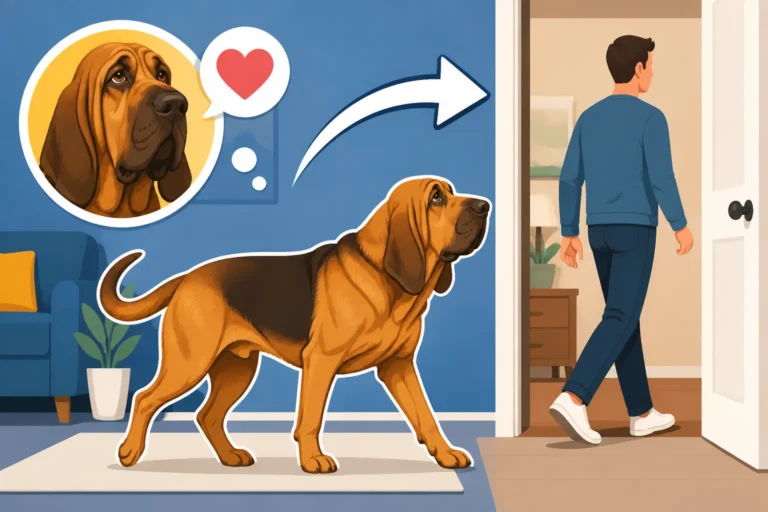
Consider a scenario: you're walking your Bloodhound, Fido, in a seemingly open park. You've practiced recall for months, and Fido is usually great. You decide to let him off leash for just a moment. Suddenly, Fido catches a whiff – perhaps a squirrel that scampered through hours ago, or a deer that bedded down in the tall grass overnight. His head drops, his tail begins to wag with that characteristic low-slung sweep, and he's off. He's not running from you, he's running to the scent. In a matter of seconds, that massive, powerful body can cover an astonishing amount of ground. You call, you plead, you whistle – but Fido is already in a different dimension, utterly absorbed. The distance he can put between you and himself in mere moments is truly frightening, and the further he gets, the less likely your voice will even register.
The Real Dangers of Unrestrained Wandering
Beyond the heartbreak of feeling ignored by your beloved companion, the real danger of letting a Bloodhound off leash is paramount. Their nose can lead them into incredibly perilous situations. Roads become invisible when a compelling scent crosses them. A busy street, a highway, or even a quiet country lane can become a death trap if Fido decides to follow a rabbit's trail straight across.
They are also incredibly prone to getting lost. While their nose can guide them to a scent, it doesn't necessarily guide them back to you. They can cover miles in their pursuit, often ending up in unfamiliar territory. Imagine the panic as you stand in an empty field, calling their name, knowing they could be anywhere, blindly following a trail into a dangerous situation. It's a terrible risk to take. This is why for a Bloodhound owner, understanding How Far a Loose Bloodhound Will Travel is not just academic; it’s a critical safety concern. A microchip is a bare minimum, but preventing them from becoming lost in the first place is always the primary goal.
Understanding the Long Line: More Than Just a Long Leash
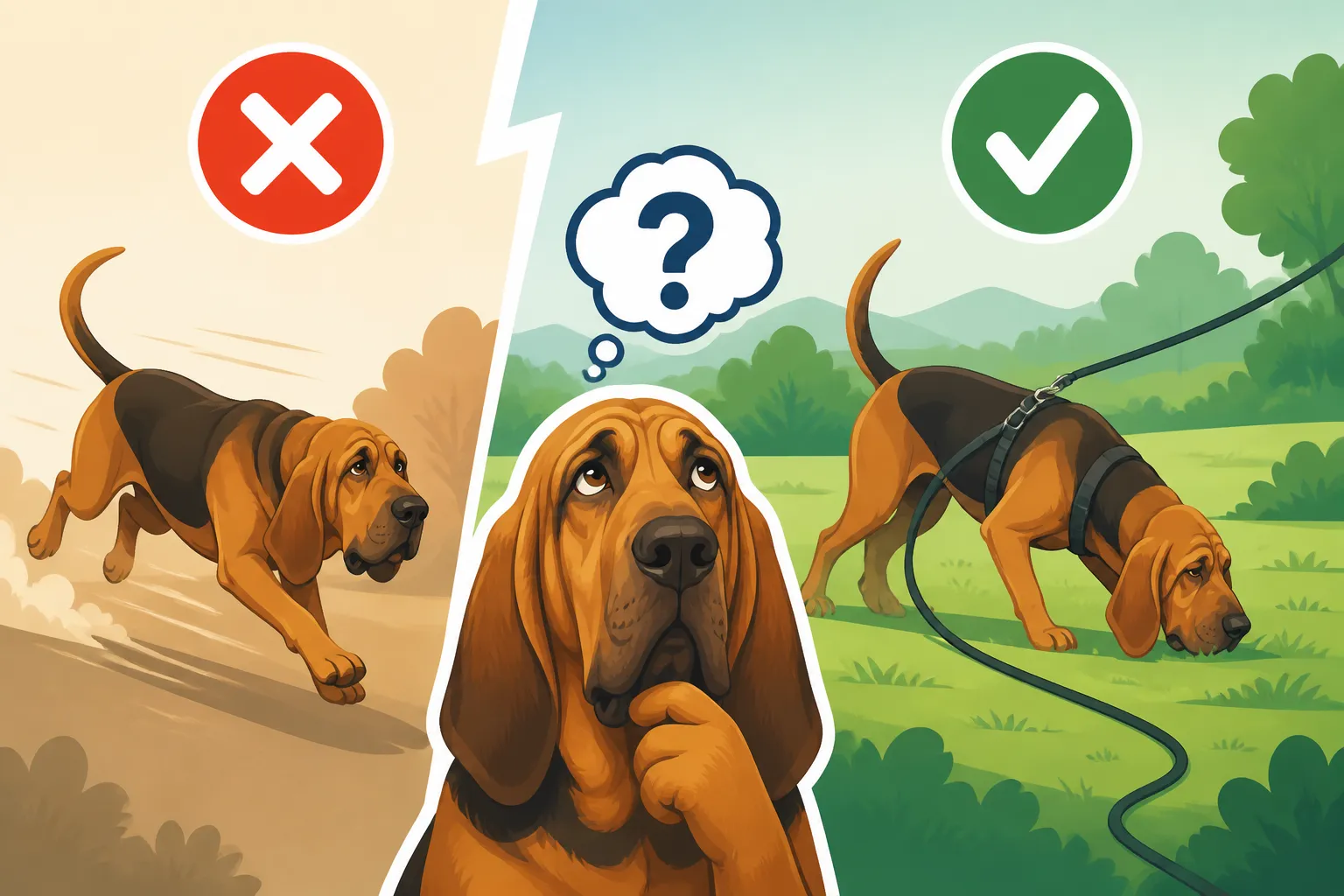
Given the inherent risks and overwhelming instincts of a Bloodhound, the concept of a long line emerges not as a compromise, but as a superior, safer, and ultimately more enriching alternative to true off-leash freedom. It's not just a longer version of a regular leash; it's a specialized tool that fundamentally changes how you interact with your scent hound outdoors.
What Defines a "Long Line" for a Bloodhound
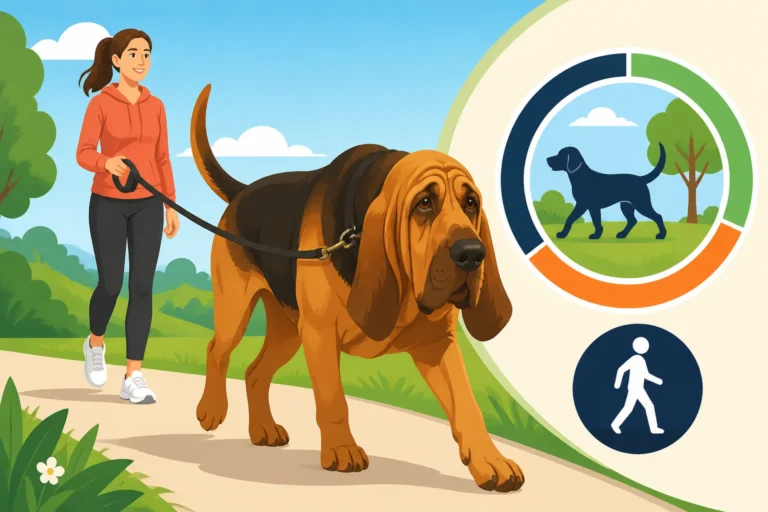
A long line, particularly for a large, powerful breed like a Bloodhound, is generally much longer and often made of different materials than your everyday walking leash. While a standard leash might be 4-6 feet, a long line typically ranges from 15 to 50 feet, or even longer for specialized training. For a Bloodhound, a length of 20-30 feet often strikes a good balance between giving them room to roam and allowing the handler to maintain control without excessive line management.
The material is also key. Traditional nylon leashes can be uncomfortable to hold, especially if your Bloodhound suddenly takes off after a scent, causing rope burn. Materials like Biothane, a coated webbing, are excellent for long lines. They are waterproof, easy to clean (a huge plus for a dog whose nose spends a lot of time on the ground!), durable, and offer a better grip without the severe friction burns of nylon. Companies widely available on platforms like Amazon offer various materials and lengths, so you can find one that feels right in your hand. The goal is to provide enough slack for your dog to explore a wide radius, follow interesting trails, and engage their powerful nose, all while still being physically connected to you.
The Philosophy Behind Long Line Training
The core philosophy of using a long line with a Bloodhound isn't about rigid obedience commands at a distance. It's about managed freedom and fostering their natural instincts in a safe, controlled environment. Think of it as allowing your Bloodhound to "be a Bloodhound" without putting them or others at risk. It's about providing enrichment that satisfies their profound need to sniff, track, and explore, which is their most fundamental form of mental and physical exercise.
Instead of fighting their natural drive, the long line embraces it. It allows your Bloodhound to drop their nose and truly investigate a scent trail, meandering and problem-solving in a way that a short leash simply can't accommodate. You become a participant in their exploration, an anchor, rather than a constant inhibitor. This managed freedom reduces frustration for the dog, allows for natural behaviors, and ultimately strengthens the bond between you and your Bloodhound because you are facilitating their greatest joy. It shifts the dynamic from "don't go there" to "go explore, and I'm right here with you."
Equipment Essentials for Long Line Work
Having the right gear is non-negotiable for effective and safe long line work with a Bloodhound. First and foremost, a comfortable and secure harness is essential. Never, ever attach a long line to a collar. The sudden jerks and stops that can occur when a Bloodhound hits the end of a long line, especially if they're moving at speed, can cause severe neck and tracheal damage. A well-fitting, Y-front harness that distributes pressure across the chest and shoulders is vital. This protects their delicate throat and spine.
You'll also want to consider hand protection. Wearing gloves is highly recommended, especially when first getting accustomed to managing a long line, or if your Bloodhound has a particularly strong pull. Even with a good material like Biothane, a fast-moving Bloodhound can cause rope burn if the line slips through your fingers. Finally, choose a line thickness and hardware (snaps) appropriate for your Bloodhound's size and strength. A flimsy line or weak snap could break, defeating the entire purpose of safety. The choice of harness is particularly important; understanding Which Harness a Bloodhound Trails In can make a huge difference in comfort and safety for both of you. Many specialized harnesses designed for tracking and trailing are readily available from pet supply retailers on Amazon.
Practical Applications: How a Long Line Can Mimic Off-Leash Freedom
Once you've embraced the long line as your Bloodhound's primary method for outdoor exploration, you'll discover a world of possibilities that truly mimics the freedom you once imagined, but with added safety and control. It's about adapting your activities to their natural talents, rather than trying to force them into a mold that doesn't fit.
Exploring Safely in Open Spaces
Imagine a vast, open field, or a quiet, wooded trail in a state park. With a long line, your Bloodhound can experience these environments to the fullest. You can let the line trail behind them, giving them the full length to wander and investigate. As they move, the line provides just enough resistance for you to be aware of their direction and speed. If they get too far ahead, or start heading towards a potential hazard, you can gently step on the line to stop them, or gather it in to redirect.
This allows them to weave through brush, circle interesting trees, and put their nose to the ground for extended periods without you needing to hover right over them. It's a beautiful sight to watch a Bloodhound truly immersed in their work, following a faint game trail or deciphering the story left by a passing person. This managed freedom allows for deep mental stimulation, tireing them out in a much more profound way than a simple walk on a short leash. They get to engage their most powerful sense, fulfilling their purpose.
Scent Work and Mantrailing on the Line
This is where the long line truly shines for a Bloodhound. Their breed was literally developed for tracking, and a long line is the quintessential tool for engaging them in actual scent work or mantrailing. Instead of just "walking," you are now enabling them to work. You can hide a "runaway" (a friend or family member) a distance away, or simply let your Bloodhound follow the faintest human or animal scent across a field.
The long line allows you to stay connected to your dog while they lead the way, nose to the ground, pulling purposefully. You learn to read their body language, understanding when they've "found" the scent, when they've lost it, and when they're working hard to regain it. This activity isn't just exercise; it's intellectual stimulation of the highest order for a Bloodhound. Many Bloodhound owners find that Mantrailing Is the Answer to a Bloodhound, Not Obedience, and the long line is absolutely central to this pursuit. If you have a puppy, even starting them early with a Starting a Bloodhound Puppy on a Trail with a short long line can build confidence and harness their natural abilities.
Building and Reinforcing Recall and Engagement
While the primary goal of a long line isn't traditional off-leash recall, it's an invaluable tool for practicing and reinforcing a reliable recall in varying environments. You can let your Bloodhound explore to the end of the line, then call them back, using the line as a gentle guide if they get too distracted. This provides a safety net that allows you to teach them that coming back to you, even when there are fascinating smells, is rewarding.
The key is to make coming back to you the best thing ever. Use high-value treats, enthusiastic praise, and playful interaction. The long line prevents them from truly blowing you off, allowing you to ensure they succeed at coming back. Over time, this consistent, positive reinforcement builds a stronger understanding of recall, even if you never intend to remove the line entirely. Training platforms like BAXTER & Bella often emphasize positive reinforcement and structured practice, which pairs perfectly with long line work to build a more engaged and responsive Bloodhound. The long line helps to bridge the gap between their natural drive and your need for safety and connection.
Challenges and Considerations for Long Line Use with a Bloodhound
While a long line offers incredible benefits, it's not simply a matter of attaching it and letting your Bloodhound run wild. There are specific challenges and considerations that handlers need to be aware of to ensure safety, effectiveness, and enjoyment for both dog and human.
The Handler's Responsibility and Awareness
Using a long line effectively requires constant vigilance and active participation from the handler. This isn't a tool for simply zoning out while your dog sniffs. You need to be acutely aware of your surroundings: other dogs, people, children, cyclists, potential hazards like barbed wire fences, or deep puddles. The line itself needs constant management. It can easily get tangled around your legs, your dog's legs, trees, or bushes. You'll develop a rhythm of gathering the line in as your dog approaches and paying it out as they move away, always keeping some slack but never letting it get completely out of control.
A Bloodhound's strength means a sudden lunge can easily pull you off balance, especially if the line snags. Being prepared, wearing appropriate footwear, and keeping your hands protected are all part of the handler's responsibility. This isn't a casual stroll; it's an active engagement where you are constantly assessing the environment and managing your dog's movement, essentially becoming their mobile anchor and safety controller.
Environmental Factors and Line Management
Different environments present different long line challenges. A wide-open, mown field is often the easiest place to start, as there are fewer obstacles for the line to snag on. However, if your Bloodhound is truly trailing, they'll inevitably lead you into more challenging terrain. Mud, tall grass, thorny bushes, and dense undergrowth can quickly turn your long line into a tangled mess. Keeping the line clean, especially if it’s dragging through mud or water, becomes another consideration. Materials like Biothane, as mentioned, are a godsend for their easy-to-clean properties.
Think about the "sniffari" experience: your Bloodhound might weave in and out of trees, leading to the line wrapping around trunks. You'll need to learn to anticipate this, guiding your dog around obstacles or quickly unwrapping the line. In more urban or semi-urban environments, the long line becomes a greater challenge due to increased pedestrian traffic, parked cars, and potential for the line to become a tripping hazard for others. Always assess the environment carefully before deploying a long line, and be prepared to use a shorter lead if the area is too crowded or complex.
Public Perception and Etiquette
One of the biggest, and often most frustrating, challenges of using a long line is public perception. To many people, a dog on a long line looks exactly like a dog off leash. They might not understand the subtle distinction or the safety you are actually maintaining. This can lead to unwanted interactions, concerned glances, or even confrontations. People might assume your dog is uncontrolled or simply let their own off-leash dog approach yours, unaware that your Bloodhound, while connected, still has a wide radius for exploration.
It's important to be a good ambassador for long line use. Always maintain control, even if it means reeling your dog in as someone approaches. Be ready to politely explain that your dog is not off leash but on a long training line for scent work or safe exploration. Maintaining respectful distance from others, especially children or other dogs, is paramount. This proactive approach helps mitigate potential issues and educates the public about responsible Bloodhound ownership and the necessity of such tools for specific breeds.
Long Line vs. Traditional Off-Leash: A Philosophical Divide
The decision to use a long line as a permanent feature of your Bloodhound's life isn't just practical; it's a philosophical shift in how you view their freedom and capabilities. It acknowledges and respects their innate design rather than fighting against it, leading to a more harmonious relationship.
Redefining "Freedom" for a Scenthound
For many dog owners, "freedom" means the ability to run unfettered, to play fetch, and to return instantly on command. For a Bloodhound, true freedom lies in the liberty to scent. Their joy isn't primarily in running for running's sake (though they enjoy a good gallop!), but in engaging that magnificent nose, deciphering the world through its olfactory tapestry. A short leash, by design, restricts this profound need. It keeps their head up, constantly pulling them away from the ground where their most vital work takes place.
The long line redefines this. It provides the "freedom" that matters most to a Bloodhound: the ability to drop their head, zig-zag across a field, and follow a trail without constant human interruption, all while remaining safely connected. It allows them to fulfill their destiny as scent hounds. This isn't a lesser form of freedom; it's a more authentic freedom for their specific breed. It allows them to truly express their nature, which is a far more enriching experience for them than the anxiety-inducing attempt at unreliable off-leash recall.
The Unrealistic Expectation of Off-Leash Reliability
It's common for new Bloodhound owners, or those unfamiliar with the breed, to harbor the expectation that with enough training, their Bloodhound will achieve reliable off-leash recall. This expectation, while understandable, is often unrealistic and sets both dog and owner up for failure and frustration. Bloodhounds simply aren't built like Golden Retrievers or Border Collies, breeds often celebrated for their off-leash prowess. Those breeds have been selectively bred for generations to work with humans, to look to their handlers for direction, and to find satisfaction in cooperation.
Bloodhounds, on the other hand, were bred to independently follow a trail, to be relentless and singular in their focus. Their reward is the trail itself, not necessarily human praise. To expect them to consistently ignore this deep-seated, genetic imperative in favor of your voice is to misunderstand the very essence of the breed. This is why Why Off Leash Is Not a Goal With a Bloodhound is such an important concept to grasp early on. Trying to force a Bloodhound into an off-leash mold is like asking a fish to climb a tree; it’s not what they were designed to do, and it only leads to stress and disappointment for all involved.
The Long Line as a Lifestyle Choice
For many dedicated Bloodhound owners, the long line isn't a temporary training aid or a fallback option; it becomes a fundamental part of their lifestyle. It’s the primary way they enjoy the outdoors with their dog, allowing for safe, enriching, and deeply satisfying adventures. It allows them to explore new parks, hike new trails, and engage in scent work without the constant worry of their dog disappearing over the horizon or into traffic.
Embracing the long line means accepting your Bloodhound for the magnificent, unique creature they are. It means providing them with the tools to live their best, most fulfilled life, celebrating their extraordinary nose and independent spirit, rather than trying to suppress it. This isn't about giving up on training; it's about training smarter, in a way that aligns with your Bloodhound's deepest instincts. It’s a commitment to their safety and happiness, ensuring that every outdoor excursion is an opportunity for discovery and connection, all while keeping them securely tethered to their loving human.
Here's a quick comparison to help visualize the difference:
| Feature/Consideration | True Off-Leash (for Bloodhounds) | Long Line (for Bloodhounds) |
|---|---|---|
| Recall Reliability | Extremely low, highly risky | High, with handler intervention & practice as safety net |
| Scent Exploration | Uncontrolled, potential for danger | Controlled, managed freedom for deep engagement |
| Handler Control | Minimal once on scent | Constant physical connection, ability to redirect |
| Safety for Dog | High risk (traffic, getting lost) | High, prevents escape & severe injury from hazards |
| Safety for Public | Risk of approach/collision | Managed distance, ability to prevent unwanted interactions |
| Enrichment for Dog | High if scent is available, but dangerous | High, allows for fulfilling natural behaviors without danger |
| Stress for Handler | Very high, constant anxiety | Moderate, active management required, but reduces panic |
| Required Equipment | Collar/Harness (for ID) | Durable long line (20-50ft), secure harness, gloves |
Disclaimer
This article is for general informational purposes only and does not constitute professional advice. Laws, prices and regulations vary by location and change over time. Consult a qualified professional for guidance on your specific situation.