How Old a Trail a Bloodhound Can Follow
One of the most awe-inspiring aspects of owning a Bloodhound is their incredible nose, but it also leads to a common question (and sometimes a big frustration): just how old of a scent can they actually follow? It's not a simple answer, and many factors can make or break a trail, leaving owners wondering if their amazing hound has hit a wall or if conditions are just conspiring against them. This guide will dive deep into the science, training, and real-world limits of a Bloodhound's ability to pick up and follow old trails, helping you understand the complex world of canine scent work.
The Factors That Determine a Trail's Age-Worthiness
When we talk about how "old" a trail a Bloodhound can follow, it's never a single number. Instead, it's a dynamic interplay of many environmental and physiological factors that either preserve or degrade the scent picture. As owners, it's easy to get caught up in the ideal, but reality often dictates what's possible.
Weather Conditions and Scent Preservation
Imagine trying to follow a trail of footprints in fresh snow versus trying to find those same prints after a blizzard. Scent works similarly. Weather is arguably the most significant external factor influencing how long a trail remains viable for a Bloodhound. A trail laid on a cool, overcast, and calm day will persist far longer than one laid during a hot, windy downpour.
Humidity, for instance, can be a Bloodhound handler's best friend. Moist air helps "hold" scent molecules closer to the ground, preventing them from evaporating too quickly or being scattered by wind. Think of a damp forest floor – the air is heavy with the smell of leaves and earth. Conversely, dry conditions accelerate evaporation, quickly dissipating the volatile organic compounds (VOCs) that make up a human scent signature. Rain is a double-edged sword: a light drizzle can enhance scent by moistening surfaces and preventing dust, but a heavy downpour can literally wash away a trail, especially on paved surfaces or sparse vegetation. And then there's wind, the nemesis of any scent dog. Even a gentle breeze can carry scent molecules away from the path of travel, creating a "scent cone" that widens with distance, making it harder for the dog to discern the precise line of travel. This is why sometimes a Bloodhound seems to work adjacent to the actual path.
Terrain and Surface Interaction
The surface on which a trail is laid plays a crucial role in how well it holds scent. Different materials absorb and retain scent differently, creating distinct challenges for a Bloodhound. Grassy fields, for example, tend to be excellent scent traps. The vegetation offers multiple surfaces for scent particles to cling to, and the underlying soil can absorb and hold scent for extended periods. This is often where Bloodhounds perform their most impressive feats on older trails.
Conversely, asphalt or concrete can be quite difficult. These hard, non-porous surfaces don't absorb scent well, and heat from the sun can quickly bake away any lingering scent molecules. Imagine a hot summer day in a city – the pavement can become a scent graveyard. Urban environments also present a host of contaminating odors from exhaust fumes, trash, and other human activity, further muddying the scent picture. Water, too, can be a major disruptor. While some Bloodhounds can follow a trail through shallow streams or even swim across small bodies of water, a significant water crossing often marks the end of a continuous ground trail, requiring the handler to anticipate where the subject might emerge. This requires advanced handling skills and an understanding of human behavior in an escape or lost scenario.
Human Factors and Trail Integrity
The person laying the trail – or, in a real search, the missing person – also contributes significantly to how old a trail a Bloodhound can follow. Every individual sheds skin cells, sweat, and other microscopic particles constantly, creating a unique scent signature. However, the amount of scent left can vary. A person actively moving, especially if they are stressed, sweating, or wearing certain types of clothing, will shed more scent than someone who is simply walking casually. What a Bloodhound Is Actually Smelling on a Trail goes into more detail about these specific components.
Consider the footwear of the missing person: bare feet leave a very direct, intense scent on the ground, but also make a person vulnerable to injury and thus limit travel distance. Shoes leave scent from the soles, but also pick up and drop ambient scent from the environment. A person who is careful to avoid touching surfaces, or who is moving very slowly and deliberately, might leave a fainter trail than someone crashing through undergrowth. The "contamination" factor is another human element. If many people have walked over the same area after the missing person, their collective scent can dilute or confuse the primary trail, making it much harder for even a top-tier Bloodhound to isolate the target odor. This is why preserving the scene of a missing person is critical for successful trailing.
The Science Behind Scent Degradation
Understanding how scent "breaks down" is key to appreciating the Bloodhound's incredible, yet finite, capabilities. It's not just about scent disappearing; it's about a complex biological and chemical process.
Volatile Organic Compounds (VOCs) and Evaporation
At the heart of human scent are volatile organic compounds (VOCs). These are chemical molecules that readily vaporize at room temperature, allowing us (and dogs!) to smell them. Our bodies produce a unique cocktail of these VOCs through sweat, skin oils, breath, and cellular shedding. When a person moves through an environment, these VOCs are deposited on surfaces. Initially, the concentration of these fresh VOCs is high, making for a strong, easy-to-follow trail.
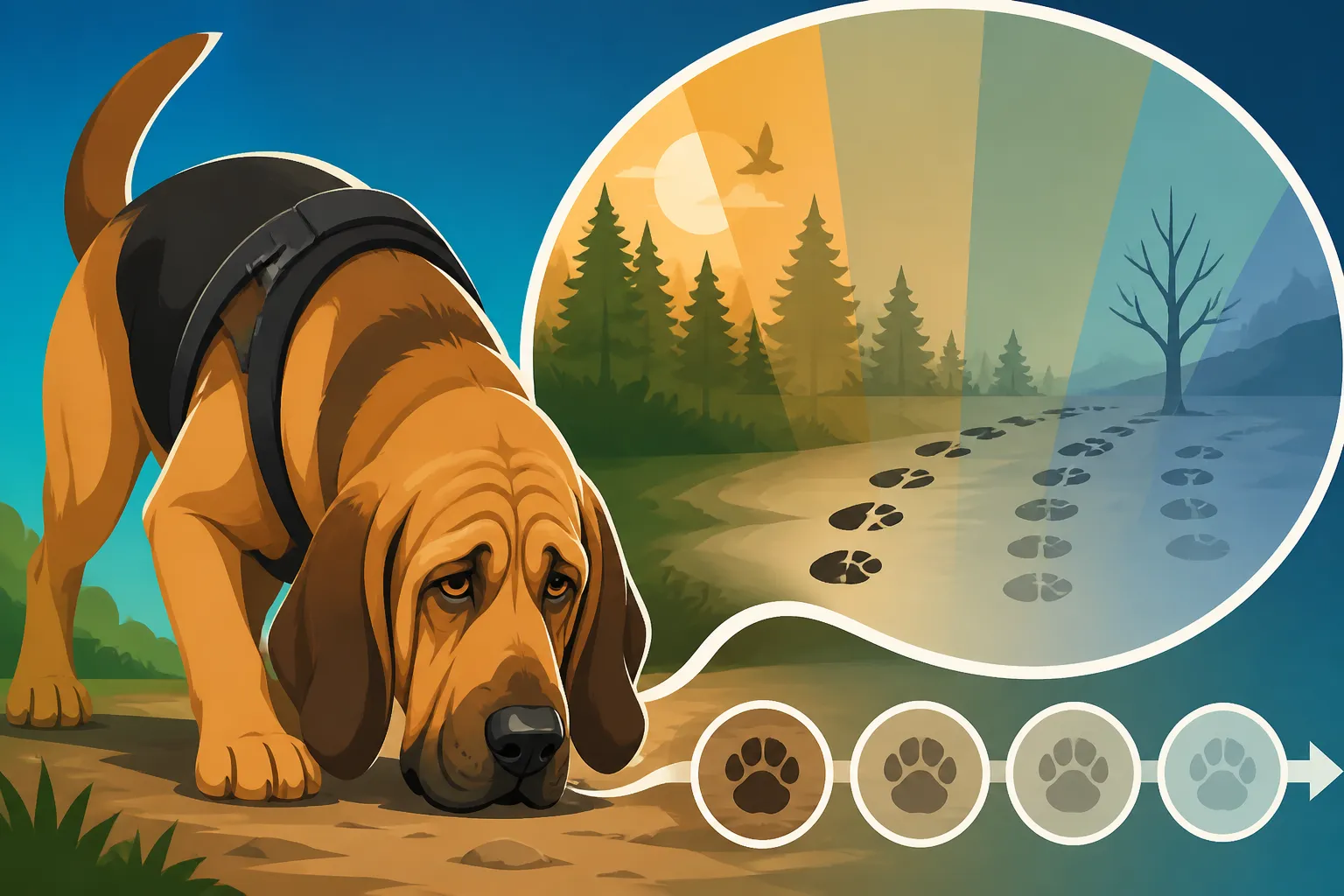
However, as time passes, these VOCs begin to evaporate into the atmosphere. This process is accelerated by heat and wind, as discussed earlier. Imagine a spilled cup of coffee: when it's hot, the aroma is strong, but as it cools and evaporates, the smell fades. The same principle applies to human scent. The rate of evaporation depends on the specific VOCs present, their molecular weight, and the ambient conditions. Some lighter, more volatile compounds will dissipate quickly, while heavier, less volatile compounds might linger longer. This differential evaporation means that the "scent picture" a Bloodhound is working with changes over time, becoming less complete and more diffuse.
Microorganisms and Environmental Breakdown
It's not just evaporation that erodes a scent trail; microscopic life plays a significant role too. Bacteria, fungi, and other microorganisms present in the soil and on environmental surfaces feed on the organic matter within human scent (like skin cells and sweat). As these microorganisms break down the organic material, they alter the chemical composition of the scent. This process of decomposition can change the odor profile of the trail, presenting a different set of cues to the Bloodhound than a fresh trail would.
Think of it like this: a fresh apple smells distinctly like an apple. But if you leave that apple out for a few days, it starts to break down, and the smell changes – it might become musty or fermented due to microbial action. A Bloodhound, with its unparalleled olfactory system, is often able to interpret these changing scent profiles, but it requires a more sophisticated level of processing. They are not just smelling the original VOCs, but also the byproducts of their decomposition. This is why a Bloodhound's nose is so much more than a simple detector; it's a highly sophisticated chemical analyzer. It's truly a marvel to witness.
Persistence of Human Scent Components
Despite evaporation and microbial breakdown, certain components of human scent can persist for surprisingly long periods. Skin rafts – microscopic flakes of skin that we constantly shed – are particularly durable. These rafts can cling to surfaces, get trapped in vegetation, or settle into crevices, protecting their embedded scent molecules from rapid environmental degradation. These tiny skin cells act like miniature time capsules for scent.
These more robust scent components are often what allow Bloodhounds to work truly aged trails, sometimes days or even weeks old, under ideal conditions. While the initial, easily evaporative VOCs might be long gone, the more persistent elements provide enough information for the dog to reconstruct a trail. It's less about a continuous "line" of fresh scent and more about a scatter of persistent scent particles that the Bloodhound connects into a coherent path. This ability to piece together a fragmented scent picture from residual components is a testament to How Many Scent Receptors a Bloodhound Has and their specialized olfactory anatomy. This is also why careful handling, such as avoiding walking directly on the scent line, is crucial in protecting these precious remaining scent components.
How Bloodhounds Are Trained for Aged Trails
Training a Bloodhound to follow old trails is an art form, built on patience, consistency, and a deep understanding of their natural instincts. It's a far cry from basic obedience, requiring specialized techniques to harness their incredible nose. Many owners turn to reputable online resources, like those offered by BAXTER & Bella, for guidance on foundational training that can lead to advanced scent work.
Early Scent Introduction and Foundation
The journey to trailing old scent begins almost from puppyhood. While formal aged-trail training doesn't start with a tiny pup, early scent introduction is foundational. Puppies are exposed to various human scents in low-pressure, positive environments. This could involve playing games where they follow a short, fresh trail to a hidden person or toy, always ending in a huge reward. The goal is to build extreme confidence and a powerful positive association with following a scent to a "find."
Trainers often use a helper (the "quarry" or "runner") who is a trusted, friendly person that the puppy adores. The helper lays a very short, fresh trail, and the puppy is enthusiastically encouraged to follow. The reward at the end is monumental – lots of praise, play, and high-value treats. This repetitive process teaches the Bloodhound that tracking a human scent leads to an incredibly satisfying outcome. It's about building their drive and making scent work the most exciting thing in their world. This foundational period also helps develop the stamina and focus needed for longer, more challenging trails later on, which can be seen in The First Year With a Bloodhound That Already Wants to Trail.
Progressive Aging of Trails
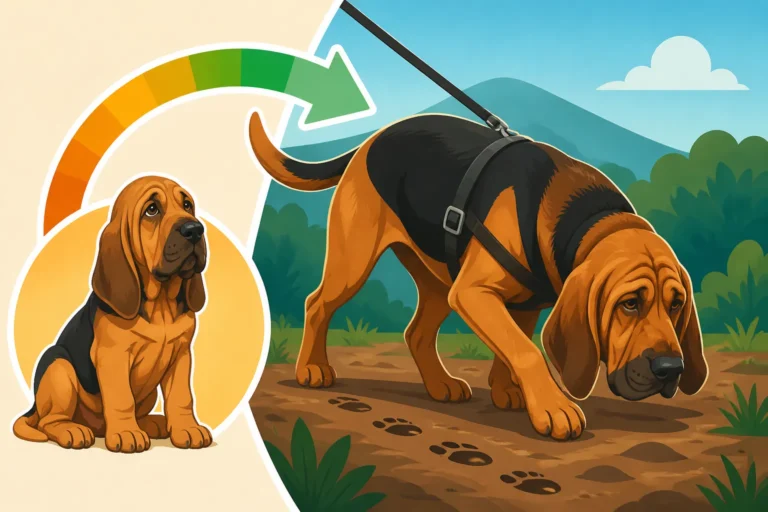
Once a Bloodhound has mastered fresh trails and demonstrated a strong, consistent drive, the real work of aging trails begins. This is a gradual, systematic process. Trainers start by letting trails sit for just a few minutes before running the dog, then slowly increase that time: 15 minutes, 30 minutes, an hour, a few hours, then overnight. This progressive aging introduces the dog to the changing nature of scent as VOCs evaporate and microbial activity begins.
The key is to set the dog up for success at each stage. If a Bloodhound struggles with a two-hour-old trail, the trainer will go back to shorter, easier trails, rebuild confidence, and then try again with a slightly aged trail, perhaps changing environmental factors to make it more favorable. The environment also plays a role in this progression. A two-hour-old trail in a cool, damp forest is much easier than a two-hour-old trail on hot pavement. Trainers meticulously record weather conditions, terrain, and trail age to understand what their individual Bloodhound is capable of. This structured approach helps the dog learn to work with increasingly subtle and fragmented scent pictures, relying on those more persistent scent components we discussed earlier.
Maintaining Motivation and Focus
Trailing old scent is mentally and physically demanding. A Bloodhound needs incredible focus and unwavering motivation to sort through faint, degraded, and often contaminated scent. Trainers use a variety of techniques to keep their dogs engaged. High-value rewards are paramount – whether it's a favorite squeaky toy, a game of tug, or a special treat, the "find" must be the ultimate payoff. Some handlers even arrange for the "quarry" to be an exciting person that the dog truly loves to greet.
Encouragement and praise are also vital throughout the trail, especially when the dog is working through a particularly difficult section. The handler becomes the Bloodhound's cheerleader and trusted partner. The long line, often a 15 to 30-foot lead, is critical here, allowing the Bloodhound to work far enough ahead to follow the scent without being restricted, but keeping them safely connected to the handler. Many handlers find high-quality long lines on platforms like Amazon that can withstand the pull of a determined Bloodhound. Furthermore, understanding the dog's subtle body language – a slight dip of the nose, a change in gait, an ear twitch – allows the handler to interpret whether the dog is still on scent, or if they need a moment to re-evaluate. This partnership between dog and handler is what truly makes successful trailing possible.
Real-World Examples and Limitations
While the Bloodhound's reputation for following ancient trails is legendary, it's important to differentiate between anecdotal claims, verifiable records, and practical operational limits.
Record-Breaking Trails and Anecdotes
Tales of Bloodhounds following trails days, weeks, or even months old are common in popular culture and often fuel expectations. Historically, famous Bloodhounds like Nick Carter achieved incredible feats, with claims of following trails several days old leading to convictions. How Old a Trail Nick Carter Followed is a fascinating read on some of these cases. While some extreme cases have been documented, it's crucial to understand these are usually under highly specific, ideal conditions – perhaps a missing person sheltering in a protected area, leaving scent undisturbed, or in environments with consistently cool, damp conditions.
One well-documented instance often cited is a Bloodhound trailing a missing person who had taken refuge in a cave for several days. The cave environment provided stable temperature, humidity, and protection from wind and rain, preserving the scent far longer than it would have lasted in the open. Another might be a missing hiker whose scent was carried and settled by a light snow, only to be rediscovered days later when a Bloodhound was deployed. These extraordinary cases highlight the potential, but they are not the norm for everyday search operations. They often require a perfect storm of environmental factors working in the Bloodhound's favor.
Practical Operational Limits
In practical search and rescue (SAR) operations, the effective age limit for a Bloodhound trail is typically far less than the extreme records suggest. Most SAR organizations consider a "cold trail" to be anything over 24-48 hours. While a Bloodhound might detect residual scent beyond this, confidently following a precise line of travel becomes exponentially more challenging. The probability of success diminishes rapidly with each passing hour, particularly in temperate climates with fluctuating weather conditions.
For example, a Bloodhound team might be deployed to search for a child missing since yesterday evening. If the weather has been cool and still, with minimal foot traffic in the area, a 16-hour-old trail is definitely workable. However, if there was a heavy rain shower, followed by high winds and then a lot of civilian foot traffic, even an 8-hour-old trail could prove incredibly difficult, if not impossible, to follow with accuracy. How Far a Bloodhound Will Follow a Trail is also influenced by these practical limits; the longer and older the trail, the more prone it is to degradation and loss. This is why rapid deployment of a Bloodhound is almost always preferred in missing person cases.
When a Trail Becomes Too Cold
The point at which a trail becomes "too cold" isn't a hard scientific cutoff, but rather a practical determination based on the dog's behavior, the handler's experience, and the environmental conditions. A Bloodhound will typically show clear indications when they are working a strong, fresh trail: nose to the ground, pulling purposefully, ears sweeping, and a confident stride. As the trail ages and degrades, these indicators become less pronounced. The dog might lift their head more often, cast wider, work slower, or show signs of frustration.
Ultimately, a trail is "too cold" when the Bloodhound can no longer consistently discriminate the target scent from ambient environmental odors, or when the scent particles are too sparse and fragmented to form a coherent path. This doesn't mean all scent is gone, but rather that there isn't enough usable scent for the dog to effectively perform their task. In these situations, the handler will often pull the dog from the line, recognizing that continued effort is unlikely to yield results and could lead to unnecessary fatigue or loss of confidence for the dog. The decision to abandon a trail is never easy, but it's a critical part of responsible and effective Bloodhound handling.
Here's a quick look at how various factors influence a Bloodhound's ability to follow an aged trail:
| Factor | Effect on Scent Persistence | Impact on Bloodhound Trailing | Optimal Conditions for Older Trails |
|---|---|---|---|
| Temperature | Higher temperatures increase evaporation. | Scent dissipates faster, making older trails harder. | Cool to cold |
| Humidity | Moist air helps scent cling to surfaces; dry air accelerates evaporation. | High humidity aids scent retention; low humidity degrades scent. | High humidity, damp ground |
| Wind | Scatters scent molecules, creating diffuse scent cones. | Makes precise trailing difficult, can eliminate scent line. | Calm, still air |
| Rain/Precip. | Light rain can enhance scent; heavy rain washes it away. | Moderate effect can improve; heavy effect destroys. | Light drizzle, no heavy downpour |
| Terrain | Vegetation/soil absorbs and retains scent; hard surfaces do not. | Grassy/wooded areas are best; pavement is challenging. | Soft ground, dense vegetation |
| Contamination | Other human/animal scents, chemicals, fuels dilute target scent. | Increases difficulty, requires intense focus to discriminate. | Low foot traffic, minimal competing odors |
| Subject Action | Running/stress sheds more scent; careful movement sheds less. | More scent = easier trail; less scent = harder trail. | Active, stressed subject (paradoxically helpful) |
Managing Expectations as a Bloodhound Handler
Owning and working a Bloodhound on scent trails is an immensely rewarding experience, but it requires a realistic understanding of their capabilities and limitations. Hype and legend can sometimes overshadow the practical realities, leading to frustration if expectations are not properly managed.
Understanding the "Ideal" Conditions for Old Trails
When you hear about a Bloodhound following a trail that's several days old, it's almost always under an "ideal" set of conditions. These are the Goldilocks scenarios for scent preservation: cool temperatures, high humidity, little to no wind, absorbent terrain (like a damp forest floor or heavy grass), and minimal cross-contamination from other people or animals. These conditions slow down evaporation, protect scent from dispersal, and provide a stable environment for skin rafts to linger. Whether Rain Destroys a Bloodhound's Trail and Whether Wind Moves the Scent a Bloodhound Follows directly address how these environmental factors impact a trailing dog's success.
It's crucial for handlers to recognize that such perfect conditions are rare in real-world searches. Most deployments happen in a dynamic environment where weather changes, terrain varies, and human activity is often unavoidable. Expecting your Bloodhound to consistently work multi-day-old trails in suboptimal conditions is setting both of you up for disappointment. Instead, appreciate the nuanced factors that contribute to scent longevity and adjust your expectations accordingly. This realistic perspective allows you to celebrate your dog's successes and understand their challenges without undermining their incredible ability.
The Role of the Handler in Maximizing Success
The Bloodhound's nose is a gift, but it's the handler's skill and experience that truly unlock its potential, especially on older trails. A great handler isn't just someone who holds the leash; they are a critical part of the team, reading the dog, reading the environment, and making strategic decisions. This partnership is what makes Mantrailing Is the Answer to a Bloodhound, Not Obedience a core philosophy for many owners.
A skilled handler understands how to start their dog in the right place, interpret subtle changes in their dog's behavior, and know when to encourage, when to let the dog work it out, and when to intervene. They've learned to anticipate how environmental factors like a change in wind direction or a transition from grass to pavement might affect the scent. They also know the importance of keeping their dog physically and mentally fit. A Bloodhound that is tired, distracted, or unmotivated will not work an old trail effectively. Regular training, proper nutrition, and a strong bond built on trust are all vital. Finding high-quality training resources, whether through local clubs or online platforms like BAXTER & Bella, is invaluable for developing these handler skills.
Knowing When to Call It Quits (or Change Tactics)
One of the hardest lessons for any Bloodhound handler is knowing when a trail has gone truly cold and it's time to cease ground trailing efforts. It's easy to push a highly motivated Bloodhound, but persistent failure can lead to frustration for both dog and handler, potentially eroding the dog's confidence. Recognizing the signs – a dog consistently casting wide, showing disinterest, or losing their drive after repeated attempts – is paramount.
When a ground trail becomes unworkable due to age or degradation, it doesn't mean the search is over. It simply means a change in tactics is needed. This might involve switching to an area search (where dogs work without a specific trail, searching for any human scent within a defined zone), deploying different types of search dogs (like cadaver or wilderness air-scent dogs), or reverting to human search techniques like grid searches. It's also important to remember that every trail provides valuable information, even if it doesn't lead directly to the missing person. Knowing where a person isn't can be just as important as knowing where they are. Documenting weather, terrain, and the dog's behavior on every deployment, successful or not, builds a crucial database of experience for both the handler and the Bloodhound. This realistic approach honors the Bloodhound's extraordinary capabilities while acknowledging the inherent limits of even the most powerful nose.
Disclaimer
This article is for general informational purposes only and does not constitute professional advice. Laws, prices and regulations vary by location and change over time. Consult a qualified professional for guidance on your specific situation.