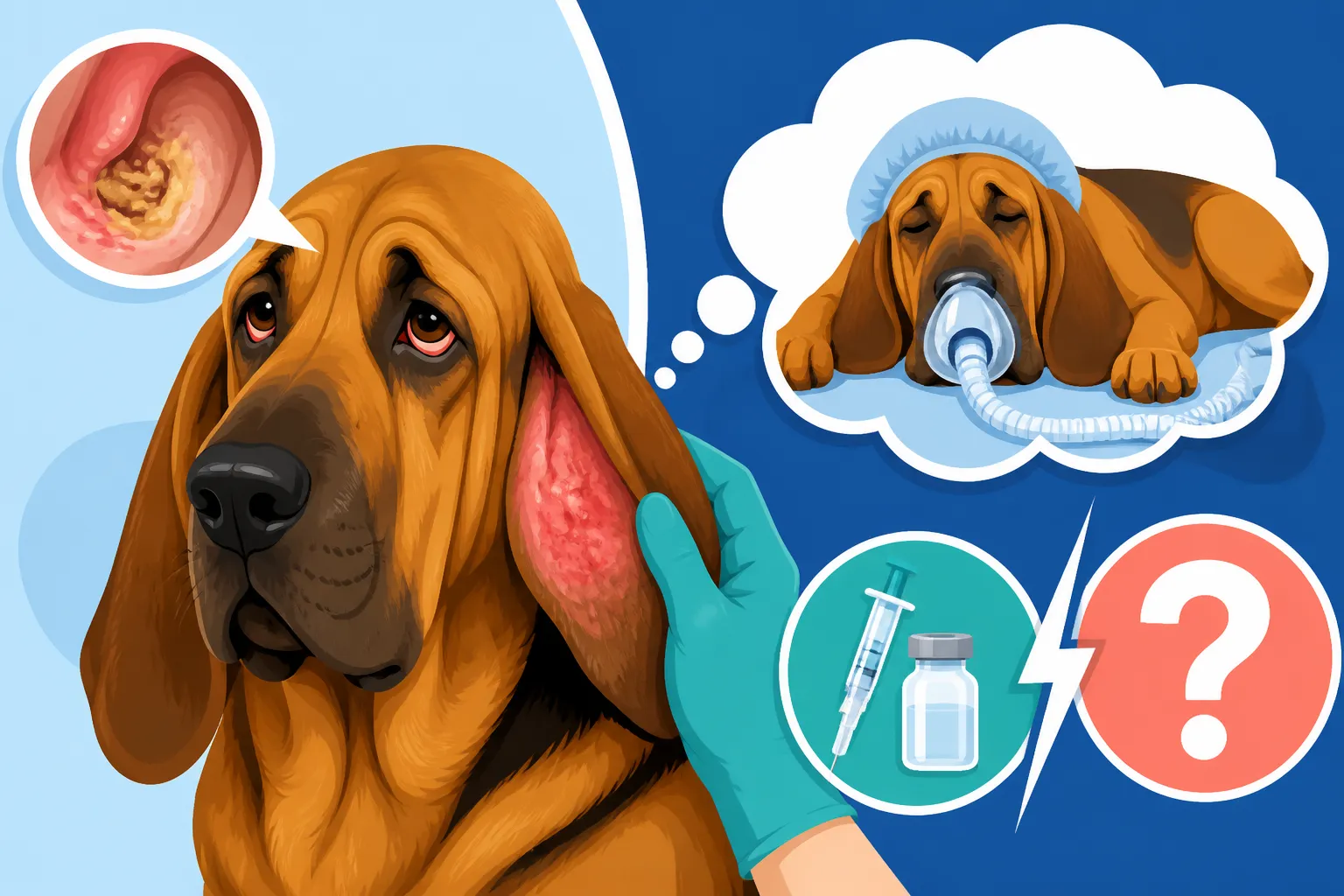
Whether a Bloodhound’s Ear Infection Needs Sedation to Treat
If you've ever had a Bloodhound, you know that their glorious, droopy ears are a magnet for trouble, often leading to painful, smelly ear infections. The worry about treating these infections is real, especially when your dog is in discomfort and the thought of needing sedation just for a vet to get a good look can be overwhelming. This guide will walk you through when sedation might be necessary for treating your Bloodhound's ear infection, what factors influence this decision, and how you can work with your vet to ensure the best care for your beloved hound.
The Unique Challenges of a Bloodhound's Ears
Let's be honest, those magnificent, long, heavy ears are a defining characteristic of a Bloodhound, but they're also an anatomical design flaw just waiting for an infection to take hold. It's not a matter of if your Bloodhound will get an ear infection, but when and how often.
Anatomy and Why Infections Are So Common
The Bloodhound's ear canal is like a deep, dark cave with very little airflow, perfectly designed to trap moisture, warmth, and debris. Their long, pendulous ear leathers hang down, effectively sealing off the ear canal from the outside world. This creates a humid, anaerobic environment that is the ideal breeding ground for yeast and bacteria. Think about it – every time they dip those ears into their water bowl, drag them through dewy grass on a trail, or just go for a swim, moisture gets trapped deep inside. Couple that with their naturally oily skin and a propensity for producing a lot of ear wax, and you have a recipe for chronic irritation and infection. It's a constant battle, and many Bloodhound owners feel like they're cleaning their dog's ears every week for life.
Beyond the external ear flap, the ear canal itself is much longer and more convoluted than in breeds with upright ears. It makes it incredibly difficult for owners and even veterinarians to get a clear view down to the eardrum without specialized tools. This deep, narrow passage means that topical medications often don't reach the deepest parts of an infection, and debris can become impacted, making it a nightmare to clear out. This is why a Bloodhound's ears are a standing infection risk, and many owners quickly learn that regular, meticulous care is simply non-negotiable.
Signs of a Severely Painful or Chronic Infection
Sometimes, an ear infection starts subtly. You might notice a bit more head shaking than usual, or a gentle scratch behind the ear. But with a Bloodhound, these things can escalate quickly, turning a minor irritation into a full-blown, incredibly painful situation. If you see your Bloodhound constantly scratching at their ears, rubbing their head along furniture, or exhibiting a head tilt, it’s a clear sign something is amiss.
More severe signs indicate a deeper problem and a higher likelihood that sedation might be needed for proper treatment. Look for:
- Aggression or pain when the ear is touched: If your usually gentle hound snaps or cries out when you try to examine their ear, it's likely excruciatingly painful.
- Swelling and redness around the ear canal opening: The tissues can become inflamed and puffy.
- Thick, dark, or pus-like discharge: This is a strong indicator of bacterial infection. The smell can be quite foul, a distinct, yeasty or putrid odor.
- Wounds or scabbing on the ear flap or around the ear canal: From excessive scratching or self-trauma.
- Loss of balance or walking in circles: If the infection has spread to the middle or inner ear, it can affect their vestibular system.
- Visible foreign bodies: Sometimes, a foxtail or other piece of debris can get lodged deep in the ear, causing immense pain.
- Complete resistance to examination or medication: If your Bloodhound fights every attempt to look at or medicate their ear, out of pain or fear, the problem has probably become significant.
When a Bloodhound's ear infection becomes permanent due to repeated inflammation and changes to the ear canal, it's a frustrating and heartbreaking situation for everyone involved. Catching these issues early is always the goal, but sometimes life happens, and we're left with a severely compromised ear.
When Sedation Becomes Necessary for Ear Treatment
It’s every owner's hope that an ear infection can be treated with a simple course of drops and a bit of cleaning at home. However, with a breed like the Bloodhound, and the severity their ear issues can reach, sedation often becomes a crucial tool for effective and humane treatment.
The Rationale Behind Sedation
The decision to sedate a Bloodhound for an ear infection isn't taken lightly. Vets always try to manage situations with the least invasive methods first. But there are several compelling reasons why sedation might be the best, or even only, option:
- Extreme Pain: Imagine having a throbbing earache, and someone is trying to poke around in it. For a Bloodhound with a deeply inflamed, painful ear, trying to clean or examine it while they're awake can cause immense distress and pain. Sedation allows the vet to thoroughly address the problem without causing additional suffering.
- Fear and Anxiety: Even if the pain isn't extreme, a Bloodhound that has had multiple, painful ear treatments might become very fearful of the vet's office or even just having their ears touched. Sedation helps reduce their stress and prevents them from developing further negative associations with veterinary care.
- Inability to Visualize the Eardrum: As mentioned, the Bloodhound's ear canal is long and narrow. If there's a lot of swelling, discharge, or impacted debris, a vet simply cannot see the eardrum with an otoscope while the dog is awake and possibly struggling. Seeing the eardrum is critical to ensure it's intact before certain medications are used, and to assess the extent of the infection.
- Deep Cleaning and Flushing: A severely infected ear often has layers of hardened wax, pus, and debris that cannot be removed with a simple wipe. Under sedation, the vet can perform a deep, thorough ear flush using specialized solutions and tools, effectively clearing out all the gunk that topical medications can't penetrate. This is often the only way to truly reset the ear environment.
- Foreign Body Removal: If a foreign object like a grass awn or foxtail has made its way deep into the ear canal, it requires precision to remove without damaging delicate structures. Sedation ensures the Bloodhound remains still, allowing the vet to safely extract the object.
- Diagnostic Samples: To accurately diagnose the type of infection (yeast, bacteria, mites), the vet needs to collect samples for cytology or culture. If the ear is too painful or the dog too resistant, sedation ensures these samples can be collected properly, leading to the right treatment plan.
Ultimately, sedation prioritizes the Bloodhound's welfare, allowing for a comprehensive and effective treatment that might otherwise be impossible, or unnecessarily traumatic, if attempted on an awake, struggling dog.
What Happens During a Sedated Ear Exam and Cleaning
When your Bloodhound needs a sedated ear treatment, it's more involved than a quick office visit, but it’s often a huge step towards resolving chronic issues. Typically, your Bloodhound will need to be dropped off at the veterinary clinic for the day, much like they would for a routine spay or neuter.
The process usually begins with a pre-sedation physical exam and bloodwork to ensure they are healthy enough for the medications. Once cleared, they will receive a combination of sedatives and pain medication to make them comfortable and relaxed. This isn't usually full general anesthesia, but rather a deep sedation that keeps them calm and still, while remaining aware of their surroundings to some extent, but without anxiety or pain.
Once sedated, the vet can perform a thorough examination. This involves using a video otoscope, which projects a magnified image of the ear canal onto a screen. This allows the vet to inspect the entire canal, identify any foreign bodies, assess the eardrum's integrity, and collect precise samples for diagnostic testing (cytology, bacterial culture, yeast identification).
The next critical step is a deep ear flush. This typically involves using a warm, sterile saline or medicated solution to gently irrigate and clean out all the accumulated debris, wax, and discharge. A suction device might be used to remove the liquid and loosened material. This process is far more effective than any at-home cleaning because it reaches the deepest parts of the ear canal, where the infection often festers. After flushing, the ear canal is carefully dried, and appropriate long-acting medications, often an antimicrobial or anti-inflammatory ointment, can be applied directly to the now-clean surfaces. The vet might also provide you with specific ear drops or oral medications to continue treatment at home.
You’ll typically pick your Bloodhound up later in the day, still a bit groggy from the sedation, but hopefully on the road to recovery from their painful ear infection.
Strategies to Avoid Sedation (and Prevent Future Infections)
The goal, of course, is to avoid the need for sedation in the first place, or at least minimize how often it's required. This comes down to consistent, proactive care and a strong partnership with your veterinarian.
Building Tolerance for Ear Care from a Young Age
The absolute best defense against the need for sedated ear treatments is to start early and make ear care a positive experience for your Bloodhound puppy. From the moment you bring your little hound home, start touching, handling, and gently looking at their ears.
Make it a game! After a gentle ear rub, offer a high-value treat like a small piece of cheese or cooked chicken. Gradually introduce a damp cotton ball for a quick wipe of the outer ear flap, always followed by praise and rewards. Don't push it too far, especially when they're young. The key is short, positive sessions that build trust and tolerance. By the time they're adults, a well-socialized Bloodhound should ideally accept routine ear cleaning without a struggle. This early training can make a world of difference when it comes to preventing fear-based resistance during vet visits. Getting a Bloodhound to accept ear cleaning is vital.
Routine Cleaning and Preventive Measures
Consistent, routine ear cleaning is your Bloodhound's best friend. You'll hear this from every Bloodhound owner and vet: their ears need cleaning every week for life. This isn't an exaggeration. A regular schedule helps prevent the buildup of wax and moisture that leads to infection.
Here’s a basic routine:
- Choose the Right Cleaner: Use a veterinary-approved ear cleaner that is specifically designed for dogs. Avoid using alcohol or hydrogen peroxide, as these can be irritating. Always check with your vet about what to clean a Bloodhound's ears with.
- Proper Technique: Gently lift the ear flap and squirt a generous amount of cleaner into the ear canal. Massage the base of the ear for 20-30 seconds to help break up debris. Let your Bloodhound shake their head – this helps dislodge material. Then, use a cotton ball or soft gauze wrapped around your finger to wipe out the visible debris and excess cleaner. Never use cotton swabs, as these can push debris deeper into the canal and potentially damage the eardrum. How far into a Bloodhound's ear to reach should be no further than your finger can comfortably go.
- Dry Thoroughly: After cleaning, make sure the ear canal is as dry as possible. A gentle ear drying solution can also be beneficial, especially after baths or swimming, to combat the natural moisture-trapping tendency of their ears.
- Protect Those Ears: Consider using a snood during meal times to keep their long ears out of their food and water bowls. You can also find specific bowl shapes that help keep a Bloodhound's ears out of their meal. This simple step reduces moisture and food debris getting into the ear canal.
These regular preventive steps significantly reduce the chances of developing severe infections that might warrant sedation. For tips on ear hair, whether a Bloodhound's ear hair should be plucked, always consult your vet, as improper plucking can cause irritation.
The Role of Early Intervention and Veterinary Partnership
Even with the most diligent at-home care, Bloodhounds can still get ear infections. The key here is early intervention. The moment you notice any signs of discomfort – increased head shaking, scratching, a change in ear odor, or a bit of discharge – call your vet. Don't wait, hoping it will clear up on its own. A mild infection is much easier and less stressful to treat without sedation than a full-blown, painful one that has been left to fester.
Working closely with your veterinarian is paramount. They know your Bloodhound and understand the breed's specific ear challenges. Discuss any concerns you have about your dog's comfort level at the vet or during ear exams. Sometimes, a vet might suggest mild oral sedatives or anti-anxiety medication to be given at home before an appointment, making the exam less stressful for your Bloodhound, and potentially avoiding deeper sedation during the visit itself.
For chronic or recurrent issues, your vet might recommend further diagnostics, like allergy testing or dietary changes, as underlying allergies can often manifest as ear infections. Remember, your vet is your partner in keeping your Bloodhound's ears healthy, and open communication is essential.
Financial Considerations and Pet Insurance
Let's face it, owning a Bloodhound is a significant financial commitment, and their ears alone can account for a considerable portion of vet bills. The question of whether a Bloodhound's ear infection needs sedation to treat often comes with a hefty price tag attached.
The Cost of Sedation and Treatment
A routine ear exam and a course of ear drops for a mild infection might only set you back $50-$150. However, when sedation becomes necessary, those costs can escalate dramatically. The charges will include:
- Sedation/Anesthesia: This isn't just the drug itself, but also the monitoring by veterinary staff, which includes tracking heart rate, breathing, and oxygen levels. This alone can range from $200-$500 or more, depending on the clinic and the depth of sedation required.
- Ear Flush and Cleaning: A thorough sedated ear flush is a specialized procedure. This involves the use of special equipment like a video otoscope, cleaning solutions, and the vet's time. Expect this to add $150-$400 or more to the bill.
- Diagnostics: If samples are collected for cytology, bacterial culture, or sensitivity testing, these laboratory fees can add another $50-$200.
- Medications: Post-procedure ear drops, oral antibiotics, or anti-inflammatory medications will also be prescribed.
- Recheck Exams: Follow-up visits are crucial to ensure the infection has cleared, and these will incur additional charges.
All told, a single sedated ear treatment can easily run from $500 to over $1000, especially if specialized services like an overnight stay or advanced imaging are required. This is why many Bloodhound owners feel like a Bloodhound's money is spent in the operating room. The standing cost of a Bloodhound's ears can really add up over their lifetime.
How Pet Insurance Can Help
Given the high likelihood of ear infections in Bloodhounds, and the potential for expensive sedated treatments, pet insurance can be an absolute lifesaver. Companies like Healthy Paws offer comprehensive plans that can cover a significant portion of these unexpected veterinary expenses.
When considering pet insurance for your Bloodhound, look for a plan that covers chronic conditions and specialist care, as ear issues can often become long-term problems. While most policies won't cover pre-existing conditions, if you enroll your Bloodhound as a puppy, any new ear infections (or other health issues) that arise will likely be covered. This means if your Bloodhound develops a severe infection requiring sedation, your pet insurance could reimburse you for a large percentage of the bill after your deductible.
Having pet insurance like Healthy Paws can provide immense peace of mind. Instead of agonizing over the cost of a necessary sedated ear flush, you can make treatment decisions based on what’s best for your Bloodhound’s health and comfort. It's an investment that can truly pay off, preventing you from facing the gut-wrenching decision of declining care due to financial constraints. What a Bloodhound's ear infection costs to treat without insurance can be a huge burden, but with a good policy, it becomes much more manageable.
| Aspect | Mild/Early Infection (No Sedation) | Severe/Chronic Infection (Likely Sedation Needed) |
|---|---|---|
| Symptoms | Occasional scratching, mild redness, slight odor, minimal discharge. | Intense scratching, pain on touch, swelling, foul odor, thick discharge, head tilt, resistance to exam. |
| Treatment Approach | Topical ear drops, gentle at-home cleaning, oral antibiotics (sometimes). | Thorough sedated ear flush, video otoscopy, specialized cleaning solutions, ear sampling for culture, long-acting medications, oral antibiotics/anti-inflammatories. |
| Vet Visit Duration | Short office visit (15-30 minutes). | Drop-off for several hours to a full day. |
| Primary Goal | Clear infection, restore normal ear environment. | Resolve infection, remove impacted debris, reduce pain, accurately diagnose, potentially prevent irreversible ear canal changes. |
| Cost Range (Estimate) | $50 – $200 (exam + medication) | $500 – $1200+ (sedation, exam, flush, diagnostics, medications). |
| Pet Insurance Relevance | Often covered, but less financially impactful. | Highly beneficial, can significantly reduce out-of-pocket costs, especially for chronic issues. (e.g., Healthy Paws) |
Disclaimer
The information provided in this guide is intended for educational purposes only and should not replace professional veterinary advice. Always consult with a qualified veterinarian for any health concerns or before making any decisions about your Bloodhound's medical care. Individual cases may vary, and a vet can provide the most accurate diagnosis and treatment plan.