Whether Bloodhounds Are Being Bred for Health Now
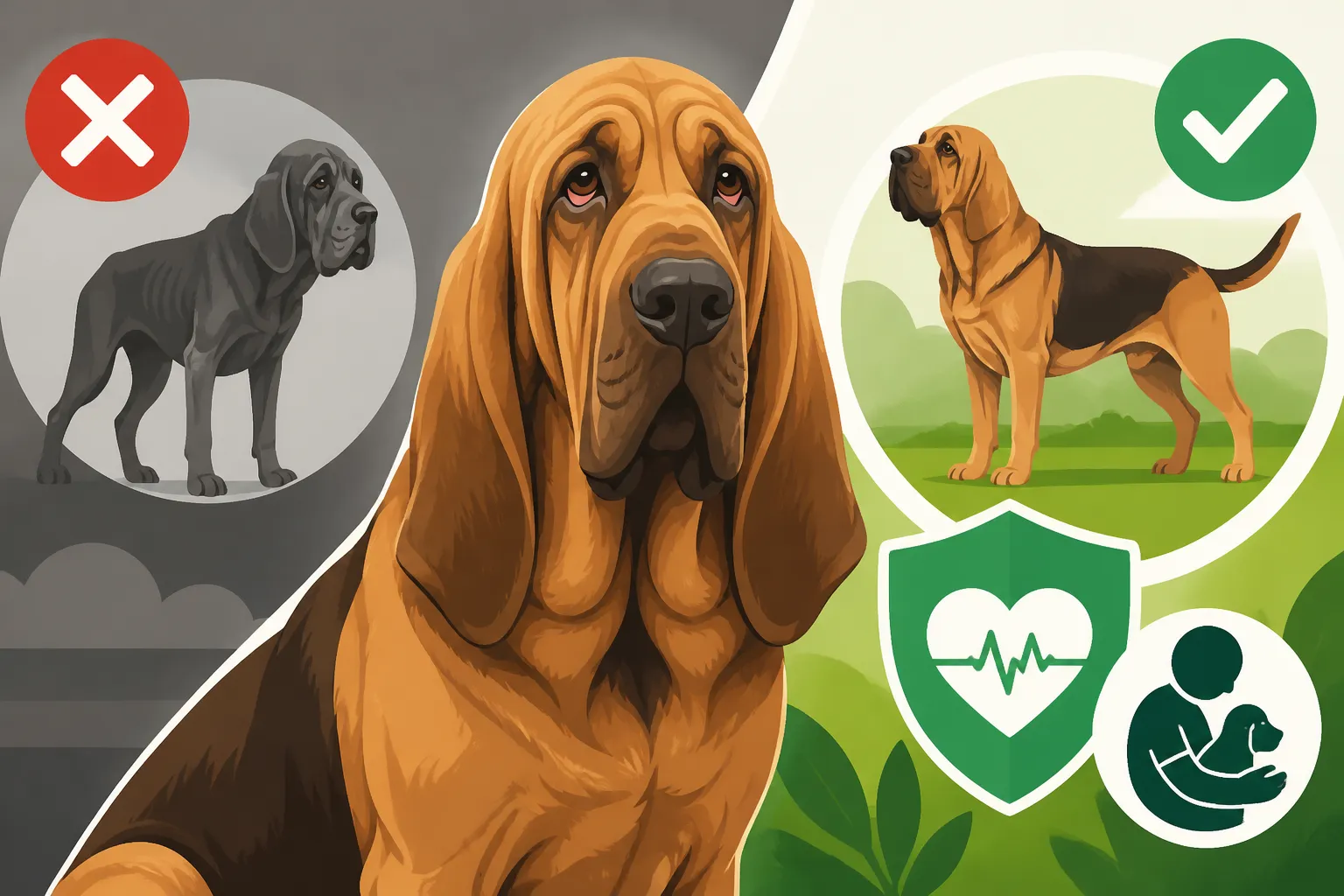
Bloodhound buyers often hear that a puppy’s parents are “health tested,” but that phrase can mean anything from a few screening results to a thoughtful breeding plan. The encouraging answer is that health-focused breeding is part of responsible Bloodhound breeding today. Still, progress is uneven, and no test or promise can guarantee a healthy dog. Here’s how to understand what breeders can screen for—and what to ask before choosing a puppy.
Are Bloodhound breeders putting more emphasis on health?
The shift is real, but it is not universal
Many responsible breeders now treat health screening, temperament, sound movement, and longevity as important parts of choosing a breeding pair—not as optional extras after a litter is planned. Breed-club guidance and widely used health-record systems give breeders and puppy buyers a framework for discussing inherited risks. That’s a meaningful change from relying on appearance or a general statement that a dog “has always been healthy.”
But a trend is not a guarantee. Breeding practices differ between kennels, and health testing can take time, money, and careful record keeping. Some breeders may complete recommended evaluations and share the results openly; others may do only limited testing or describe a veterinarian’s routine checkup as a complete health screen. The phrase “health tested” is not enough on its own. Ask which tests were done, when they were done, and where the results can be reviewed.
Health-first breeding also means looking beyond an individual dog. A dog may appear healthy while carrying an inherited risk, or may develop a condition later in life. Breeders who keep in touch with puppy families can learn what happened as dogs mature, including health concerns that do not show up when a puppy is young. That family history can help inform future breeding choices.
What “breeding for health” should mean in practice
A thoughtful breeder considers several parts of a dog’s wellbeing together. These can include joint health, eyes, heart health, temperament, body condition, and the structure that allows the dog to move and breathe comfortably. For Bloodhounds, it is also reasonable to discuss the breed’s particular concerns, including bloat, eye and eyelid problems, and hip or elbow dysplasia. Why a Bloodhound Dies Younger Than Its Size Predicts provides broader context on why long-term health deserves attention in this breed.
Breeding for health does not mean trying to eliminate every possible risk from a population. No breed can be made free of all disease through a simple checklist. It means using the best available information, avoiding pairings that could create an unreasonable risk, and making decisions with the health of future puppies in mind. A breeder may need to weigh screening results alongside a dog’s overall health, relatives’ records, temperament, and genetic diversity.
It also means being honest about uncertainty. A responsible breeder should not promise that a puppy will never develop a health problem. They should be willing to explain what is known about the parents and their relatives, what remains uncertain, and what support they offer if a puppy develops a concern. A calm, specific answer is more useful than a sweeping guarantee.
Which health checks should puppy buyers ask about?
Ask for specific records, not just verbal assurances
Start by asking what evaluations were completed on both parents. The American Bloodhound Club’s breeding guidance is a useful starting point, and What the American Bloodhound Club Asks Breeders to Screen goes into the subject in more detail. You can also ask the breeder to explain how their screening plan relates to the dogs they chose to breed. Whether a Bloodhound Should Be Screened Before Breeding is relevant if you want to understand the purpose of screening before a litter is planned.
For hips and elbows, ask whether the parents have had formal evaluations and how you can view the results. If the breeder shares an OFA result, ask what the score means rather than treating a label as self-explanatory; What an OFA Hip Score Means for a Bloodhound can help with that conversation. A routine veterinary exam is valuable, but it is not interchangeable with a specific screening evaluation.
Eye and cardiac evaluations are also worth discussing. Bloodhounds can have eye or eyelid conditions, and a breeder should be able to tell you what assessments were done and whether any issues have appeared in the family. The Four Eye Problems a Bloodhound Is Born Toward and Heart Disease in the Bloodhound offer background on concerns buyers may want to raise. Ask whether findings are documented and whether a specialist evaluation was recommended when needed.
| What to ask about | Why it matters | A useful follow-up |
|---|---|---|
| Hip and elbow evaluations | Joint concerns can affect comfort and movement | “Can I see the formal results for both parents?” |
| Eye examinations | Some eye and eyelid issues may need ongoing care | “Who performed the exam, and when?” |
| Cardiac assessment | A normal appearance at home does not replace an appropriate evaluation | “What was checked, and were any follow-ups advised?” |
| Health history in relatives | Some problems appear later or across several generations | “What have you learned from earlier litters and close relatives?” |
| Written health terms | A contract can clarify responsibilities and communication | “Can I read the agreement before placing a deposit?” |
Understand what a screening result does—and does not—tell you
A screening result is one piece of evidence, not a lifetime forecast. It can help identify a concern in a particular dog, support better breeding decisions, or document that an evaluation was completed. It cannot rule out every inherited condition, predict every future illness, or guarantee that two dogs will produce puppies without health problems.
It is also worth asking what a database listing means. A CHIC number, for example, indicates that the required health tests for that breed have been completed and the results made public through the program. It does not necessarily mean every result was normal. Read the individual findings, and ask the breeder to explain any result you do not understand.
If a breeder says that a dog is “clear,” ask what condition or test that statement refers to. A clear result for one test does not answer questions about every other health issue relevant to the breed. A breeder should be comfortable distinguishing between a normal finding, a test that was not performed, and a condition that has not been observed.
How to evaluate a breeder’s health-first claims
Look for a pattern of openness and follow-through
A breeder who prioritizes health should be willing to talk about both strengths and limitations in their breeding program. They can explain why they selected the parents, which screenings were completed, and what they know about close relatives. They should also welcome reasonable questions instead of treating them as an insult or rushing you toward a deposit.
Ask how the breeder follows up with families after puppies go home. Do they check in as dogs grow? Do they ask owners to report diagnoses, even when the news is difficult? That information can help a breeder understand whether concerns are appearing in a family line. A breeder who has raised only one litter may have less long-term information than someone with years of records, but should still be candid about what they know and what they do not.
A contract is another part of the conversation, but it is not proof of good breeding by itself. Read the health terms carefully and ask what the breeder expects you to do if a veterinary concern arises. What a Bloodhound Breeder's Contract Covers can help you prepare for that discussion. Avoid assuming that a written guarantee prevents a condition or covers every possible expense; the wording and requirements matter.
Watch for warning signs without demanding impossible certainty
Be cautious if a breeder will not identify the tests performed, refuses to share results, or uses “vet checked” as the only explanation for a breeding plan. It is also a concern if they claim their dogs have no health risks at all, dismiss questions about relatives, or insist that a particular registry label proves the puppy is guaranteed healthy.
At the same time, a responsible breeder may not have a perfect answer to every question. Some conditions can be complex, and health information can be incomplete. What matters is whether the breeder explains the limits honestly and shows a consistent effort to make informed decisions. A transparent discussion about a known issue is often more reassuring than an unsupported claim that nothing could ever go wrong.
Ask to meet the mother if practical, and observe her general condition and behavior. This does not replace health records, and meeting a friendly parent cannot predict a puppy’s future health. Still, it gives you a chance to see how the dogs are cared for and whether the breeder answers questions in a straightforward way. For broader context on the breed’s history and population, see Whether Bloodhound Numbers Are Falling.
What buyers can do to support a healthy Bloodhound
Choose carefully, then keep useful records
Before committing, take time to compare breeders’ answers rather than judging only by photographs, availability, or a puppy’s price. Ask for records, read the contract, and consider whether the breeder seems prepared to support the dog after pickup. If you are unsure how to interpret a result, bring the paperwork to your veterinarian and ask what it means for the puppy’s care.
Once your Bloodhound comes home, keep copies of screening records, vaccination and treatment history, diagnoses, and follow-up notes. Share relevant updates with the breeder, especially if your dog develops a condition that might be important for the family’s health history. That feedback can help future breeding decisions become better informed.
A breeder’s work is only one part of a dog’s health. Routine veterinary care, appropriate nutrition, safe exercise, and prompt attention to changes all matter. If you need to restock ordinary grooming or feeding supplies, you might use a local shop or a retailer such as Chewy; keep veterinary recommendations, rather than product claims, at the center of medical decisions. Chewy may also be one option for everyday supplies like food storage or cleaning items, while your veterinarian should guide choices involving treatment or a medical diet.
Keep expectations realistic throughout the dog’s life
Even a puppy from carefully screened parents can develop an illness or injury. That does not automatically mean the breeder acted irresponsibly. The better question is whether the breeder made thoughtful choices with the available information, communicated openly, and continues to learn from the dogs they produce.
Likewise, a puppy from parents with reassuring records still needs attentive care. Keep up with veterinary visits, ask about changes in movement or vision, and seek urgent help when symptoms are sudden or severe. Health-conscious breeding can reduce avoidable risks and improve decision-making across generations, but it cannot substitute for lifelong care. Chewy or another retailer can help with routine supplies; health concerns belong with a qualified veterinary professional.
The most encouraging sign is not a claim that a breeder has solved every Bloodhound health problem. It is a clear, documented, and ongoing commitment to better information, thoughtful pairing decisions, and honest communication with puppy families. When you find that combination, you have a stronger basis for choosing a puppy—without being asked to believe that any dog comes with a guarantee.
Disclaimer
This article is for general informational purposes only and does not constitute professional advice. Laws, prices and regulations vary by location and change over time. Consult a qualified professional for guidance on your specific situation.