Whether a Bloodhound Mix Keeps the Nose
A Bloodhound mix may inherit a powerful nose, but a Bloodhound parent does not guarantee a Bloodhound’s tracking ability. Genes, the other breed, individual temperament, health, and training all shape how a dog uses scent. This guide explains what you can reasonably expect, how to recognize scent-driven behavior, and how to give a mixed-breed dog safe, rewarding ways to use its nose.
What a Bloodhound mix may inherit
Scent ability is not an all-or-nothing trait
A mixed-breed dog can inherit scenting ability from its Bloodhound parent, but inheritance does not work like a switch that turns “Bloodhound nose” fully on or off. A puppy receives a mix of traits from both parents, and even littermates can differ in how strongly they investigate odors, how persistent they are, and how easily they stay focused.
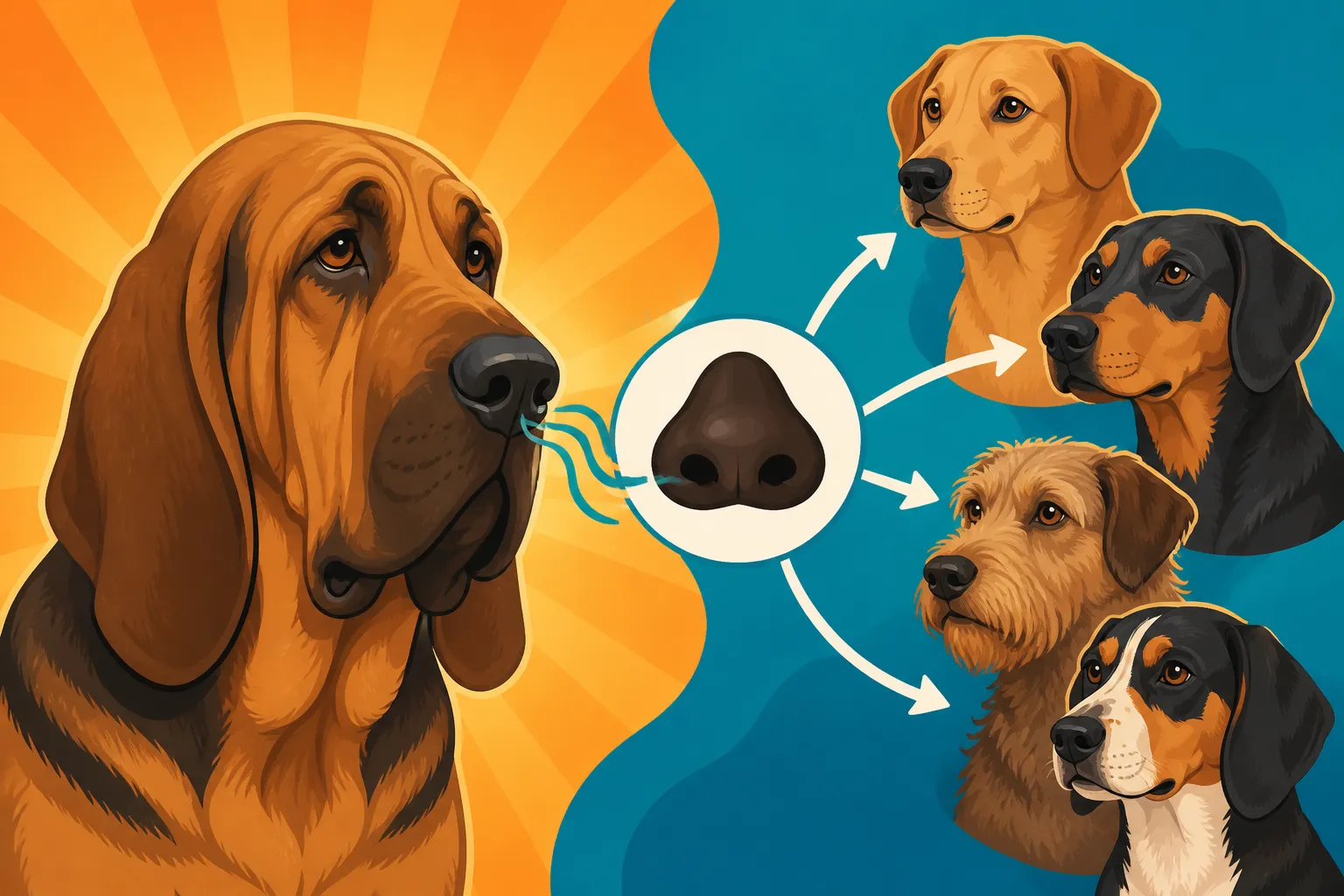
The other parent breed matters, too. A cross with another scent hound may be especially interested in following odors, while a cross with a breed selected for a different kind of work may show a different blend of instincts. Still, breed labels cannot reliably predict exactly what one dog will do. A dog with one Bloodhound parent might show strong tracking behavior; another may be much more interested in play, people, or other activities.
And “has a good nose” can mean several things. A dog might notice a food crumb from across the kitchen, search enthusiastically for a toy, or follow a person’s trail over ground. Those are related forms of scent interest, but they are not interchangeable proof of professional tracking ability. The specialized work Bloodhounds are known for involves more than detecting an odor: it also takes persistence, concentration, training, and a handler who can read the dog.
Bloodhound features do not predict performance by themselves
Long ears, loose skin, and a broad, wrinkled face may make a mixed-breed dog look more Bloodhound-like. But appearance is not a reliable way to measure scenting talent. A dog can have a few recognizable Bloodhound features without showing an exceptional interest in trailing, while a dog with a less obvious resemblance may be highly motivated to follow odors.
It is also useful to separate a dog’s body shape from its behavior. A Bloodhound-like build does not tell you whether the dog will work slowly and methodically, become distracted by competing smells, or give up when a trail gets difficult. These are individual tendencies that become clearer through observation and training rather than visual guesswork.
If you are trying to understand what contributes to a Bloodhound’s characteristic tracking behavior, What a Bloodhound Is Actually Smelling on a Trail offers useful context. A mixed-breed dog may enjoy scent games without having the same abilities, training history, or working style as a trained Bloodhound. That distinction is not a knock against the mix; it simply helps set realistic expectations.
What “keeping the nose” really means
People often ask whether a Bloodhound mix “keeps the nose” as though scenting ability were a single trait that can be carried intact from one parent. In practice, the question is better broken into smaller ones: Does the dog investigate scents often? Does it use its nose to locate food or toys? Can it stay with an odor when the environment gets distracting? Does it enjoy working with a handler?
A mix may have a strong everyday interest in scent without being suited to formal tracking. Another might show a natural urge to follow a trail but need patient, structured practice to learn how to work with a person. Some dogs are enthusiastic in familiar settings and less focused outdoors, where traffic, wildlife, people, and layers of competing odors can make the job harder.
So the most accurate answer is: a Bloodhound mix may inherit a keen sense of smell and a willingness to follow odors, but neither is guaranteed by ancestry alone. Watch the dog in different situations, and consider its behavior over time rather than judging it by one exciting sniffing session.
Clues your mix is strongly scent-motivated
Watch what happens on ordinary walks
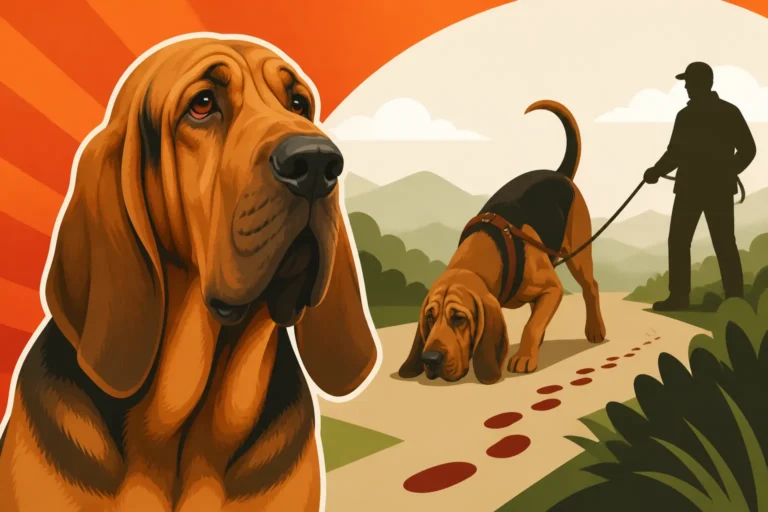
A scent-driven dog may pause frequently, lower its nose to the ground, return to an odor it noticed earlier, or pull toward a place where an animal or person has passed. The walk can feel less like moving from point A to point B and more like your dog is reading a long, complicated story written in smells.
That interest can be fun, but it can also be frustrating. You may be halfway down a suburban sidewalk when your dog locks onto a scent and seems not to hear a familiar cue. A long line and secure harness give the dog room to investigate while helping you maintain control. That’s different from allowing the dog off leash: even an impressive nose does not make recall dependable when a compelling trail takes over. Why Off Leash Is Not a Goal With a Bloodhound explains why safe boundaries matter for this breed and its mixes.
Notice whether your dog can disengage with a gentle cue, whether the sniffing is relaxed or frantic, and whether the dog can settle again afterward. Those details tell you more about how scent affects your particular dog than the number of times it stops to sniff. For ideas on balancing exploration and movement, Walking a Bloodhound That Has Found a Scent is also relevant to mixes that get absorbed in outdoor odors.
Look for persistence, not just enthusiasm
A dog that eagerly sniffs a treat hidden under a towel has shown curiosity and motivation. A dog that keeps searching after the first easy spot comes up empty has also shown persistence. Neither observation, on its own, establishes that the dog can follow a human trail, but together they can help you understand how much the dog enjoys scent-based tasks.
Try a simple, low-pressure game at home. Let your dog see you place a familiar toy or treat in an easy location, then give a consistent cue to search. As the dog gets comfortable, make the hiding place slightly less obvious. Keep sessions short and let the dog succeed; a beginner’s search game should feel rewarding, not like an exam.
You can note whether your dog searches systematically, checks the same spots repeatedly, or abandons the task quickly. None of these responses is a permanent verdict. Practice, confidence, age, fatigue, and the value of the reward can all change a dog’s performance. For an introduction to structured scent activities, How to Introduce a Bloodhound Puppy to a Scent Article describes a useful starting point for puppies and can help owners of adult mixes think about building a clear search routine.
Consider the whole dog, including health and temperament
A dog’s willingness to use its nose can change with its comfort and surroundings. A dog that is tired, anxious, overheated, or uncomfortable may not engage in a search game as enthusiastically as usual. Likewise, a dog in a busy place may be overwhelmed by so many competing smells that it seems distracted or uncertain.
Pay attention to the dog’s normal behavior rather than expecting every outing to look like a demonstration. If your dog suddenly stops following familiar games, seems reluctant to explore, or develops other changes in behavior, discuss the change with a veterinarian. Don’t assume a new pattern is simply stubbornness or a loss of scent ability.
Scent work should be adapted to the dog in front of you. A young dog may need very brief sessions; an older dog may prefer easy searches that do not require hard running or difficult footing. A mixed breed can enjoy nose games without needing to prove anything about its ancestry.
How to develop scent skills safely
Start with easy indoor searches
At home, begin with a familiar reward and a quiet room. Ask the dog to wait briefly, place a treat or toy where it is visible, then use a consistent search cue. Once the dog understands the game, make the hiding place a little less obvious. A towel fold, open cardboard box, or a spot behind a chair can add a small challenge without making the task confusing.
For a dog that gets overexcited, make the game slower and easier rather than adding more difficulty. You might place one reward in a straightforward location and allow the dog to find it calmly. Praise the search itself, not only the moment the dog gets the reward. That helps make sniffing and problem-solving part of the enjoyable activity.
Some owners keep treats, a toy, and cleanup supplies in one place so a short search game is easy to fit into the day. Chewy is one place owners may use to browse general pet supplies such as treat pouches or enrichment items, but the important part is choosing equipment that fits your dog and the activity. A special purchase is not required to teach a dog to search.
Add outdoor challenges gradually
Once your dog understands a simple indoor search, you can practice in a quiet yard or another controlled area. Use a secure leash or long line, choose a safe surface, and keep the first searches short. Outdoors, the dog may encounter many unrelated odors, so a search that felt easy in the living room can suddenly become much more complicated.
Avoid turning every walk into a test. Let your dog sniff freely at appropriate times, and use a separate cue when you want to begin a structured search. This distinction can help the dog understand when the goal is relaxed exploration and when you are asking for a particular activity. If the dog becomes fixated or pulls hard, create distance from the distraction and reset rather than forcing it to continue.
A well-fitted harness and a suitable line can make training more comfortable and controlled. Chewy may be a convenient place to compare basic walking and training supplies, but fit and safe handling matter more than a particular brand. Check that equipment is secure, does not rub, and is appropriate for the dog’s size and strength. For more on the gear and working style, see Which Harness a Bloodhound Trails In and Why a Bloodhound Works on a Long Line, Not a Collar.
Keep training positive and realistic
Short, successful sessions are usually easier for a beginner dog to understand than long drills. If your mix loses interest, gets frustrated, or becomes too excited to think, pause and make the next attempt easier. A dog that finds the reward is learning; a dog that has to repeat a confusing search over and over may simply become discouraged.
Reward choice should suit the individual dog. Some dogs work happily for food, while others are more engaged by a favorite toy or a chance to greet a familiar person. Keep rewards safe and manageable, and account for treats in the dog’s overall feeding routine. If you want to explore more formal mantrailing or tracking, seek a qualified local instructor who uses humane methods and can tailor the work to your dog.
Avoid testing a dog by putting it in a risky situation or expecting it to locate a missing person. Scent games are enrichment, not a substitute for trained search teams. A pet dog can have a wonderful nose and still lack the preparation, control, and experience required for operational work. Whether an Average Owner Can Train a Bloodhound to Trail can help clarify the difference between recreational practice and serious trailing.
What to expect from different Bloodhound mixes
The other parent breed can influence the picture
A mix with another scent hound may be especially eager to follow odor trails, but that still does not guarantee the dog will behave like a purebred Bloodhound. Different hound breeds have different histories and working styles, and the individual dog may inherit a blend that is hard to predict.
A cross with a non-hound breed may still have a strong interest in sniffing. Many dogs enjoy searching for food, toys, or familiar people, regardless of whether their breed is associated with tracking. The dog’s upbringing and opportunities to practice can shape how visible that interest becomes, too.
For example, imagine two dogs from the same litter living in different homes. One owner regularly plays hide-and-seek with toys, so the dog learns to search and becomes confident using its nose. The other dog has few scent-based activities and spends most walks hurrying along at the owner’s pace. The difference in observed behavior does not prove that one dog inherited more scenting ability; experience may be part of the explanation.
A practical way to compare scent activities
It helps to separate common scent behaviors from specialized tracking. The table below is a guide to what an activity may show, not a scorecard for deciding whether a dog has a “real” Bloodhound nose.
| Activity | What it may show | What it does not prove |
|---|---|---|
| Finding a treat hidden nearby | Interest in searching and motivation to locate food | Ability to follow a person’s trail |
| Searching for a familiar toy | Persistence and enjoyment of a scent game | Reliable tracking in a busy outdoor setting |
| Sniffing during walks | Curiosity and attention to environmental odors | Training, control, or working-dog skill |
| Following a short, prepared trail | Early interest in a structured scent task | Readiness for search-and-rescue or police work |
| Working with a qualified instructor | Response to training and handler communication | Guaranteed success in every environment |
Use these activities to learn what your dog enjoys. A mixed-breed dog that loves indoor searches may never show much interest in long trails, and that is perfectly fine. Enrichment does not need to become a career path to be worthwhile.
When a mixed breed may be a good fit for scent work
A Bloodhound mix can be a great candidate for casual tracking games if it is healthy, enjoys searching, and can participate safely. Look for a dog that remains engaged without becoming distressed and can recover after an exciting session. If the dog has trouble focusing, begin with easier rewards, fewer distractions, and shorter activities.
Formal classes may be useful when you want guidance on building trails, handling a long line, and reading the dog’s behavior. Ask a potential instructor how they manage frustration, what equipment they recommend, and whether beginners can work at a comfortable pace. The goal should be a positive experience for both dog and handler, not pressure to perform.
If you’re choosing a puppy or considering adoption, ask about the dog’s parents and observed behavior, but treat any prediction as an estimate. A breeder or rescue may be able to describe whether a dog has shown interest in searching, yet no one can promise precisely how strong its adult scenting behavior will be. For breed background, The Bloodhound Against the Other Scenthounds can help put the Bloodhound’s traits in context, while Whether a Bloodhound Mix Keeps the Nose is the question this guide answers: a mix may inherit scenting ability, but the dog’s actual interests and skills have to be discovered one nose-led moment at a time.
Disclaimer
This article is for general informational purposes only and does not constitute professional advice. Laws, prices and regulations vary by location and change over time. Consult a qualified professional for guidance on your specific situation.