Bloodhound or German Shepherd for Search Work
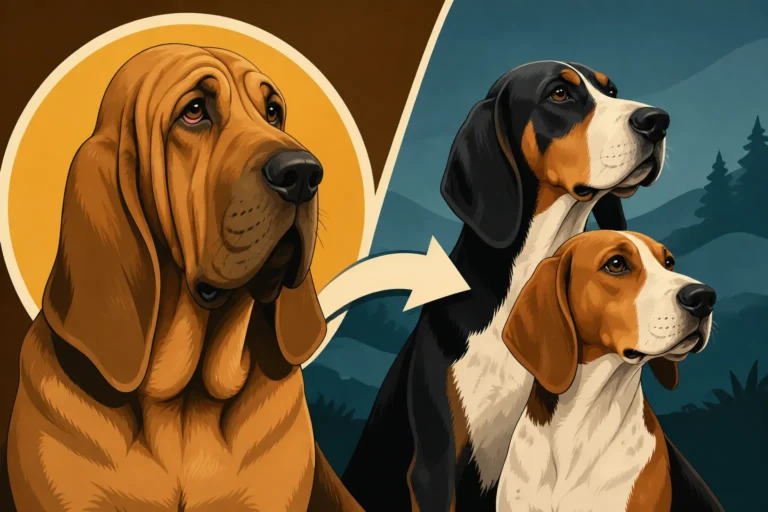
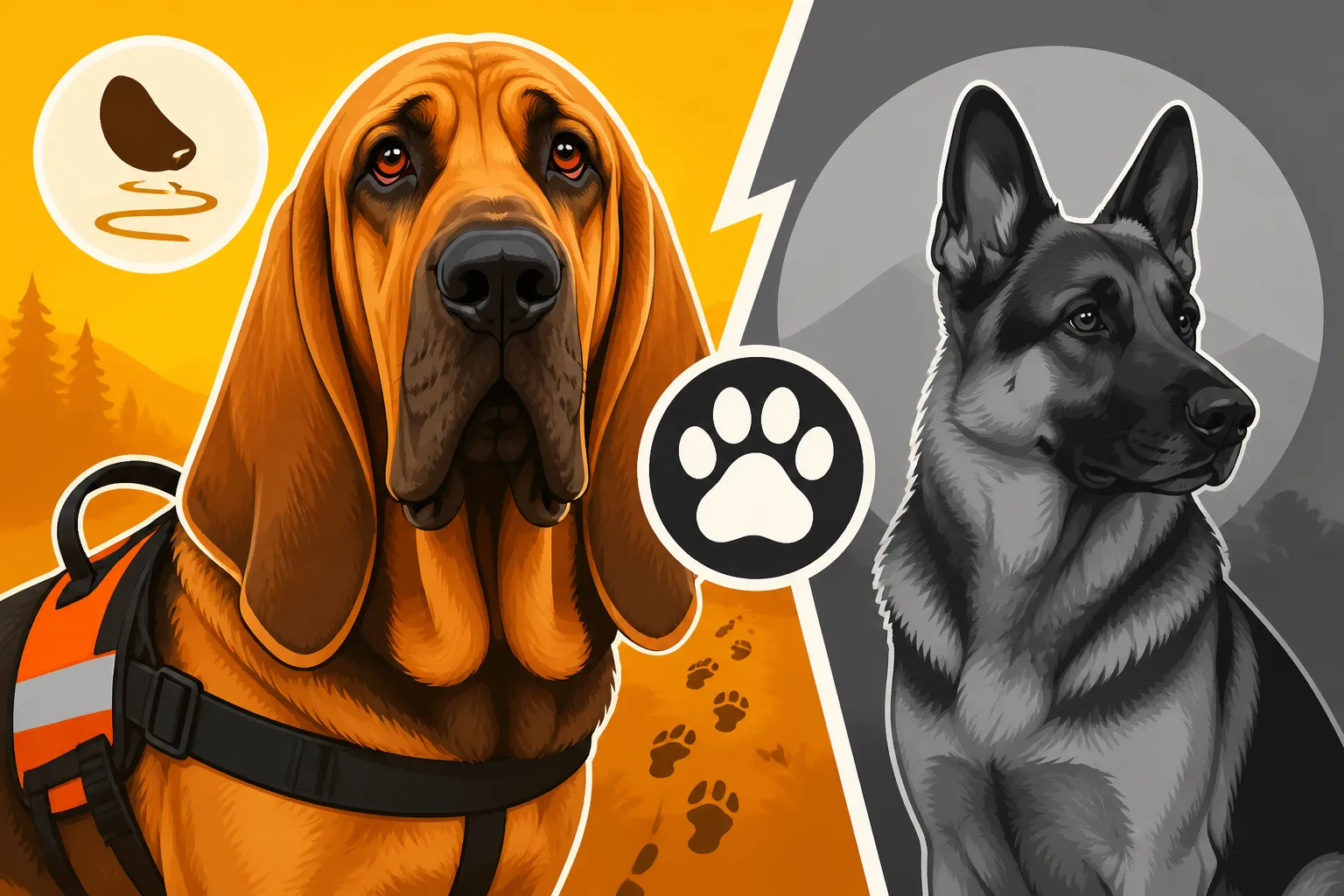
Choosing between a Bloodhound and a German Shepherd for search work can feel like choosing between a specialist and an all-rounder. The Bloodhound is famous for following an individual person’s scent, while German Shepherds are often valued for versatility across search tasks. But the right dog depends on the mission, the handler, and the team’s training—not breed reputation alone.
Bloodhound and German Shepherd search strengths
What a Bloodhound is suited to
A Bloodhound’s standout skill is following a particular person’s scent along a trail. A handler may give the dog a scent article, such as an item that carries the missing person’s scent, then watch for the dog to work that scent through changing terrain and distractions. The dog’s job is not simply to move in the direction people are searching; it is to investigate and follow the target scent.
That can make a Bloodhound a strong candidate for trailing work when a team has a useful starting point and a scent article. The dog may work with its nose close to the ground, but the exact pattern varies with the dog, the conditions, and the scent picture. Wind, rain, heat, surface type, foot traffic, and the age of the trail can all change what the dog encounters. For a closer look at scent discrimination, see How a Bloodhound Separates One Person's Scent From a Crowd.
Bloodhounds are not automatic search tools, though. Their strong drive to follow scent can make handling and safety skills especially important. A Bloodhound may continue investigating when the handler would prefer to pause, change direction, or leave a tempting odor alone. A long line, suitable harness, clear communication, and practice in realistic settings are part of safe work—not optional extras. A Bloodhound's Nose Outvotes Its Handler explains why following scent can compete with a handler’s cue.
What a German Shepherd is suited to
German Shepherds are often chosen for work that benefits from a versatile, trainable dog. Depending on the individual dog and its training, a German Shepherd may work in area search, tracking, human-remains detection, disaster settings, or other scent-related roles. These are distinct skills, not one general ability: a dog trained to locate live people by air scent is doing a different job from one trained to follow a specific ground trail.
That versatility can be useful for teams that need a dog to work across varied environments or perform a defined mix of tasks. It does not mean every German Shepherd will enjoy or excel at every search role. Confidence, sociability, stamina, environmental stability, play or food motivation, and the dog’s ability to work around noise and unfamiliar surfaces all matter.
A German Shepherd’s reputation for obedience should not be mistaken for guaranteed field reliability. Search work asks a dog to make decisions within a trained task while the handler reads subtle behavior and manages safety. A dog that performs polished obedience in a quiet training area may still need extensive preparation for darkness, crowds, unstable footing, or a confusing scent picture.
The practical difference between the breeds
| Search-work consideration | Bloodhound | German Shepherd |
|---|---|---|
| Common strength | Following an individual person’s scent along a trail | Versatility across search roles, depending on training |
| Typical handler focus | Reading trail behavior and managing a scent-driven dog | Matching the dog’s working style to a specific search task |
| Useful starting information | A reliable scent article and a clear area of interest can help | The task may call for an article, area assignment, or a specific detection cue |
| Main training challenge | Keeping the dog safe and responsive while it pursues scent | Building reliable performance for the chosen task and environment |
| Best selection question | Does the dog show sustained interest in human trailing? | Does the dog have the temperament and drive for the team’s defined role? |
This comparison describes tendencies, not guarantees. A well-trained dog of either breed can be a poor fit for a particular team if its temperament, physical condition, or working style does not match the assignment.
Match the dog to the search mission
Trailing a specific person
If a team’s primary need is to follow a known person’s scent from a starting point, the Bloodhound deserves serious consideration. Its traditional specialty is trailing, and teams may find that its focus on a scent path suits this role. The handler still has to interpret the dog’s behavior, consider environmental changes, and report uncertainty honestly. A dog following scent is not a map, and a trail is not always a direct line from the start to the person.
German Shepherds can also be trained for tracking or trailing. The meaningful comparison is not “Which breed can do it?” but “Which candidate dog can work this specific task consistently, safely, and with this handler?” A team should observe the dog on varied training trails, not decide from a breed description or a single impressive demonstration.
The process of selecting and preparing a team matters as much as the breed. A practical starting point is to connect with established local search-and-rescue organizations and learn what skills they require before acquiring a dog for deployment. How a Bloodhound Is Certified for Search Work offers related context on the preparation and evaluation involved.
Searching a broader area or complex site
A team searching a broad area may need a dog trained to locate human scent within the assigned search zone, rather than follow one person’s trail from a specific article. Some German Shepherds are trained for this kind of area work, but the role depends on the program and the individual dog. A Bloodhound may also be trained for different search tasks; neither breed should be ruled in or out based only on its label.
Disaster sites introduce their own demands. Noise, unstable surfaces, confined spaces, machinery, and unfamiliar odors can challenge even an experienced dog. A dog’s willingness to investigate unusual footing and remain focused amid disruption needs to be evaluated carefully. A team working in these settings should rely on role-specific training and operational standards, rather than assuming that a generally athletic or confident dog is ready. See Whether a Bloodhound Works After a Disaster for more on the demands of that environment.
It also helps to separate a dog’s search specialty from the team’s overall capability. A strong dog is one member of a larger operation that may include command, mapping, medical support, communications, and trained handlers. Search roles and terminology vary among organizations, so prospective handlers should ask local teams which tasks they actually deploy and what qualifications they expect.
Difficult terrain and changing conditions
A search dog may face woodland, urban streets, farmland, water edges, steep ground, or a mix of surfaces in one assignment. Neither breed has a universal advantage across all of them. A Bloodhound’s trailing performance can be affected by how scent moves and persists in a particular setting. A German Shepherd’s ability to work in a challenging environment likewise depends on training, conditioning, and individual confidence.
Weather should be treated as a factor to plan around, not a simple pass-or-fail rule. Heat can affect a dog’s comfort and endurance, while wind and rain can alter how scent behaves. Handlers need to learn what their own dog’s behavior looks like when it is working normally, becoming tired, or losing confidence. For breed-specific discussion of heat and trailing conditions, see Whether Heat Shortens What a Bloodhound Can Do.
Terrain matters for the handler, too. A large dog working on a long line can create a physical challenge on slopes, through dense brush, or near roads and waterways. The team needs appropriate equipment, a handler who can manage the dog safely, and a plan for rest and hydration. The right choice is the dog the team can support in the conditions it is likely to face.
Evaluate the individual dog and handler
Temperament, motivation, and resilience
Breed can suggest what to investigate, but it cannot tell you how an individual dog will respond to field work. Look for curiosity, persistence, recovery after a startling event, comfort with different surfaces, and willingness to work in the presence of unfamiliar people and dogs. The right traits depend on the assignment: a dog may need to stay composed around busy public spaces, or confidently investigate a remote and uneven area.
Motivation matters because search training requires repetition. Some dogs are driven by a toy, others by food, and others by the satisfaction of completing the task. The reward system should be chosen and used by the training team, not assumed from breed. If a dog loses interest quickly, becomes overwhelmed, or struggles to disengage safely, those are useful observations to discuss with an experienced trainer.
The handler’s style and the dog’s working style must fit together. A powerful, scent-focused dog can be difficult to manage if the handler is not comfortable reading body language and handling a line. A highly responsive dog still needs a handler who can avoid cueing it toward an expected answer. Good teams train to reduce assumptions and record what the dog actually does.
Training, certification, and team fit
Search work is not just teaching a dog to find a person. Training should build the chosen skill in a planned progression, then test it under conditions that resemble the team’s real assignments. The handler learns how to present an article or task cue, manage the dog, interpret changes in behavior, communicate findings, and recognize when the search is inconclusive.
Certification and deployment requirements differ by organization and location. Before choosing a puppy or adult dog, contact the team you hope to join and ask what it expects of handlers, dogs, and training schedules. A dog that is a promising candidate for one group’s trailing program may not suit another group’s area-search needs. Whether an Average Owner Can Train a Bloodhound to Trail discusses the difference between an owner’s interest and the sustained work involved in training.
A reputable training group should be willing to explain its standards and the limits of what a dog’s indication can establish. Dogs can make mistakes, and handlers can misread behavior. Search results should be interpreted in context and passed to the appropriate team leaders, rather than presented as certainty without supporting information. For a useful discussion of limits, see Whether a Bloodhound Can Be Wrong.
Choose and prepare for the right search partner
Questions to ask before selecting a dog
Start with the mission, not the breed. Ask whether the team needs trailing, area search, detection, or another defined specialty. Then ask which traits matter most for that work, how candidates are assessed, and what training commitment the handler must make. These questions can prevent a common and painful mismatch: bringing home a dog for a romantic picture of search work, only to learn that the local program needs a different role or has a demanding path to deployment.
If you are evaluating a specific Bloodhound or German Shepherd, ask about health, previous training, behavior around distractions, and experience in varied environments. For a young dog, look at the breeder’s approach to health and temperament and plan for gradual exposure rather than expecting a puppy to perform like a trained adult. For an adult rescue, request available records and allow time for the dog to settle before judging its working potential.
Also consider the household and logistics. Search training may involve travel, waiting, variable schedules, and a dog that needs regular physical and mental activity outside callouts. Routine items such as food, cleaning supplies, and training rewards need to be readily available; some handlers use retailers such as Chewy for household pet supplies, while others prefer local stores or their training group’s recommendations. The retailer is incidental—the dog’s needs and the team’s safety rules come first.
Equipment and daily care for a working dog
Equipment should match the dog, the terrain, and the task. A suitable harness and long line may be central to trailing, while other search roles can call for different arrangements. Fit and handling practice matter: gear that rubs, tangles, or slips can distract the dog or create a safety problem. Ask an experienced team member to help assess equipment before relying on it in the field.
Daily care supports reliable work. Keep the dog’s nails, coat, ears, and paws in good condition, and build a routine for checking the dog after training. Bloodhounds may need particular attention to long ears and skin folds; the details depend on the individual dog. Some handlers keep wipes, towels, water, and a familiar food reward in the vehicle. Chewy may be one option for replenishing ordinary supplies, but seek veterinary advice for health concerns rather than trying to solve irritation or injury with a product alone.
Food, rest, and conditioning should be planned around the dog’s age, health, and workload. Avoid suddenly increasing exercise because a training session is coming up. A veterinarian can help tailor conditioning and nutrition, especially for a growing dog or one returning from an injury. Whether the dog is a Bloodhound or German Shepherd, sustainable preparation is more valuable than pushing for a dramatic performance.
A grounded way to make the decision
Choose a Bloodhound when the work you are preparing for centers on individual scent trailing and you are ready for the handling demands of a determined scent hound. Consider a German Shepherd when your team’s needs call for a versatile candidate and the individual dog shows the temperament for the task you intend to train. Neither choice is a shortcut to search capability.
The strongest decision usually comes after speaking with local search teams, observing training, and evaluating actual dogs rather than relying on breed stereotypes. Ask what the dog is expected to do, how the team measures readiness, and how it handles uncertain results. A Bloodhound and a German Shepherd can both contribute meaningfully to search work; the best partner is the one whose ability, training, handler, and mission fit together.
Disclaimer
This article is for general informational purposes only and does not constitute professional advice. Laws, prices and regulations vary by location and change over time. Consult a qualified professional for guidance on your specific situation.