Whether Nick Carter Has a Memorial
Nick Carter is remembered as one of the most famous working Bloodhounds in American history, but fame does not always leave behind a statue or a marked grave. If you are trying to find out whether he has a memorial, the key distinction is between a formal public monument and the lasting record of his work. This guide explains what is known and what remains uncertain.
Does Nick Carter have a memorial
No widely recognized public monument is associated with him
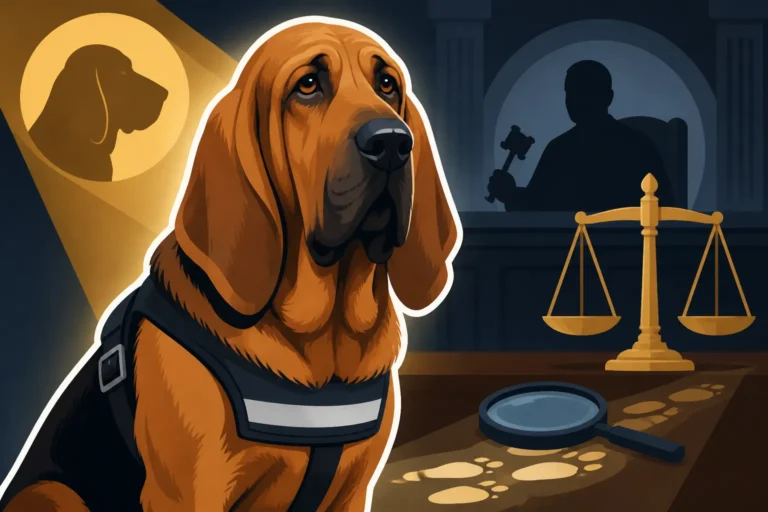
Nick Carter is not generally known to have a prominent public memorial such as a statue, dedicated museum, or nationally recognized historic site. His reputation comes chiefly from accounts of his trailing work and the stories repeated about his remarkable record. That is different from having a permanent, clearly documented monument that visitors can reliably seek out.
It is worth being careful with search results and retellings. A reference to a grave, a memorial, or a local tribute may be repeated without enough detail to establish where it is, who maintains it, or whether it commemorates this particular Bloodhound. Unless a source identifies the location and provides evidence that connects it to Nick Carter, treat the claim as unconfirmed rather than as a definite public landmark.
A grave and a public memorial are not the same thing
Even if a dog was buried privately, that would not necessarily mean the burial place is marked, open to visitors, or maintained as a memorial. Working dogs often lived with their handlers, and their graves could be on private land or in places that later changed ownership. A private grave might be meaningful to the people who knew the dog without becoming a recognized historic site.
That distinction matters for Nick Carter because the surviving public story focuses on what he did, not on a well-established memorial location. If you encounter a claim that he has a grave or marker, look for a named location, a clear connection to his handler, and an explanation of how the identification was established. A general mention of “a memorial” is not enough to confirm that visitors can find one today.
His best-known memorial is his place in Bloodhound history
For most readers, Nick Carter’s legacy is preserved through written accounts, breed histories, and later discussions of famous tracking dogs. The article Nick Carter, the Bloodhound With Six Hundred Fifty Finds explores why his reputation became so enduring, while Who Owned the Bloodhound Nick Carter provides useful context about the person associated with his working life.
That kind of remembrance is less tangible than a marker in a park, but it can still keep a historical animal in public memory. Nick Carter’s name continues to appear because people are interested in how a Bloodhound worked, what stories were told about his finds, and how his reputation was built. In that sense, his memorial is largely documentary rather than architectural.
Why Nick Carter became famous
His reputation grew from stories of working trails
Nick Carter became known through accounts that presented him as an exceptionally capable tracking dog. The appeal is easy to understand: a dog following a person’s trail across changing ground sounds almost uncanny, especially when the story ends with a successful identification or arrest. Those dramatic details helped turn an individual working Bloodhound into a symbol of the breed’s scenting ability.
But a famous story and a fully documented record are not always identical. Accounts can differ in how they describe a case, what “success” means, and how many finds should be credited to one dog. Some retellings simplify a complicated investigation into a neat tale of dog, trail, and capture. That does not erase Nick Carter’s importance; it does mean that specific numbers and individual case claims should be read with care.
The question of documentation is covered in Whether Nick Carter's Finds Were Documented. It is a useful companion if you are trying to separate a historical record from a story that has grown more polished with each retelling.
His story became tied to the Bloodhound’s public image
Bloodhounds have long attracted attention because their specialized scenting work seems so different from ordinary pet-dog behavior. Their long ears, loose skin, and deliberate focus are often described as features that help them work a trail. Nick Carter’s reputation gave the breed a memorable historical example: not just a dog with a powerful nose, but a dog whose work people associated with real investigations.
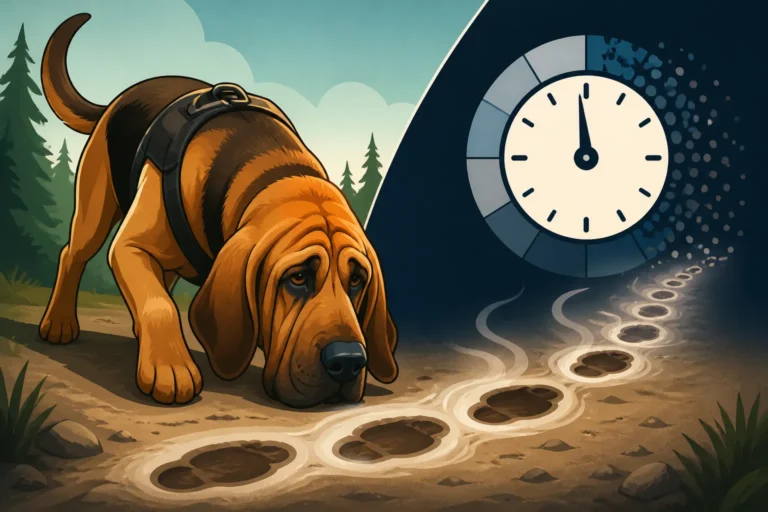
That public image can become larger than the available evidence. A celebrated dog may be described as flawless, even though tracking is affected by weather, surface, time, contamination, and the handler’s decisions. Understanding the broader context helps keep the story grounded. What a Bloodhound Is Actually Smelling on a Trail explains the scent-following process, and How a Bloodhound Separates One Person's Scent From a Crowd looks at a common question about the breed’s work.
Nick Carter’s fame also sits within a larger history of famous working dogs. The article Which Other Bloodhounds Are Famous can help put his reputation in perspective rather than treating him as the only notable dog in the breed’s story.
The famous number attached to him needs context
A large number of successful finds is one reason Nick Carter’s name continues to circulate. Yet a number on its own can be difficult to interpret. Does it count trails followed, people located, cases in which a dog assisted, or outcomes credited to the dog after an investigation? Those categories are not interchangeable, and older accounts may not define them consistently.
For a more focused look at one frequently repeated claim, see How Many Convictions Nick Carter's Nose Produced in 1903. The important point is not to dismiss every account, but to ask what exactly is being counted and how the figure was recorded. A careful description is more useful than repeating a dramatic total without explaining what it represents.
How to check claims about a Nick Carter memorial
Look for an exact location and a clear connection
If you are hoping to visit a memorial, start with the most practical questions: Where is it? Is it a grave, a marker, a museum display, or a commemorative plaque? Who maintains the site? Is it open to the public? A credible account should be able to answer these questions rather than simply saying that Nick Carter “has a memorial.”
Also check whether the location is directly connected to the dog and his handler. A town may celebrate local tracking history generally, or a site may honor working dogs as a group, without being a memorial to Nick Carter specifically. Those tributes can still be worthwhile, but they should not be confused with a dedicated memorial.
| Claim you find | What to check before treating it as confirmed |
|---|---|
| Nick Carter has a grave | Is the burial location identified, and is there evidence linking it to him? |
| A marker honors him | Does the marker name Nick Carter, or does it commemorate Bloodhounds more generally? |
| A museum displays his story | Is the exhibit permanent, and does it provide historical context? |
| A local site is connected to his work | Is the connection explained, or is it only repeated in informal accounts? |
| A website gives a precise location | Does it distinguish a public site from private property or an unverified claim? |
This kind of checking is especially helpful when a page gives a vivid story but no details that would let a reader confirm it. A specific place name is a starting point, not proof by itself.
Separate historical records from later retellings
A useful account should make clear whether it is drawing on contemporary records, a later biography, local tradition, or an unsourced retelling. Those forms of evidence do not carry the same weight. A newspaper story from the period may preserve valuable detail, but it can still reflect the language and assumptions of its time. A later article may offer helpful context, but it should explain where its information comes from.
The same caution applies to the story of Nick Carter’s work. Where Nick Carter Worked can help readers understand the geographic setting associated with his career, while Whether Nick Carter's Record Has Been Beaten explores how people compare his reputation with other tracking dogs. These topics are related to his legacy, but neither automatically proves that a physical memorial exists.
Be cautious about private property and old burial claims
A supposed grave or marker may be on private land, may have been moved, or may no longer be accessible. Do not assume that a location mentioned in an old account is open for visitors. If a site is privately owned, respect posted boundaries and seek permission rather than arriving unannounced.
It is also reasonable to ask local historical organizations or libraries whether they hold records about a claimed marker. A reliable answer may be that the organization knows the story but cannot verify a physical memorial. That is still useful information: it helps distinguish community memory from a confirmed, visitable site.
What Nick Carter’s legacy means today
His influence is cultural as much as physical
People often search for a memorial because they want a place where history feels concrete. A grave marker or statue gives a visitor something to stand beside. Nick Carter’s story, however, is chiefly encountered through written history and the enduring fascination with Bloodhound tracking. That may feel less satisfying if you hoped to plan a visit, but it explains why his name continues to matter even without a widely recognized monument.
His legacy also invites a broader question about how working animals are remembered. A dog may contribute to a community’s history without receiving the sort of formal commemoration that a human figure might. Later writers, breed clubs, historians, and dog enthusiasts can preserve the story, but their accounts still benefit from careful sourcing and clear distinctions between established fact and legend.
His story should be remembered without turning it into myth
It is possible to admire Nick Carter’s reputation while acknowledging that old accounts can be incomplete. Respecting the dog does not require claiming that every story is proven, that every trail was successful, or that a particular memorial exists without reliable confirmation. A thoughtful account can celebrate his place in Bloodhound history and still be honest about what is not firmly established.
That balance is especially important when people use historical examples to make claims about the breed today. Nick Carter’s fame does not mean every Bloodhound will perform the same way, nor does it make scent work infallible. For readers interested in the breed’s abilities and limits, Whether a Bloodhound Can Be Wrong offers a useful reminder that a dog’s work is part of a broader process involving training, conditions, and human interpretation.
The direct answer
Nick Carter does not appear to be associated with a widely recognized public monument or an established memorial site that visitors can confidently locate. His remembrance is primarily carried through accounts of his tracking work and his status as a famous Bloodhound. Claims about a particular grave, marker, or local tribute should be checked for a precise location and a clear historical connection before being treated as confirmed.
Disclaimer
This article is for general informational purposes only and does not constitute professional advice. Laws, prices and regulations vary by location and change over time. Consult a qualified professional for guidance on your specific situation.