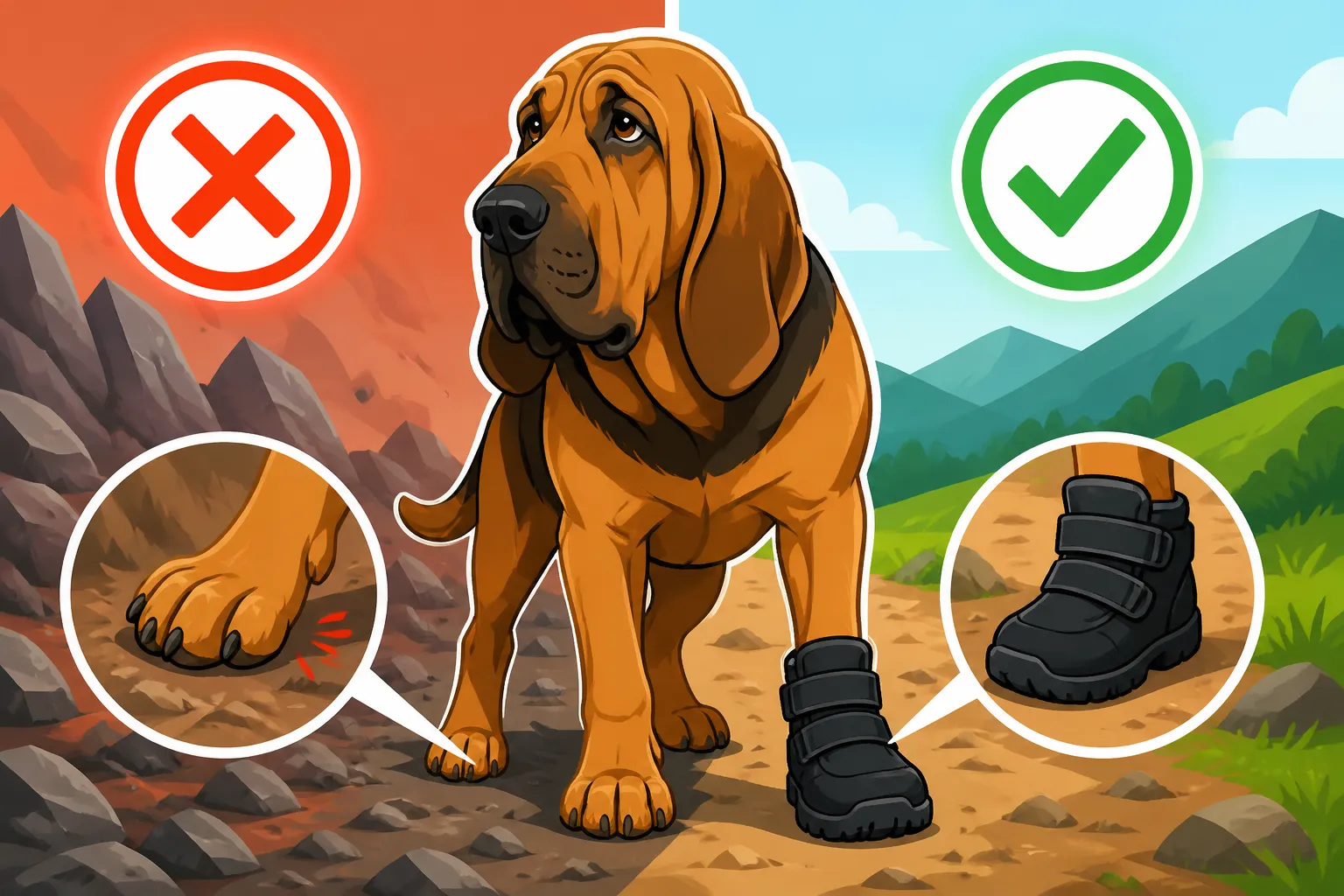
Whether a Bloodhound Needs Boots for Rough Ground
There's nothing quite like watching your Bloodhound, nose to the ground, absolutely lost in a scent. It's a beautiful, primal sight. But when that trail takes them over gravel, hot asphalt, icy crust, or sharp rocks, a pang of worry probably hits you right in the gut. Those magnificent paws, so crucial to their work and joy, are also incredibly vulnerable. This guide is all about whether your Bloodhound actually needs boots for those challenging terrains, and how to keep their paws healthy no matter where their nose leads them.
The Unique Vulnerability of a Bloodhound's Paws
Bloodhounds are built for endurance, not necessarily for traversing jagged landscapes without a care in the world. Their pads, while tough from daily use, aren't impervious to damage. Unlike some breeds with denser, more compact feet, a Bloodhound's paw structure, combined with their relentless focus on scent, can put them at a higher risk for injury on rough or extreme surfaces.
Think about it: a Bloodhound isn't picking and choosing its path like a casual walker might. If a scent goes through a patch of thorns, over broken concrete, or across a field of sharp stubble, your Bloodhound is going through it. Their drive to follow the trail often overrides any immediate discomfort, meaning they might not even register a minor cut or abrasion until much later. This dedication, while admirable, can lead to painful injuries if their paws aren't adequately protected. Plus, those deep wrinkles on their face and long ears might get all the attention, but their paws are truly their primary tool for their life's work. It's a good idea to remember how much your dog relies on those feet.
Anatomy and Function of Bloodhound Paws
A Bloodhound's paw pads are essentially thick skin and fatty tissue designed to absorb shock and provide traction. They have an intricate network of blood vessels and nerves, making them sensitive to temperature, pressure, and pain. While regular exposure to varied terrains can toughen them up, there's a limit. Prolonged contact with abrasive surfaces can wear down the protective outer layer, leading to tenderness, cracks, or even open wounds.
Furthermore, the webbing between their toes can be susceptible to foreign objects like burrs, small stones, or even compacted mud and ice. Once something gets lodged in there, it can rub and irritate, eventually causing an infection if not caught and treated promptly. Their large, heavy frame also means their paws bear a significant amount of weight, which can exacerbate issues on unforgiving surfaces. For owners, this means that while their dog's nose is a marvel, their feet require constant vigilance.
The Impact of Trail Work on Paw Health
For Bloodhounds engaged in mantrailing or search and rescue, their paws are their livelihood. They might spend hours on varied terrain, from urban concrete jungles with hidden glass shards to dense forest floors littered with sharp sticks and uneven rocks. The sheer volume of work they put in means their paws are subjected to constant stress and potential injury.
A minor cut or bruise on a paw pad can escalate quickly into a major lameness issue, sidelining a working Bloodhound for weeks. Imagine your dog's frustration, eager to work but unable to put weight on a sore foot. This isn't just about pain; it's about their mental well-being too. Ensuring their paws are in top condition is paramount for their continued ability to do what they love. Regular inspection and preventative care, like knowing Conditioning a Bloodhound's Feet for Trail Work, are absolutely vital.
Identifying "Rough Ground" for Your Bloodhound
When we talk about "rough ground," it's not always just jagged rocks or broken glass. The definition can be much broader, encompassing a variety of surfaces and conditions that pose a threat to your Bloodhound's paw pads. Understanding these hazards is the first step in deciding if boots are a necessary part of your paw protection strategy.
Common Hazardous Surfaces and Conditions
Let's break down some typical scenarios where your Bloodhound's paws might be at risk:
- Extreme Temperatures: This is a big one. Think about how hot asphalt gets in direct summer sun – it can reach temperatures high enough to cause serious burns in minutes, equivalent to a second-degree burn on human skin. Conversely, frozen ground, ice, and packed snow can lead to frostbite, especially with prolonged exposure. Whether Heat Shortens What a Bloodhound Can Do applies not just to their stamina, but to their paws too. Salt and de-icers used in winter are also corrosive and can cause chemical burns and drying. If you live somewhere with harsh winters, you already know Whether Road Salt Hurts a Bloodhound's Pads.
- Abrasive Surfaces: Gravel roads, concrete sidewalks, rough asphalt, and even certain types of synthetic turf can act like sandpaper on paw pads. Over time, these surfaces can wear down the protective layers, making the pads thinner, more sensitive, and prone to cracking or blistering.
- Sharp Objects: This is probably what most people think of first. Broken glass, sharp rocks, thorns, splinters from fallen branches, metal debris, or even stiff, dry stubble in a field can easily puncture or lacerate a paw pad or the delicate skin between the toes. Even a small, embedded object can cause immense pain and lead to infection.
- Chemical Irritants: Beyond road salt, lawn chemicals, pesticides, antifreeze spills, or even some industrial residues can be toxic or severely irritating if absorbed through the pads or licked off after a walk.
Assessing the Risk Based on Activity and Environment
The need for boots really depends on where your Bloodhound spends its time and what kind of activities you do together. A Bloodhound mostly enjoying a well-manicured suburban yard and occasional park walks might rarely encounter truly hazardous conditions. However, a Bloodhound that joins you on hikes through wilderness trails, accompanies you on city pavement searches, or works in agricultural fields will face a much wider array of threats.
If your Bloodhound is prone to excessive licking or chewing their paws after walks, it might be a sign that they're experiencing discomfort or irritation from the ground. Similarly, any limping, tenderness, or visible cuts should prompt an immediate paw inspection. Be honest with yourself about the environments you expose your dog to. If your adventures frequently involve any of the hazardous surfaces listed above, then considering paw protection is not just a good idea, it's a responsible one.
The Practicalities of Bloodhound Boots: When, Why, and How
So, you've assessed the risks and think boots might be the way to go. Excellent! But dog boots aren't a one-size-fits-all solution, and getting your Bloodhound to accept them can be a journey in itself. Let's delve into the ins and outs of paw protection.
Benefits and Drawbacks of Using Dog Boots
Dog boots offer several clear advantages, particularly for a Bloodhound:
- Protection from Injury: This is the most obvious benefit. Boots create a physical barrier against sharp objects, abrasive surfaces, and extreme temperatures. They can prevent cuts, punctures, burns, and frostbite, which means fewer emergency vet visits and less downtime for your dog.
- Prevention of Chemical Exposure: Boots shield paws from road salts, de-icers, pesticides, and other irritating or toxic chemicals they might encounter. This is especially important as dogs often lick their paws, inadvertently ingesting harmful substances.
- Improved Traction: Some boots are designed with enhanced grip, which can be invaluable on slippery surfaces like ice, wet concrete, or slick rock, helping to prevent slips and falls.
- Support for Injured Paws: If your Bloodhound already has a minor paw injury, a boot can protect the wound from further damage or contamination during walks, allowing it to heal more effectively.
However, boots also come with their own set of challenges:
- Acceptance Issues: Many dogs, especially those not introduced to boots as puppies, find them strange and uncomfortable. You might see the famous "boot dance" where they lift their paws high, try to shake them off, or even chew at them. Patience and positive reinforcement are key here.
- Fitting Challenges: Bloodhounds have large paws, and finding boots that fit snugly without being too tight or too loose can be tricky. A poorly fitting boot can rub, cause blisters, or fall off easily, negating its purpose.
- Reduced Sensory Input: Boots can reduce your Bloodhound's natural feel for the ground, which might affect their confidence or proprioception on trails, especially for a dog that relies so much on tactile input.
- Maintenance: Boots need to be cleaned after use, especially if they've been in mud or dirty conditions. They also need to be checked for wear and tear, and replaced when necessary.
- Cost: Quality dog boots can be an investment, particularly if you need multiple pairs for different conditions or if your dog is particularly hard on them.
Choosing the Right Boots for Your Bloodhound
Selecting the perfect pair of boots for your Bloodhound involves considering the specific conditions you'll be using them in, as well as your dog's comfort.
-
Material:
- Rubber/Silicone: Excellent for waterproof protection against rain, snow, and salt. They often offer good grip.
- Neoprene: Provides insulation for cold weather and is somewhat water-resistant.
- Cordura/Durable Fabric: Good for general abrasion protection on rough trails. Look for reinforced toes and soles.
- Leather/Synthetic Leather: Can offer good durability and flexibility.
-
Sole Type:
- Thick, rugged soles are best for sharp rocks, thorns, and very abrasive surfaces.
- Textured, grippy soles are crucial for ice and slippery conditions.
- Thinner, more flexible soles might be better for dogs who need more ground feel, but offer less protection.
-
Closure System:
- Velcro straps are common, but ensure they are wide and secure enough to prevent the boots from slipping off. Some boots have multiple straps for a more secure fit around the dewclaw area.
- Drawstrings/Cinching mechanisms can also help customize the fit.
-
Height:
- Ankle-height boots are sufficient for basic paw protection.
- Higher boots that extend further up the leg offer more protection against snow, burrs, or deep mud, and are often harder for dogs to shake off.
When shopping, popular online retailers like Amazon and Chewy offer a vast selection of brands and styles, allowing you to compare features and read reviews from other large dog owners.
Fitting and Acclimating Your Bloodhound to Boots
Getting the right fit is critical. Measure your Bloodhound's paws carefully. You'll want to measure the widest part of the paw while they are standing and putting weight on it. If there's a significant difference between front and back paw sizes (which is common for large breeds), you might need two different sizes or a set of four where the sizes can be mixed. Remember, you want a snug fit that won't twist or slip, but also doesn't pinch.
Introducing boots should be a gradual process filled with positive associations:
- Start Indoors: Put on one boot at a time for short periods. Immediately offer high-value treats and praise. Let them walk around in it for a minute, then take it off.
- Increase Duration: Gradually increase the time they wear one boot, then two, then all four. Keep the sessions short and positive.
- Walk Around: Once they tolerate wearing them indoors, try a short walk outside on a familiar, comfortable surface. Again, keep it brief and positive.
- Gradual Exposure to Rough Ground: Only once they are fully comfortable walking in boots on easy terrain should you introduce them to the truly rough ground you bought them for.
Consistency and patience are key. Never force the boots on or punish your Bloodhound for trying to remove them. Make it a fun game, and they'll be much more likely to accept their new footwear.
| Terrain Type | Risk Level | Recommended Protection | Notes |
|---|---|---|---|
| Hot Asphalt/Pavement | High | Boots (rubber or heat-resistant sole) | Can cause severe burns quickly. Test surface with your hand for 5 seconds. |
| Icy/Snowy Pavement | High | Boots (waterproof, insulated) | Prevents frostbite, protects from salt/de-icers. |
| Sharp Rocks/Gravel | High | Boots (rugged, thick sole) | Shields from cuts, abrasions, and embedded debris. |
| Desert/Arid Trails | High | Boots (durable fabric, thick sole) | Protects from sharp plants, hot sand/rocks, and excessive drying. |
| Forest Floor (light) | Low-Medium | Paw Balm/Wax, occasional boots | Generally safe, but watch for thorns, sharp sticks, or burrs. Whether a Bloodhound's Nails Wear Down on Trail here. |
| Sandy Beaches | Low-Medium | Paw Balm/Wax, occasional boots | Protects from hot sand and irritation; rinse paws after. |
| Grassy Fields | Low | None/Paw Balm | Generally safe, but check for ticks, burrs, and allergens. |
| Indoor Floors | Low | None | Not typically needed, unless for traction on slippery surfaces. |
Beyond Boots: Comprehensive Paw Care for Your Trailing Companion
While boots are an excellent solution for specific challenging conditions, they aren't meant for every moment of your Bloodhound's life. A holistic approach to paw care ensures their feet remain tough, healthy, and ready for adventure, whether they're wearing boots or not. This involves daily checks, preventative measures, and knowing when to seek professional help.
Daily Paw Inspections and Cleaning
Your Bloodhound's paws should be part of your daily routine. After every walk or trail session, especially if you've been on varied terrain, take a few minutes to meticulously inspect each paw. Gently spread their toes and examine the pads, the skin between the pads, and around the nails.
Look for:
- Cuts, scrapes, or punctures: Even tiny ones can become infected.
- Redness or swelling: Signs of irritation, inflammation, or infection.
- Foreign objects: Burrs, thorns, small stones, or even sticky sap can get lodged in the fur or between the pads.
- Cracks or dryness: Indicates the pads are losing their natural moisture and flexibility.
- Excessive licking or chewing: A clear indicator of discomfort or irritation.
If you find anything, address it promptly. For minor dirt or debris, a warm, damp cloth is usually enough. For stubborn mud, or if they've stepped in something questionable, a gentle paw wash with dog-specific shampoo and thorough rinsing is in order. Make sure to dry their paws completely, especially between the toes, to prevent moisture-related issues like yeast infections. This diligence is just as important as knowing How Often a Bloodhound's Nails Need Trimming.
Moisturizing and Conditioning Paw Pads
Just like our hands and feet, a Bloodhound's paw pads can become dry and cracked, especially in extreme weather or with frequent exposure to harsh surfaces. Cracked pads are not only painful but also create easy entry points for bacteria and infection.
Regularly apply a good quality, dog-safe paw balm or wax. Products from brands like Burt's Bees or Musher's Secret are often recommended by dog owners and can be found on Chewy or at your local pet supply store. These balms create a protective barrier, lock in moisture, and help keep the pads supple. Apply it before bed so it has time to soak in without being immediately licked off. This step is a small investment of time that can save a lot of discomfort and potential vet bills down the line.
Nail Care and Its Importance for Paw Health
Long nails can cause a myriad of problems for your Bloodhound's paws and overall posture. When nails become too long, they can push the toes upwards, affecting the dog's balance and putting undue stress on the paw joints and even the leg structure. This can lead to splayed feet, discomfort, and even lameness over time.
Regular nail trims are essential. For a Bloodhound, this might mean every 2-4 weeks, depending on how quickly their nails grow and how much natural wear they get. If you can hear their nails clicking on hard floors, they're too long. If your Bloodhound is not accustomed to nail trims, start slowly and make it a positive experience with treats and praise. If you're unsure or uncomfortable doing it yourself, don't hesitate to ask your vet or a professional groomer for assistance. Proper nail length allows their paw pads to bear weight correctly and grip surfaces effectively.
When to Seek Veterinary Attention for Paw Issues
Sometimes, despite your best efforts, paw problems can arise or become more serious than a simple home remedy can fix. Knowing when to call the vet is crucial.
You should seek veterinary attention if you notice any of the following:
- Deep cuts or punctures: Especially if they are bleeding heavily, deep, or if you suspect a foreign object is embedded.
- Severe limping or non-weight-bearing lameness: This indicates significant pain or injury.
- Persistent swelling, redness, or discharge: These are classic signs of infection.
- Foul odor: Often associated with bacterial or yeast infections, especially between the toes or in deep cracks.
- Persistent licking or chewing: If your Bloodhound can't leave their paw alone, there's a reason, and it needs to be investigated.
- Difficulty walking or reluctance to move: Could be a symptom of paw pain affecting their mobility.
- Any concerns about a suspected burn or frostbite.
Early intervention can prevent minor issues from becoming major health problems. Your veterinarian can accurately diagnose the problem, provide appropriate treatment (such as antibiotics for infection, wound care, or pain relief), and offer tailored advice for your Bloodhound's specific needs.
Disclaimer
This article is for general informational purposes only and does not constitute professional advice. Laws, prices and regulations vary by location and change over time. Consult a qualified professional for guidance on your specific situation.