Whether Road Salt Hurts a Bloodhound’s Pads
Winter walks can be a magical experience with your Bloodhound, the crisp air filling their incredible nose with a symphony of scents. But for many of us living in colder climates, that joy is often accompanied by a lurking worry: the invisible threat of road salt and de-icers that line our streets and sidewalks. It’s a genuine concern, and you’re not alone in wondering if these harsh chemicals are doing damage to your Bloodhound’s sensitive paw pads. This guide is here to walk you through exactly how road salt impacts your companion's paws, what signs to look for, and most importantly, how to protect them so those winter adventures remain joyful and pain-free.
The Harsh Reality of Winter Walking and Your Bloodhound's Paws
As responsible Bloodhound owners, we know our dogs need their outdoor time, no matter the weather. Their noses demand it! But when snow and ice blanket our communities, out come the de-icing agents, transforming seemingly safe walking paths into potential minefields for sensitive paws. It's not just a minor irritation; these chemicals can cause real harm.
Why Road Salt Is Such a Menace
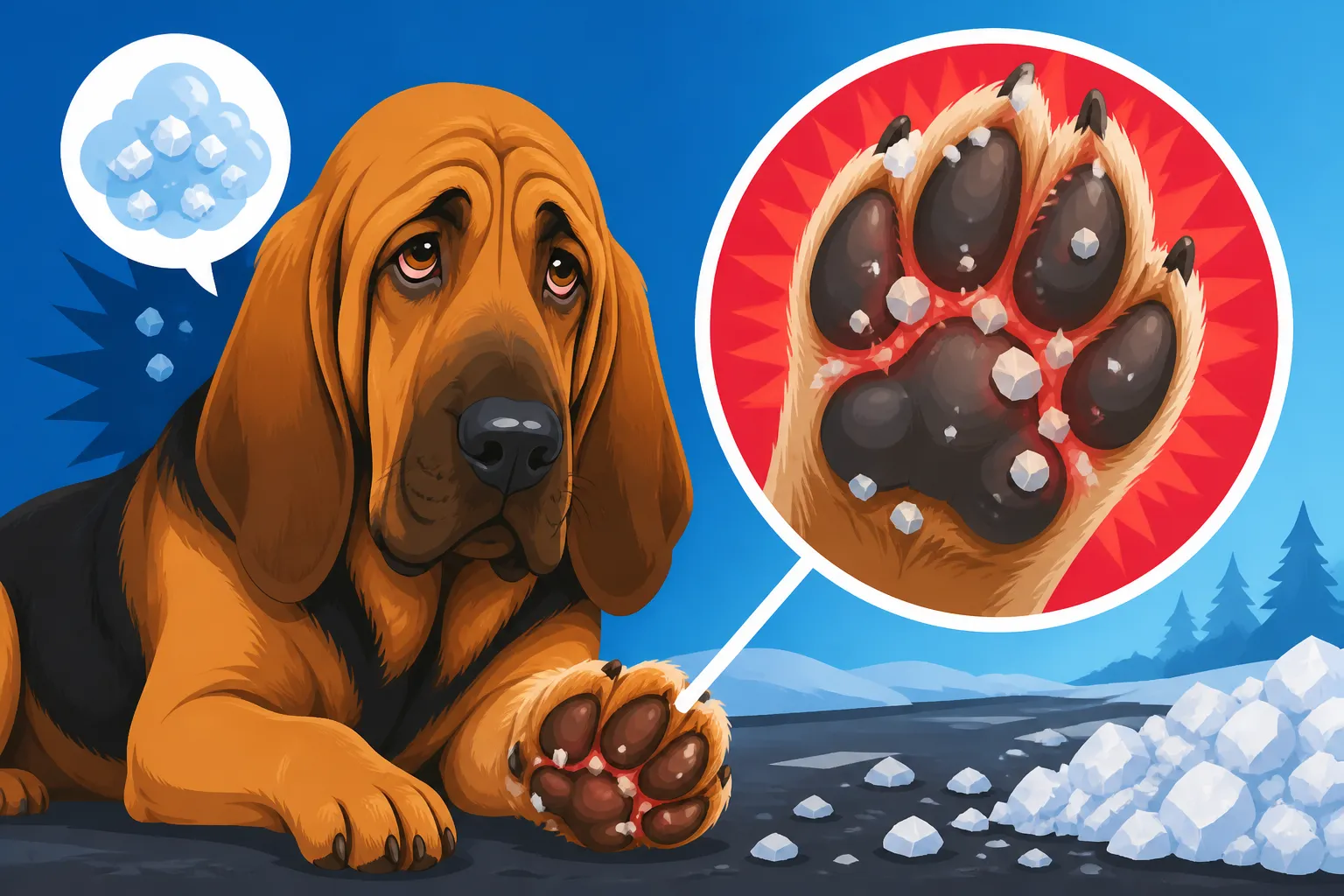
Road salt isn't just one thing; it's a blanket term for various chemical compounds used to melt ice. The most common is sodium chloride, which is essentially rock salt. While effective at melting ice, it's incredibly drying and can be quite corrosive, especially when it gets between paw pads and lingers. Think about how your hands feel after handling rock salt – now imagine that on soft, sensitive skin. Other de-icers might include calcium chloride or magnesium chloride, which can actually generate heat when they react with moisture, leading to chemical burns on exposed skin. These compounds are designed to break down ice, and in doing so, they can also break down the protective layers of your Bloodhound’s paw pads, leading to dryness, cracking, and irritation. It’s a necessary evil for clear roads, but a definite hazard for our beloved hounds.
The problem isn't just the direct contact. These salts don't just disappear; they form a brine that your Bloodhound walks through, soaking into their pads and fur. Then, when they come inside, the brine dries, concentrating the irritants. It's a double whammy: the initial exposure on the street, and then the prolonged contact as it dries on their paws. Even after the snow has melted, residual salt can linger on sidewalks and street edges for days, meaning the threat isn't gone just because the sun is out.
The Unique Vulnerabilities of a Bloodhound's Paws
Bloodhounds are generally robust dogs with strong, substantial paws built for covering ground, but they aren't immune to the effects of harsh chemicals. Their sheer size and weight mean more pressure on those pads with every step, potentially grinding irritants deeper into cracks or abrasions. Furthermore, a Bloodhound's characteristic low-slung body and long, pendulous ears mean more of their underside and legs are exposed to slush and salty spray from the ground. It's not just their paw pads; the delicate skin between their toes, on their hocks, and even on their belly can become irritated and chafed by the constant contact with salty water.
Consider their instinctual sniffing behavior. A Bloodhound’s nose is always to the ground, pulling them through puddles and slush where salt accumulates most heavily. This means maximum exposure, not just to their feet but to their dewlaps and chest as well. This constant contact can exacerbate any skin sensitivities or even contribute to issues like skin fold dermatitis if the moisture and irritants get trapped in their magnificent wrinkles. Keeping those areas clean is just as important as paw care.
Spotting the Signs of Salt Damage
Knowing what to look for is the first step in addressing salt-related paw issues. Your Bloodhound, being the stoic creature they often are, might not immediately yelp in pain, but they'll give you subtle clues. After a walk, pay close attention if they start excessively licking or chewing at their paws. This is a common indicator of irritation or discomfort. You might also notice them favoring a paw, lifting it frequently, or even limping slightly – sometimes it’s just a momentary sting, but other times it can be a sign of deeper irritation.
Physically, examine their paw pads. Are they red, inflamed, or unusually dry and cracked? You might even see small cuts or abrasions that the salt has aggravated. The skin between their toes can also become red and swollen. In severe cases, you might spot blistering or bleeding, which requires immediate veterinary attention. Don't forget to check their legs and belly too; redness or a rash on these areas can also indicate salt exposure. Catching these signs early means you can intervene before minor irritation escalates into a painful infection or severe chemical burn.
Immediate Action and Ongoing Care for Salt-Exposed Paws
Once you've braved the winter elements with your Bloodhound, the work isn't over. The moments immediately following your walk are crucial for preventing salt damage, and consistent care can keep their pads healthy all season long.
The Crucial Post-Walk Rinse and Wipe
This is arguably the most important step in protecting your Bloodhound's paws from road salt. As soon as you step back inside, make it a habit to thoroughly clean their feet. Don't delay! A simple basin of warm water and a soft cloth or towel works wonders. You don't always need soap, but if their paws are particularly grimy, a mild, dog-specific paw shampoo can be helpful. The key is to rinse away all traces of salt, slush, and de-icing chemicals. Pay special attention to the areas between their paw pads, where salt can hide and cause the most irritation.
Many owners find a dedicated paw washer cup incredibly useful – these typically have soft silicone bristles inside and make cleaning quick and efficient. After rinsing, always, always, always dry their paws completely. Moisture trapped between pads, even clean water, can lead to its own set of problems, like yeast infections. Using a soft towel, gently pat and rub each paw, ensuring the skin between the toes is dry. This quick routine, though it might add a few minutes to your return home, is an absolute game-changer for paw health. Just like you might need What a Bloodhound Owner Spends on Towels and Cleaner for drool and dirt, having dedicated paw towels is a must!
Soothing and Healing Damaged Pads
If you do spot signs of irritation, like dryness or minor cracks, it's time to bring out the soothing balms. There are many excellent dog-specific paw balms and waxes designed to moisturize and create a protective barrier. Look for natural ingredients like shea butter, coconut oil, beeswax, or vitamin E. Apply a generous amount to their pads before bed or when they're settled, giving it time to absorb. Brands like Musher's Secret or a good quality paw balm you might find on Chewy or Amazon can work wonders. If your Bloodhound tries to lick it off, a recovery cone or a soft bootie might be necessary for a short while to let the balm sink in.
For more significant damage, such as deep cracks, bleeding, or chemical burns, a trip to the vet is non-negotiable. These can become infected very quickly, and your veterinarian can provide appropriate medicated creams, antibiotics, or pain relief. Never try to self-diagnose or treat severe paw injuries, especially with human products, as many can be toxic to dogs. Early intervention is key to preventing long-term damage and ensuring your Bloodhound stays comfortable.
Preventing Ingestion: A Hidden Danger
Beyond the direct irritation to their paws, there’s another critical concern: ingestion. Dogs naturally lick their paws, especially when they’re itchy or uncomfortable. This means that any salt or de-icing chemical residue left on their pads after a walk can be ingested. Many de-icing agents are not just irritants but can be toxic if consumed in significant quantities. Ingesting these chemicals can lead to gastrointestinal upset, including vomiting, diarrhea, and abdominal pain. In more severe cases, depending on the specific chemicals involved (like certain types of antifreeze or some calcium chloride blends), it can cause kidney damage, neurological issues, or even be life-threatening.
This is precisely why the immediate and thorough post-walk paw cleaning is so vital. By removing the chemicals before your Bloodhound has a chance to lick them off, you eliminate the risk of ingestion. If you suspect your Bloodhound has ingested a large amount of road salt or de-icer and shows symptoms beyond mild stomach upset, contact your veterinarian or an emergency animal hospital immediately. Knowing what your local municipality uses for de-icing can also help your vet determine the best course of action.
Proactive Protection: Gear and Habits to Adopt
Prevention is always better than cure, especially when it comes to your Bloodhound’s delicate paws. Thankfully, there are several proactive steps you can take to minimize their exposure and keep them comfortable throughout the winter months.
The Case for Bloodhound Boots
While not every Bloodhound will be thrilled about wearing boots, they are undeniably the most effective barrier against road salt, ice, snow, and even rough terrain. For breeds like the Bloodhound, whose paws are constantly exposed, boots offer comprehensive protection. Finding the right fit is crucial: they need to be snug enough to stay on, but not so tight that they restrict circulation or cause rubbing. Look for boots designed for large breeds, with durable soles, waterproof materials, and adjustable straps or Velcro to ensure a secure fit around their ankles. Brands like Ruffwear or Pawz (disposable rubber boots) are popular choices often found on Chewy or Amazon, but you might need to try a few styles to see what your particular hound tolerates.
Introducing boots might take some patience. Start by putting them on for very short periods inside, associating them with treats and positive reinforcement. Gradually extend the time and introduce them during short walks in the yard before tackling a full neighborhood stroll. It can be a comical sight at first, with the "Bloodhound boot dance," but once they get used to them, the protection they offer is invaluable. If your Bloodhound is particularly sensitive or if you live in an area with heavy salting, boots are a worthwhile investment in their health. You might even find yourself considering Whether a Bloodhound Needs Boots for Rough Ground for warmer weather adventures if they adapt well to paw protection.
Paw Waxes and Balms as a Barrier
For Bloodhounds who absolutely refuse to wear boots, or for those days when the salt exposure isn't quite as severe, paw waxes and protective balms are an excellent alternative. These products create a breathable, invisible barrier on your dog’s paw pads, shielding them from the drying and irritating effects of salt, ice, and cold temperatures. Think of it like a chapstick for their paws! They work by forming a protective layer that repels moisture and irritants.
Apply these waxes generously to your Bloodhound's paw pads and in between their toes before heading out for a walk. Make sure to massage it in well, so it adheres properly. Reapply as needed, especially if your walk is long or if you notice the barrier wearing off. Many of these waxes also contain moisturizing ingredients that help keep pads supple and prevent cracking in the first place. As mentioned earlier, natural ingredients are best, and always opt for products specifically formulated for dogs, as they are safe if ingested when your dog licks their paws.
Choosing Safe Walking Routes
Sometimes, the simplest solution is the best. You can significantly reduce your Bloodhound’s exposure to road salt by being strategic about where and when you walk. If possible, seek out routes that are less heavily salted. This might mean walking on grassy verges next to the sidewalk rather than directly on the pavement, or exploring parks and trails that aren't treated with de-icers. While your Bloodhound's nose will inevitably take them off the beaten path, trying to stick to areas with natural snow cover instead of chemically treated surfaces can make a big difference.
Consider the time of day, too. After a fresh snowfall, sidewalks might not be heavily salted right away. Conversely, after an ice storm, main thoroughfares will likely be saturated. If you have the flexibility, try to walk during times when temperatures might be higher and salt has had a chance to melt and dissipate, or when maintenance crews haven't yet applied fresh layers. Remember, your Bloodhound still needs How Much Exercise a Bloodhound Actually Needs, even in winter, so finding safe, alternative routes can ensure they get their mental and physical stimulation without unnecessary risk to their paws.
Beyond Winter: Year-Round Pad Health Is Key
While road salt is a seasonal concern, your Bloodhound's paw pads face challenges year-round. Maintaining their health consistently is vital, ensuring they are resilient enough to handle whatever comes their way, be it winter chemicals or summer heat.
Regular Paw Inspections and Maintenance
Paw care isn't just for winter; it's a year-round commitment. Make it a routine to inspect your Bloodhound's paws regularly – ideally, at least once a week, but more frequently if they're very active or showing any signs of discomfort. Check for any cuts, scrapes, thorns, foxtails, or other foreign objects that might have become lodged between their pads. Look for redness, swelling, or any unusual discharge. Just like Everything on a Bloodhound Hangs Down and Has to Be Cleaned, their paws are exposed to the elements and need attention.
Part of this routine should include keeping the hair between their paw pads trimmed. Long hair can trap moisture, dirt, and debris, creating a breeding ground for bacteria or yeast, and making it harder to spot injuries. It also collects snow and ice balls in winter, which can be incredibly painful. Use blunt-nosed scissors or a small electric trimmer to carefully snip away excess hair, making sure not to cut too close to the skin. Regular nail trimming is also crucial; overgrown nails can change their gait, put pressure on their paw pads, and even make them more susceptible to injury. Learning How Often a Bloodhound's Nails Need Trimming is a fundamental part of responsible ownership.
Conditioning Your Bloodhound's Paws
Believe it or not, paw pads can be conditioned and toughened over time. Regular walks on varied, natural surfaces like dirt, grass, and gravel (avoiding extremely hot or rough surfaces, of course) can help build thicker, more resilient pads. Think of it like building calluses on your own hands. However, there’s a fine line between conditioning and causing injury. Always be mindful of the terrain and your dog’s comfort.
If your Bloodhound is involved in scent work or Conditioning a Bloodhound's Feet for Trail Work, you'll already be familiar with the importance of keeping their paws in top shape. However, even for pet Bloodhounds, a good foundation of paw health makes them less susceptible to everyday irritations and better prepared for seasonal challenges like road salt. Incorporating paw massages can also improve circulation and help you identify any problems early.
What if it's Not Salt? Other Paw Problems
It's easy to blame road salt for all paw troubles during winter, but sometimes, irritation or lameness can stem from other issues entirely. It's important to differentiate to ensure your Bloodhound gets the correct treatment. Allergies are a common culprit for paw licking and redness, often manifesting with seasonal flare-ups or reactions to certain foods. Environmental allergens, like pollen or dust mites, can cause intense itchiness, leading your Bloodhound to chew at their paws until they become raw or infected.
Foreign objects, as mentioned, are always a possibility – a small stone, a piece of glass, or a burr lodged between pads can cause significant pain and limping. Fungal or bacterial infections can also cause redness, itchiness, and an unpleasant odor. Sometimes, structural issues like arthritis or minor sprains can cause a dog to favor a paw. Even in winter, frostbite is a concern, especially on unprotected paw pads in extremely cold temperatures. If paw issues persist despite careful salt management, or if you see symptoms like pus, severe swelling, or lameness, always consult your veterinarian to get an accurate diagnosis and treatment plan. It's always better to be safe than sorry when your Bloodhound's comfort is at stake, just as you would monitor for Signs a Bloodhound's Fold Has Become Infected.
Disclaimer
This article is for general informational purposes only and does not constitute professional advice. Laws, prices and regulations vary by location and change over time. Consult a qualified professional for guidance on your specific situation.