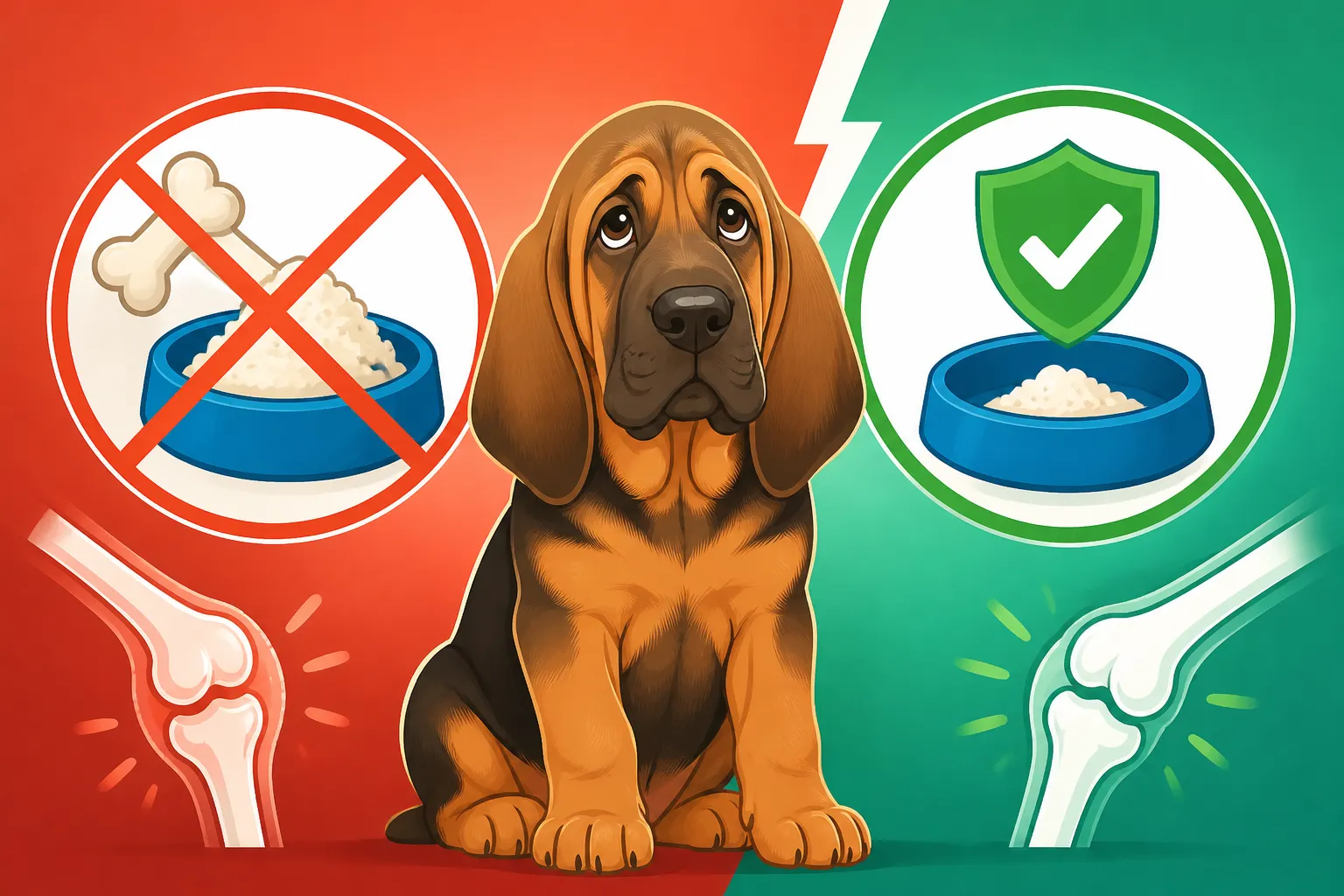
Whether a Bloodhound Puppy Needs Restricted Calcium
Bringing home a Bloodhound puppy is an exciting time, filled with dreams of long walks, happy bays, and that unmistakable deep, wrinkled affection. However, amidst all the joy, many new owners find themselves completely overwhelmed by conflicting advice on feeding, especially regarding calcium. There's a lot of well-meaning but ultimately confusing information out there, and the thought of accidentally harming your growing giant can be truly anxiety-inducing. This guide is here to cut through the noise, explaining exactly why calcium balance is so critical for your Bloodhound puppy and how to ensure they get precisely what they need without going overboard or falling short.
The Unique Growth Needs of a Giant Breed Puppy
When you look at a Bloodhound puppy, it's easy to forget that this adorable, clumsy fluffball will eventually grow into a massive, powerful dog weighing over 100 pounds. This incredible growth spurt, happening in a relatively short period, places immense demands on their developing skeletal system. Unlike smaller breeds that mature quickly but don't gain as much mass, Bloodhounds are classified as a giant breed, meaning their growth plates are open for longer, and their bones need to support rapidly increasing weight.
This rapid growth isn't just about getting bigger; it's about the intricate process of bone formation, cartilage development, and muscle growth all happening simultaneously. If this process isn't supported correctly through nutrition, particularly with a careful eye on mineral balance, your Bloodhound puppy can be prone to a host of developmental orthopedic diseases that could plague them for life. It's a critical window where good nutrition can set them up for a lifetime of health, or where missteps can lead to significant problems.
Why Rapid Growth is a Double-Edged Sword for Bloodhounds
The sheer speed at which a Bloodhound puppy gains size and weight is breathtaking. Imagine a human baby quadrupling its birth weight in a year; that's the kind of intense physiological change happening in your growing hound. Their bones are lengthening and thickening, their joints are forming, and their cartilage is maturing. All of this requires a precise balance of nutrients.
Unfortunately, this rapid growth, while natural, also makes Bloodhounds incredibly susceptible to developmental orthopedic diseases like hip and elbow dysplasia, osteochondritis dissecans (OCD), and panosteitis. Their genetic predisposition plays a huge role, of course, but nutrition acts as a critical environmental factor that can either mitigate or exacerbate these conditions. Overfeeding, especially with diets that are too high in calories or the wrong balance of minerals, can force growth at an unnatural, unhealthy pace, putting undue stress on immature joints and bones. This is why managing their growth rate, rather than accelerating it, is paramount. You want steady, healthy growth, not fast growth.
The Role of Calcium and Phosphorus in Bone Development
Calcium and phosphorus are the dynamic duo of bone health. They are the most abundant minerals in a dog's body, primarily found in bones and teeth. Calcium is vital for bone mineralization, nerve transmission, muscle function, and blood clotting, while phosphorus is also a key component of bones and teeth, and plays a role in energy metabolism.
However, it's not just about getting enough of these minerals; it's about getting them in the right ratio. These two minerals work in a delicate balance. If there's too much of one and not enough of the other, the body struggles to utilize them effectively, leading to skeletal abnormalities. For growing puppies, especially large breeds, the precise calcium-to-phosphorus ratio is critical for proper bone development. It’s a complex biochemical dance, and even small imbalances can have significant consequences for a rapidly growing skeleton.
Understanding "Restricted Calcium" for Bloodhound Puppies
The term "restricted calcium" can sound alarming, as if you're purposefully withholding something essential from your beloved puppy. But that's not what it means at all, especially for a giant breed like a Bloodhound. It's a nuanced approach to nutrition designed to support healthy, controlled growth, not stunt it.
Imagine a construction project: you need enough steel beams to build a strong skyscraper, but too many beams, or beams placed incorrectly, can actually compromise the structure, not strengthen it. Similarly, "restricted calcium" simply means providing calcium at levels that are optimal for a Bloodhound puppy's development, avoiding the excesses that can lead to problems. It’s about precision, not deprivation.
What "Restricted" Actually Means and Doesn't Mean
When we talk about "restricted calcium" for Bloodhound puppies, we're not suggesting you put your puppy on a low-calcium diet that would be insufficient for their needs. That would be detrimental. Instead, it refers to keeping calcium levels within a specific, carefully calibrated range that supports steady bone development without promoting abnormally fast or uneven growth. For large and giant breed puppies, this typically means a calcium content in the range of 1.2% to 1.5% on a dry matter basis, with a calcium-to-phosphorus ratio between 1.1:1 and 1.5:1.
This contrasts sharply with many generic "all life stages" foods or puppy foods designed for smaller, faster-maturing breeds, which might have higher calcium levels that are appropriate for a Chihuahua but potentially problematic for a Bloodhound. The goal is to ensure your Bloodhound puppy gets adequate, but not excessive, calcium, allowing their bones and joints to mature at a healthy, manageable pace. It's about moderation and balance, preventing the over-mineralization that can lead to structural problems.
The Dangers of Too Much Calcium
This is where the concept of "restricted calcium" truly shines. Over-supplementing calcium or feeding a diet too rich in calcium is a significant concern for giant breed puppies. When calcium intake is too high, it can interfere with bone remodeling, a natural process where old bone tissue is broken down and new bone is formed. Excess calcium can lead to an over-mineralization of cartilage, which is particularly vulnerable during rapid growth.
This can manifest as several serious orthopedic issues. One common problem is osteochondrosis (OCD), where cartilage fails to mature properly and thickens, sometimes detaching from the underlying bone, causing pain and lameness. More famously, excess calcium can contribute to the development of Hip and Elbow Dysplasia in the Bloodhound. While genetics play a huge role, poor nutrition in puppyhood can exacerbate these conditions, leading to more severe symptoms and potentially requiring expensive surgeries. The delicate balance is easily disrupted, and too much of a good thing quickly becomes a very bad thing for their developing joints.
The Dangers of Too Little Calcium
While the focus for giant breeds is often on the dangers of excessive calcium, it's important to acknowledge that insufficient calcium can also be incredibly harmful. A diet severely lacking in calcium would lead to poor bone mineralization, resulting in weak, brittle bones that are susceptible to fractures and deformities. Conditions like rickets, where bones fail to calcify properly, can occur.
However, with commercially available, reputable large breed puppy foods, this is a far less common problem than over-supplementation. These diets are formulated to meet the minimum requirements. The risk usually arises if owners attempt to feed a homemade diet without expert veterinary nutritional guidance, or if they dilute a complete commercial food too much. The key takeaway here is balance: neither too much nor too little, but just right within the recommended guidelines for giant breed puppies. It highlights the fine line that responsible Bloodhound owners must walk when it comes to their puppy's nutrition.
Choosing the Right Diet for Your Bloodhound Puppy
Navigating the world of dog food can feel like a minefield, with so many brands, formulas, and marketing claims. For your Bloodhound puppy, making the right choice is paramount for their long-term health and joint integrity. It's not just about picking a popular brand; it's about understanding the specific nutritional profile required for a giant breed.
The good news is that many reputable pet food companies recognize the unique needs of large and giant breed puppies and formulate their diets accordingly. These specialized foods are your best bet because they take the guesswork out of ensuring proper calcium levels, phosphorus ratios, and overall caloric density, which are all crucial for controlled, healthy growth in breeds like the Bloodhound. Thinking that an "all life stages" food is sufficient, or that "more protein is always better," can be a costly mistake for a developing giant.
Look for Large Breed Puppy Formulas
When you're at the pet store, or browsing online at Chewy or Amazon, don't just grab the first puppy food you see. Seek out formulas specifically labeled "large breed puppy" or "giant breed puppy." These foods are meticulously designed with a lower caloric density to prevent rapid weight gain, and, most importantly, they have carefully controlled calcium and phosphorus levels that fall within the recommended range for these fast-growing dogs. They also tend to have appropriate protein levels and other joint-supporting nutrients.
Some brands, like Ollie, offer customized plans, but even if you're not going for a fresh food diet, look for the "large breed puppy" designation on kibble. These formulations aim to promote a slower, more sustained growth rate, which is critical for the proper development of bones and joints in a Bloodhound. Always double-check the guaranteed analysis on the bag, looking for that sweet spot of 1.2% to 1.5% calcium on a dry matter basis. This conscious choice is one of the most proactive steps you can take to protect your puppy's skeletal health.
Avoiding Calcium Overload from Supplements or Table Scraps
Once you've chosen a high-quality large breed puppy food, resist the urge to "improve" it with supplements or table scraps. This is where many well-intentioned owners inadvertently cause problems. Adding calcium supplements, even if they seem innocuous, can easily push your puppy's total calcium intake into the dangerous zone. Unless specifically directed by your veterinarian due to a diagnosed medical condition, calcium supplements are a definite no-go for growing Bloodhound puppies.
Similarly, feeding your puppy large amounts of dairy products (like milk or yogurt) or bones, even raw bones, can dramatically increase their calcium intake beyond safe levels. Table scraps, while seemingly harmless, often contain disproportionate amounts of certain minerals or fats that can disrupt the carefully balanced nutrition of their commercial diet. Stick to the formulated large breed puppy food as their primary sustenance. If you want to give treats, choose small, low-calorie options and ensure they don't make up a significant portion of their daily intake. Remember that Whether Overfeeding a Bloodhound Puppy Harms Its Joints isn't just about calories, but also about nutrient balance.
Reading Food Labels: Calcium and Phosphorus Ratios
Deciphering a dog food label can feel like reading a foreign language, but for calcium and phosphorus, you need to pay close attention to the "Guaranteed Analysis" section. Look for the percentages of Calcium (Ca) and Phosphorus (P). As mentioned, you want to see calcium in the range of 1.2% to 1.5% on a dry matter basis. The dry matter basis is important because the "as fed" percentage will be lower if the food has moisture. If it's not listed on a dry matter basis, you can ask the manufacturer or calculate it yourself.
Beyond the raw percentages, the ratio between calcium and phosphorus is equally vital. For large breed puppies, an ideal Ca:P ratio falls between 1.1:1 and 1.5:1. A ratio outside this range, either too high in calcium or too low, can be problematic. This ratio ensures that the two minerals work synergistically rather than competitively. Don't be shy about contacting the pet food company directly if these numbers aren't clearly listed or if you need clarification. Being an informed consumer is one of the best ways to be a responsible Bloodhound owner, especially when their How Fast a Bloodhound Puppy Should Grow depends so much on balanced nutrition.
When to Consult Your Veterinarian About Calcium Intake
Even with the best intentions and careful food choices, a Bloodhound puppy's growth can be complex. There are times when professional guidance is absolutely essential. Your veterinarian is your best partner in ensuring your Bloodhound puppy's nutritional needs are met and that they are growing at a healthy rate. Don't hesitate to involve them if you have any concerns or notice anything out of the ordinary. They can provide personalized advice that takes into account your specific puppy's growth trajectory and genetic background.
Regular veterinary check-ups throughout puppyhood are not just for vaccinations; they're crucial opportunities to monitor your Bloodhound's development, assess their physical condition, and discuss any potential issues before they become serious problems. This proactive approach can make all the difference in catching and addressing nutritional imbalances early.
Signs of Nutritional Imbalance
While it's not always easy to spot subtle signs of nutritional imbalance, there are some red flags that should prompt an immediate call to your veterinarian. These can include:
- Lameness or limping: If your Bloodhound puppy is consistently limping, showing pain when moving, or favoring a limb, it could be a sign of skeletal development issues. This is especially critical if you notice Signs a Bloodhound Puppy Has Elbow Dysplasia or other joint discomfort.
- Abnormal gait: An unusual way of walking or running, appearing stiff, or having trouble getting up.
- Swelling in joints: Any visible swelling or warmth around your puppy's joints.
- Changes in appetite or energy: While these can indicate many things, a sudden drop in energy or refusal to eat could be related to discomfort or a more serious underlying issue.
- Unusual bone development: In rare cases, severe imbalances might lead to visibly bowed limbs or other obvious bone deformities.
Remember, Bloodhounds are stoic, and sometimes a limp might seem minor but could be indicative of a significant problem under the surface. It's always better to be safe and have your vet investigate.
The Importance of Regular Vet Checks
Scheduled veterinary visits during your Bloodhound's puppyhood are non-negotiable. Beyond vaccinations and deworming, these appointments allow your vet to perform thorough physical examinations, checking your puppy's weight, growth rate, and joint health. They will palpate joints, observe gait, and generally assess their overall development.
Your vet can also discuss your puppy's diet with you, confirming that the food you've chosen is appropriate for a giant breed. They can calculate your puppy's ideal weight range for their age and help you adjust feeding amounts to prevent both underfeeding and overfeeding, both of which can impact skeletal development. These regular checks are your primary defense against preventable growth-related problems and offer an opportunity to get reliable, professional advice tailored to your individual hound. These are the appointments that help ensure your puppy matures into a healthy adult and eventually reaches The Age a Bloodhound Reaches Full Weight without undue strain on their body.
What to Ask Your Vet
When you have your Bloodhound puppy's check-ups, come prepared with questions. Don't be afraid to ask for specifics about their diet and growth. Here are some examples:
- "Is the specific large breed puppy food I'm feeding optimal for their calcium and phosphorus needs?"
- "What is a healthy weight gain trajectory for my Bloodhound puppy at this age?"
- "Are there any specific signs of orthopedic issues I should be watching for with a Bloodhound?"
- "At what age do you recommend screening for hip and elbow dysplasia, and what methods do you prefer, like Whether PennHIP or OFA Suits a Bloodhound?"
- "Should I consider a Whether a Bloodhound Puppy Needs Restricted Calcium for a prolonged period, or transition to an adult food sooner if growth seems too rapid?"
- "How often should I be bringing my puppy in for growth monitoring appointments?"
Open communication with your vet is key to making informed decisions about your Bloodhound's health and nutrition. They are there to support you through the journey of raising your giant breed puppy, helping you to avoid common pitfalls associated with their rapid growth and unique nutritional requirements.
Calcium and Phosphorus: A Comparison for Large Breed Puppies
To help you visualize the crucial balance, here's a table comparing ideal calcium levels and what excessive levels might entail for a large breed puppy.
| Factor | Ideal for Large Breed Puppies (Dry Matter Basis) | Excessive Levels for Large Breed Puppies |
|---|---|---|
| Calcium Percentage (Ca) | 1.2% – 1.5% | > 1.8% |
| Phosphorus Percentage (P) | 0.8% – 1.2% (approx) | Can vary, but ratio is key |
| Calcium:Phosphorus Ratio | 1.1:1 – 1.5:1 | > 1.8:1 (or any ratio where Ca significantly outweighs P) |
| Growth Rate Impact | Slow, steady, controlled growth | Accelerated, unnatural growth, potentially uneven |
| Joint Health Outcome | Optimized development, reduced orthopedic risk | Increased risk of OCD, hip/elbow dysplasia, joint pain |
| Bone Density | Healthy mineralization | Over-mineralization of cartilage, abnormal bone remodeling |
| Recommended Diet | Reputable "Large Breed Puppy" formulas | Generic "All Life Stages" or "Performance" puppy foods, homemade diets without vet guidance, unmonitored supplementation |
Disclaimer
This article is for general informational purposes only and does not constitute professional advice. Laws, prices and regulations vary by location and change over time. Consult a qualified professional for guidance on your specific situation.