Why a Bloodhound Carries an Odor
Many Bloodhound owners quickly discover that their beloved companion comes with a distinct, sometimes overwhelming, aroma. It's a common frustration, making you wonder if you're doing something wrong or if your nose is just overly sensitive. This guide dives deep into the specific physiological and lifestyle reasons why Bloodhounds often carry a noticeable odor, and what practical steps you can take to manage it, ensuring both you and your hound can live comfortably.
The Bloodhound's Ear: A Humid, Hidden Cave
One of the biggest culprits behind that "Bloodhound smell" often resides right under those magnificent, long ears. Imagine living in a perpetual sauna, never fully drying out, and constantly sweeping the floor. That's a bit like what a Bloodhound's ear canal experiences, and it's a prime breeding ground for all sorts of stinky issues.
The Unique Anatomy of a Bloodhound's Ears
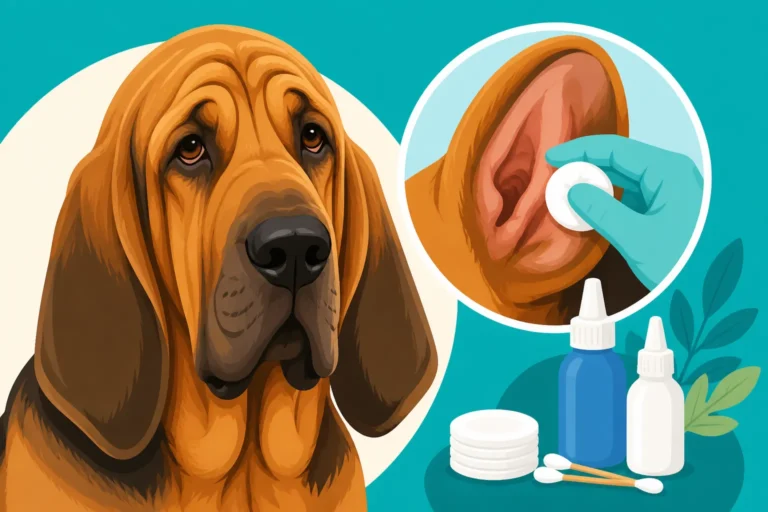
Bloodhounds are blessed with incredibly long, heavy ear leathers that hang low, often touching the ground when they're sniffing intently. While these ears are fantastic for funneling scent directly to their powerful noses, they create a perfect microclimate: warm, dark, and damp. This lack of airflow is the root of so many ear-related problems for our hounds. The deep, convoluted ear canal itself, unlike many upright-eared breeds, traps moisture and debris easily. It's an environment where bacteria and yeast thrive, leading to chronic ear infections that are notoriously difficult to eradicate and, yes, contribute significantly to the breed's signature scent. It's not just the external part of the ear; the internal structure is designed to hold moisture in.
When a Bloodhound's ears are healthy, they should have a faint, clean smell. But that ideal is often elusive. The constant battle against moisture and the sheer length of the ear leather means that even routine dirt and ear wax can accumulate rapidly, especially if your hound loves to investigate every puddle or dewy patch of grass. Owners often lament how quickly their perfectly clean hound can develop an ear odor just hours after a bath, and it's because these ears dry so slowly, acting like sponges for ambient moisture and then sealing it in. Understanding this unique anatomy is the first step toward managing the inevitable challenges. It's not a flaw, but rather a design feature perfectly suited for scent work, that just happens to have an aromatic side effect in a domestic setting. You can learn more about this by reading Why a Bloodhound's Ear Canal Stays Damp.
The Standing Infection Risk and Its Scent
Given the environment, it's no surprise that Bloodhound ears are a Standing Infection Risk. Yeast and bacterial infections are incredibly common, and they bring with them a very distinct, often pungent, smell. Yeast infections tend to have a sweet, musty, or almost bread-like odor, sometimes compared to dirty socks or corn chips. Bacterial infections, on the other hand, can smell more putrid, cheesy, or truly foul. These infections aren't just an unpleasant smell; they are uncomfortable and painful for your dog, causing itching, head shaking, and sometimes discharge.
Many Bloodhound owners find themselves in a constant cycle of cleaning and treating ear infections. Without diligent, consistent care, a mild infection can quickly escalate. The odor becomes stronger as the infection worsens, permeating not just the dog's head, but often their bedding and even the air in your home. It’s a battle, and sometimes you feel like you're losing. The frustration of dealing with a recurring ear infection, despite your best efforts with cleaning solutions and vet visits, is incredibly real. Even when treated, the residual smell can linger for a while, making you question if the infection is truly gone.
Regular, thorough cleaning is paramount. It’s often recommended to clean a Bloodhound’s ears weekly, sometimes even more frequently if they're prone to infections or have been swimming. This isn't a quick wipe; it involves a proper ear cleaning solution that can break down wax and debris, followed by gentle drying of the external ear canal. It’s a commitment, but one that drastically reduces the frequency and severity of infections, and subsequently, the odor. Products from retailers like Chewy or Amazon offer a wide range of ear cleaning solutions suitable for routine maintenance.
Skin Folds: Traps for Moisture and Microbes
Beyond the ears, a Bloodhound's glorious, loose skin is another significant contributor to its distinctive aroma. Those deep, expressive wrinkles around their face, neck, and sometimes even their chest and legs, are part of what makes them so endearing. However, these folds are also natural traps for moisture, dirt, food particles, and saliva, creating ideal conditions for bacterial and yeast growth, much like the ears.
Where a Bloodhound's Folds Are and Why They Collect Gunk
A Bloodhound's loose skin is a hallmark of the breed, a feature developed to enhance their scenting abilities by maximizing surface area for scent particles to cling to, and to protect them in dense undergrowth. But in a domestic environment, these same features become maintenance challenges. You'll find folds most prominently on their head, around their eyes, muzzle, and neck. They also often have noticeable skin folds on their chest and around their dewlaps. These areas, particularly the facial folds, are constantly exposed to water when drinking, food when eating, and their own saliva when they drool.
When these areas get damp and stay damp, with limited air circulation, it's an open invitation for problems. Imagine having a damp cloth tucked into your skin all day; it wouldn't take long for it to start smelling unpleasant. For a Bloodhound, these folds are essentially permanent damp cloths. Food can get trapped, creating a fermenting mess. Water drips and settles, never fully drying. Saliva, particularly around the lips and jowls, can accumulate and oxidize, leading to a sour smell. It’s a battle against nature, and it’s a constant one. The sheer number and depth of these folds mean that simply wiping them with a towel isn't always enough to get into every crevice and ensure they are thoroughly dry.
Skin Fold Dermatitis and Its Odor
The constant dampness and trapped debris in these folds make them highly susceptible to a condition called skin fold dermatitis, also known as intertrigo. This is essentially an inflammatory condition of the skin caused by friction, heat, and moisture within the folds, which is then exacerbated by bacterial or yeast overgrowth. You might notice redness, irritation, hair loss, and a greasy discharge within the folds. And accompanying all of this is a truly unpleasant, often pungent, smell. The odor can be yeasty, rancid, or cheesy, depending on the predominant microbes at play. Skin Fold Dermatitis on a Bloodhound is a common and persistent issue for the breed.
Managing skin fold dermatitis is crucial for both your Bloodhound's comfort and your peace of mind regarding the smell. This requires a dedicated daily routine of cleaning and drying the folds. Wiping a Bloodhound's Folds Before They Sour isn't just about aesthetics; it's preventative medicine. You might use a gentle, antiseptic wipe or a soft cloth dampened with a vet-approved cleaning solution. After cleaning, it's essential to thoroughly dry the area. Some owners even use cornstarch or a pet-safe drying powder to help keep the folds dry, though this must be done carefully to avoid further irritation. If an infection takes hold, veterinary intervention with medicated washes or oral antibiotics might be necessary. It’s a cycle that many Bloodhound owners become very familiar with, and it demands diligence.
Drool: The Sticky, Scent-Carrying Secretion
Ah, the drool. It’s an unavoidable, signature characteristic of the Bloodhound. Those magnificent, loose flews (lips) that are so effective at trapping scent also make them prodigious droolers. And while drool itself might not initially smell bad, where it goes, what it collects, and how it dries can certainly contribute to the overall Bloodhound odor.
How Drool Accumulates and Where It Goes
Bloodhounds drool. A lot. It’s not a myth, it’s a reality. Their loose jowls aren't designed to hold saliva in, so when they get excited, thirsty, or even just tilt their head, that drool can fly. This isn't just a small drip; it can be strings, globs, and sometimes even a veritable shower, especially after drinking or if they’re particularly animated. This saliva lands on their fur, on their bedding, on your furniture, and on your floors. Where a Bloodhound Puts Its Drool is often everywhere.
The problem isn't just the sheer volume, but what happens to the drool once it's dispersed. It collects on the fur around their muzzle, neck, and chest, creating damp, sticky patches. These damp areas, just like the skin folds, become havens for bacteria and yeast, which break down the organic compounds in the saliva, leading to that distinct sour or yeasty smell. Think about a dishcloth left damp in the sink—it quickly starts to smell. The same principle applies here. Also, the drool attracts dirt, dust, and environmental allergens, trapping them against the fur and skin, further contributing to a matted, smelly mess.
Managing Drool-Related Odor
Managing drool-related odor is an ongoing task that requires more than just a quick wipe. It means being proactive. Many Bloodhound owners invest in snoods—fabric tubes that go over the dog's head and keep their long ears out of the food and water bowl. This dramatically reduces the amount of liquid their ears soak up, which in turn means less dampness to contribute to ear odor, and less drool adhering to the ear leather. These are widely available from pet specialty stores or online retailers like Amazon.
Beyond snoods, regular wiping of your Bloodhound’s face and chest, especially after meals and drinks, is essential. Keep soft cloths handy in various rooms. You might even consider having designated "drool rags" that are laundered frequently. For the fur itself, a quick wipe with a damp cloth followed by a dry one can help prevent the accumulation of sour-smelling residue. Some owners find that certain shampoos formulated for "smelly dog" breeds, available from retailers like Chewy, can help neutralize odors in the fur that has been repeatedly exposed to drool. It's a never-ending job, but consistent effort prevents the odor from becoming overpowering.
Coat and Skin: The Natural "Hound" Scent
Even with perfectly clean ears, dry folds, and minimal drool, many Bloodhounds still possess a distinct "houndy" smell. This isn't necessarily a sign of poor hygiene or health; it's simply part of their genetic makeup. Their coat type and skin characteristics naturally contribute to a specific aroma.
Bloodhound Coat Type and Natural Oils
Bloodhounds have a relatively short, dense, and somewhat coarse coat. While it might seem low-maintenance compared to a long-haired breed, this coat has its own characteristics that contribute to odor. Their skin produces natural oils that protect their coat and skin. These oils, while healthy and necessary, can have a particular scent. This "dog smell" is common across many breeds, but in hounds, it's often more pronounced.
The texture of their fur can also trap environmental odors more readily. If your Bloodhound loves to roll in questionable outdoor delights – a common hound pastime – that smell will adhere to their coat. These natural oils, combined with environmental factors like dust, pollen, and simply being a dog, gradually build up a scent layer. It’s a very different situation than a poodle, for example, whose coat is hair-like and doesn't have the same oily production or trap external odors in the same way. This natural oil production is a fundamental aspect of their skin health, so you can't, and shouldn't, try to strip it away completely. However, understanding it is key to managing the odor effectively.
Bathing and Environmental Factors
While you can't eliminate a Bloodhound's natural scent entirely, regular bathing can certainly help keep it in check. How Often a Bloodhound Needs a Bath is a question many owners grapple with. Bathing too frequently with harsh shampoos can strip their skin of essential oils, leading to dryness and irritation, which can ironically worsen odor issues. However, not bathing often enough allows those natural oils and trapped environmental grime to build up, intensifying the "hound smell."
The sweet spot for bathing a Bloodhound often depends on their activity level and individual skin type, but generally, once every 4-6 weeks is a good starting point for most, possibly more often for particularly active or smelly hounds. Using a high-quality, gentle dog shampoo designed for sensitive skin or odor control can make a big difference. After bathing, ensuring they are thoroughly dried, especially within their folds and under their ears, is crucial to prevent new odor sources from developing. Toweling them down and then allowing them to air dry in a warm, well-ventilated area, or even using a pet-specific forced-air dryer, can be beneficial. Environmental factors also play a huge role. If your Bloodhound spends a lot of time outside, especially in damp or muddy conditions, they will naturally pick up more odors. Regular grooming, including brushing to distribute natural oils and remove loose fur and dirt, is also part of the odor management routine.
Other Contributors to Bloodhound Odor
While ears, skin folds, drool, and natural coat oils are the primary culprits, other factors can contribute to a Bloodhound's overall smell. These might be less common or more indicative of an underlying health issue, but they're important to consider when troubleshooting persistent odors.
Anal Glands and Dental Health
Two often-overlooked sources of strong odors in dogs are their anal glands and dental health. Anal glands are two small sacs located just inside a dog's anus that contain a foul-smelling liquid used for scent marking. Normally, these glands express naturally when a dog defecates. However, if they become impacted or infected, they can leak, releasing a strong, fishy, or rotten smell that can quickly permeate their fur and your home. If you notice a sudden, very unpleasant odor, especially if your Bloodhound is scooting on their rear or licking excessively, it's worth a vet check.
Dental health is another potential source. Just like in humans, poor oral hygiene in dogs can lead to plaque and tartar buildup, gum disease, and terribly bad breath. Over time, bacteria in the mouth can create a truly offensive smell that you'll notice not just when they yawn, but even as they breathe. Regular dental care, including brushing their teeth at home with a dog-specific toothpaste, dental chews, or professional cleanings by your veterinarian, can prevent this. Given their penchant for drooling and the bacteria that can accumulate, Bloodhounds are not exempt from needing diligent dental care, even if the primary odor source is elsewhere.
Diet and Underlying Health Issues
Believe it or not, a dog's diet can sometimes play a role in their overall scent. A diet that doesn't agree with your Bloodhound can lead to digestive upset, gas, and even changes in skin and coat health that could contribute to odor. Some owners report that switching to a high-quality food, especially one with appropriate protein and fat sources and sometimes specialized for large breeds, can improve coat health and reduce overall "doggy" smell. Brands like Ollie, which focus on fresh, high-quality ingredients, might be considered by owners looking to optimize their dog's diet, though it’s always wise to discuss dietary changes with your vet.
More seriously, persistent or unusual odors can sometimes be a red flag for underlying health issues beyond the typical ear and skin fold problems. Conditions like hypothyroidism, kidney disease, or certain skin conditions can manifest with changes in body odor. If you’ve been diligent with grooming and hygiene but your Bloodhound still has a strong, unusual, or worsening smell, a comprehensive veterinary check-up is in order. Your vet can rule out medical conditions and provide guidance tailored to your individual hound. This is especially important if the odor is accompanied by other symptoms like lethargy, changes in appetite, or excessive scratching.
Here's a quick overview of common Bloodhound odor sources and their typical solutions:
| Odor Source | Typical Smell | Management Strategy | Frequency of Care |
|---|---|---|---|
| Ears | Yeasty, sweet, foul, putrid | Weekly cleaning, vet-prescribed medication for infection | Weekly (cleaning), As needed (medication) |
| Skin Folds | Sour, yeasty, rancid, cheesy | Daily wiping & drying, antiseptic wipes, medicated washes | Daily (wiping), As needed (meds) |
| Drool | Sour, wet dog, stagnant | Regular wiping, snoods, washing bedding | Multiple times daily |
| Coat & Natural Oils | "Houndy," musky, sometimes earthy | Regular bathing, brushing, appropriate shampoo | Every 4-6 weeks (bath) |
| Anal Glands (Impacted) | Fishy, rotten | Veterinary expression or treatment | As needed |
| Dental Health | Foul, putrid breath | Daily tooth brushing, dental chews, professional cleaning | Daily (brushing), Yearly (vet) |
In conclusion, a Bloodhound's odor is rarely due to just one thing. It's often a combination of their unique anatomy, natural proclivities, and sometimes a reflection of underlying health needs. With consistent care, diligence, and a little patience, you can absolutely manage that distinctive Bloodhound scent, making for a much more pleasant experience for everyone in the home. It’s a labor of love, but one that comes with the territory of owning these magnificent, sweet-natured hounds.
Disclaimer
This article is for general informational purposes only and does not constitute professional advice. Laws, prices and regulations vary by location and change over time. Consult a qualified professional for guidance on your specific situation.