The Age a Bloodhound Should Have a Gastropexy
Preventative gastropexy surgery for Bloodhounds reduces fatal bloat risk caused by their deep, narrow chest shape and stomach twisting.
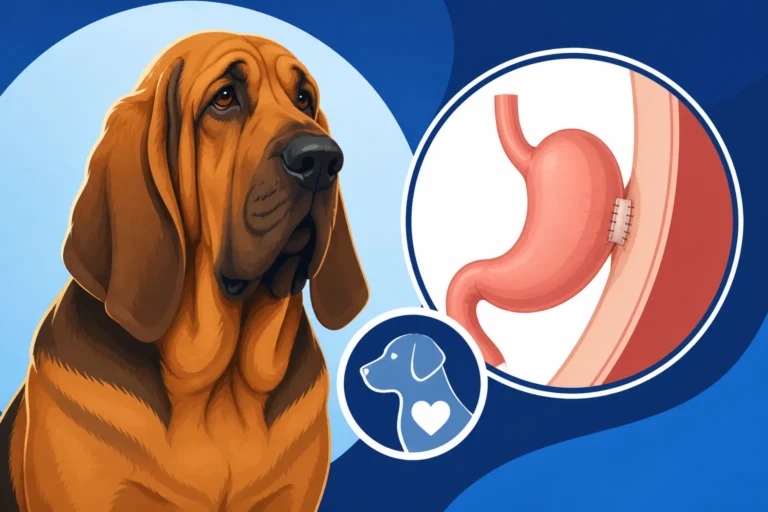
Preventative gastropexy surgery for Bloodhounds reduces fatal bloat risk caused by their deep, narrow chest shape and stomach twisting.
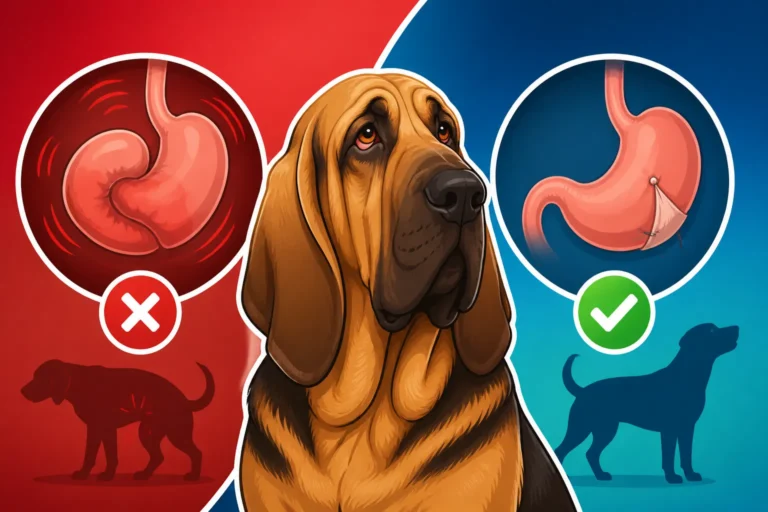
A preventive gastropexy surgically secures a Bloodhound stomach to prevent fatal twisting and organ damage during bloat emergencies.
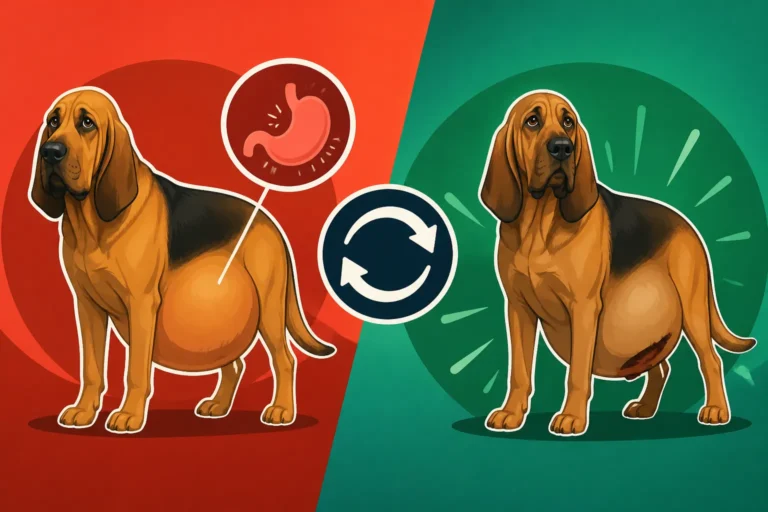
Bloodhound bloat recurrence rates reach seventy to eighty percent without gastropexy surgery, explaining risks and prevention steps.

Gastric Dilatation-Volvulus survival rates for Bloodhounds depend on intervention time, twist severity, and internal damage.
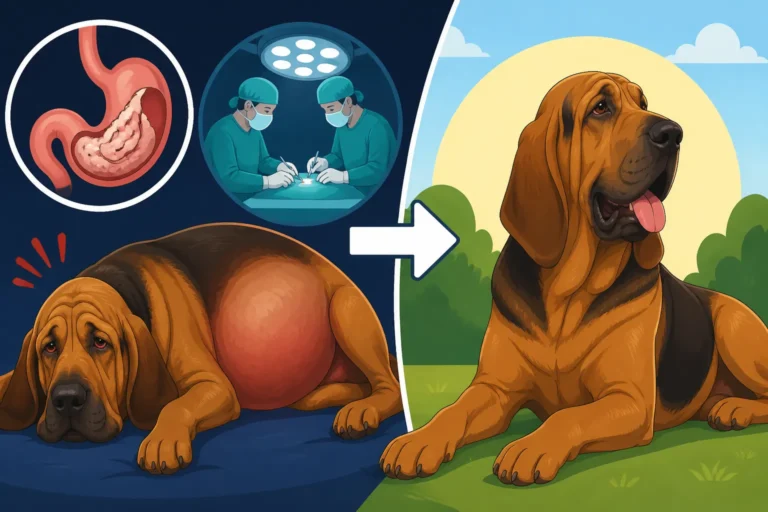
Emergency bloat surgery corrects a twisted stomach in Bloodhounds, relieving trapped gas and reversing life-threatening shock.
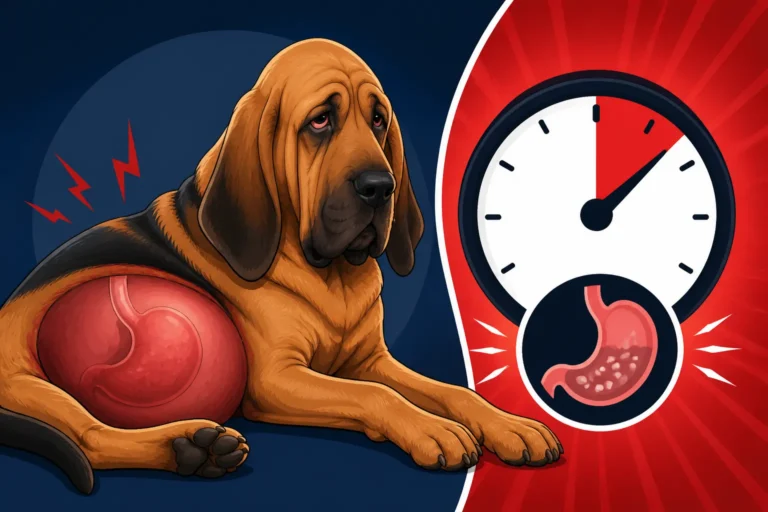
Bloodhound bloat causes rapid stomach twisting and fatal shock, requiring immediate emergency veterinary intervention for survival.
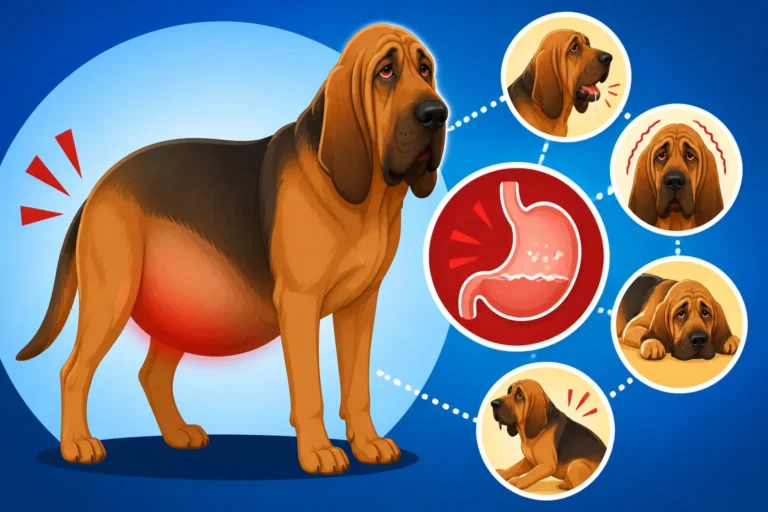
Gastric Dilatation-Volvulus in Bloodhounds causes severe stomach twisting, creating a life-threatening medical emergency requiring immediate veterinary care.

The Purdue Bloat Study identified major risk factors for life-threatening gastric dilation-volvulus in deep-chested dog breeds.
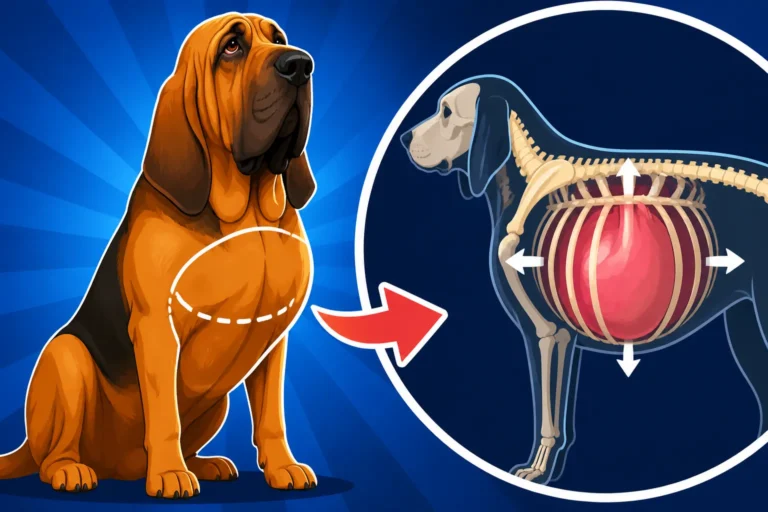
Bloodhound chest shape and loose ligaments allow the stomach to rotate inside the deep cavity and cause fatal bloat and GDV.

Bloodhound lifespan data shows a median age of six to ten years influenced by genetics, rapid puppy growth rates, and bloat risks.