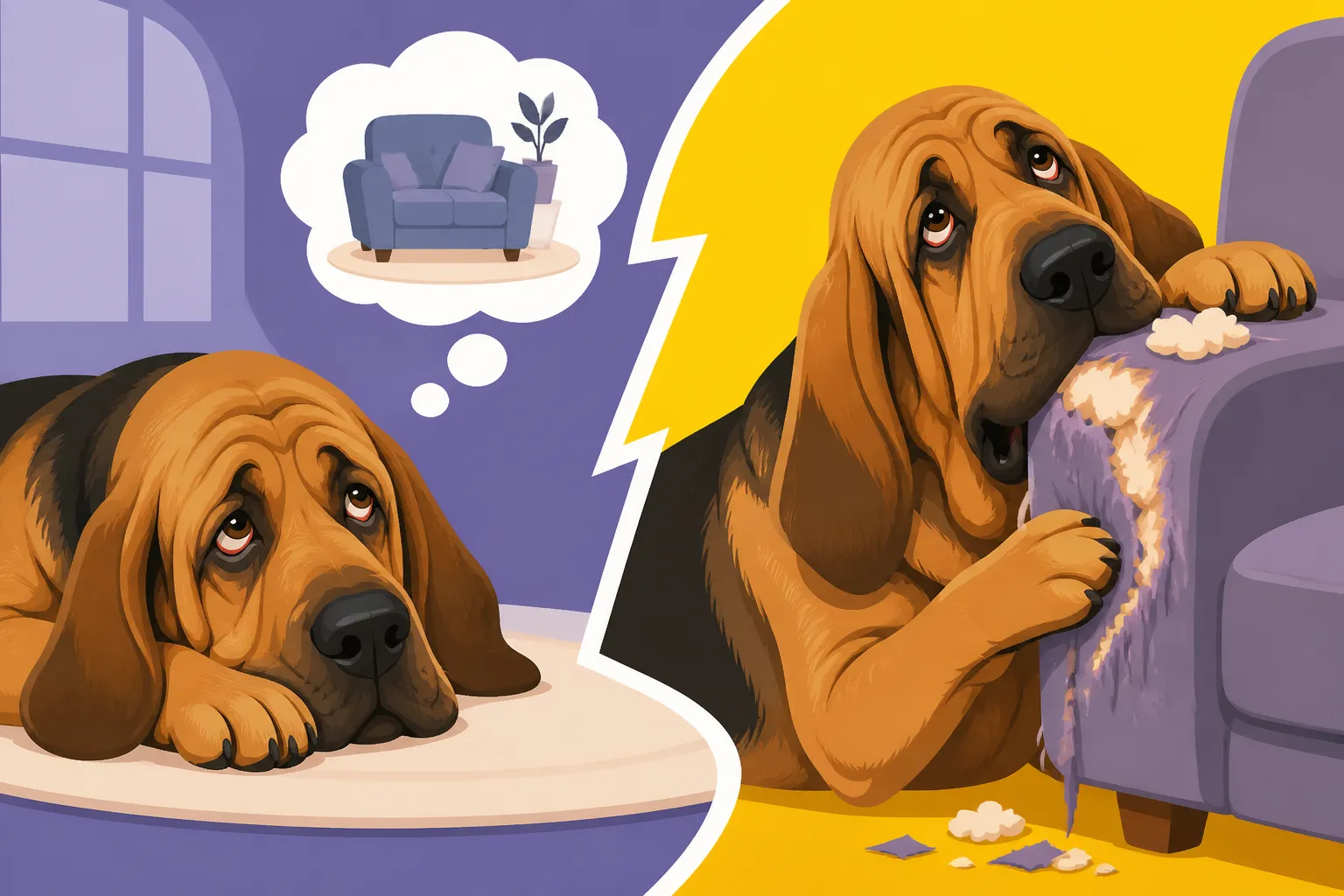
Whether a Bloodhound Chews Furniture When Bored
It’s a scenario many Bloodhound owners know all too well: you leave for a few hours, or perhaps you're just busy in another room, and you return to find a beloved piece of furniture gnawed on, a door frame splintered, or a cushion ripped to shreds. This guide is here to unravel the mystery of why your intelligent Bloodhound might be turning into a four-legged wrecking ball when left to their own devices, specifically focusing on the powerful driver of boredom, and how to redirect that boundless energy.
The Bloodhound's Drive to Chew and Why Boredom Fuels It
Let's face it, Bloodhounds are more than just pretty faces with an incredible nose. They are hounds, through and through, and that means they have deep-seated instincts that need an outlet. When those outlets aren't provided, especially when it comes to mental stimulation, they will absolutely find their own "jobs"—and unfortunately, those jobs often involve redecorating your home with their powerful jaws.
Natural Chewing Instincts
Chewing is a perfectly natural and necessary behavior for dogs, starting from puppyhood. Think about a young Bloodhound puppy: everything goes into their mouth! This isn't just about exploring their world; it's also about relieving discomfort as their adult teeth come in. Those needle-sharp puppy teeth make way for strong, impressive adult canines, and chewing helps massage their gums and strengthen their jaws. Even as adults, dogs chew to keep their teeth clean, to relieve stress, and simply because it feels good. For a breed like the Bloodhound, with those magnificent, powerful jaws designed for holding and carrying, the oral fixation can be particularly strong. They might not be carrying game in their mouths, but they certainly enjoy putting their mouths to work. If we don't give them appropriate things to chew, your furniture becomes the next best option.
When a Brain Needs a Job
A Bloodhound's nose is legendary, capable of following trails days old, through all sorts of environments. But what many people don't realize is that this incredible olfactory ability comes with an equally incredible need for mental engagement. Their brains are wired to solve scent puzzles, to process complex information from the world around them. If a Bloodhound isn't regularly given opportunities to use that magnificent nose and powerful intellect, they get bored. And a bored Bloodhound is a Bloodhound looking for trouble. It's like having a brilliant scientist with nothing to research; they're going to start experimenting on their surroundings! This deep-seated need to work, to process, to do something is often misunderstood. We tend to think of physical exercise as the primary way to tire out a dog, but for a Bloodhound, mental fatigue from scent work or problem-solving is often far more effective at preventing destructive behavior. This is why many experienced Bloodhound owners will tell you that Mantrailing Is the Answer to a Bloodhound, Not Obedience. Engaging their nose and mind is paramount.
Beyond "Just Bored": Other Factors
While boredom is a huge culprit for destructive chewing in Bloodhounds, it's worth acknowledging that it doesn't always act alone. Sometimes, a Bloodhound's chewing can stem from other underlying issues, or a combination of factors that are exacerbated by boredom. Separation anxiety, for example, can manifest as destructive chewing, particularly around exit points like doors and windows, or items that smell strongly of you. In these cases, the chewing isn't just about "having nothing to do" but about intense distress. Hunger, especially in growing puppies or if their feeding schedule isn't consistent, can also lead them to chew inappropriately in search of something edible. And let's not forget attention-seeking! If your Bloodhound learns that chewing on something forbidden gets your immediate, albeit negative, attention, they might just keep doing it. It's all about understanding the full picture, but for many Bloodhounds, a lack of mental engagement from sheer boredom is the driving force behind those chewed chair legs.
Recognizing the Signs of a Bored Chewer
Distinguishing between boredom-driven chewing and other types of destructive behavior is crucial for effective intervention. A Bloodhound's chewing isn't always a simple act; it often comes with tell-tale signs if you know what to look for. Paying close attention can help you pinpoint the root cause and apply the right solutions.
The "What" and "Where" of Bored Chewing
When a Bloodhound chews out of boredom, their targets tend to be whatever is readily available and offers an interesting texture or a satisfying resistance. You'll often find chair legs gnawed down to nubs, table edges rounded off, or baseboards sporting fresh teeth marks. These are often solid, stationary objects that offer a good "chew session." You might also find pillows, blankets, or even rugs with corners shredded. This isn't necessarily frantic, desperate chewing like you'd see with extreme separation anxiety; it's often more methodical, almost like they're just passing the time, seeing what interesting textures they can discover or what they can dismantle. Unlike a dog with severe anxiety who might focus on chewing through a door to escape, a bored Bloodhound is simply engaging with their immediate environment in the most stimulating way they know how.
The Timing of the Destruction
The timing of your Bloodhound's destructive chewing can be a huge clue. If the chewing primarily happens when they are left alone, especially after a period of activity has ended and they haven't been mentally engaged, boredom is a strong suspect. This might be during your workday, or even in the evenings after their walk when you've settled down, but they haven't. They’ve had their physical exercise, but their minds are still buzzing, looking for a way to occupy themselves. It's often not during peak activity or moments of intense stress, but rather when there's a lull, an empty space in their schedule that their keen mind feels compelled to fill. You might find a mess upon returning home, or discover it after an hour of quiet time. This pattern suggests that their brain, designed to be constantly processing scent information, is simply underemployed.
Behavioral Cues Beyond Chewing
Destructive chewing is often just one symptom of a deeper boredom or lack of fulfillment. If your Bloodhound is chewing out of boredom, you might observe other behaviors that indicate their restless mind. Look for general restlessness: pacing back and forth, inability to settle down, or constantly seeking your attention, sometimes nudging you with their wet nose or dropping a toy at your feet repeatedly. They might also exhibit excessive vocalization, not necessarily frantic barks, but those characteristic Bloodhound bays that seem to go on and on, echoing through the house. The Baying a Bloodhound Cannot Be Trained Out Of is a reality, but excessive, unprovoked baying can often be a sign of boredom. They might also engage in other "mouthing" behaviors, perhaps trying to mouth your hands or clothing more frequently, or even just constantly carrying things in their mouth, not necessarily chewing them, but just needing that oral engagement. All these behaviors point to a dog whose intellectual and physical needs are not being fully met, leading them to invent their own entertainment.
Strategies to Combat Boredom-Driven Chewing
Once you've identified that boredom is the likely culprit behind your Bloodhound's furniture-chewing habits, you can start implementing strategies to redirect that powerful energy into more appropriate and constructive activities. It's not about punishing the behavior, but understanding the need behind it and fulfilling it in a positive way.
Mental Stimulation is Key
For a Bloodhound, physical exercise alone is rarely enough. Their incredible noses and minds need to be put to work. Scent work is hands down the best way to mentally tire out a Bloodhound. This doesn't mean you have to become a professional tracker, though many Bloodhound owners find themselves diving into trailing as a hobby! Simple "find it" games with treats hidden around the house or yard can be a fantastic start. Puzzle toys, where your Bloodhound has to figure out how to get a treat, are invaluable. Look for durable, interactive toys on platforms like Amazon that require problem-solving. Snuffle mats, where kibble or treats are buried in fabric strips, engage their nose and foraging instincts. You can also get creative with homemade puzzles using cardboard boxes. Remember, a tired nose means a tired dog, and a tired dog is less likely to chew on your antique coffee table. Engaging in formal training, even if it's just basic obedience, uses their brain power too. Programs like BAXTER & Bella offer online resources that can guide you through positive reinforcement training, providing mental challenges right from your living room.
Physical Exercise and Enrichment
While mental stimulation is paramount, physical exercise remains important for a large, active breed like the Bloodhound. Structured walks, where they get to sniff and explore (safely, on a long line!), are far more beneficial than simply letting them out in the yard. The varied scents and sensory input on a walk provide excellent mental enrichment as well. Aim for consistent, moderate exercise tailored to their age and physical condition. Remember, How Much Exercise a Bloodhound Actually Needs isn't just about running; it's about engagement.
Beyond walks, enriching their environment with appropriate chew items is vital. Invest in a variety of durable chew toys. Think about different textures and purposes:
- Stuffable rubber toys: Brands like Kong are fantastic; fill them with peanut butter, yogurt, or wet dog food and freeze them for a long-lasting challenge.
- Durable nylon chews: Nylabone offers various shapes and flavors that can satisfy a strong chewer.
- Natural chews: If safe for your dog, options like bully sticks or dental chews can provide sustained chewing pleasure.
The trick is to rotate these toys regularly to keep them novel and exciting. Don't leave all the toys out all the time; bring out a few, then swap them for others later. This makes them feel "new" again and maintains interest, providing a consistent, appropriate outlet for their chewing needs.
Environmental Management and Prevention
Sometimes, even with the best intentions and plenty of enrichment, a Bloodhound will still find trouble. This is where good old-fashioned management comes in. Crate training is a lifesaver for many Bloodhound owners, especially for puppies or when you can't directly supervise your dog. A crate, when introduced properly and made into a positive den, provides a safe, chew-proof space where your Bloodhound can relax without destroying your home. If you're wondering, Whether Crate Training Suits a Bloodhound Puppy, the answer is almost always a resounding yes.
Baby gates can be incredibly useful to restrict access to certain rooms or areas of the house where valuable furniture resides. If you know your Bloodhound targets a specific chair leg, physically block access to it when you're not around. For items that can't be moved, like baseboards, you might consider using bitter apple spray or other deterrents. Be aware that the effectiveness of these sprays varies widely from dog to dog; some Bloodhounds will just lick it off and keep chewing!
Ultimately, the goal is to set your Bloodhound up for success by making inappropriate chewing targets less appealing and inaccessible, while making appropriate chew items abundantly available and desirable. This prevention-first approach saves you headaches (and furniture!).
Training and Redirection
Active training can also play a huge role in preventing boredom chewing. Teaching a strong "leave it" cue can be invaluable. This command, when practiced consistently, teaches your Bloodhound to disengage from something you don't want them to chew. It takes patience and high-value rewards, but it's well worth the effort. When you catch your Bloodhound chewing on something they shouldn't, immediately interrupt them with a cheerful sound or clap, then redirect them to an appropriate chew toy. As soon as they take the toy, praise them enthusiastically and offer a treat. The key is not to punish the act of chewing, but to teach them what is okay to chew instead. Consistency is absolutely vital here. Every time you redirect them successfully, you're reinforcing the right choice. It helps them understand What a Bloodhound Will Work For, showing them that choosing the right chew toy leads to good things. Remember, a Bloodhound often has a mind of its own, and Why a Bloodhound Ignores a Cue It Knows can often be attributed to a lack of motivation or a more enticing distraction – so make your redirection worthwhile!
Building a Routine to Prevent Chewing
A predictable and engaging daily routine is one of the most powerful tools you have against boredom-driven chewing. Bloodhounds thrive on structure, and knowing what to expect can significantly reduce anxiety and restlessness, leading to less destructive behavior.
The Power of Predictability
Dogs, like people, often feel more secure and less anxious when they know what's coming next. A consistent daily schedule that incorporates exercise, mental stimulation, feeding times, and rest periods can work wonders for a Bloodhound. If your Bloodhound knows that after your morning walk, they'll get a stuffed Kong to enjoy in their crate while you leave for work, they're much less likely to feel anxious or bored. They learn to anticipate the positive outlets for their energy. This predictability helps them conserve their energy for the right activities instead of channeling it into destructive endeavors.
Consider a sample routine:
- Morning: Potty break, brisk walk (30-45 minutes with plenty of sniffing), breakfast in a slow feeder or puzzle toy.
- Mid-morning: Independent chew time (stuffed Kong) in a safe space (crate or designated area) while you're busy or away.
- Midday (if possible): Quick potty break, short training session, or quick game of "find it."
- Afternoon/Evening: Longer walk or dedicated scent work session, dinner, gentle chew time, cuddle time, then quiet time before bed.
This structure helps manage their expectations and energy levels throughout the day. It also helps answer the question of What a Bloodhound Does With an Empty Afternoon – ideally, they're napping or working on a puzzle toy, not dismantling your couch.
Designated Chewing Times and Spaces
Just as important as what they chew is when and where they chew. By intentionally creating designated chewing times and spaces, you can further reinforce appropriate behavior. For instance, always offer a special chew toy when you leave the house or when your Bloodhound settles into their crate. This helps create a positive association with that item and the act of being alone or confined.
You might have a "chew zone" in the living room – perhaps a durable mat with a basket of approved toys. By consistently offering chews in these designated areas, your Bloodhound learns that these are the places for chewing, not under the dining room table or on the sofa arm. This also ties back into training, where you can reward them specifically for choosing the appropriate item in the designated space. It's all about making the "right" choice easy and rewarding, and the "wrong" choice less accessible and less appealing.
Long-Term Engagement and Enrichment
Preventing chewing isn't a one-and-done solution; it's an ongoing commitment to enriching your Bloodhound's life. As they mature, their needs might change, but their need for mental and physical stimulation will not diminish. Continue to explore new types of scent work, whether it's more complex "find it" games, nose work classes, or even serious trailing practice. Remember that The First Year With a Bloodhound That Already Wants to Trail is a crucial time to establish these foundational activities.
Regular training, learning new tricks, or practicing existing ones keeps their minds sharp and engaged. Consider taking part in dog sports like K9 Nose Work or tracking, which are perfectly suited to a Bloodhound's natural abilities. Even if you live in a smaller space, Whether a Bloodhound Suits an Apartment largely depends on your commitment to providing these outlets. The more you invest in their mental and physical well-being, the less likely they are to resort to destructive behaviors born out of boredom. It's about building a partnership where you understand their unique needs and provide creative, consistent ways for them to thrive.
| Chew Type | Benefits | Considerations | When to Use It |
|---|---|---|---|
| Stuffable Rubber Toys | Durable, challenging, long-lasting with fillings | Can be messy with wet fillings, monitor for wear | When leaving dog alone, during quiet times, after meals |
| Durable Nylon Chews | Satisfies strong chewing instinct, helps clean teeth | Not all dogs find them appealing, some can splinter | Daily, supervised chew sessions |
| Puzzle Feeders/Snuffle Mats | Mental stimulation, slows eating, uses nose | Not for aggressive chewers who might destroy them | Meal times, for mental breaks, before naps |
| Natural Chews (Bully Sticks) | Highly palatable, provides dental benefits | Can be expensive, monitor for choking hazard, calories | Occasional treat, supervised only |
| Frozen Treats (Ice Cubes, Broth Pops) | Soothing for teething, refreshing, low-calorie | Can be messy, best used outdoors or on washable surfaces | Hot weather, for puppies, light boredom relief |
Disclaimer
This article is for general informational purposes only and does not constitute professional advice. Laws, prices and regulations vary by location and change over time. Consult a qualified professional for guidance on your specific situation.