Why an Electric Collar Is Wrong for a Bloodhound
It’s easy to feel utterly defeated when your beloved Bloodhound, with its seemingly deaf ears and independent streak, ignores every command you’ve ever taught. The frustration can lead some to consider drastic measures, like electric collars, in a desperate attempt to gain control over their powerful scent drive. This guide is here to explain precisely why an electric collar is not only ineffective but deeply detrimental to the unique nature of a Bloodhound, and how you can build a stronger, more harmonious relationship with your amazing hound.
Understanding the Bloodhound's Unique Drive and Temperament
Before we even begin to talk about what not to do, it’s crucial to understand who your Bloodhound truly is, deep down in their DNA. These aren't your average, biddable family pets in the traditional sense, and expecting them to behave like one sets both of you up for failure. Their core identity is rooted in a drive that most other breeds can only dream of.
The Unmatched Power of Their Nose
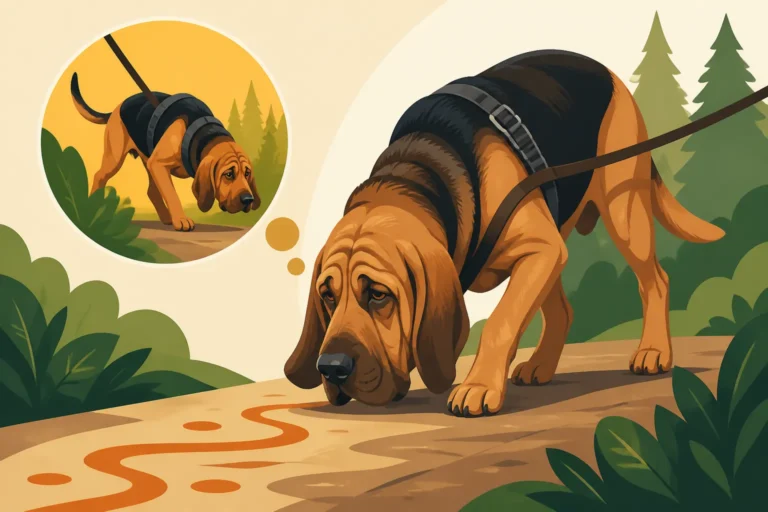
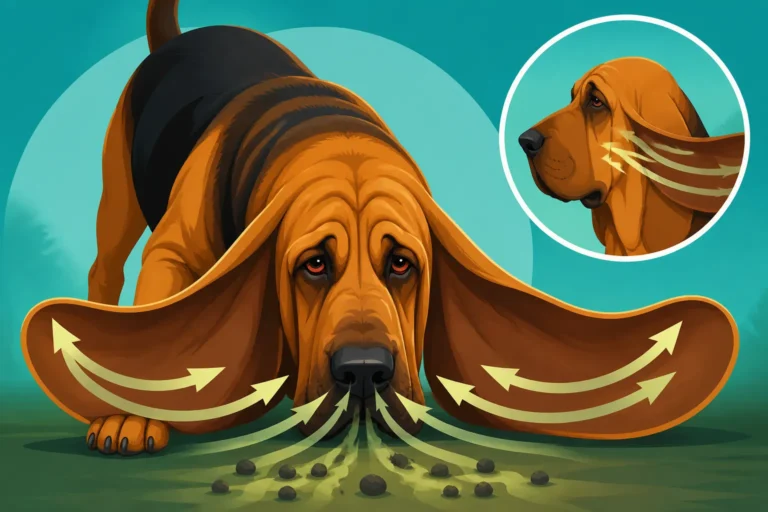
Your Bloodhound lives in a world of scent. Imagine walking through a bustling city and being able to pick out the distinct odor of every single person, every dropped crumb, every car exhaust, all at once, in perfect detail. That's a glimpse into your Bloodhound's reality. Their nose is not just a tool; it is their primary sense, overriding sight, sound, and often, your voice. When they put that magnificent nose to the ground, they are not "disobeying" you; they are doing exactly what they were bred for over centuries to do, focusing with an intensity that can block out everything else.
This isn't a matter of them being defiant; it's a matter of biological imperative. Their world unfolds in layers of odor, and once they've locked onto a compelling trail – whether it's the faint scent of a rabbit that passed by an hour ago or the distant smell of a barbecue – their brain is completely consumed. This intense focus is why things like Why Recall Fails on a Bloodhound Outdoors are so common. It's not personal, it's physiological.
Sensitivity and Trust
Despite their large size and formidable appearance, Bloodhounds are inherently gentle and often quite sensitive souls. They thrive on positive interaction and a strong, trusting bond with their human companions. They are not dogs that respond well to harsh corrections or fear-based training. In fact, such methods can easily shut them down, making them fearful, withdrawn, or even leading to avoidance behaviors.
Think of them as magnificent, albeit sometimes clumsy, detectives. They are eager to please, but on their own terms, which usually involves following their nose. A fair, consistent, and kind approach builds the kind of relationship where they want to work with you, even if their instinct still screams for them to follow that fascinating smell. They need to trust that you are their partner and protector, not a source of unpredictable discomfort or pain. What Harsh Handling Does to a Bloodhound can have long-lasting, negative consequences on this vital bond.
Independence, Not Malice
It's tempting to label a Bloodhound as "stubborn" when they’re locked onto a scent and seem to ignore your pleas. However, it's more accurate to describe them as highly independent problem-solvers. Their historical role wasn't to perform complex obedience routines at a handler's side, but to follow a trail relentlessly, sometimes for miles, often out of sight and hearing of their human. They were bred to make their own decisions in the field, interpreting scent information without constant direction.
This independence means they process commands differently. They might hear you, but if a scent is more compelling, their brain prioritizes that sensory input. This isn't an act of defiance, but a deeply ingrained trait. They're not trying to be difficult; they're just being a Bloodhound. Understanding this fundamental aspect of their character is the first step toward effective and humane training. It means recognizing that their "slow" response or seeming disregard isn't an affront, but simply Why a Bloodhound Pauses Before It Obeys.
Why Electric Collars Are Ineffective and Harmful for Bloodhounds
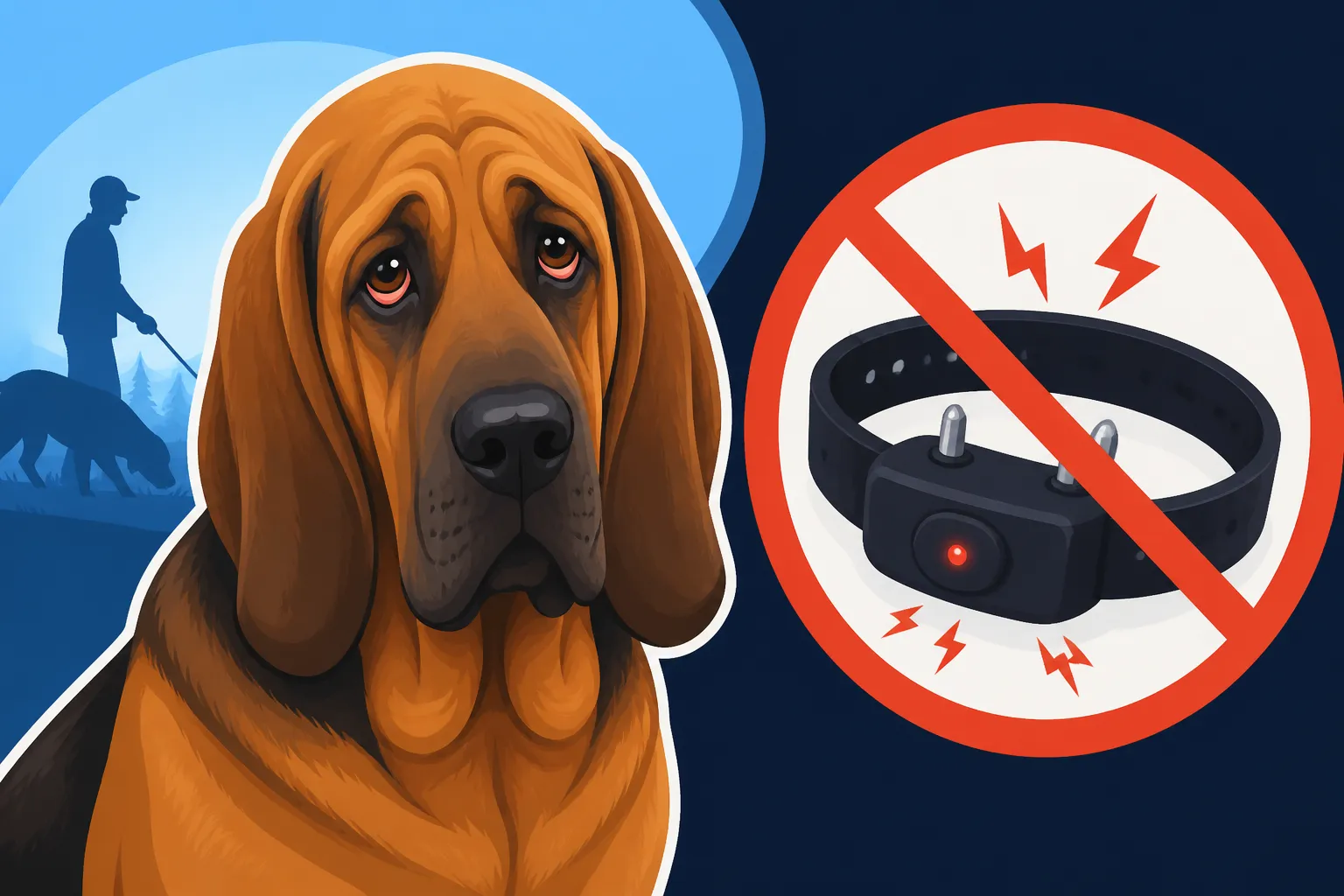
Given their unique makeup, it becomes clear why electric collars, often marketed as a quick fix for "stubborn" dogs, are particularly unsuitable and potentially damaging for Bloodhounds. These devices operate on the principle of aversive conditioning, using pain or discomfort to suppress unwanted behaviors. This approach clashes fundamentally with a Bloodhound's nature and can lead to a host of problems far worse than a missed recall.
The Risk of Misassociation
One of the biggest dangers of using an electric collar on a Bloodhound is the high risk of misassociation. Imagine your Bloodhound is deeply engrossed in following a particularly enticing scent trail – perhaps a rabbit just ran across your path. You hit the button on the remote, and your dog receives a shock or a painful jolt. What do you think they associate that unpleasant sensation with? Is it the lack of recall? Or is it the thrilling scent they were following? Or even you, the person holding the remote?
More often than not, they'll associate the discomfort with whatever was most prominent in their environment at that moment: the smell, the location, or even the sound of your voice. This doesn't teach them to come when called; it teaches them that certain scents, places, or even your presence can be painful or scary. This can create anxiety around training, fear of specific environments (like parks or trails where they might be corrected), or a damaged relationship with you. Instead of coming when called, they might become evasive or fear-aggressive in those situations.
Erroding Trust and Creating Fear
Bloodhounds, as we've discussed, thrive on trust and positive relationships. They need to view you as a benevolent leader, a source of comfort and security. Introducing pain or discomfort into this dynamic can severely damage that bond. When a dog cannot predict when or why it's being shocked, it leads to confusion, fear, and a breakdown of trust.
A Bloodhound that experiences repeated, unpredictable shocks from an e-collar may become hesitant, withdrawn, or even develop defensive behaviors. They learn to avoid the handler or situations where the collar is present. This doesn't create a well-trained dog; it creates a dog that is constantly anxious and fearful, and one that is less likely to engage with you in any meaningful way. The joy of working together, the very essence of the Bloodhound's spirit, is extinguished, replaced by apprehension.
Suppressing Natural Instincts Without Redirecting Them
An electric collar might, for a moment, interrupt a Bloodhound from following a scent. But it doesn't teach them what to do instead. It doesn't fulfill their innate, powerful drive. Suppressing such a fundamental instinct without providing a constructive outlet is like trying to stop a river by building a dam without an overflow. The pressure will build, and it will find another way out, often in less desirable forms.
For a Bloodhound, simply stopping them from trailing can lead to frustration, increased anxiety, or the development of other undesirable behaviors like destructive chewing, excessive vocalization, or obsessive behaviors as they try to cope with their unfulfilled instincts. The goal with a Bloodhound should always be to channel their incredible nose, not to crush it. This is precisely why Mantrailing Is the Answer to a Bloodhound, Not Obedience is such a powerful and positive approach to their training. It allows them to use their nose productively, rather than punishing them for using it instinctually.
Escalation and Learned Helplessness
When a Bloodhound doesn't understand the connection between a behavior and a correction from an e-collar, handlers often escalate the intensity or duration of the shock, believing the dog is "stubborn." This escalation can lead to a state of learned helplessness, where the dog simply gives up trying to respond or engage, because nothing they do seems to stop the unpleasant sensation.
Alternatively, a sensitive Bloodhound might become highly reactive, associating the shock with nearby stimuli and developing aggression towards innocent passersby, other dogs, or even inanimate objects. It's a cruel gamble that can profoundly damage a dog's psyche and create serious behavioral problems that are far harder to address than the initial "disobedience." The true problem isn't the Bloodhound's "stubbornness," but the misapplication of a tool that doesn't account for their intrinsic nature.
Positive Reinforcement: The Only Ethical and Effective Path
So, if electric collars are out, what's left? The answer, unequivocally, is positive reinforcement. This method focuses on rewarding desired behaviors, strengthening the bond between you and your Bloodhound, and teaching them what to do rather than punishing them for what they shouldn't. It's a slower path, perhaps, but it's one built on trust, understanding, and lasting results.
Building a Strong Foundation of Trust
With a Bloodhound, your relationship is paramount. Positive reinforcement builds that relationship by making you the source of all good things. When your Bloodhound makes a choice you like, they get rewarded generously with high-value treats, enthusiastic praise, or a favorite toy. This teaches them that engaging with you and listening to your cues leads to positive outcomes.
Think about it: why would a Bloodhound choose your voice over the irresistible scent of a squirrel if your voice has been associated with pain or confusion? They won't. But if your voice means delicious bits of cheese or a fun game of tug, suddenly your cues become much more appealing. Many online training platforms, such as BAXTER & Bella, offer comprehensive courses based entirely on positive reinforcement, which can be invaluable for new and experienced owners alike, guiding you step-by-step through building this critical bond.
Harnessing Their Drive, Not Suppressing It
The beauty of positive reinforcement, especially with a scent hound, is that it allows you to work with their instincts, not against them. Instead of punishing them for using their nose, you can redirect that incredible drive into productive, enjoyable activities.
Mantrailing Is the Answer to a Bloodhound, Not Obedience highlights this perfectly. By teaching your Bloodhound to follow a specific human scent on command, you give them a job that deeply satisfies their innate needs. You can start with simple games like How to Introduce a Bloodhound Puppy to a Scent Article, slowly building their skills. Equipping yourself with the right tools, like a comfortable tracking harness and a long line, can be easily done through retailers like Amazon. These tools provide control and safety without resorting to painful corrections, allowing your Bloodhound to explore their world of scent under your guidance. What a Mantrailing Harness and Long Line Cost is a small investment for a happy, fulfilled hound.
Consistency and Patience
Bloodhounds are intelligent, but they are also deliberate. They may not respond with lightning speed, and they might need more repetitions than other breeds to solidify a command. Consistency is key. Every time you ask for a behavior, be prepared to follow through with positive reinforcement. Short, frequent training sessions are far more effective than long, frustrating ones.
Understand that their natural inclination is to process scent, which can make them seem slow to respond to verbal cues. It's not that they don't understand; it's that their brain is often occupied. Patience is your most valuable virtue. Celebrate every small victory, every glance their way when you call their name, every step closer on a recall. Remember, Why a Bloodhound Pauses Before It Obeys is part of their charm; it's their brain catching up to what your nose already told them.
Practical Alternatives and Management Strategies
Living with a Bloodhound means acknowledging their unique needs and implementing practical strategies to keep them safe, happy, and well-behaved, without resorting to harsh methods.
Long Lines and Secure Fencing
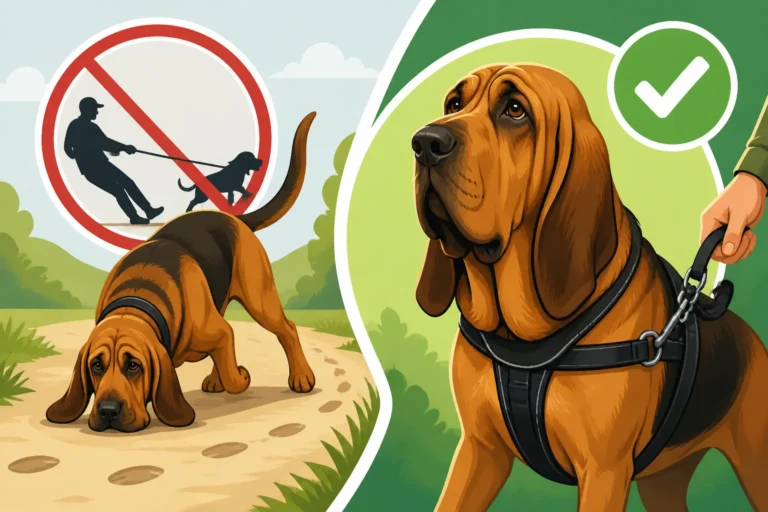
For many Bloodhound owners, the dream of off-leash walks remains just that – a dream. Why Off Leash Is Not a Goal With a Bloodhound is a harsh reality, but an important one for their safety. Their nose will always trump your voice in an open, unfenced area. That's why a quality long line is an absolute game-changer. It allows them to explore and follow scents within a safe radius, giving them a sense of freedom while maintaining your control. When out for walks, always use a well-fitting harness rather than a collar to prevent injury to their neck. A wide variety of harnesses and long lines are available on Amazon, tailored to big, strong hounds.
At home, secure fencing is non-negotiable. What Fencing Actually Holds a Bloodhound needs to be sturdy and tall, as these dogs can be surprisingly determined escape artists when a scent beckons. Think six feet high, and consider reinforcing the bottom to prevent digging. Even if you have a securely fenced yard, never leave your Bloodhound unsupervised for long periods, especially if they are prone to following scents outside the property line.
Engaging Mental Stimulation
A tired Bloodhound is a good Bloodhound, but physical exercise alone isn't enough. They need to use their brains, specifically their powerful noses. Integrating scent work into their daily routine is vital. This can range from structured Mantrailing Is the Answer to a Bloodhound, Not Obedience sessions to simple hide-and-seek games with treats in your home or yard. Puzzle toys that dispense kibble or treats can also keep them mentally engaged.
These activities don't just tire them out; they fulfill a profound need. They allow your Bloodhound to be who they truly are. Even 20-30 minutes of focused scent work can be more mentally exhausting and satisfying than an hour of walking on a leash, as Whether Nose Work Tires a Bloodhound More Than Walking suggests. This mental enrichment helps prevent boredom-related destructive behaviors and keeps them calmer indoors.
Professional Guidance
If you're struggling with your Bloodhound's training or behavior, don't hesitate to seek professional help. Look for certified professional dog trainers who specialize in positive reinforcement and have experience with scent hounds. They can offer tailored advice, help you understand your dog's motivations, and teach you effective, humane techniques. This isn't a sign of failure; it's a responsible investment in your dog's well-being and your shared future. A good trainer will help you develop strategies that embrace your Bloodhound's natural abilities, rather than fighting against them.
Here's a quick comparison of the two approaches:
| Feature | Electric Collar Approach | Positive Reinforcement Approach |
|---|---|---|
| Primary Method | Aversive (pain/discomfort) | Rewarding desired behaviors (treats, praise, play) |
| Impact on Trust | Erodes trust, can cause fear/anxiety | Builds strong, positive trust and bond |
| Effectiveness for Scent Drive | Suppresses without redirecting, causes frustration | Channels drive into productive activities (e.g., mantrailing) |
| Risk of Misassociation | High, dog may associate correction with environment/scent | Low, dog clearly associates rewards with specific actions |
| Long-Term Outcomes | May lead to learned helplessness, aggression, avoidance | Creates a confident, engaged, well-adjusted dog |
| Focus | What not to do | What to do |
The journey with a Bloodhound is incredibly rewarding, but it requires patience, understanding, and a willingness to work with their unique, scent-driven nature. By choosing positive reinforcement and embracing their instincts, you'll build an unbreakable bond with your magnificent hound that’s based on mutual respect and joy, not fear.
Disclaimer
This article is for general informational purposes only and does not constitute professional advice. Laws, prices and regulations vary by location and change over time. Consult a qualified professional for guidance on your specific situation.