Whether a Bloodhound Sulks After a Correction
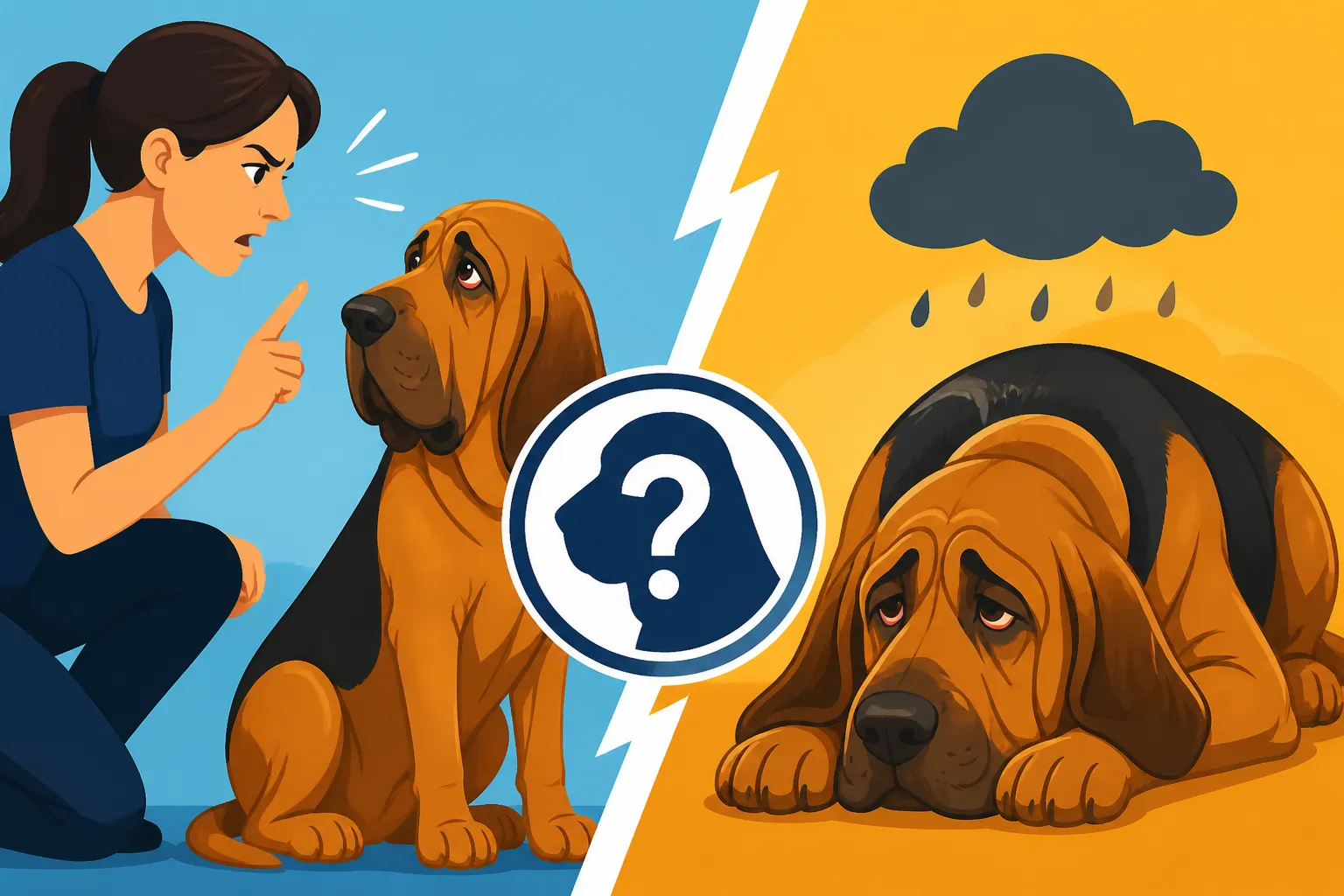
It's a common, heartbreaking moment for many Bloodhound owners: you've given your big, floppy-eared companion a firm "no" or a gentle correction for counter-surfing, and suddenly, they seem to shrink. They might turn their head away, avoid eye contact, or even slowly slink off to their bed, looking utterly dejected. This behavior often leaves us wondering if our Bloodhound is truly "sulking," holding a grudge, or if we've somehow damaged the deep bond we share. This guide will explore the unique Bloodhound temperament, help you understand what's really going on when they exhibit these behaviors, and equip you with more effective ways to communicate with your sensitive scent hound.
Understanding the Bloodhound's Unique Perspective on Corrections
Bloodhounds aren't your typical "eager to please" golden retrievers who bounce back instantly from a redirect. Their deep intelligence, combined with their extraordinary drive for scent, means they process the world—and your feedback—in a very particular way. What looks like sulking to us is often a complex reaction stemming from their innate traits.
Their Deliberate Processing Style
One of the most defining characteristics of a Bloodhound is their deliberate nature. They don't usually operate on quick, impulsive reactions, especially when it comes to understanding human communication. When you give a correction, whether it's a verbal cue to stop an unwanted behavior or a gentle physical redirect, your Bloodhound isn't just shrugging it off. They are, in fact, taking it in, sifting through the information, and trying to make sense of it within their own world view.
Think about it: these are dogs bred to methodically follow a trail for miles, ignoring distractions and piecing together minute scent particles. This requires intense focus and a methodical approach, which translates to how they interact with their owners. When they receive a correction, particularly if it's sharp or startling, they might pause, turn away, or slow their movements not out of spite, but because they are genuinely trying to compute what just happened and what it means. This isn't instantaneous for them. If you’ve ever felt like your Bloodhound takes a moment before responding to a known command, you’re not alone; many owners observe that Why a Bloodhound Pauses Before It Obeys. This processing time is integral to their personality.
The Overwhelming Power of Scent
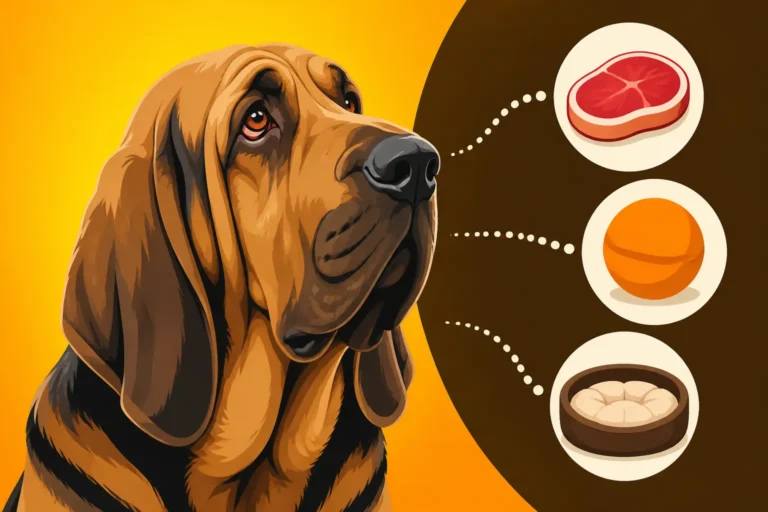
For a Bloodhound, their nose is their world, their passion, and often, their undoing in a human household. They are truly the kings and queens of scent, and every moment is an opportunity to explore the rich tapestry of odors around them. When a Bloodhound is engrossed in a scent—whether it's an interesting patch of grass in the yard, a crumb on the kitchen floor, or the faint odor of a passing squirrel—their focus is singular and profound. This is why A Bloodhound's Nose Outvotes Its Handler almost every time.
A correction in this scenario isn't just interrupting a behavior; it's interrupting a mission. Imagine you're deeply engrossed in a fascinating book, utterly lost in its world, and someone suddenly yells your name. Your first reaction might be a startle, then confusion, and perhaps a moment of feeling disoriented or "pulled away" from your important task. A Bloodhound experiences something similar, but exponentially. They might disengage from you because their brain is still partially on the "trail," trying to reconcile the interruption with their primary drive. This isn't personal defiance; it's a physiological and behavioral default. Their entire being is geared towards scent, and anything that pulls them away from it can cause a moment of cognitive dissonance that can appear like "sulking."
Decoding the "Sulking" — What it Really Means
When a Bloodhound appears to sulk, it's rarely about being intentionally manipulative or holding a grudge in the human sense. Instead, these behaviors are usually expressions of confusion, mild stress, a need for space, or simply their characteristic way of processing information. Understanding these subtle cues is key to building a stronger, more trusting relationship with your hound.
Beyond Human Emotion: Processing, Not Pouting
It’s easy for us, as humans, to project our own complex emotions onto our dogs. When our Bloodhound lowers their head, avoids eye contact, or slowly walks away after a correction, it looks like pouting or hurt feelings. However, it's far more likely to be a combination of several things:
- De-escalation: A Bloodhound's large, wrinkly face and deep-set eyes often give them a perpetually sorrowful or earnest expression. When they lower their head or turn away, they might be attempting to de-escalate perceived tension or avoid direct confrontation. It's a way of saying, "I understand you're unhappy, and I'm not challenging you."
- Cognitive Load: As we discussed, Bloodhounds take time to process. The "sulking" phase might be them actively thinking through what just occurred. They're trying to figure out what they did wrong and how to avoid that outcome in the future.
- Mild Stress or Anxiety: A harsh or confusing correction can create mild stress. Their body language is often a reflection of this internal state. They might be trying to make themselves smaller, or retreat, to cope with this momentary discomfort. They are generally sensitive souls, and What Harsh Handling Does to a Bloodhound can have a profound impact on their willingness to engage and learn.
Physical Manifestations and Their Interpretations
Let's look at some common "sulking" behaviors and what they genuinely signify for a Bloodhound:
- Turning Away or Avoiding Eye Contact: Instead of defiance, this is often a sign of deference and a desire to avoid confrontation. In the canine world, direct eye contact can be perceived as a challenge. By turning their head or body, they're communicating submission and trying to diffuse the situation.
- Slow Movement or Slouching: This isn't laziness or exaggerated sadness. It's more likely a sign of reduced confidence or energy expenditure as they process. A Bloodhound in this state is not trying to annoy you; they're genuinely feeling less inclined to engage in high-energy activities until they've understood the situation.
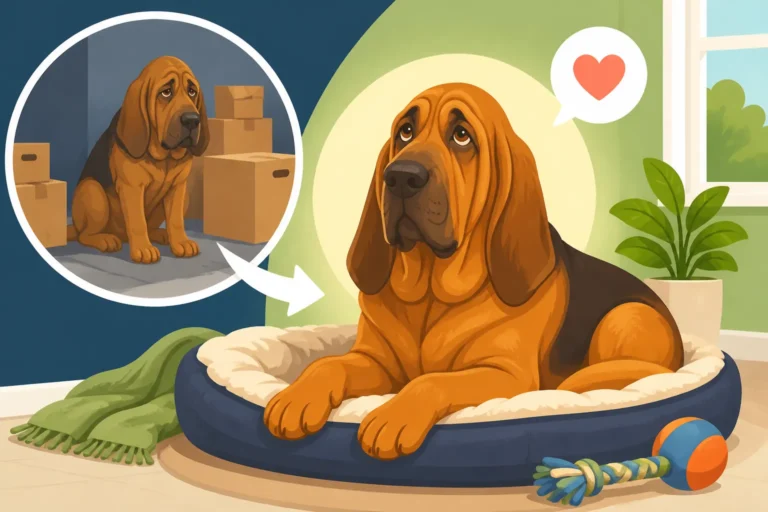
- Retreating to a Quiet Spot: If your Bloodhound goes to their crate or a secluded corner, they're not necessarily "hiding" in shame. They are simply seeking a safe, low-stimulation environment to decompress and understand the event. This is a self-soothing mechanism, much like a person needing a quiet moment after a stressful interaction. Providing them with a comfortable, secure retreat can be very helpful for their overall well-being.
To help clarify the difference between what we might think we see and what's actually happening, here’s a simple table:
| Behavior Observed (Perceived "Sulking") | Bloodhound's Actual State/Reason |
|---|---|
| Ignoring owner, turning head away | Averting perceived pressure/confrontation; processing |
| Slow, deliberate movements | Reduced confidence; thinking through the interaction |
| Lowered head, "sad" expression | De-escalation; mild stress; earnest attention |
| Retreating to bed/crate | Seeking comfort/space to decompress; self-soothing |
| Lack of enthusiasm for usual activities | Temporary dip in confidence or mood due to confusion |
Gentle and Effective Correction Strategies for Bloodhounds
Given their sensitive nature and unique processing style, harsh or confrontational corrections are not only ineffective but can be detrimental to your Bloodhound's trust and willingness to learn. Instead of creating a dog that "sulks," you could inadvertently create one that shuts down, becomes anxious, or even tries to evade interaction with you altogether.
Redirection, Not Reprimand
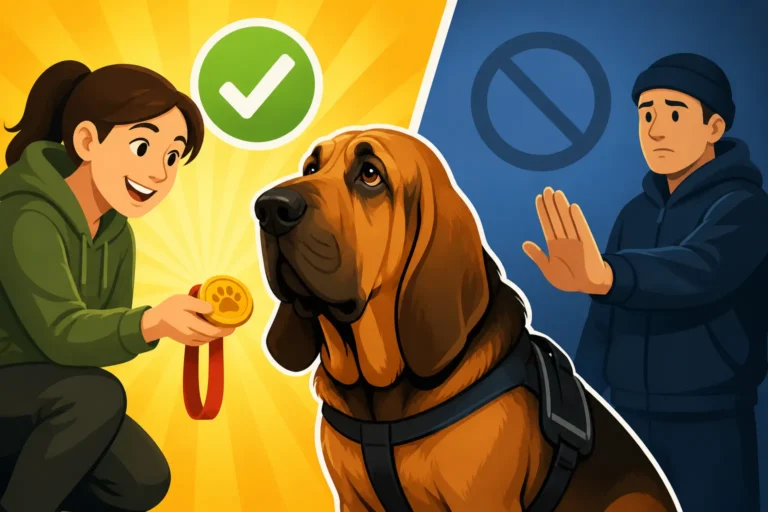
The most effective way to address unwanted behaviors in a Bloodhound is through redirection and positive reinforcement. Instead of focusing on what you don't want them to do, show them what you do want.
For example, if your Bloodhound is counter-surfing, a sharp "no!" followed by what looks like "sulking" might not teach them anything except that reaching the counter sometimes gets a loud noise. A better approach is to anticipate the behavior. When you see them sniffing the counter, immediately redirect their attention to an appropriate chew toy or a short training exercise in another part of the room. Reward them heavily for engaging with the toy or performing the desired behavior. This teaches them an alternative, acceptable action. Many helpful resources, like online puppy programs from BAXTER & Bella, emphasize these positive, redirection-based methods that work wonders for sensitive breeds like Bloodhounds. They help owners understand the 'why' behind canine behavior rather than just punishing the 'what'.
The Power of Patience and Consistency
Bloodhounds thrive on clear, consistent communication. They aren't trying to be difficult when they take their time; they're simply working through the information. Therefore, your corrections—or rather, your redirects—need to be consistent every single time. If a certain behavior is unacceptable one day but ignored the next, your Bloodhound will become confused, and this will exacerbate any "sulking" tendencies because they won't understand the rules.
Patience is paramount. Don't expect instant compliance or immediate understanding. Deliver your redirect calmly and clearly, then give your Bloodhound the space and time to process. Follow up with positive reinforcement when they choose the desired behavior. This positive feedback helps them understand what you want them to do, rather than just what they shouldn't. This consistent, patient approach builds trust and helps your Bloodhound feel secure in their understanding of your expectations. It’s also important to remember that How Long a Bloodhound Takes to Learn Something New can vary greatly, and they often need repetition in diverse environments.
Why Harsh Methods Backfire
It cannot be stressed enough: harsh handling techniques are counterproductive for Bloodhounds. Yelling, physical corrections, or using tools like prong collars or electric collars do not teach a Bloodhound what you want. Instead, they instill fear, erode trust, and can lead to a dog that is anxious, withdrawn, or even fearful of engaging with you. This can manifest as an exaggerated form of "sulking," where the dog truly shuts down and avoids interaction. You might see genuine fear in their eyes, not just momentary dejection. This is why tools like a prong collar are definitely Why a Prong Collar Is Wrong for a Bloodhound.
A Bloodhound needs to feel safe and respected to learn. Their primary drive is scent, and they are incredibly focused. When that focus is met with harshness, it can be deeply unsettling for them. Rather than connecting the correction to the specific unwanted behavior, they might associate it with you or with the general act of interacting with you. This can hinder their progress in all areas, including scent work, where focus and a strong handler-dog bond are crucial. Positive, reward-based training methods, which focus on making the desired behavior rewarding, are the most effective path forward for these intelligent but sensitive hounds.
Rebuilding Connection and Moving Forward
After a perceived "sulking" incident, it's natural to feel a bit disconnected from your Bloodhound. But the good news is that Bloodhounds are generally forgiving and eager for connection. Rebuilding that bond and ensuring they feel understood is crucial for their well-being and your relationship.
Immediately Following a Correction: Short, Positive Interactions
Once you've delivered a gentle redirect or correction, don't prolong the "tension." Give your Bloodhound a moment to process, but then quickly follow up with a low-pressure, positive interaction. This isn't rewarding the unwanted behavior; it's rewarding their general presence and willingness to engage with you.
This could be as simple as:
- A calm, soft word: "Good boy/girl," or "It's okay."
- A gentle pat: If they are receptive and not actively retreating.
- Offering a neutral, high-value chew: Something like a bully stick that they can quietly enjoy, which helps them decompress. You can find a wide variety of these on Amazon, ensuring you have suitable options on hand.
- Engaging in a quick, known command: Ask for a "sit" or "stay" that you know they can easily perform, and reward them enthusiastically. This helps rebuild confidence and reminds them that interacting with you is generally a positive experience.
The goal is to show them that while a specific behavior was undesirable, your overall relationship and affection remain intact. You're not "mad" at them as a whole, just the action.
Enrichment and Engagement: Tapping into Their Instincts
Bloodhounds are working dogs, even if their "job" is primarily being a beloved family pet. Their brilliant noses need to be engaged regularly, and mental stimulation is just as important as physical exercise for their overall happiness and balanced behavior. A bored Bloodhound is often a Bloodhound who invents their own (often inconvenient) entertainment.
Channeling their natural instincts can reduce stress and undesirable behaviors, thus lessening the need for corrections in the first place. Consider:
- Scent Games: Hide-and-seek with treats, or "find the toy" games. This engages their most powerful tool in a fun, rewarding way. There are even beginner-friendly "nose work" kits available online that can make this easy to start at home.
- Mantrailing: This is the ultimate Bloodhound activity. It involves teaching them to follow a specific human scent over various terrains. Even if you're not planning search and rescue, introductory mantrailing courses or seminars (like those offered by trainers often found through BAXTER & Bella) are fantastic for building confidence, focus, and a powerful bond. You'll find that Nose Work Tires a Bloodhound More Than Walking often holds true, as it's incredibly mentally taxing.
- Puzzle Toys: Toys that dispense kibble or treats as your dog manipulates them can provide valuable mental exercise and keep them occupied for periods.
Providing these outlets helps your Bloodhound feel fulfilled, mentally stimulated, and less prone to behaviors that might elicit corrections. When a Bloodhound feels useful and engaged, they are generally happier and more harmonious members of the household.
Observing Their Cues and Building Mutual Understanding
Every Bloodhound is an individual. While they share common breed traits, your dog will have their own unique quirks and ways of communicating. Take the time to truly observe your Bloodhound's body language—not just when they're "sulking," but in all situations.
- What do their ears do when they're happy? When they're confused?
- How do they hold their tail when they're relaxed versus tense?
- What are their go-to stress signals (lip-licking, yawning, shaking off, looking away)?
Learning to read these subtle cues will allow you to intervene before a problematic behavior escalates, often avoiding the need for a correction entirely. For instance, if you see them starting to fixate on the counter, and you know their personal stress signal for "I'm about to do something I shouldn't," you can redirect them with a fun activity or a chew before they even get a chance to engage in the unwanted behavior. This proactive approach reinforces positive habits and strengthens your communication, ensuring that those moments of "sulking" become a rare, quickly resolved occurrence.
Disclaimer
This article is for general informational purposes only and does not constitute professional advice. Laws, prices and regulations vary by location and change over time. Consult a qualified professional for guidance on your specific situation.