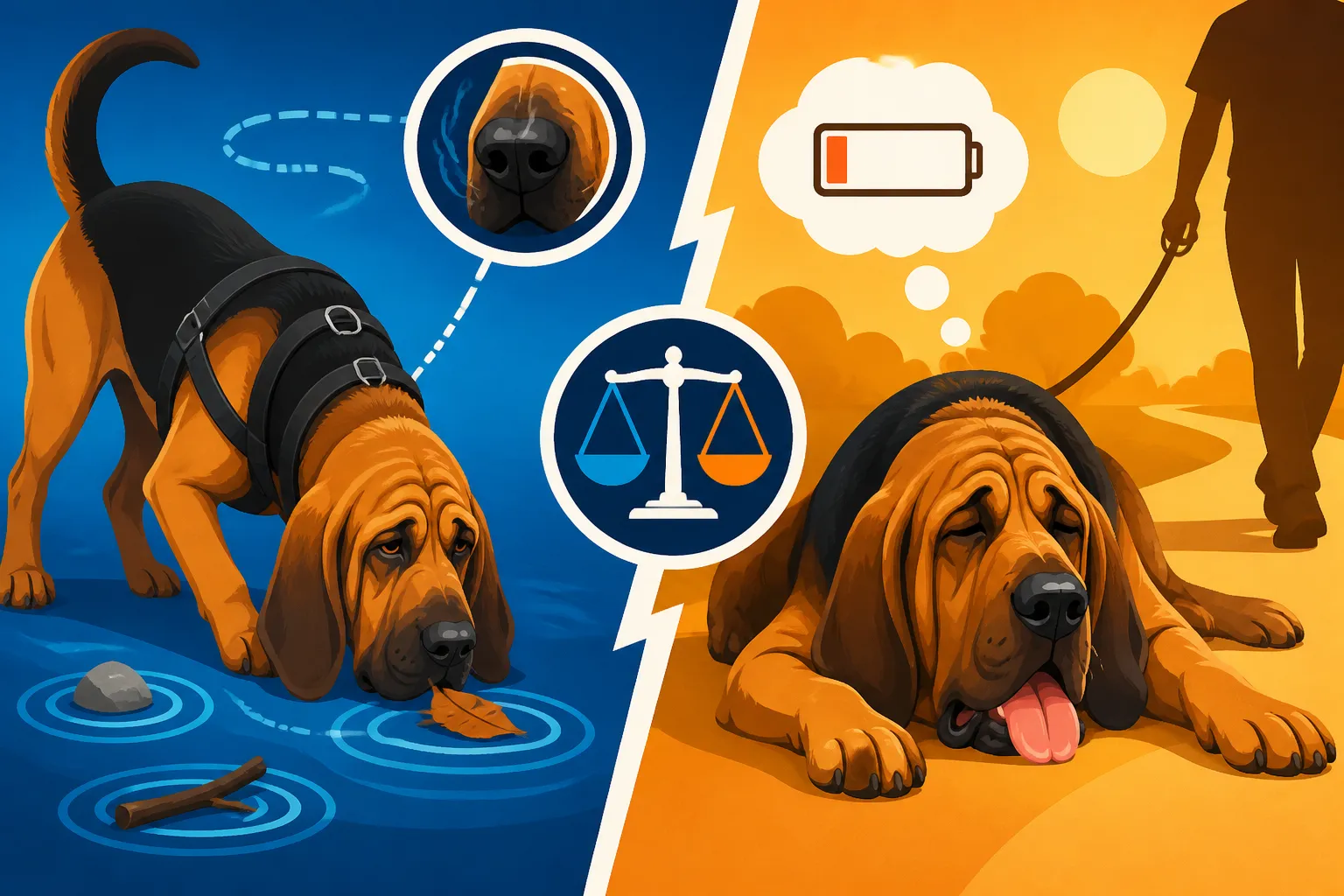
Whether Nose Work Tires a Bloodhound More Than Walking
One of the biggest struggles for any Bloodhound owner is figuring out how to truly tire out their magnificent, driven companion. You might walk for miles, come home exhausted, and find your hound still has that glint in their eye, ready for more adventure. This often leads to the question: does engaging their incredible nose in dedicated scent work actually drain them more than a long walk around the neighborhood? The answer, for many of us who live with these dedicated scenting machines, is a resounding yes, and understanding why can transform your approach to daily exercise and enrichment.
The Bloodhound's Nose: A Mental Marathon
It's easy to look at a Bloodhound and see a large, sturdy dog capable of physical exertion, but their true athleticism lies within their nose and the intricate brain processes that power it. When a Bloodhound is working a scent, they aren't just sniffing; they are engaging in an intense cognitive workout that can be far more fatiguing than any physical trek.
The Sheer Processing Power of a Bloodhound's Scent
Think about the complexity of a Bloodhound's olfactory system. It's not just about having more scent receptors, though they certainly do. It's about how their brain processes that information. When your Bloodhound puts their nose to the ground, they're sifting through a mind-boggling amount of data: distinguishing individual human scent from countless environmental odors, analyzing its age, tracking its direction despite wind currents, and even discerning changes in the ground itself. This isn't a passive activity; it's an active, analytical process that demands immense mental energy. Imagine trying to solve a complex puzzle while simultaneously navigating a busy street and listening to a dozen conversations at once – that's a bit like what a Bloodhound's brain is doing on a trail.
Furthermore, their unique facial structure, with those long, pendulous ears and abundant wrinkles, isn't just for looks. Their ears actually sweep scent particles towards their nose, concentrating the odor, while their deep facial folds collect and hold scent, allowing them to constantly re-evaluate and confirm the trail. This anatomical advantage means they are continuously bathed in scent information, enhancing the intensity of their mental processing. It's a non-stop barrage of sensory input that their brain is working hard to interpret, making their entire nervous system work overtime.
The Focus and Concentration Required for Trailing
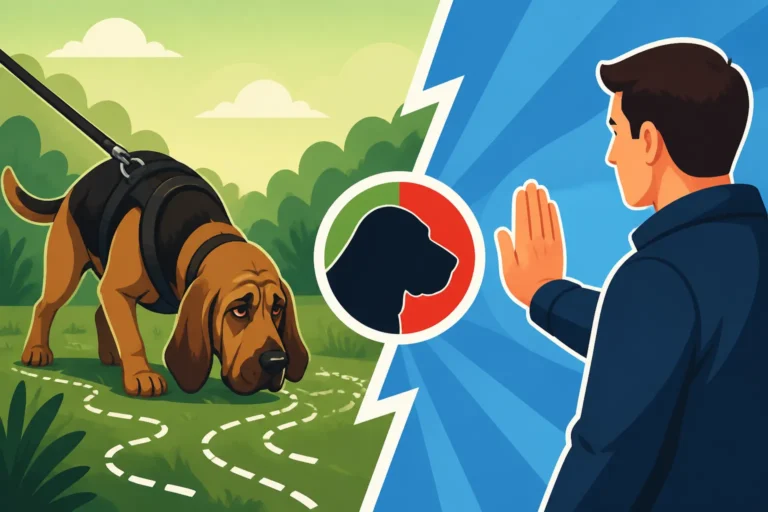
When a Bloodhound is truly "on," following a scent, their concentration is absolute. They enter a state often described as a "trance" or "zone." In this focused state, distractions that might typically grab their attention – squirrels, other dogs, even the sound of their owner's voice – often fade into the background. This single-minded dedication is what makes them such exceptional trailers, but it comes at a significant mental cost.
Think about a human athlete performing a highly technical routine, like a gymnast or a figure skater. It's not just the physical effort that's draining; it's the intense mental focus required to execute every movement precisely, ignore the crowd, and maintain perfect form. For a Bloodhound, scent work is their highly technical routine. They are making constant micro-adjustments, confirming and re-confirming the path, and problem-solving when the scent becomes weak or appears to split. This level of sustained, deep concentration taxes their brain in a way that a casual walk simply cannot. It requires them to block out extraneous information and dedicate all their cognitive resources to one task, leading to a profound sense of mental fatigue. This is a very different kind of engagement than a simple walk. Mantrailing Is the Answer to a Bloodhound, Not Obedience speaks to this dedicated focus.
The Emotional and Instinctual Drive in Scent Work
Bloodhounds were quite literally bred for scent work. It's not just a skill for them; it's an inherent, deeply ingrained instinct and a fundamental part of their identity. When they are allowed to follow a scent, they are fulfilling their most primal drive. This isn't just a mental exercise; it's an emotional and instinctual release. The satisfaction they get from successfully working a trail, even a practice one, taps into a profound sense of purpose.
However, this deep emotional engagement also contributes to fatigue. Imagine working on a passion project you deeply care about. You might spend hours on it, feeling exhilarated but ultimately drained, not just physically but emotionally and mentally. For a Bloodhound, finding that "missing" person at the end of a trail is incredibly rewarding, but the entire process, from the initial sniff to the final "find," is a huge investment of their entire being. This deep, instinctual satisfaction means they pour themselves fully into the task, drawing from a well of energy that a less meaningful activity wouldn't tap. It's a profound experience for them, and like any profound experience, it leaves them truly spent.
Walking a Bloodhound: More Than Just Steps
While a walk might seem like a straightforward physical activity, for a Bloodhound, even a stroll can be a complex experience. However, the nature of that experience, and the type of fatigue it produces, differs significantly from dedicated nose work.
The Physical Demands of a Bloodhound's Walk
Let's be real, a Bloodhound is a large, powerful dog. Even if they're not actively pulling, managing their sheer size and strength on a leash for an hour can be physically demanding for the human on the other end. For the dog, a brisk walk certainly provides cardiovascular exercise and strengthens their muscles. If you're tackling varied terrain, like hills or uneven paths, the physical effort increases. A Bloodhound with a good, steady pace can cover a lot of ground, burning off calories and building endurance. How Much Exercise a Bloodhound Actually Needs touches on this aspect of their daily routine.
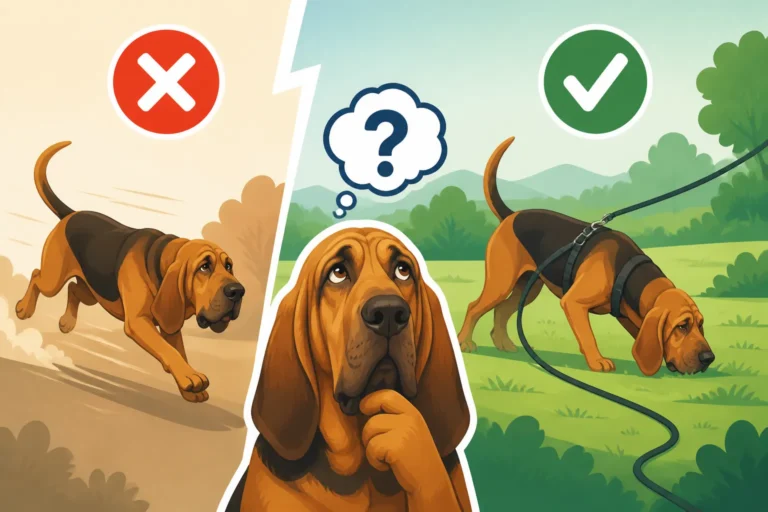
However, many Bloodhounds, with their noses glued to the ground, aren't always moving in a perfectly efficient, straight line. They might stop suddenly to investigate a fascinating scent, pull to the side, or zig-zag across the path. This can be a stop-and-start type of physical exertion that, while tiring, might not provide the continuous, deep muscle engagement of a steady run or a more focused activity. It's physical, no doubt, but often interspersed with bursts of scent-driven energy rather than sustained athletic output.
The Mental Distraction of a Casual Walk
During a typical walk, a Bloodhound is constantly taking in their environment. Their nose is still working overtime, of course, picking up on every interesting scent in the neighborhood. They're processing sounds, sights, and the presence of other animals or people. This is mental stimulation, absolutely! It prevents boredom and enriches their lives.
However, it's a very different kind of mental activity than the intense, single-focus problem-solving of a scent trail. On a walk, their brain is scanning, observing, reacting, and taking in a broad spectrum of information. It's more like casually browsing the internet or listening to a podcast while doing chores – stimulating, but not requiring the deep, sustained concentration of writing an essay or solving a difficult math problem. They might be mentally engaged, but their cognitive energy is spread wide, not narrowly focused on one intricate task. They're not necessarily making high-stakes decisions about a trail, but rather categorizing and reacting to environmental stimuli.
The Difference Between a Casual Stroll and a a Purposeful Hike
It's important to distinguish between different types of "walking." A quick 15-minute potter around the block for a potty break barely scratches the surface of a Bloodhound's needs. A long, steady walk on a leash for an hour or two provides good physical exercise, but again, it's often more about physical endurance and general environmental sniffing.
Then there's the purposeful hike, where you might intentionally take your Bloodhound off-road (on a long line, of course, because Why Off Leash Is Not a Goal With a Bloodhound is a critical understanding) through woods or fields. This can offer a blend of physical challenge and increased scenting opportunities, allowing them to explore a richer olfactory landscape. Even then, without a specific "target" scent, their nose work is more generalized exploration than focused trailing. So, while a hike is certainly more tiring than a neighborhood stroll, it still typically doesn't reach the same level of intense mental and emotional engagement as a dedicated scent work session specifically designed to track a person.
Comparing the Fatigue: Mind vs. Body
When it comes down to it, the fatigue a Bloodhound experiences from nose work compared to walking is largely a question of mental versus physical exertion, and how each contributes to overall "tiredness."
Why Mental Fatigue Hits Differently
Many dog owners, especially those new to scent hounds, underestimate the power of mental work to exhaust a dog. Humans experience this too: a day spent deep in thought, problem-solving, or focusing intensely on a difficult task can leave you feeling utterly drained, even if you haven't moved much physically. The same is true for Bloodhounds.
When a Bloodhound is engaged in scent work, their brain is firing on all cylinders. They are constantly analyzing, interpreting, and making decisions based on incredibly subtle sensory cues. This high-level cognitive function consumes a tremendous amount of energy. While their body might still have plenty of miles left in it, their brain reaches a point of saturation. They might become less responsive, make more errors, or simply lie down and disengage. This mental "burnout" can manifest as a dog that is quiet, sleepy, and deeply relaxed, even though they haven't run themselves ragged. A twenty-minute intensive scent trail can leave a Bloodhound more thoroughly "done" for the day than an hour-long walk. This mental saturation is often what truly settles a high-drive scent hound.
The Efficiency of Nose Work for Tiring Out a Bloodhound
Given their innate drive, a targeted scent work session is incredibly efficient at tiring out a Bloodhound. Instead of simply logging physical miles, you are tapping directly into their core purpose. Even a short session – say, 15 to 30 minutes of focused trailing – can be enough to truly satisfy and exhaust a Bloodhound mentally. How Long a Bloodhound Can Work Before It Tires highlights how quickly that mental energy can deplete.
Consider this scenario:
- Scenario A: Long Walk. You take your Bloodhound for a two-hour walk on a leash through your town. They trot alongside you, sniff every lamppost, greet a few neighbors, and get some good physical exercise. They come home, drink a lot of water, maybe sprawl out for a bit, but often, after an hour or so, they're looking for something else to do. Their body might be tired, but their mind might still be buzzing with under-stimulated energy.
- Scenario B: Scent Work Session. You set up a 20-minute trailing exercise in a local park. Your Bloodhound puts on their harness, gets the scent article, and focuses intently on following the hidden person. They problem-solve through windy patches, ignore the dog walkers nearby, and celebrate exuberantly at the find. When they come home, they might collapse into a deep, contented sleep that lasts for hours. Their body got some exercise, but their brain worked intensely, leading to a much more profound sense of calm and exhaustion.
Signs of Mental and Physical Exhaustion
It's important for us as owners to recognize the difference between physical and mental fatigue in our Bloodhounds.
Signs of Physical Exhaustion:
- Excessive panting, even after a cool down period.
- Lagging behind on a walk.
- Reluctance to get up or move.
- Heavy body language, seeking out cool spots to lie down.
- Sore muscles or stiffness the next day (especially if unusual).
- Dropping off to sleep quickly, but perhaps waking up more restless later.
Signs of Mental Exhaustion (from nose work):
- Becoming less responsive to cues they normally know.
- Making more mistakes on the trail, seeming confused or hesitant.
- Disengaging from the task, perhaps lying down or trying to sniff indiscriminately.
- A quiet, calm demeanor after the session, often with deep sighs.
- Seeking a quiet, dark place to sleep deeply and undisturbed.
- A profound sense of relaxation and contentment, even if their body isn't physically "spent."
- Falling into a truly deep, restorative sleep.
The key difference is often the quality of rest. A Bloodhound physically tired from a walk might be restless later, still looking for something to engage their brain. A Bloodhound mentally tired from nose work is usually deeply, profoundly satisfied and ready for genuine rest.
| Aspect | Nose Work (Trailing) | Walking (Leashed) |
|---|---|---|
| Primary Focus | Mental (olfactory processing, problem-solving) | Physical (cardiovascular, muscle engagement) |
| Intensity | High mental, moderate physical | Moderate physical, scattered mental |
| Type of Fatigue | Deep mental exhaustion, contented calm | Physical tiredness, potentially mental under-stimulation |
| Duration Needed | Shorter sessions (15-45 mins) for significant impact | Longer durations (1-2+ hours) for comparable physical drain |
| Satisfaction | High, fulfills innate drive | Moderate, provides exercise and sensory input |
| Result | Often leads to deep, prolonged rest | May lead to rest, but sometimes followed by restlessness |
Integrating Both for a Balanced Bloodhound
Ultimately, the goal isn't to choose one over the other, but to understand how both physical exercise and mental stimulation contribute to a well-adjusted and happy Bloodhound. A balanced approach leverages both types of activity.
The Importance of a Varied Exercise Routine
Just like humans, dogs thrive on variety. Solely focusing on walks might leave your Bloodhound physically fit but mentally bored, leading to undesirable behaviors like destructive chewing, excessive baying, or general restlessness. Conversely, while nose work is incredibly valuable, it shouldn't entirely replace physical activity. They still need to move their bodies, strengthen their muscles, and maintain good cardiovascular health.
A varied routine could look like this:
- Daily walks: Essential for physical conditioning, potty breaks, and general exposure to the world.
- Regular nose work sessions: Several times a week, dedicate time to actual trailing or advanced scent games. This could be in your yard, a local park, or specialized training classes.
- "Sniffari" walks: Integrate elements of nose work into walks by letting your Bloodhound dictate the pace and allowing them ample time to investigate interesting scents.
- Playtime: Tug, fetch (if your Bloodhound is inclined), or wrestling with other appropriate dogs.
By combining these activities, you're addressing all facets of your Bloodhound's well-being, ensuring both their body and mind are appropriately challenged and satisfied.
Practical Tips for Incorporating Nose Work
Getting started with nose work doesn't have to be complicated. You don't need to join a search and rescue team right away!
- Start Simple: Hide treats around the house or yard and encourage your Bloodhound to find them. This builds their confidence and teaches them the game.
- Introduce a Scent Article: Use a small piece of fabric rubbed by a family member or friend. Let your Bloodhound sniff it, then hide the person a short distance away (starting with just a few yards) and let your dog track them. Reward heavily at the "find."
- Invest in Good Gear: A well-fitting tracking harness that doesn't restrict movement and a sturdy long line (15-30 feet) are essential. You can find many options for these on Amazon, often with good reviews from other working dog owners.
- Seek Guidance: If you're serious about trailing, consider taking an introductory scent work class. Many local dog training facilities offer "Nose Work" or "Scent Detection" classes. Online resources, such as those offered by training platforms like BAXTER & Bella, can also provide structured lessons and support for getting started in scent work at home. Whether a Pet Bloodhound Should Do Scent Work Classes is a great resource for this.
- Vary the Environment: Once your Bloodhound understands the game, try trailing in different locations – parks, urban areas, wooded trails – to introduce new challenges. What a Bloodhound Is Actually Smelling on a Trail can give you insights into their world.
Remember, the goal is to make it fun and rewarding for your Bloodhound. Always end on a positive note.
Maximizing the Benefit of Walks
Even regular walks can be made more enriching for a Bloodhound:
- The "Sniffari" Walk: Instead of marching briskly, dedicate certain walks (or portions of walks) to being a "sniffari." Let your Bloodhound sniff for as long as they want in interesting areas. Let them investigate those bushes or that patch of grass with intense focus. This allows for natural, self-directed mental stimulation.
- Vary Your Routes: Don't stick to the same path every day. Explore new neighborhoods, parks, or trails to introduce new sights, sounds, and most importantly, new smells.
- Incorporate Training: Use walks as an opportunity to practice loose-leash walking, recalls (in safe, enclosed areas), and other basic obedience cues. This adds a layer of mental engagement to the physical activity.
- Use the Right Equipment: A comfortable, Y-front harness is generally better for a Bloodhound than a collar, as it prevents pressure on their throat if they pull, and many harnesses have a front clip option which can help reduce pulling.
By thoughtfully integrating both the intense mental workout of nose work and varied, enriching physical walks, you can provide your Bloodhound with a truly fulfilling life that honors their incredible abilities and keeps them happy, healthy, and wonderfully tired.
Disclaimer
This article is for general informational purposes only and does not constitute professional advice. Laws, prices and regulations vary by location and change over time. Consult a qualified professional for guidance on your specific situation.