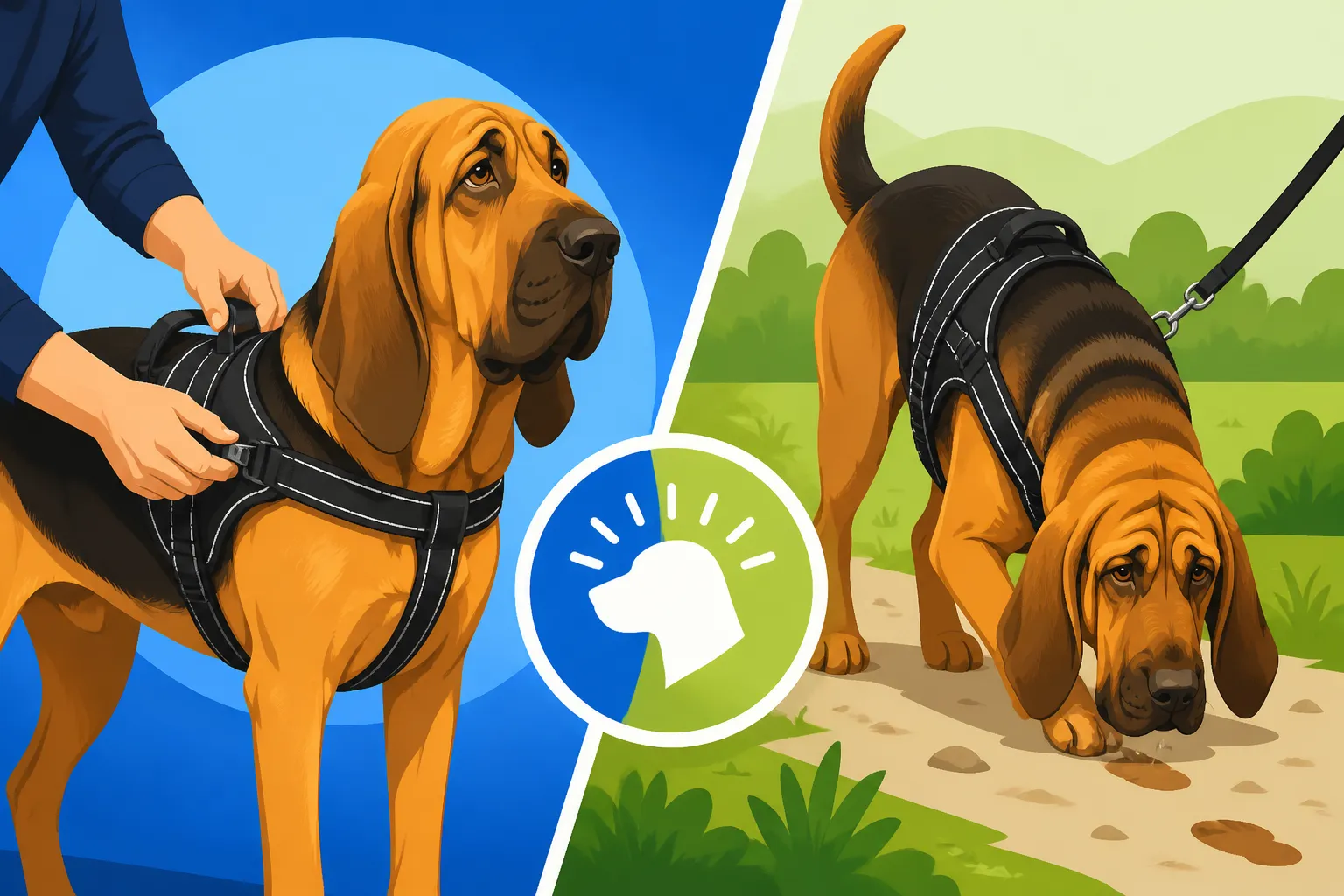
Whether Putting the Harness On Cues a Bloodhound to Work
The moment you reach for that harness, does your Bloodhound suddenly perk up, eyes bright, tail giving a tentative thump? Many Bloodhound owners find themselves wondering if their dog understands that the harness means it's time to work, not just go for a casual stroll. It's a natural question, given their intense focus on scent, and the answer, like with most things Bloodhound, lies in consistency, association, and understanding their unique drive. This guide will explore how your Bloodhound learns these signals and how you can intentionally create a clear "work" cue with their harness.
The Power of Association: How Dogs Learn "Cues"
Dogs, including our beloved Bloodhounds, are masters of association. They don't understand our human language in the abstract, but they are incredibly adept at connecting specific actions, objects, and sounds with outcomes. This is the foundation of all training, and it's precisely how a harness can become a powerful cue for your Bloodhound.
Classical Conditioning and Canine Expectations
Think of Pavlov's dogs; they learned that a bell meant food was coming, so they started salivating at the sound of the bell alone. Our dogs do this all the time. If every time you put a specific harness on your Bloodhound, you then go out to do exciting scent work, what do you think they'll start to associate with that harness? Exactly! The harness itself becomes a predictor of the fun and rewarding activity that follows. It's not magic; it's classical conditioning in action.
For a Bloodhound, whose entire genetic makeup is geared toward tracking and finding, this association can be incredibly strong. They live for scent work. The promise of a trail is often enough to ignite their passion. If the harness consistently precedes this highly reinforcing activity, it quickly transforms from a piece of equipment into a potent signal. This is why you might notice your Bloodhound's demeanor shift the moment you pick up their tracking harness versus, say, their walking harness for a potty break in the yard. They're anticipating the specific activity they've learned to associate with that particular gear.
Differentiating Between "Walkies" and "Work" Harnesses
One of the best ways to solidify the harness as a work cue is to have different harnesses for different activities. This might sound a bit extra, but for a breed as focused and driven as a Bloodhound, it provides immense clarity. Imagine one harness, perhaps a brightly colored Y-front harness, is strictly for your daily neighborhood walks. When you put that one on, your Bloodhound knows it's time for a casual sniff, maybe some polite leash manners practice, and a return home.
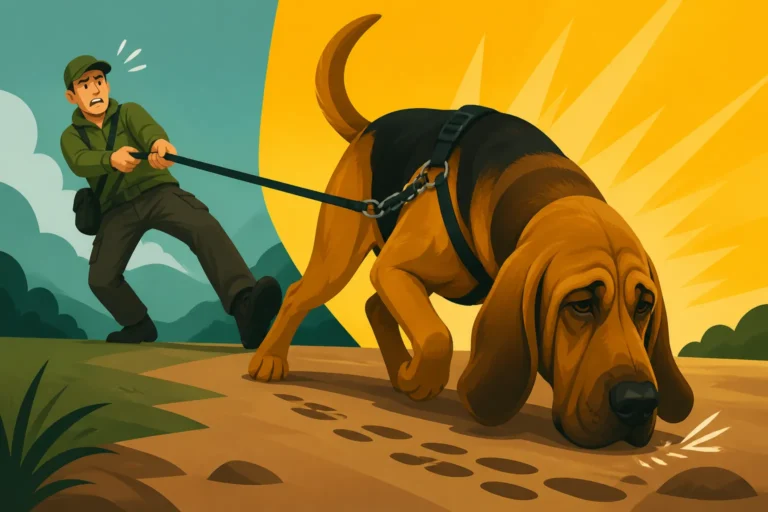
Now, imagine you have a separate, perhaps more robust, back-clip tracking harness specifically for scent work sessions. Every single time this particular harness comes out, it's followed by a thrilling trailing exercise. Over time, your Bloodhound will learn that the "green harness" means short walks, while the "red harness" means serious scenting adventure. This distinction helps manage their excitement and focus. When the "work" harness is on, they are mentally preparing for the task at hand, engaging their incredible nose and problem-solving skills. Without this clear differentiation, every harness might just signal "outdoor activity," which is fine for many dogs, but Bloodhounds truly thrive on purpose. For finding specific types of tracking harnesses or long lines, many owners turn to large online retailers like Amazon, which offers a wide selection suitable for large, powerful breeds like Bloodhounds.
The Bloodhound's Unique Mindset and Response to Cues
Bloodhounds aren't just any dog; their history and genetic imperative mean they approach "work" differently than many other breeds. Understanding this deep-seated drive is key to appreciating how powerfully they respond to cues like a specific harness.
The Irresistible Call of the Scent
A Bloodhound's nose is not just part of its face; it's its entire world. They possess an olfactory ability that is legendary, and their instinct to follow a trail is almost impossible to override once it's engaged. When a Bloodhound has learned that a particular harness means "time to track," the mere sight or feel of that harness ignites this primal drive. It's not just a signal for them to move; it's a signal to hunt with their nose. A Bloodhound's Nose Outvotes Its Handler very eloquently describes this phenomenon.
Their brain lights up, their body posture changes, and their focus narrows to the anticipation of scent. You might see their head drop slightly, their jowls begin to move as they mentally "process" the air, and their tail might wag with a different rhythm—a lower, more intense wag that signifies deep engagement rather than frivolous joy. This intense concentration is what makes them exceptional trackers, but it also means that their work cue, like a harness, carries significant weight in their mind. It’s not just a command; it’s permission to do what they were born to do.
Focus and Energy Management for Scent Work
For a Bloodhound, scent work is not just physical exercise; it's a huge mental workout. This means that managing their energy and focus before and during a trail is critical. If the "work" harness always means high-intensity, focused trailing, then putting it on can immediately shift their mental state into "game on" mode. This allows them to conserve energy for the actual trail and avoid blowing their mental load on unnecessary excitement beforehand.
Consider how you feel before a big presentation or a challenging workout. You might put on certain clothes or engage in a specific routine to get into the right mindset. Bloodhounds are similar. The harness, as a cue, helps them mentally prepare. It tells them, "Okay, this isn't just a romp; this is serious business, and you need to bring your A-game." This mental preparation can actually make for a more successful and less frustrating trailing session, as they are already primed to concentrate on their task. What a Bloodhound Is Actually Smelling on a Trail delves into the intricacies of their olfactory world, highlighting why such focus is essential.
| Harness Type | Common Use Case | Typical Bloodhound Association | Impact on Training |
|---|---|---|---|
| Front-Clip/Y-Harness | Daily Walks, Leash Training | Casual outings, basic manners, general exercise. | Can be used as a "general purpose" harness; less intense association. |
| Back-Clip Tracking Harness | Scent Work, Trailing Sessions | High-focus work, exciting trails, specific training. | Strong "work" cue if used consistently; fosters mental readiness for scenting. |
| Body Harness (Broad Strap) | Car Safety, Long Walks | Secure transport, long hikes where comfort is key. | More for safety or endurance than specific work cues, but can be adapted. |
| Head Halter/Gentle Leader | Leash Manners, Control on Walks | Specific training tool for preventing pulling; not typically a "work" cue. | Focuses on handler control, less on independent work; often used short-term. |
Building a "Work Harness" Association
So, how do you intentionally cultivate this powerful association between a specific harness and serious scent work? It's all about consistency, positive reinforcement, and clear differentiation.
The Ritual of the Harness
Creating a ritual around putting on the "work" harness is incredibly effective. It's not just about clipping it on; it's about the sequence of events that precede and follow. For example, maybe you always get the scent article ready first, then you bring out the special tracking line, and then you reach for the designated work harness. The sequence itself becomes part of the cue.
When you put the harness on, do it calmly but with an air of anticipation. Avoid overly excited verbal cues like "Let's go tracking!" until the harness is fully on and secured. This helps prevent your Bloodhound from becoming overstimulated before the work even begins. Once the harness is on, you can use your chosen "work" verbal cue, like "Find it!" or "Track!", immediately followed by starting the trail. This multi-sensory cue (sight of harness, feel of harness, specific verbal cue) reinforces the message: "It's time to put that amazing nose to work!" Many online training platforms, such as BAXTER & Bella, offer structured programs for building these types of consistent rituals and cues with your dog, often including advice specific to scent work and large breeds.
Positive Reinforcement is Key
Every time your Bloodhound successfully completes a trail while wearing their "work" harness, the reward needs to be meaningful. This isn't just a polite "good dog." For a Bloodhound, the ultimate reward is often the find itself—locating the "runaway" or the hidden scent article. Supplement this with high-value treats and enthusiastic praise. This powerfully reinforces the entire experience, from the harness going on to the successful conclusion of the trail.
If the experience is always positive and rewarding when the work harness is on, your Bloodhound will eagerly anticipate it. Conversely, if training sessions become frustrating, overly long, or result in punishment when wearing that harness, the positive association will weaken. Keep it fun, keep it engaging, and always end on a high note. Remember, the harness is not just equipment; it's a symbol of shared adventure and success for your Bloodhound. Whether a Bloodhound Should Be Rewarded by the Person Found explores effective reward strategies for these scent champions.
Consistency Across Environments
To truly solidify the harness as a universal work cue, you need to be consistent across various environments. Don't just use the work harness for trails in the local park. Take it to new fields, urban environments, or even indoor training spaces. The more varied the locations where the "work" harness reliably leads to successful scent work, the stronger and more generalized the association becomes.
This consistency helps your Bloodhound understand that regardless of the surroundings, when that harness is on, their job is clear: follow the scent. It prevents them from thinking the harness only means "track at the park" and instead broadens it to "track wherever we are." This is especially crucial if you ever intend for your Bloodhound to participate in serious search and rescue or trailing competitions, where adaptability to diverse environments is paramount.
Beyond the Harness: Other Work Cues for a Bloodhound
While the harness can be a powerful cue, it's just one piece of the puzzle in communicating with your intelligent Bloodhound. A well-rounded working dog understands a combination of cues.
Verbal Cues and Hand Signals
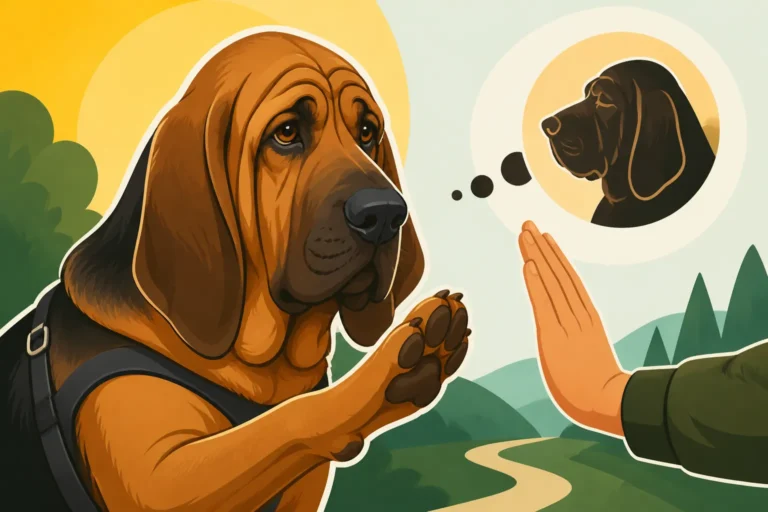
Pairing the harness with specific verbal cues is a natural extension. Words like "Track!" or "Search!" become deeply ingrained. Just like the harness, these words should be reserved only for scent work sessions to maintain their significance. You might also develop subtle hand signals that precede or accompany the verbal cue, giving your Bloodhound another layer of information. For instance, a pointing gesture towards the ground might signal "start the track." What a Bloodhound Will Work For outlines the various motivators that drive these incredible dogs, including clear communication.
The beauty of a Bloodhound is their eagerness to please when they understand the task. The clearer your communication through a combination of cues, the more confidently they will approach their work. It's a dance between handler and hound, and each signal, whether it's a harness, a word, or a gesture, is a step in that dance.
The Role of Specific Equipment
Beyond the harness, other pieces of equipment can also serve as cues. The long line, for instance, is intrinsically linked with tracking. When you bring out that 15-foot or 30-foot line, your Bloodhound likely knows it's not for a casual walk around the block. The scent article itself—a piece of fabric or an item imbued with the target person's scent—is perhaps the most potent cue of all. The moment they get a sniff of that, their focus shifts dramatically.
Having distinct equipment for different activities helps reinforce the "work" mindset. It compartmentalizes their activities, allowing them to switch roles effectively. This isn't about being rigid, but about providing the predictability and clarity that allows a Bloodhound to excel at what it does best. For instance, you might find specific training collars and leashes on Amazon that are more suited for general obedience, keeping your dedicated scent work equipment distinct.
The Handler's Demeanor and Body Language
Perhaps the most subtle, yet powerful, cue of all comes from you, the handler. Your body language, your tone of voice, and your overall demeanor can profoundly influence your Bloodhound. When you're preparing for scent work, do you adopt a more serious, focused posture? Do you speak in a slightly lower, more deliberate tone? Do you project confidence and expectation?
Bloodhounds are incredibly sensitive to their handler's emotional state. If you approach a scent work session with a calm, focused, and confident attitude, your Bloodhound will pick up on that and mirror it. If you're stressed or uncertain, they might become anxious or less confident in their work. Therefore, your own internal state and outward expression become an overarching cue that frames the entire experience, from the moment you pick up that special harness until the trail is complete.
Disclaimer
This article is for general informational purposes only and does not constitute professional advice. Laws, prices and regulations vary by location and change over time. Consult a qualified professional for guidance on your specific situation.